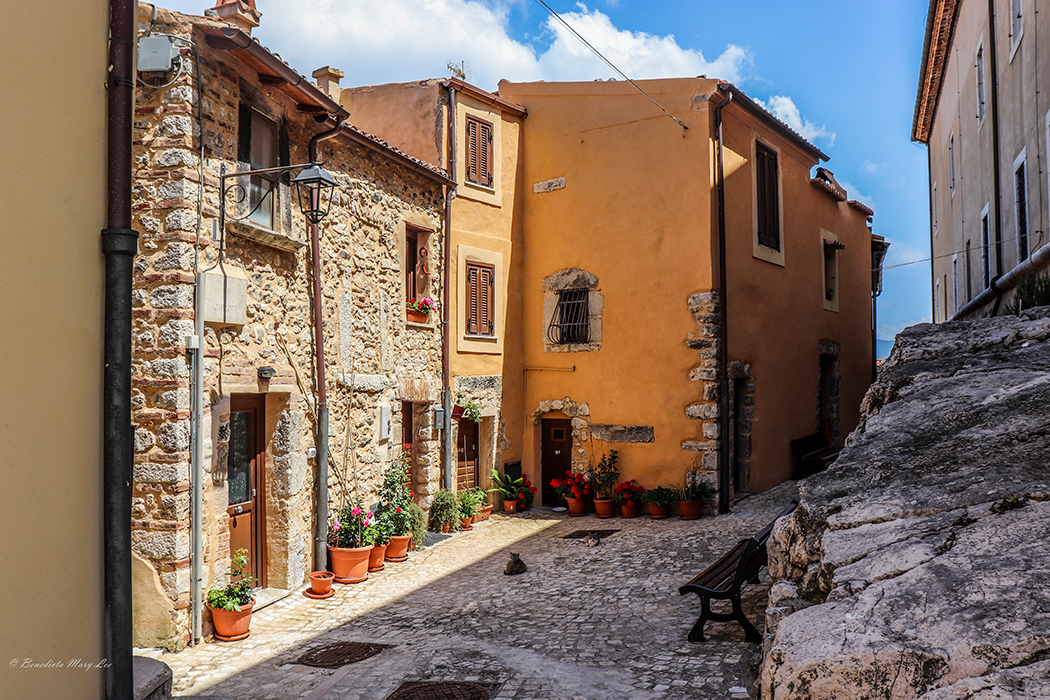
The Museum of Arts and Popular Traditions of Micigliano was created to provide a record of the agricultural and pastoral tradition of this special area.

The museum is organised through the story of life inside and outside the home in the past time.

One section illustrates the mountains, the forests and the work of the fields while another section shows the urban environment and ultimately life in the house where the women wove and cooked. They discuss the most strenuous and profitable trades of the past, like the lumberjack, carpenter, blacksmith, farmer and shepherd.

In each sector the visitor can see the most original and authentic tools used.

powered by social2s

The civic museum of Borgo Velino includes a nature section, dedicated to the plants and herbs of the valley of Velino, an ethnographic section, with work-related objects and tools from the farm life, and an artistic section, including some works of the local area.
 

powered by social2s
Roccasecca dei Volsci. Museum of Oil and Popular Traditions

The ethno-anthropological Museum of Oil and Popular Traditions in Roccasecca dei Volsci is located in the former mill of the seventeenth century Palazzo Massimo.

It offers a course on sociological and anthropological aspects related to oil and peasant culture. The production of oil has represented one of the most important industries in Italy since the rise of Rome.

powered by social2s

The EtnoMuseo of Lepinis in Roccagorga was created to identify, preserve and put value into the cultural heritage and traditions of the Lepine community.

Lepini Mountains separated the Latin Valley (or Sacco River Valley) from the Thyrrenian Sea and are an incredible natural reserve of biodiversity.

Through installations, creative scenes and information panels, the museum seeks to stimulate the critical capacity of the visitor. Field studies were carried out to select and perpetuate the collective memory.

powered by social2s

The Center of Emigrant Documentation in Roccagorga was born from the need to recall the historical memory of this important collective experience that affected this area of ​​Lepini Mountains.

After the unification of Italy first and then after the II World War, whole families left the country to escape hunger.

On one side of the centre we see a big relief for the entire length of the wall depicting an ocean liner, such as the impressive Rex, which had taken many emigrants across the ocean in search of a future.

powered by social2s

The Museum of Banditry of Itri (museo del brigantaggio) is housed in a modern structure and is one of the few that tells a dark period of the unification of Italy: one of the robbers in the south of Lazio and southern Italy in general.

The history is illustrated by interactive panels on the uses and customs in Italy pre- and post- unification and there are display cases with period weapons.

Through extensive photographic section and the documents you can perceive the cruelties of the regular troops (Piedmontese) who were more savage than the bandits, who expressed the deep unease of a plundered and marginalized population.

Particularly interesting are the stories of the elderly from various parts of Lazio, told in the local dialect, through which one can relive the memories of people who lived in the same historical period in which the Museum is based.

powered by social2s

The Museum of Popular Traditions of Bassiano, is located inside Palazzo Pietrosanti and in the rooms on the ground floor. Bassiano is a wonderful medieval town on Monti Lepini south of Rome and not far from the coast.

It reproduced the typical environments of the peasant work of the past. Equipment and tools related to the production of cheese, pork processing and field care are exhibited

powered by social2s

Subscribe to Newsletter

Discover a territory through the emotions of the people that have lived it.