


Nero Nero... I'm not part of Petrolini's generation, which I knew primarily for his parody of power featuring an unlikely Nero. That's why I was surprised to see Ettore Petrolini's Chicchignola among the plays competing for Ruggito d'Attore 2026 Award in Alvito.
I thought it would be a light comedy in the style of Eduardo Scarpetta, but instead I found myself immersed in a bitter yet occasionally comical story about the fragility of the human soul. Petrolini strikes me as the Roman version of the great Napolitan playwriter Eduardo de Filippo, where the petty failings of men are recounted with that sarcasm and distance from the typical Roman reality of 'when a pope dies, another is made.'
The light-hearted depth of the text was rendered absolutely masterfully by the company Attori All’Improvviso from Vallerotonda thanks to the direction of Raffaella Catalano who also played the female lead. Such a delicate yet incisive direction that I forgave the use of Neapolitan dialect. I also forgave the use of some words that have one meaning in Italian but another in Rome, and which Petrolini had certainly inserted with their Roman meaning.
Chicchignola was played by the excellent Paolo Nicolella from Caserta and father-in-law of Raffaella. Especially in the third act, when sadness replaces bravado, his stage presence filled the entire stage.

So I started doing some research on Ettore Petrolini the writer and found a modern personality: "I imported parody. I abolished the definitions of 'comedian in his repertoire'; or "magic comedian," etc., and the first adjectives appeared - for me - "parodist" or "grotesque comic" and "original," "fantastic," "bizarre," and so on!»
His unconventional style led him to collaborate with the Futurists, particularly Filippo Tommaso Marinetti, who dedicated some thoughts to it: "the most difficult to analyze of Petrolini's masterpieces... with its mechanical, motorik rhythm, its endlessly hammering teuf-teuf, absurdities, and grotesque rhymes, it digs spiral tunnels of wonder and illogical and inexplicable joy into the audience."
Petrolini is Rome, as is Trilussa or Alberto Sordi (and even Carlo Verdone), and I was amazed to discover that two of Rome's iconic songs were sung and set to music for the first time by him: Una gita a li castelli and Tanto pe' Cantà.
Just writing their titles makes me hear them whistling in my head!
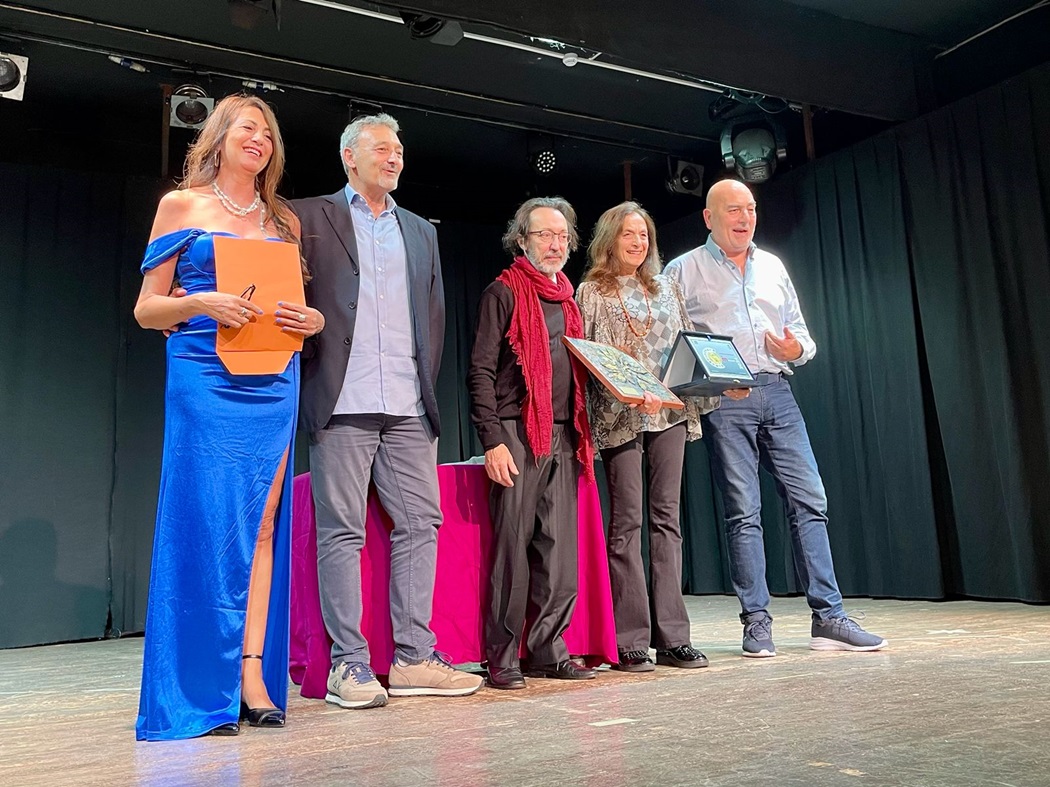
Thanks to the courage of Raffaella Catalano for choosing to stage this work, and to Federico Mantova of FITA Frosinone for organizing this Ruggito d'Attore festival, which allows me to discover the beauty of the people of our Ciociaria.
Petrolini died young at 52 in 1936, and the few videos available online are incredibly modern. Who knows how much was still going through his head!




Follow us