Talk to your pet on January 17, Feast day of Saint Anthony!

Blessing the Animals is one of the most engaging religious events in the calendar and takes place on January 17, the day of the death of Saint Anthony, one of the most interesting figures of the Catholic, Orthodox and Lutheran Churches.

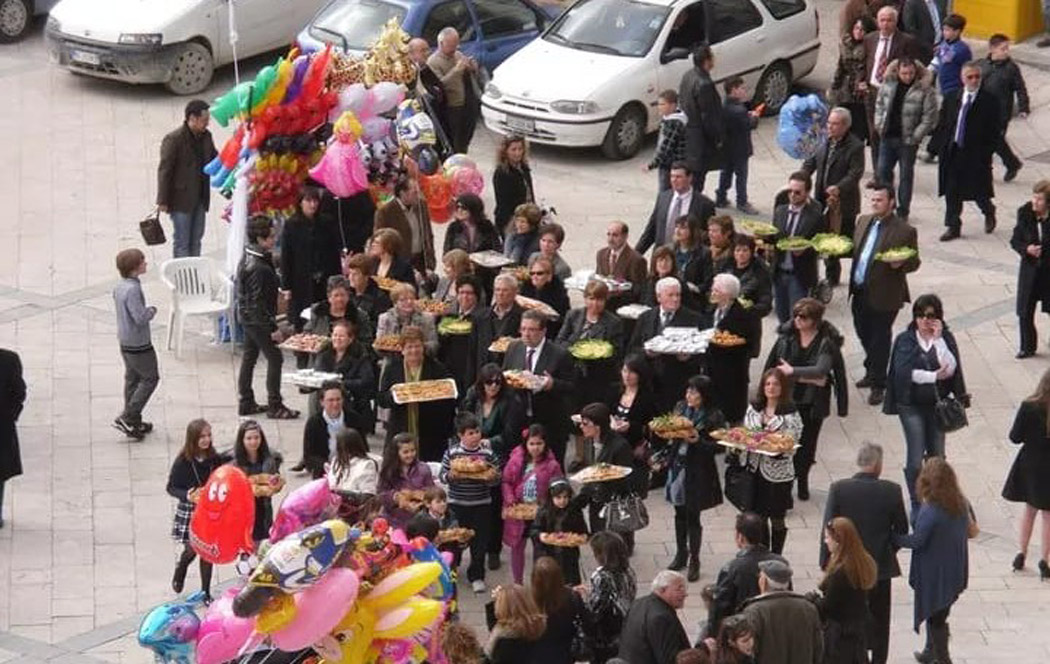
Suddenly the churches are full of pets meowing, barking and squawking, and in the church-yard you can find large animals such as horses, pigs and cows. What happens when the circus is in town? When strolling in many villages you will come across groups of horses while at night the streets come alive with bonfires and, perhaps, with handing out of polenta. Each village and town has its own peculiarities.

But where did all this start? And why is Saint Anthony often represented with a pig at his side?

The tradition began in the Middle Ages in Germany, where in every village a pig is bred to be given to the monks who run the 'hospital of St. Anthony', but the story has deeper roots.

Anthony was born in Egypt in 251 from a very rich family. He became an orphan when 20 years old and gave all his possessions to the poor to seek the essence of life in simplicity and solitude. He was responsible for the founding of the first 'Monastery' in Palestine and his life became an example to St. Benedict who, a few centuries later, took monasticism to a 'professional' level.

St. Anthony was a hermit, a worker, a vegetarian and a person who cured the sick, especially those with troublesome skin disorders that we now call 'shingles' or ‘fire of St Anthony’. In short, he was a religious 'contemporary' who drew lines of behavior that today does appear 'innovative'.

The figure of Saint Anthony (not to be confused with the Portuguese Saint Anthony of Padua) is connected to fire and to animals. And these two are partly linked.

The fire is that of hell, where it says that Antonio was going to bring back some souls struggling with the demons, while animals are related to their role as healers and sources of ointments for shingles that is prepared from the fat of the pig.

The history of the celebration of St. Anthony and the blessing of the animals, however, started only in the eleventh century in France, where in 1088 the son of a rich man was cured of shingles and he rewarded the monks by founding a new order (the ‘Antonian’) and funding a 'Hospitium', a sort of pilgrim hospital. Since then the cult spread and slowly the celebrations began all over Europe.

Back to the present. Respect for the pig and other animals happens on this day dedicated to them (even if Saint Anthony is, on one hand the patron saint of animals, and on the other protector of butchers).

Some traditions say that on the night of St. Anthony animals talk and it is better that the farmers do not hear them talking. Others say that it is better to control them when they talk or they can go crazy.

One of the most significant celebrations is in Palestrina near Rome where three associations create folkloric parades that recall work of the past and end with blessing of the animals. The associations are: the 'Cattle' (cattle ranchers), the 'Carrettieri' (those who carry goods using carts pulled by animals) and the 'Mulattieri' (those who transported goods in inaccessible areas using mules).

The traditional celebrations in honor of St. Anthony in Sora are held on January 16th and 17th with the celebration of the Holy Mass at the end of which the traditional blessing of the animals is scheduled.

The feast of St. Anthony "Favaro" in Jenne has its roots in rural culture and is still maintained today with great popular participation. The corn sown in spring was harvested at the end of September. The Polenta made as it was once, and the fallone (pizza made with corn flour and water) are the typical dishes that can be enjoyed during the festivities.

In Doganella di Ninfa, a village of Cisterna di Latina, the patron of the fields and animals is honored with an event that is a source of pride for the inhabitants of the populous village, which straddles the towns of Sermoneta and Cisterna di Latina.

Here the corn, brought from the distant Americas, grows flourishing and, since the end of the Second World War, the festival has a touching religious moment, culminating in the Procession of the Patron in the countryside, escorted by numerous parishioners on their tractors, to witness the protection of the Saint on animals and the countryside.

In Monte Compatri the classic parade of allegorical floats colors the streets of the town in honor of St. Anthony. The products of the territory are the setting for an event that has entered the heart of the 'monticiani' (inhabitants of Monte Compatri), a particular festival that also marked the time between sowing and crops in agriculture.

The blessing of the animals, the educational farm and the workshops fill this day, after the classic walk enlivened by allegorical wagons, while preparing a bonfire for the evening of 17 January in Piazza Garibaldi, which warms up the tasting of polenta.

In Cerveteri, St. Anthony is a big party in the historic center with religious celebrations and then with many initiatives and fun for families and children.
In the afternoon there is the parade of carnival wagons and animals. Afterwards we find ourselves at the Cuppoletta di Sant'Antonio for the blessing of the animals.

Finally in Piazza Santa Maria large party with masks, confetti, colors, entertainment and distribution of sandwiches, wine, and typical sweets of Carnival.

On January 17, traditionally the Church blesses the animals and the stalls placing them under the protection of the saint. The tradition derives from the fact that the order of the Antonians had obtained permission to raise pigs inside the inhabited centers, since the fat of these animals was used to anoint the sick struck by the fire of St. Anthony. The pigs were fed at the expense of the community and circulated freely in the village with a bell around their neck.

In Monterotondo, the Feast of St. Anthony is the most anticipated event of the year, the most popular event for all the monterotondese.

On 17 January the sacred image of the saint leaves the house of Emanuele Simeone to reach the Cathedral of Santa Maria Maddalena. The solemn Mass is celebrated and the blessing of the animals that precedes the parade takes place at the sound of the fanfare of the IV Regiment of the Carabinieri on horseback.

Among the many events that celebrate St. Anthony in the Province of Viterbo the Feast of St. Anthony in Sutri provides a long calendar of events that start before 17 January and end after 20, but the most intense days are always those of 16 and January 17, when the solemn procession, the parade of the cavalry and the blessing of the animals take place, together with other religious and civil events that always attract a large audience.

In Nepi the Feast of St. Anthony on January 17 starts the events of the Nepesino Carnival.

The opening of the famous machine fair precedes the lighting of the great "Focarone" and then the traditional "Beverino", before ending with the solemn procession through the streets of the town.

Tuscania celebrates the feast of Saint Anthony with a solemn mass and procession, parade on horseback through the streets of the village and the blessing of animals, followed by the Frittella Festival, with tastings and guided visits to the main archaeological sites (Ara del Tufo Necropolis, National Etruscan Museum of Tuscania).

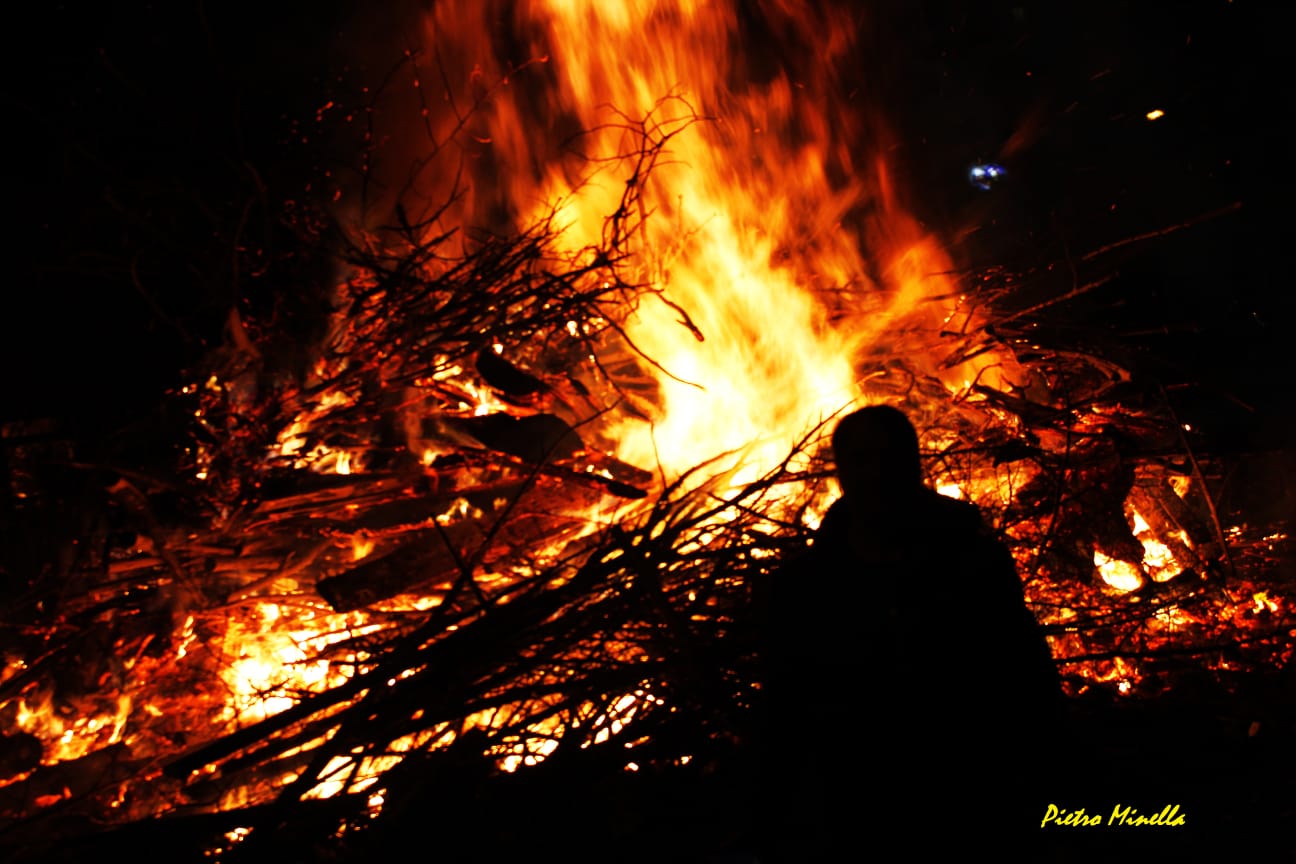
But perhaps the most exciting event is in Bagnaia, a village near Viterbo, where on the evening of January 16 a bonfire is lit in the square, 'the focarone' or 'Sacred Fire of St Anthony'. People gather in a procession through the village that ends with dancing by the fire. In the days before the festival they organize popular games and on the evening people are offered special local biscuits (cavalucci), accompanied by hot chocolate.

powered by social2s
Eraclea Minoa, a town and perhaps a little girl

They had come to that place by chance and, involved by their surroundings, they had abandoned themselves to the scent of the pines and the sea, entrusting themselves to a sovereign nature until the beginning of a sunset that had enveloped them in eternal beauty.

As if by magic, he had made them feel part of that whole.

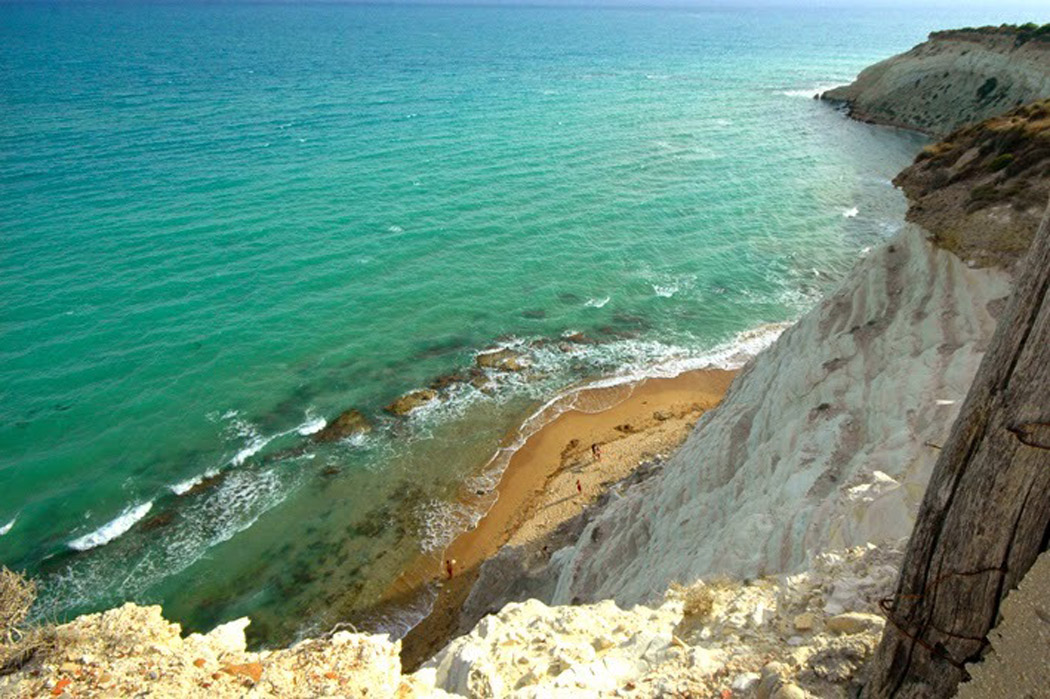
Eraclea Minoa in Sicily.

A difficult name to learn, there was no town but only a few villas separated from the sea by the eucalyptus grove and a couple of kiosks where you could find something to eat and drink. That was an exclusively natural and very ancient location.

A pine forest directly on the beach touched the coast for kilometres parallel to the shoreline.

And then a cliff, a surprise that was revealed only at the end, at the foot of Capo Bianco.

Can hugged his wife and they dived into the sea to cool off. They headed for the only kiosk to eat something and rest after the long walk.

The homemade and tasty food made them feel even better. They complimented the owner for the excellent eggplant parmigiana and the very fresh fried fish. A mature lady at that moment greeted with a "Good morning", ordered an iced coffee and took a seat at the only free shaky table and lit a cigarette. Can asked her what cigarettes she smoked and the lady showed them to him, offering him some.

He accepted thanking her and asked for her lighter. They introduced themselves and talked about this and that. Each of them told a little bit without filters or lies. A natural empathy enveloped them immediately, so much so that the lady invited the kiosk owner to let the couple taste his ricotta cannoli sprinkled with pistachio, accompanied by a good coffee, to conclude the lunch.

Natalia and Can enjoyed and greatly appreciated those Sicilian delicacies. They told her their whole story, who he was and that Natalia was an Italian from Rome. They conversed with such naturalness that it seemed they had always known each other.

The lady also introduced herself:

- I am Milena Argento - she said -I am a teacher and I enjoy writing. I have already published two books and I am completing a third.

- Really? My mother is also a teacher. Do you live here?", Can replied.

- Not really, but I have a house behind the pine forest and I come there from time to time, apart from the summer, when I need to be alone for a while. Indeed, if you want to come and take a shower, to cool off from the saltiness .... I'd love to.

They looked at each other and accepted that invitation made with her heart, spontaneous and cordial. The lady did not allow them to pay the bill and she wanted at all costs to offer the meal they had eaten.

Sicilian generosity and hospitality is not a rumour, but a truth.

They got up together and headed for the lady's cottage. They looked at each other and accepted that invitation made with the heart, spontaneous and cordial. The lady did not allow them to pay the bill, she wanted at all costs to offer her the meal they had eaten. Sicilian generosity and hospitality is not a rumour, but a truth. They got up together and headed for the lady's cottage. They preferred the outdoor showers and headed for them.

Milena begged them to sit quietly and handed them bathrobes, towels, shower gel and shampoo. They showered together, continuing to kiss and cuddle. They dried and dressed, fresh and in love as ever.

They thanked the lady for hospitality and told her that they would come back to visit her, but also that they would have the pleasure of hosting her in Istanbul, a beautiful city.

They left their contacts and greeted her with a promise to her that she would write about them and that if the creature they were trying to conceive was a girl, they would call her Eraclea.

powered by social2s
Inside Molise with Colletorto in the heart, a cure for the soul

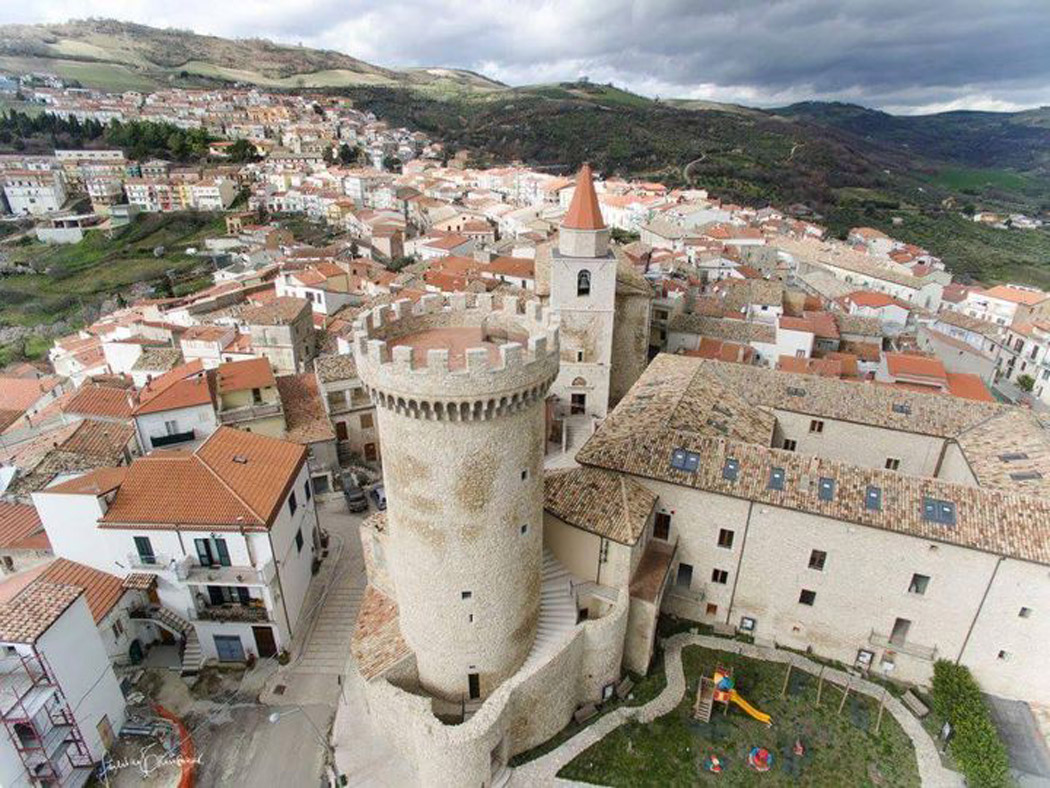
My Molise mother was from Molise. To be exact, from Colletorto. There as a child I spent my summers.

I have childhood memories of those summers, and the more time passes, the more they are dear to me.

I was born in Milan and 50 years ago, and more, the distance that existed between the two places was not only geographical.

Emigration had, as it were, uprooted us from our history, our people, our culture. From a rural and peasant reality we had transformed into citizens and workers.

In the summer, people would return to their own town, perhaps showing off the car or some tinsel that would show the well-being achieved in the city. But we never spoke of the poverty and sadness that one was forced to live, far from their roots.

I was a child. These things I would understand only later. It was a source of amazement for me to see the peasants return to town in the evening with their donkeys and mules and taking them to drink at the public drinking trough before putting them in the stables: in Milan they were scenes that were not seen.

And even "o 'strusc' serotino" (evening walk) I couldn't understand it, and why the participants greeted each other every time they met even if it happened several times in a row since they were going up and down many times.

In fact, the ‘struscio’ was the walk that was made in the main street of the town and in which one shared one's presence in the community. ‘Serotino’ because it took place in the evening immediately after dinner.

And the men took off their hats as a sign of respect every time they greeted someone. It was like a dance in which we talked about everything and with everyone. And it was a way to meet and exchange news, when there was no television or telephones.

I did not understand those men and women sitting in front of the door of their houses who spoke in a dialect that I did not understand at the time, and who greeted me, and especially the women, hugged me and kissed me.

It was their way of blessing me, but I couldn't know at the time.

And I was fascinated by the fires of "le ristocc " in the dark of the night. The 'restocc', or what remained of the grain after it was harvested. And the rest was burned so that the Venus nourished the soil for the following sowing and for the new harvest.

The fires that could be seen in the night were a magnificent sight. Seen once, their image remains in your heart and mind with absolute clarity.

In Colletorto, from the terrace below the Palazzo, which rises over the valleys below, you could see them light up the night in August evenings. And it was a wonderful sight.

And the women who returned from the oven, carrying on their heads   "co maccatur 'n'cap" the trays in which they had cooked the dishes, especially on holidays.

The women carried incredible weights on their heads, helping themselves only with a woven handkerchief. They put it on their heads to distribute the weight, just like that of the copper basins with which the water taken from the fountains was transported, and to protect themselves from the heat of the pans and pots that, while still hot, were brought from the oven.

And those desserts that did not exist in the city: sweet and savoury taralli, (pretzels) with or without sugar icing, those with almonds, simple pizza, made only with tomatoes and my favourite: "a pizza doc" with layers of cream.

I remember the trips to the sea at ​​Termoli with bread and tomato and some fruit, and water and beer put to cool down on the seashore. And they all had a nickname: Pepp u Piattar, Lina Bambà, Pepp u' scazzllus. But I didn't know what they meant.

And now at the very thought, remembering these things, I am moved and my eyes become moist. Because I didn't understand then, but over time I realized that all those things were petals of happiness, and the luck of having lived them enriched me and those memories made my life better.

Because little is said about Molise. And few know that it is a bit like the land of happiness.

Molise is the place where you can find the most important cures: cares for the soul.

powered by social2s
Memories of Easter in Cattolica Eraclea

For Easter, the houses and squares were filled with young people who had returned home for the holidays.

Holy Week, in Cattolica Eraclea in Sicily was lived with intensity, fasting and abstinence were observed, which intensified from the evening of Holy Thursday, when we went around the churches in procession, with the statue of Our Lady of Sorrows and the bells were tied.

The day of Friday began already at seven in the morning with the services of Good Friday in the church, where the passion was read in several voices, interspersed with passages from the "Stabat Mater" as a lament, which appeared more an Attic tragedy than sacred representation and lasted all day.

After the services in the church, the worshipers went in procession, with the statue of Our Lady of Sorrows and that of Jesus carrying the cross, up to Calvary, located on a mound. Here the crucifixion was simulated, with another statue of Christ, with pierced hands and feet and the chest wounded by the spear.

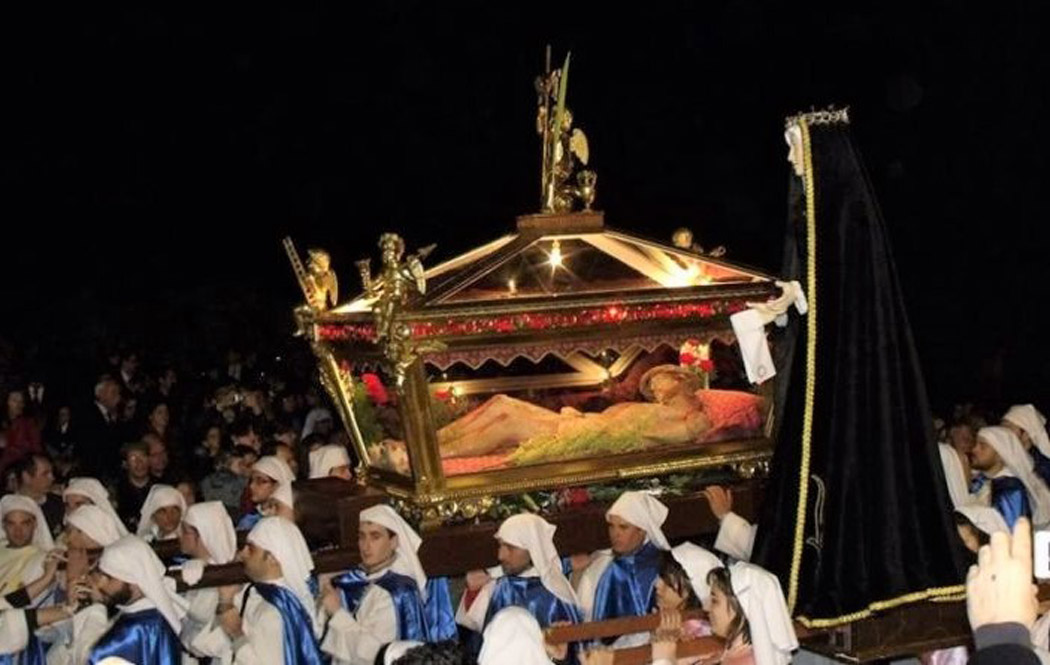
It was held on the cross until the first star came out and then was placed in a splendid glass urn with gilded inlays.

It was carried in procession throughout the town by men belonging to brotherhoods, who were distinguished by the colour of the cape, with the face covered by a white hood called "Cappe".

The procession was made up of almost all the villagers, who followed the urn in step, three forward and one back, singing "Asi, pour tears", all evening, until they reached the Mother Church around one in the morning.

Silence reigned throughout Holy Saturday, until midnight, when the bells were rung to announce the Resurrection.

On Easter day, the meeting between the Madonna and the Risen Son took place in the square. In front of the crowd of villagers, the Virgin covered by a black mantle arrived, carried by some people, and in front of her came the statue of San Michele carried by the children. St. Michael paced back and forth three times as they shouted that Jesus had risen.

Only after the third time, the black cloak was dropped and the statue of Christ was brought in front of that of the mother, who bent down to kiss his feet and her side.

The next day, Easter Monday, it was customary to go out for outings.


powered by social2s
The traditional lunch of San Giuseppe in Cattolica Eraclea

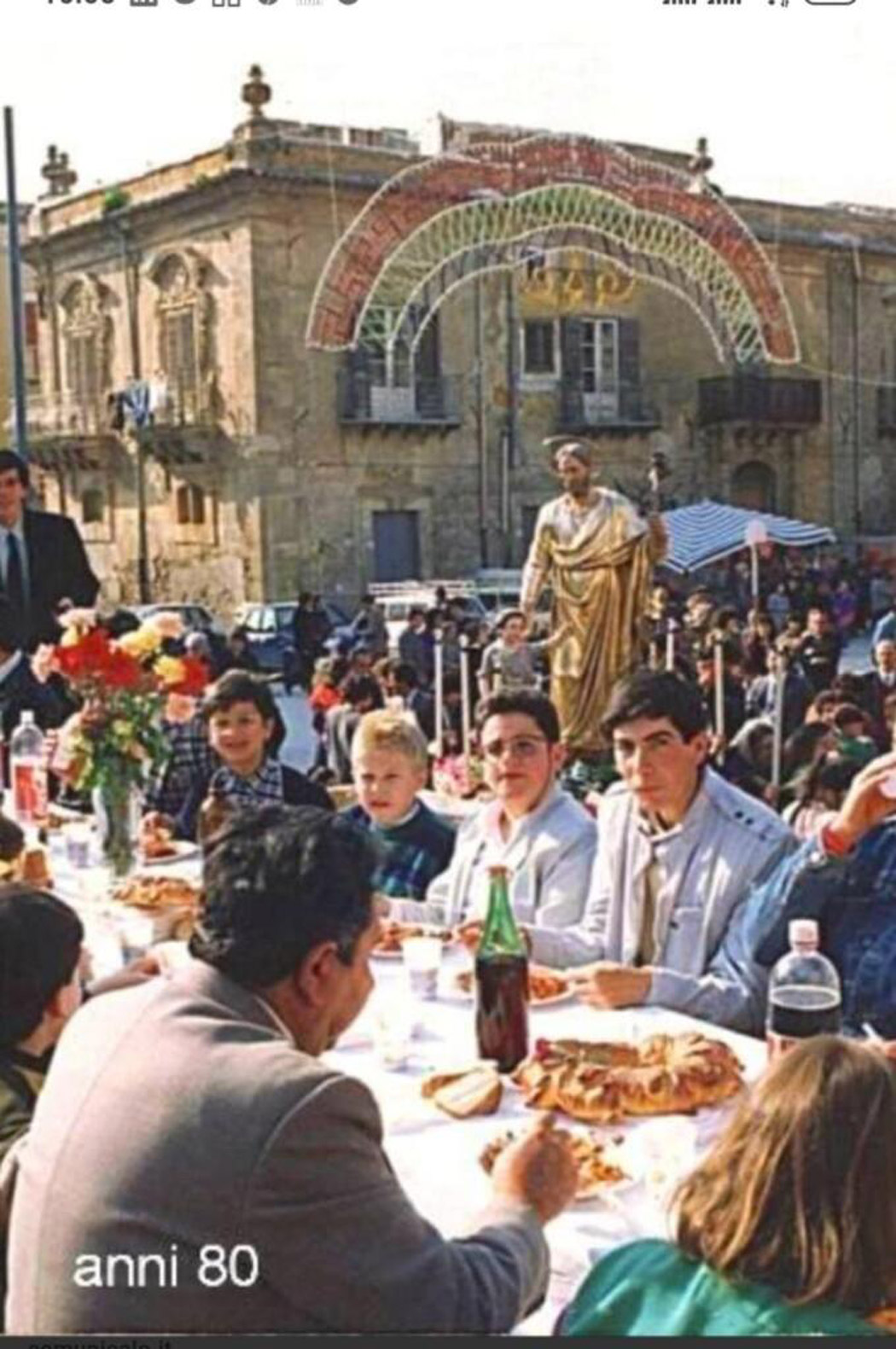
In Cattolica Eraclea every 19th March the patron saint San Giuseppe (St Joseph) is celebrated with religious ceremonies but also with a particular rite in the kitchen.

We are in Sicily, an island with such an ancient history that we can define Cattolica Eraclea as a town that is modern. Some architects would call us a 'foundation town', in fact we know exactly the precise moment in which they were born.

It was 1612 when King Philip of Spain, known as the Pious, gave permission to build this village a little inland from the original nucleus of Eraclea Minoa on the sea near the beautiful Agrigento.

Our name is a tribute to the city of Hercules on the sea and to the king of Spain.

For Sicily we are a young town but our history has rites and traditions of centuries, such as that of the feast of the patron saint San Giuseppe.

From the first light of dawn you can feel that ferment that heralds a special day, nineteen firecrackers wake up the inhabitants of Cattolica Eraclea.

The services in the church begin at eight, with the local band going to pick up the people who have to bring votive offerings for the Saint and who have to attend mass.

These people parade in procession with large candles called 'ntorci', adorned with red sulla flowers and banknotes, as an ex voto for the graces received. This ritual is repeated three times throughout the morning, as many as there will be masses celebrated in honour of the Saint.

Immediately after lunch, three figures who interpret the Madonna, St. Joseph and the Child Jesus, with a donkey, go around the historic centre and go knocking at some houses. They ask for asylum, but regularly are refused and expelled as happens in the history of the Bible.

Finally the procession arrives in Piazza Roma where, on a large stage, the table is set up on which the traditional lunch, 'la mangiata di li Santi', of the Holy Family, will be consumed, in which St. Joseph, Mary, Jesus, and thirteen 'saints', are played by locals.

The dishes are varied and abundant in the great Sicilian hospitality tradition.

Among the courses you must not miss omelettes of all kinds with seasonal vegetables, broad beans, fennel, artichokes, wild asparagus ... one fennel per person, one purciddrato each (the typical St. Joseph's bread) and an orange.

But there is no shortage of baked pasta and a second course of meat, usually breaded, with lettuce salad as a side dish.

All these dishes are offered for devotion by those who have made a pledge to the Saint.

For the recurrence of the feast and for devotion it is a local tradition to prepare "li Purciddati" (buccellati), a special bread in the shape of a circular garland with an egg white glaze and garnished with sesame seeds.

In the afternoon the statue of the Saint is carried in procession through the streets of the town and the celebrations end in the evening with fireworks.

A succession of emotions and a tradition that is renewed every year.


powered by social2s
Albano Laziale remembers the emperor Septimius Severus on 4 February

Every 4th February in Albano Laziale we celebrate the great emperor Septimius Severus, born in 193 and who died on this day in 211 AD at Eburacum (now York) in Britain, to whom we owe our own history.

Few would know how to connect the name of this important Roman emperor with the city of Albano Laziale, yet our town exists in our current urban (and perhaps social) form thanks to him.


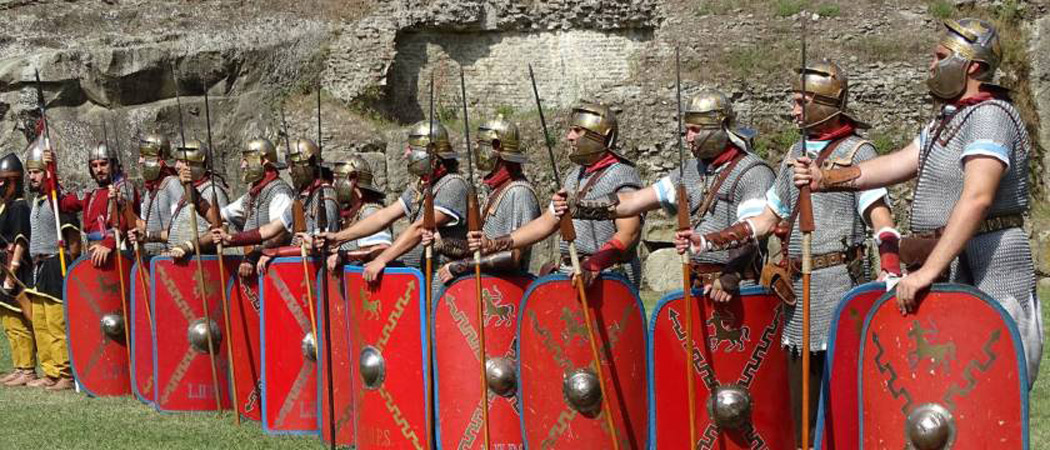
In fact, in 202 Septimius Severus settled the Legio II Parthica, his personal legionary bodyguard, in Albanum territory.

It was a unique case in Roman history of a legion based near Rome and facing the Via Appia. The strategically elevated position on the crater of Monte Albano allowed the view of the whole Agro Romano, from the Tiber to Anzio and the control of this access to the city of Rome.

The Emperor had a large camp built for his legionaries, of which today we can recognize and still see important remains: such as the imposing Porta Pretoria, the huge Cisterns and sections of walls and towers.

But connected to this camp he also built a grandiose Amphitheatre, very well maintained and that few people know is the largest in Lazio after the Colosseum where open-air shows are still performed and magnificent historical re-enactments are celebrated.

In nearby Ariccia, the presence of the legion is evidenced by the remains of the thermal buildings on the Via Appia Antica, by the necropolis inside the Chigi Park, which retains its characteristic cupae, and by the tombs to be rediscovered in the area of ​​the Spolverini Hospital. .

Thanks to the legion's encampment, a village first arose and then a hamlet, then this became a town hall and, during the Middle Ages, the Renaissance and the Baroque, the city grew in importance up to the present day.

The history of the legion allocated by Septimius Severus is so important that Albano Laziale even dedicated a special well kept and very interesting museum to it. A recent photographic exhibition was held by the local historical re-enactment group with collateral events, in the largest Civic Museum of Albano Laziale.

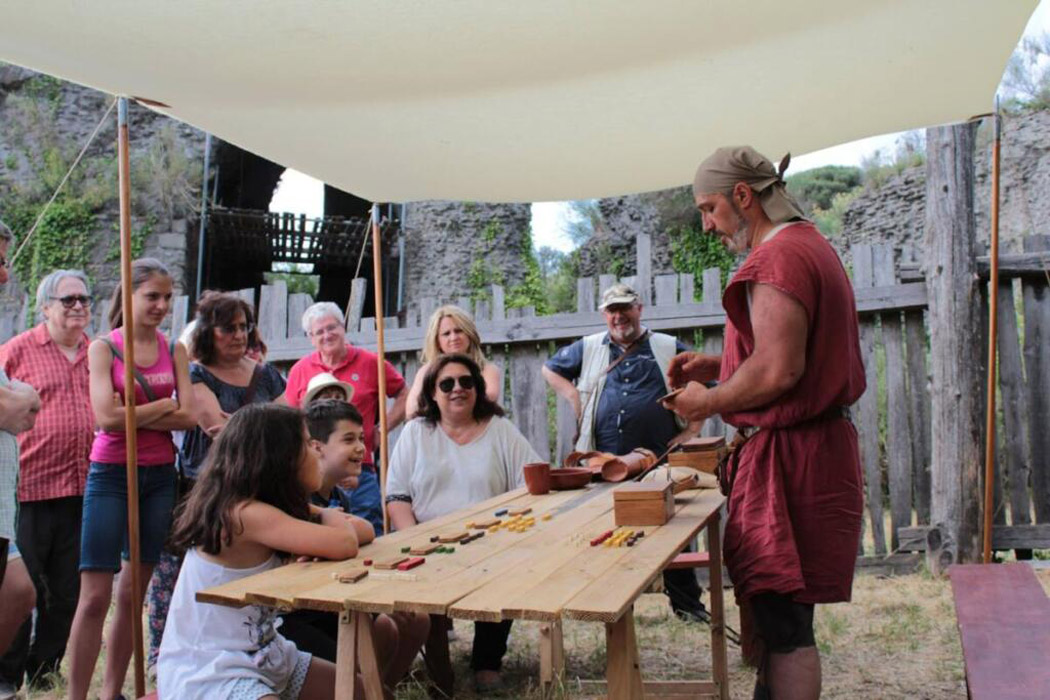
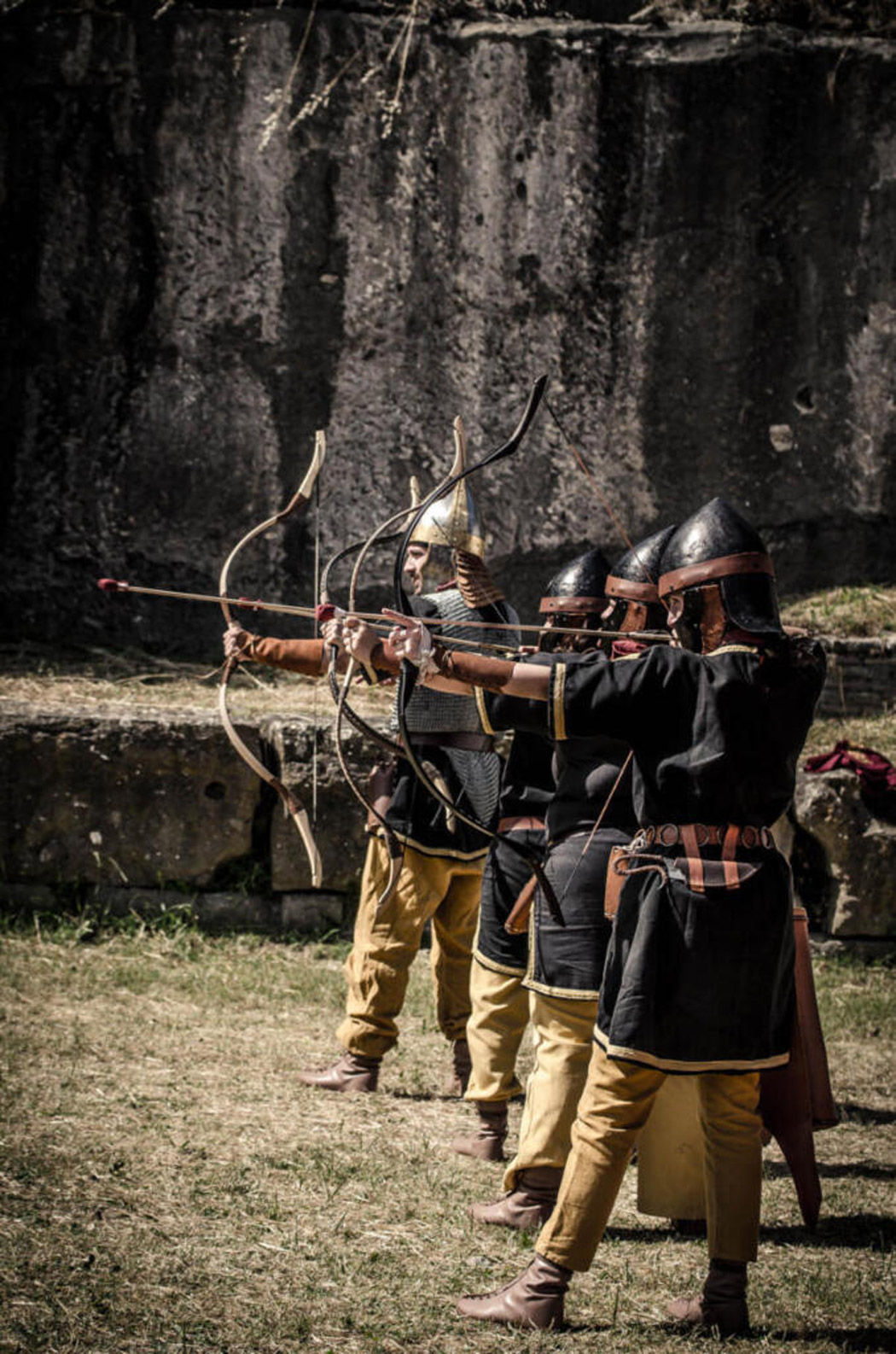
With the Legio Secunda Parthica Severiana we recall the epic of Septimius Severus that is well-known and appreciated not only by the public but also by institutions, museums and schools. We do philological research in the costumes, we prepare teaching with the exhibition tables and we do spectaculars of the figures and simulated fights, always with orders given strictly in Latin.


The group is invited to the most important events of Roman historical re-enactment and participates as a protagonist in events worthy of protection of the Lazio Region, such as the splendid "Atmospheres of the ancient Roman world" in Albano Laziale (June) and the "Feriae Latinae" which include the ascent of Monte Cavo along the Via Sacra and the celebrations in honour of Jupiter Laziale (May)following the description given by Cicero.

The group worthily represents the ancient history of this territory.

Anyone wishing to get in touch or want to be part of it, as a legionary, archer, dancer or ancient craftsman, can call Roberto Alessandrini (328 0993 319) or send an email to This email address is being protected from spambots. You need JavaScript enabled to view it..


In fact, in 202 Septimius Severus settled the Legio II Parthica, his personal legionary bodyguard, in Albanum territory.

It was a unique case in Roman history of a legion based near Rome and facing the Via Appia. The strategically elevated position on the crater of Monte Albano allowed the view of the whole Agro Romano, from the Tiber to Anzio and the control of this access to the city of Rome.


The Emperor had a large camp built for his legionaries, of which today we can recognize and still see important remains: such as the imposing Porta Pretoria, the huge Cisterns and sections of walls and towers.

But connected to this camp he also built a grandiose Amphitheatre, very well maintained and that few people know is the largest in Lazio after the Colosseum where open-air shows are still performed and magnificent historical re-enactments are celebrated.


powered by social2s

Subscribe to Newsletter

Discover a territory through the emotions of the people that have lived it.