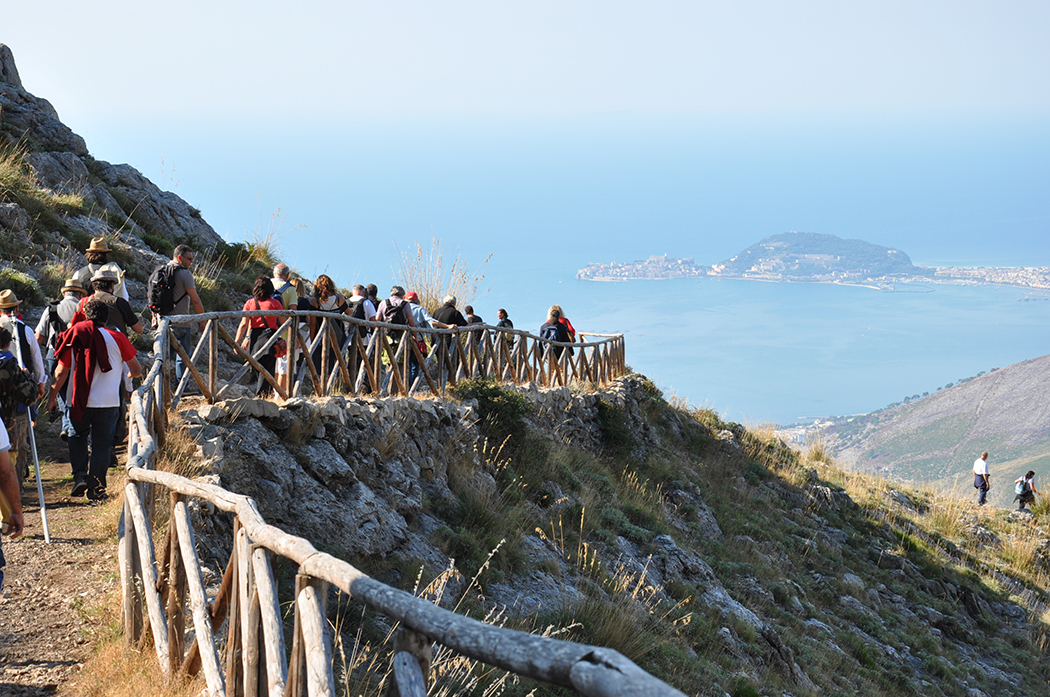
There is an organ that all organ players want to play and it is located in Rocca Massima, a small village in the Lepini Mountains founded in 1202 by decree of Pope Innocent III, with a view overlooking both the Tyrrhenian Sea and the Valley of the Latini.
But how did this organ become the most famous in the world?
It all started about twenty years ago when a group of friends who were passionate about organ music began to reflect on how to promote their beloved village internationally and decided that it was time to equip the church of San Michele Arcangelo with an organ. But not just any organ ... it must be able to become the most famous organ in the world thanks to an International Organ Show.
We meet Claudio Bonizzi of the company Inzoli-Bonizzi di Crema, active since 1867, and a a certain magic is born because the group of friends can realize a dream of a lifetime: commissioning a new organ giving complete freedom of expression to the artisans who will create it.
First we must remember that each organ is significantly different from others. In part, because the organ is not a portable instrument and for which its acoustic value will always be given by the combination between the instrument and the environment in which it is placed. But above all, every organ has different pipes and registers, as well as keyboards, pedals and bellows.
Generally the artists, the masters of the chapel, commission an organ and build it according to their preferences or their style. More rarely happens the case of an artisan enterprise left free to express itself.
In November 1998 and Claudio Bonizzi arrived in the Pontina plain not able to see Rocca Massima in the mountains because the village was surrounded by clouds. It seemed like a scene from 'where eagles dare'.
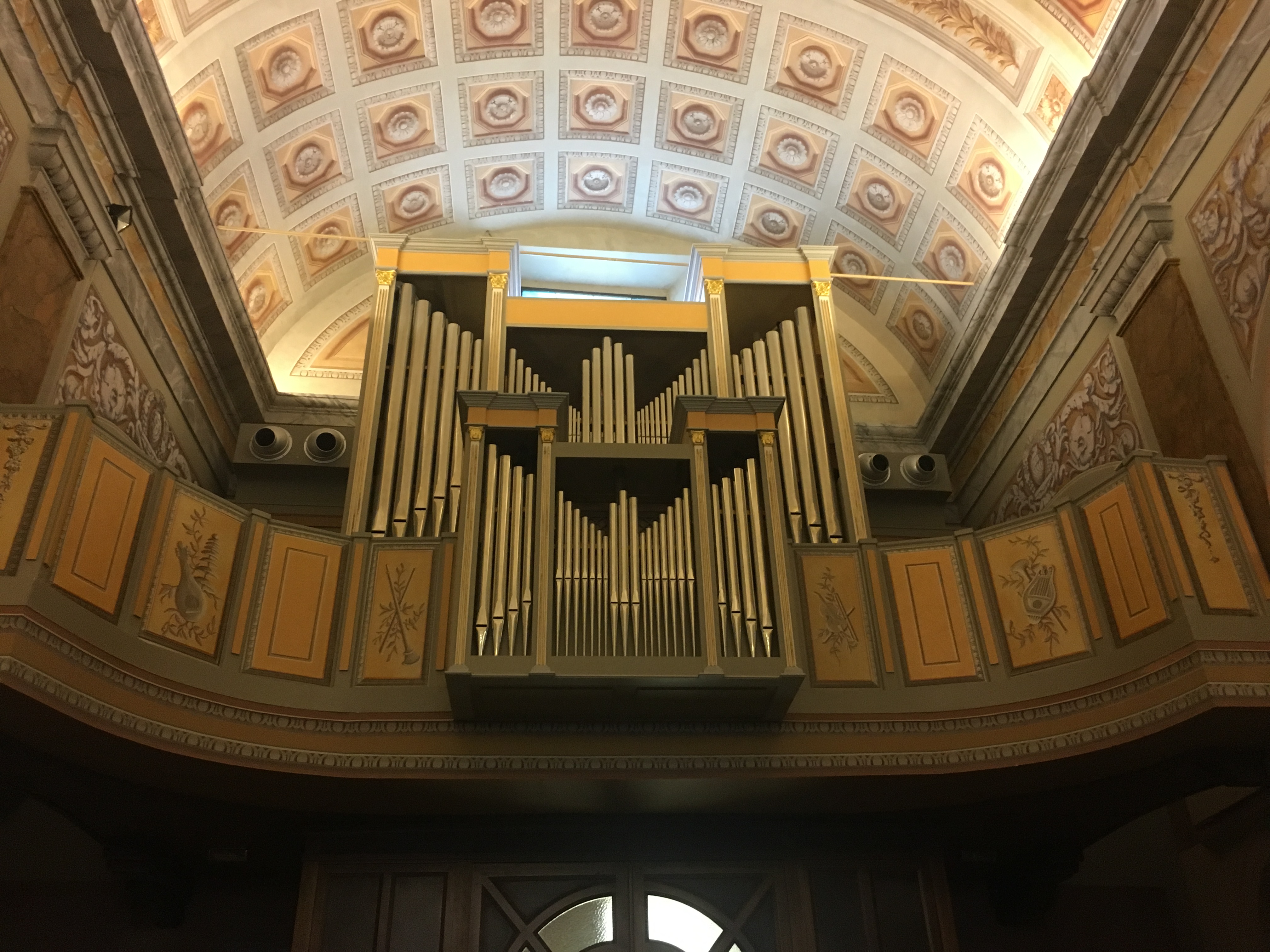
When he arrived in the village he found the Mediterranean warmth to welcome him and a small procession that escorted him to the church where he had to study the shape and volume of the inside of the church, take measurements and check the acoustics. There was a small choir space and it was decided to place the organ above the entrance door, needing to create a new, more robust and appropriate choir for the new organ.
"The work started early and lasts for about 20 months, during which we brought the individual pieces of the organ to the church, which is on the highest point of the town, with a small Ape, the van with three wheels, as it is not reachable by other vehicles. Each trip of the Apetta was dedicated to a different reed. Meanwhile, every day the ladies prepared local sweets to make our work more enjoyable ".
The Organ of Rocca Massima
The Rocca Massima organ has 1063 pipes and is totally mechanical transmission (equal temperament - with a pitch at 440 Hz) with two keyboards of 58 keys (C1-A3).
The keys are diatonic and covered in boxwood while the dark keys are covered in ebony. The large organ is connected to the lower keyboard and the Positive, located behind the musician, is guided by the upper keyboard. The pedals are flat with 30 pedals, C1 - F3, while the registers are controlled by knobs placed on the sides of the keyboard.
The organ was inaugurated with a concert by Maestro James Edward Goettsche, titular organist of St. Peter's Basilica in the Vatican in Rome. Goettsche had participated in the construction of the organ and some registers had been added at his request.
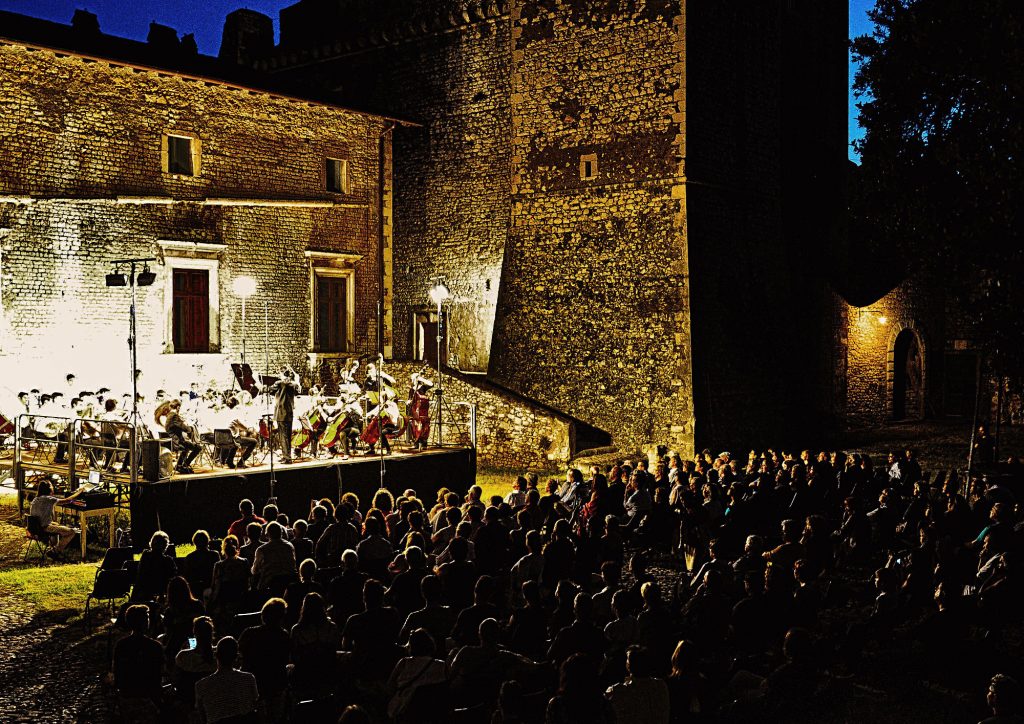
Thanks to the citizens of Rocca Massima promoting the enterprise, and also to the organ teacher, the fame of the Rocca Massima organ has soon gone around the world and the greatest players ask to play it. The International Organ Show every year has as its masters the organ masters of the largest churches in Europe and the world.
Who is Inzoli-Bonizzi ', the construction company?
The Inzoli company was founded in 1867 in Crema, a city of the 'low country' (the Po Valley) near Cremona, the famous city of Stradivari. So with Crema famous for organs and Cremona for violins, this area attracts musicians, artisans, violin makers and artists and has become one of the European centres of music.
The Cavalier Pacifico Bonizzi started working for them and in 1956 he took over the company which is now called 'Inzoli-Bonizzi' and is successfully led by 3 of his 4 children. At the moment in Italy there are about thirty companies registered in the AIONET - Italian Organ Association which has as members companies that build or restore organs.
The secret of the success of these three brothers is certainly love, you can read it in the eyes of Claudio while telling their story but also from some of his words:
"We have no secrets, we have to promote organ culture and for this we have founded a school where everyone can come to learn the trade and collaborate with the music schools of Cremona. While all the other musical instruments can be moved and brought before the public, in the case of the organ it is the public that must come to the instrument that is often found only in churches. For this reason it is necessary to promote more and more the musical culture related to the organ".
"The original German instruments worked with greater air pressure and therefore had a louder sound that would seem strange to us today. For a while, then, organs had been influenced by the Italian Opera and were filled with accessories such as bells, trombones and other things necessary for more enjoyable music".
We must then think that the organ music of the past was different from that of today, the instrument that Bach played was very different from those of today and therefore the music was also different.
It was Pope Pius X who supported the Cecilian Movement, named after Santa Cecilia, patron of music, for a return to sacred liturgical music in churches with a more sober guise. Many registers were removed from the organs and many of the existing organs were changed such that we no longer have the 'lightweight' version.
In conclusion: if the famous Inzoli-Bonizzi company talks about the organ of Rocca Massima as its masterpiece, if the greatest organists want to take part in the International Organ Festival and if the village offers such a tasty enogastronomic variety that includes the famous DOC wines of the nearby Cori.
What better opportunity is there to spend a summer weekend in Rocca Massima, the highest town of the Province of Latina at 750 m above sea level, and experience in person the emotions created by the most famous organ in the world?





Follow us