


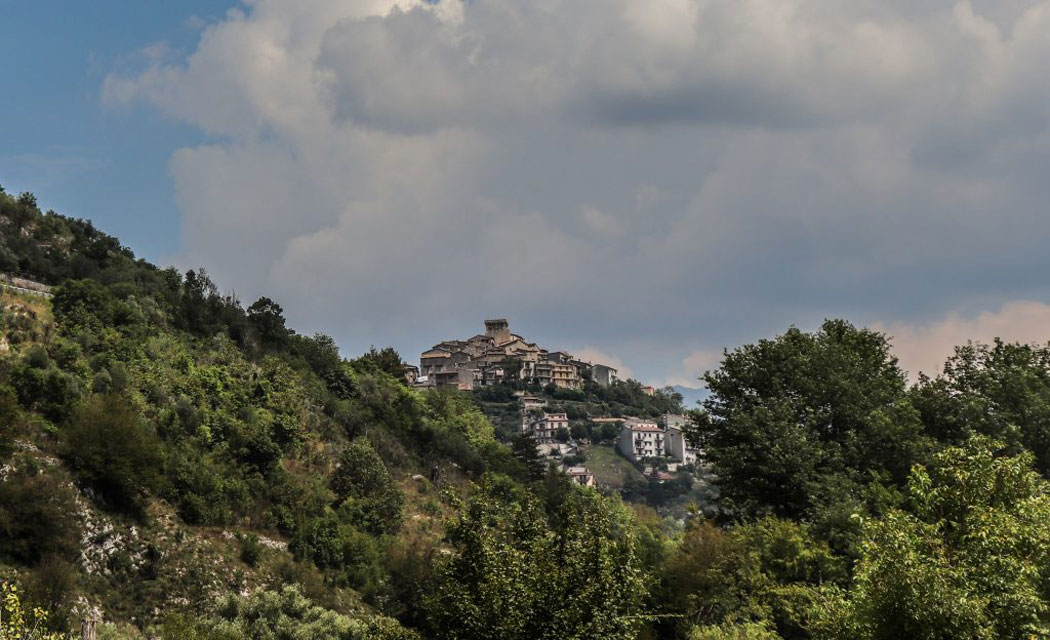
The medieval center of Trevi nel Lazio is located on a hill in the center of a large valley crowned by the Simbruini Mountains and the Ernici Mountains and is part of the Simbruini Mountains Park, where the Marsican bear also walks.
The Aniene river flows through the valley with its spectacular small waterfall. The river is blocked by a dam which forms an artificial lake for the production of energy and has created a naturalistic corner much appreciated by those who love spending a day in the countryside.
Geologically the area is very interesting and in Trevi nel Lazio there is the Risorgenza della Foce, one of the largest caves with an underground river of pure water.
Trevi derives its name from the term treba (crossroads) due to its position on three communication routes that crossed the Apennines Mountains and were mainly used for transhumance.
The Trevi area has been populated since the period of the Equi, who were then defeated by the Romans who gave it the name Treba Augusta and promoted it as an important communication hub in the wool trade.
The very famous Trevi Arch in the lower part of the valley remains from this period.
The fall of the Roman Empire and the barbarian invasions pushed the population to find refuge in fortresses located on a hill, the first nucleus of the current medieval village. In Trevi in Lazio, the young Saint Peter the hermit spent the last twenty years of his life and died there in 1052. Today he is the patron saint, and his hermitage is located under the oratory dedicated to him in the center of the ancient village.
The first lords of the fiefdom were the Counts of Segni, but soon Trevi nel Lazio was conquered by the powerful Caetani family of Pope Boniface VIII who named the castle. The family was not very interested in the mountain village and governed with contempt for the locals, so much so that they were driven out in 1471.
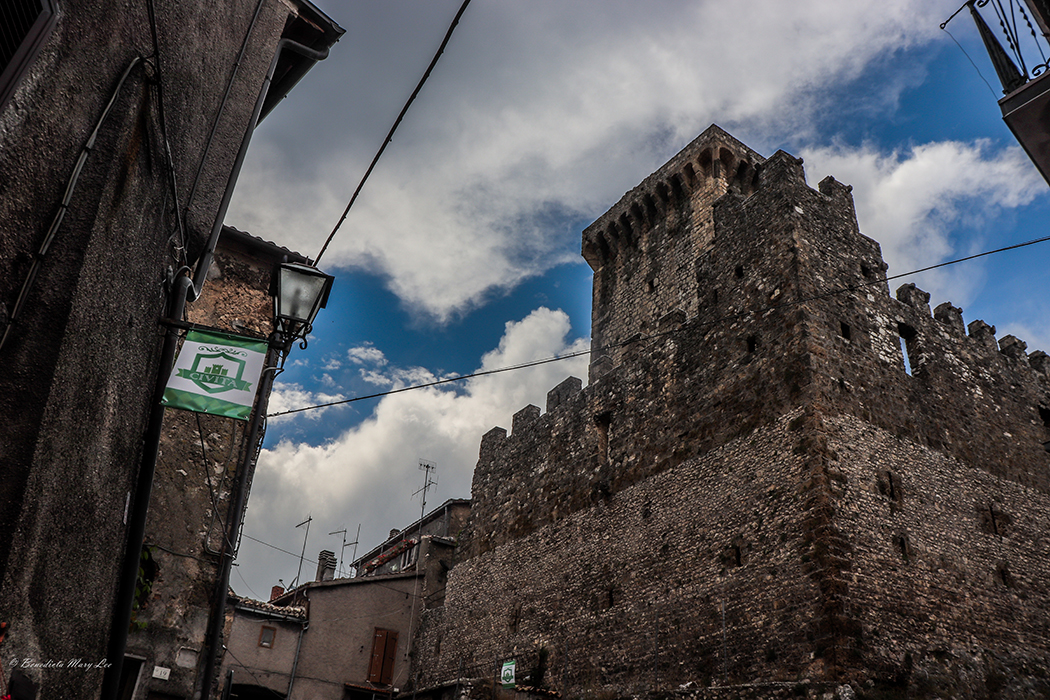
The castle of Trevi nel Lazio with its mighty tower still dominates the image of the village today and makes it immediately recognisable.
In 1471, Trevi nel Lazio came under the direct control of the monks of the nearby Abbey of Subiaco who aimed to expand up to the Arcinazzo plateaus. The monks remained there until 1638 and immediately afterwards the village and the fiefdom came under the direct control of the Vatican.
Walking through the streets of the center you recognize the ancient walls with the two Neapolitan and Roman gates, located in the direction of the two cities, and you come across poems written on ceramics set in the houses and modern works of art that give a touch of magic.




Follow us