‘Quizling’ the Quiz Educational tool

We want the best for our children and we need to find a way to educate them without annoying them, trying new forms of ‘edutainment’ or ‘infotainment’ using quizzes such as ‘Quizling’ as a quiz educational tool.

For instance, a core part of the educational process for children virtually worldwide comprises tours, visits to museums, sites of interest (historical places, houses of government, etc), sports arenas, gardens, zoos and technological organisations. Kids should store thousands of ‘bits’ of information from these visits and this is easier if the learning process is a game and a challenging activity. Each of these institutions welcomes many thousands of children each year.

For instance, in Australia, there are nearly 4 million school students and in England there are well over 8 million each doing about 4 excursions per year. The larger institutions such as national museums, houses of government and manufacturers usually offer a structured tour, but not often is the tour linked to the curriculum of the students, and except in rare cases there is no feedback to determine whether the students have gained knowledge during the visit. It is proven that interactive exhibitions and laboratories within museum and galleries attract a lot of attention from the students, but it is not easy to set up laboratories and workshop for kids at all hours of the day.

So how can the high cost of including excursions and visits to these institutions be justified in the school budget? This question occurred to two Australian school teachers who came up with an answer that matches the lifestyle and expectations of today’s children. Their answer is Quizling, a revolutionary new quiz education tool, an education app that enables students to gain maximum benefit from visits and everyday education via an innovative quiz-based learning platform, by playing and sharing quizzes on mobile devices.

The app is free to download and users have immediate access to hundreds of quizzes, on loads of topics from quizzes aligned to the curriculum to fun sports quizzes. Engagement is boosted with friendly competition and social sharing – all in a safe environment for children. At the end of 2012, the Daily Mail reported that the global average of ten-year-olds who own a mobile device is approaching 50%, so this is the right space.

The market is obviously growing as schools are increasingly adopting BYOD (Bring Your Own Device) policies, with tablets favoured in primary schools in many countries. This sector requires social learning; student created content; game based learning and learning analytics. Within schools, teachers face the problem of complex, boring and unsecure apps.

The Quizling quiz education tool has been tested and trialled with organisations such as the Australian Mint that has put together enthralling quizzes about the history of coinage and characteristics of Australian coins and notes. This approach is, for each child, a 3D social medium – the student has direct involvement with the product not just tactile and visual reaction with the device.

The Mint engages with a wide variety of audiences, ranging from foreign governments and central banks (for whom it produces currency), to numismatists (coin collectors) and the many thousands of people that visit its site in Canberra, including 70,000 school aged students. The visitors have usually less than an hour for the visit, so communication density is high and, normally, data retention low.

The Quizling app is a convenient and contemporary way of adding value to that tourism product, and enables the Mint to put coins and coin-related knowledge on to people’s phones for them to take away, “and hopefully create that enduring relationship and become an advocate for people back in their own community to visit the Mint.”

The Mint see the advantage in teachers using the app to condense the learning and content deployed during the visit, “we would envisage that the teacher can debrief the visit by encouraging students to jump on their device, and go through these fun quizzes as a learning opportunity”. Doing quizzes is a source of enjoyment as the many board and web-based games demonstrate, so there is little resistance even from the most recalcitrant student.

So what are the unique features of this innovative quiz based educational tool? The competitive advantage is that the Quizling multi device quiz education tool provides:

1. Channels for institutions to send out branded quizzes to students, and parents and teachers;

2. Access to quizzes from respected sources for students, parents and teachers;

3. Feedback to parents and teachers concerning the learning value of any particular experience;

4. Increased market appeal for institutions, as students become sales advocates;

5. Useful data and analytics to cultural institutions, parents and teachers;

6. Fun, creative engagement for students – it is not limited to the educational curriculum.

The market place (how Quizling makes its money) is fourfold:

Students –the children who can download the quizzes for free and whose answers are recorded and stored

Parents interested in the performance of their children who can purchase for a small subscription access to the results and solutions

Teachers and schools whose interests are the performance of their bodies of students i.e. the results and analytics, and hence improving the quality of the educational programmes

The institutions who become Innovation Partners and use the Quizling app to expand their addressable market, increase the market appeal of their products and fulfil their mission for the benefit of their funding bodies.

The app is targeted at primary to middle secondary students along with their parents, teachers and schools, forming a direct link between students and those interesting in engaging with them in an educational format. Of course it can be expanded for any age group, even professionals. Any organisation can enrol and present quizzes for its own target audience. An Innovation Partner Program developed specifically for organisations with an educational agenda, such as museums and galleries, is set to further broaden the quality and outreach of the content.

Then the world will be Quizling’s oyster. While the existing and planned quiz programmes are applicable to any English speakers and final product testing is being carried out in Australia, Quizling is interested in expanding its programme by linking with curricula in other countries and by becoming multilingual. Are you interested in being part of this success story whether as a franchisee, institution or educational authority? Contact Dion Oxley at Quizling on This email address is being protected from spambots. You need JavaScript enabled to view it. and test it yourself, go Quizling!

powered by social2s
best barber of the world Isola del Liri
Museum of the world's most interesting barber in Isola del Liri

Right in the center of Isola del Liri, in front of the imposing waterfall, in a late Neapolitan Baroque tenement you can find something unexpected: the world's most interesting barber!

I do not know if Marco Sardellitti is the best barber in the world or not, but he certainly is the most original and the most interesting barber. At first glance it is not clear whether his is a barber shop or vintage décor museum.

Scrutinizing the windows you see restored and arranged antique barber chairs, then strange sofas for waiting such as one converted part of an old Fiat Cinquecento and another, a bin, then you will discover the ancient red and blue insignia of the barbers shop.

Looking past the showcase, you can see a very elegant area, with a wall decorated with beige and brown streaks where you can also see modern equipment and it is understood that this is really a barber. To have a haircut or shave in that place must be truly a unique experience (but I am a woman).

I cannot resist pursuing this enigmatic scene, and try to figure out how to find Marco. It is Sunday in winter and the shops are closed, but I can find him through Facebook and when I ask about this barber I get a lot of information and finally I can talk to him personally. I find a sunny person who is full of life:

I have collected almost all the equipments of the old Isola del Liri barbers, restored and exhibited them. In a showcase are also all the ancient tools used by barbers, a section of the shop is a museum dedicated to the care of man.

Isola del Liri is a very special town and is the only town in Europe with a waterfall of a river in the centre of the city. Above the waterfall stretches the impressive castle that since 1100 has influenced the history of this whole valley and is now a national monument.

I started to be a barber for a bet my father had over 15 years ago. He was in a hurry and went to get his hair cut but had found a long line. The owner told him that if he was able to find him a trainee he could have his hair done free for a year. And there I started the profession! 

Being a barber is an almost counter-cultural choice, it seems a profession of the past but Marco has made it into a continuous experience. Not only is his shop a museum and an art workshop where you live a unique experience while having your hair done, but you can have another special experience following Marco in his work of 'street barber'.

The world's most interesting barber has equipped a mobile station in an elegant Apetta van with which he tours and offers free haircuts for charity. Marco works with many charities; he went to cut hair for earthquake victims of Norcia, the homeless, the community of Sant'Egidio and the pediatric oncology department of the Hospital of Infant Jesus. With the proceeds he has already funded equipment for the hospital of Sora and the next target is a device for the Infant Jesus Hospital of Rome.

There are some positive people who are able to live life by taking only the positive part and to overcome obstacles without getting caught up. It reminds me of the poem by Hikmet - 'To life' when in the first verse he tells us how to 'take life seriously' ...

Marco’s positivity is contagious and, perhaps, it is also thanks to him that this part of Isola del Liri has a special charm, and the shops and the locals have a comfortable and friendly approach. I must go back at Isola del Liri during the Blues Festival in July because with the sun, the music and the sound of the waterfall this town must be magic.

And maybe I'll ask Marco to brush my hair and massage my head. I'm not a man, but I just want to sit down in one of those chairs in front of the strange mirror housed in an old trunk.

How much I enjoyed writing this article!

powered by social2s
Horse Museum Collection paintings
Family Memories in A Collection of Toy Horses

The horse has occupied a unique role in mankind since the first human bestrode one of these magnificent beasts.

It is remembered in the myths of far distant past such as Pegasus, the flying horse, the magnificent Centaur which shows man’s desire to share the beauty and power of the horse, or the magical Unicorn, a joyful toy horse gift to many a young girl.

Claudia Bettiol fell in love with horses as a young woman during recovery from illness and has been captivated by the superb elegance, power, speed and grace of the horse ever since. When her family crumbled following tragedy, she turned to the horse to give her daughter Maria a source of strength and purpose, and that is where the story really starts.

From an initial small collection of artistic representations of the horse, a collection started of model and toy horses, a collection that is now possibly too large to be shown in one exhibition. Yet, it must be shown, to share the joy with others, the very young, children, adolescents, parents and grandparents.

The Museum of Toys in Zagarolo, housed in the wonderful Palazzo Rospigliosi on the top of the spur in Zagarolo, is an ideal place to share toy horses. It has selected a range of toys and works of art, models and games that each involve the horse.

The growth of the collection refected Maria’s growth from a young girl to now as a young adult. From baby toys, rocking horses and soft toys to Barbies and My Little Pony. In parallel Claudia expanded her collection of classical horses from Greece, Etruria and the Roman era. As Maria’s interests in riding blossomed, the collection expanded to encompass Eventing and Ranches.

Meanwhile the geographical spread included China with the glazed ceramic horses and central Asia. Collecting moved in parallel to toy horses of childhood to include a library of horse literature balanced by the horse in art. Some of Claudia’s passions of the artistic world are reflected in copies of works by Van Gogh, Degas, Dali and others.

In more recent years the eclectic nature has included one of the finest works of Turkish silk carpet art, an exquisite small piece of amazing fineness that took the hand weaver some 18 months to create.  Other miniatures such as Iranian enamelling also attract the careful eye.

Of course, one stand of the exhibitioon represents the horse in Italian art and artisanship, but it barely touches on the wide range of art forms and materials applied to the horse in all regions of Italy, including wood, alabaster, marble, bronze, brass, silver, gold, ceramic, Murano and other sources of glass.

In summary, a visit to see the toy horses will surely bring a smile to the face of all ages, and for many the exhibition of toy horses will be just one thrilling memory of the joys of childhood and of collecting.

powered by social2s
Larissa Museum Thessaly
Two Million Years Living in Thessaly

The great cities of the ancient world such as Rome and Athens are but babes in relation to the cities and towns of Thessaly in central Greece.

The area of Larissa, the capital of Thessaly, has been continuously occupied since the Neolithic Age, and areas to the east have discoveries dating back to the Paleolithic period. Thessaly today is the province of central Greece and its borders vary little from those of the ancient times, while some towns have disappeared and others have been formed, yet the geology and geography remain.

The Thessaly plain is bordered on the south by mountains and lakes of Karditsa. To the west stand the giant monoliths of Meteora supporting the fabulous Byzantine monasteries. To the north soars Mount Olympus and its range. To the south east are the waters of the sea with Volos and the ancient Thebes, the founding towns for Jason’s adventures.

So the people of Larissa and Thessaly have much to remember and to be proud of as the source of civilisation in Greece. They have been people who took advantage of working the rich soils of the plains and worshipped their gods on the mountains.

Some 30 years ago a competition was held for the design of a museum to record the ‘passing of time’ in the Thessaly and particularly the Larissa area. The museum construction was completed ten years ago and the museum was completed in 2013.

It is a fresh museum though the pine trees in the park outside date from up to 40 years ago, so fresh that there is not yet a museum shop, photographic book or catalogue. But this Diachronic Museum of Larissa tells the story of the region as the different tribes, peoples and conquerors came and went and left their imprint.

The museum is articulated into 11 sections of archaeological findings injecting geographical and cultural history into the time line. The spaces, beginning with the Paleolithic, leaps to the Neolithic and slides into the bronze age before meeting the grand classical and Hellenistic periods. The arrival of the Romans is followed by the advent of Christianity and then the relatively long Byzantine period.

Each space opens eyes as the culture of the period and region are described in an easy to comprehend style that creates interest and the visitor must be impressed by how the human race developed being cultivated by the environment of this region.

Time is compressed as we delve into the past with a seemingly logarithmic progression. One million years of Paleolithic, ten thousand of Neolithic, one thousand, one hundred years, we record the changes of the peoples and the development of technology and lifestyle as we race towards the twenty first century AD.

One of the most striking exhibits is the range of fine ceramic bowls from the Neolithic Age, up to 8,000 years ago. These decorated bowls were fired in open ovens at about 850 degrees. The Thessaly area is renowned for its horses since antiquity and we are reminded that the magnificent stallion of Alexander the Great, Bucephalus, came from here.

We move forward to the period of Turkish control and are captured by the town of Ampelokia that for less than one hundred years after the mid 1700’s was the first cooperative in the world, and a grand success.

Yes, many others were formed more recently, and Ampelokia failed due to several mainly external forces, but its existence brought great wealth to the town and prosperity for all the population showing that a non-capitalist model can create wealth. The catalyst for this was a naturally occurring scarlet red dye that was not affected by the sun. It is erythrodamon, known as rizari.

Today, driving though the plains of Thessaly in October, you are struck by the many fields of cotton being harvested and every road has a white border of cotton blown from the wagons used to cart the harvest. The wealth of Ampeloki came from dyeing this cotton with their rizari dye and exporting the spun dyed cotton through their agents in major European cities.

The market expanded more rapidly than the supply and the producers agreed to form a cooperative to more effectively address the market place. Unfortunately aniline dyes replaced rizari in the 1800’s but history may yet tell us that rizari was the better product.

Not just for the dye is the Diachronic Museum of Larissa a truly absorbing experience, nearly every exhibit has a story that captivates. While holidaying in Thessaly, don’t rush past Larissa to Meteora, Olympus or Philipp’s tomb, take a day or more in this town and enjoy its truly expansive history and its museums, including the statue and small museum remembering that Hippocrates died in Larissa.

While enjoying a coffee, look up Antonis Karakonstantakis on Fb, meet him and start your collection of fabulous stone mosaics from the slopes of Mount Olympus.

powered by social2s
Priverno
Museum of Priverno Remembering Privernum

The main road from the motorway at Frosinone to the Tyrrhenian seaside resort of Terracina is a continuous stream of cars and trucks on a summers day, and nearly all the travellers give not a second thought to the towns of the Lepini Mountains spread and dotted over the low hills and higher mountains.

But on this very warm summer’s day just before Ferragosto, our objective is not the seaside, but the old town of Priverno, with its medieval old centre and its archaeological history of the Volsci and the Romans.

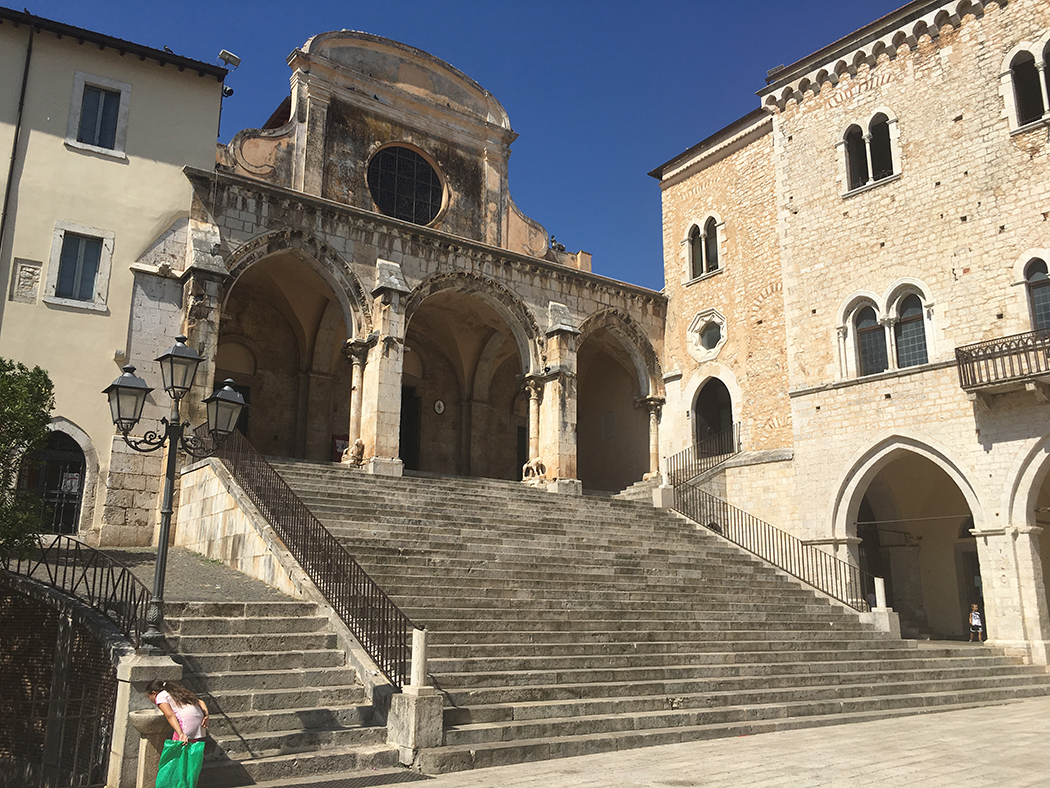
There are three stone benches on the left hand side as you drive through the old town square (Giovanni XXIII), each bench at least partially protected from the late morning sun by old trees standing at the edge of the road. Seek a parking place. A coffee in the bar is followed by the chance to relax on one of the benches facing the cathedral and, slightly to the right, the city hall. Behind us are the local police station and the Archaeological Museum.

Mothers and children and businessmen walk past each giving a friendly welcome to the officer of the local constabulary standing near the kerbside. He knows his job and eyes off the few cars parked irregularly in the square, but grants an ‘indulgence’ to the one with a disability pass.

We seek to know just a little more of this square that is dominated architecturally by the cathedral and the Antonelli Palace (now the City Hall), so we move into the sun, cross the ‘corso’ and climb the 31 steps to the church.

The first impression is of walking into a dark room, as eyes adjust to the ambience, and of a welcome cool air in the calmness underneath the organ loft and choir. A slow circumnavigation of the church reveals an altar on the left of the nave, but a better lit chapel is at the end of the side aisle on the right, with bas relief statues of St Thomas Aquinas and St Sebastian. On the left hand side aisle is a statue of Madonna Assumption into Heaven.

There are many paintings, a little difficult to discern in the unlit environment, and a modern circular stained glass window is centred in the facade above the portal.

Two youngish teenage girls are seated on the floor in a side chapel, maybe just relishing the cool, and respecting the peace of the cathedral. We ‘light’ three candles and offer a silent prayer. Then, outside again we experience that the heat of the day seems to have expanded. Immediately a few metres to our left a stairway rises to the inner workings of the city hall.

We return to our ‘base camp’ and enter the Archaeological Museum of Priverno. It has three levels and derives all its display ‘wealth’ from the ‘diggings’ around Privernum. It is an excellent museum, without peer, that, in about 20 rooms covers the history, mythology and archaeology of the city from the time of the Volsci and their Queen Camilla to the end of the Roman empire. Every item in every themed room is declined and explained and relationships are presented.

There are unfortunately only a few benches where you can rest and absorb the ambience. It is obvious that this exhibition has been carefully planned in every detail. The director proudly declares the museum of Priverno to be a centre of, and for, women, though I notice but one room dealing exclusively with the feminine gender. Maybe the present is making up for millenia of failure to adequately recognise the power and roles of the second sex.

For the international traveller, there is only one challenge, all the detailed descriptions are elucidated only in Italian – so there is one project still available to further enhance the attractiveness of this museum and the old town of Priverno to the experiential tourist. Yet for the many thousands of Italians who tour past Priverno to the sea, there is a wonderful memorial to your Roman past standing in the Giovanni XXIII cathedral square in Priverno.

(This article is reproduced under licence from Energitismo Limited)
powered by social2s
MATERIA, museum of art and dyeing with sustainability

The MATERIA Museum, the Museum of Art and Dyeing, Renewable Energy and Environment was founded in Val di Bisenzio, Cantagallo (Tosco-Emiliano), to study and bring understanding of the environmental sensitivity of this vast territory with its spectacular natural heritage.

The Prato area has been famous since the Middle Ages for textile processing, the creation of any type of coloured fabric and for this you need creativity, energy and continuous innovation in the chemical dyes. Many textile companies, therefore, were born near one of the oldest forms of energy available: the hydraulic paddlewheels along canals, a clean, renewable energy.

Some several years ago sustainability has come back into the foreground in Prato and the textile industries have created an eco-textile district. This has led both companies, Gruppo Colle expert in dyes and Andritz Group, leader in turbine manufacturing, to give birth to this very original museum of art and dyeing, tracing two stories, seemingly distant but strongly interconnected: in textile and energy.

MATERIA is also the source of information on what the activities of the textile industries are today, more related to the chemicals, dyeing, and the developments which have resulted in it having increasingly less impact on the environment. The Prato and other Italian textile industries have invested heavily in this area and the companies must publicise the achievements to recover competitive advantage.

The museum of art and dyeing was installed in a mill of the late sixteenth century and you can see the old mill-stream with the dam and the water turbine, restored early last century, and the horizontal wheel with spoon blades, called a ‘ritrecine’. Looking ahead, to the present but starting from the past. There are centuries of work and engineering that they read concerning the industrial architecture highlighted with passion on your way through the MATERIA museum.

What many termed a visionary project is now a center to learn the history of textile production in Prato valley, the importance of the force of the water, as well as the environment and the sustainable and renewable energies. The project was designed by architect Giuseppe Guanci one of the best Italian 'industrial archaeologists'.

An original note: inside the museum of art and dyeing there is a "confessional", a red room with an armchair and video station where a visitor will be invited to declare his guilt in relation to the environment and to explain his intentions to rectify.

I am guided to the discovery of the office of Elisa Fabbri, head of the museum of art and dyeing, and we move from the visit to the turbine, and to the so-called "hell", a suggestive underground cavity for water control from 1450. Nearby there are turbines and other ancient gear that show well the evolution of hydraulic technology. MATERIA is energetically autonomous: the electricity comes from a photovoltaic plant and a hydroelectric turbine, while the heating is provided by the offtake from the neighboring dyeing plants.

Inside, meanwhile, one feels the clean air with panels showing the textile processes and the industry of Val di Bisenzio. Elisa tells me that just starting from the importance of colour, MATERIA will host art exhibitions highlighting the relationship that binds all that is beautiful: art, fashion and environment.

MATERIA is more a tool to shape environmental sensitivity than a traditional museum and it is a worthwhile experience for all tourists in search of something unique. From the traditions of the Middle Ages to the largest Italian district for today's fabrics, it sits in a picturesque setting where from here also starts our Third Industrial Revolution by Cetri.

powered by social2s
Caresse, charm and resourcefulness in the history of the bra

The history of bra is incredibly connected with Rocca Sinibalda, near Rome.

Rocca Sinibalda, a place of sumptuous and pure shapes, stands towering to the sky as an indefatigable noblewoman. And as a woman of the past she hides her secrets. In fact, only by watching it from above, can you discover the form of an eagle. But among much else, digging into its history you will discover that Rocca Sinibalda is related to the genesis of the brassiere – the bra.

Among those rooms full of events of great history, full of beauty, there stayed for many a year the rich American woman who designed the most intriguing and seductive female undergarment, to be precise: the bra.

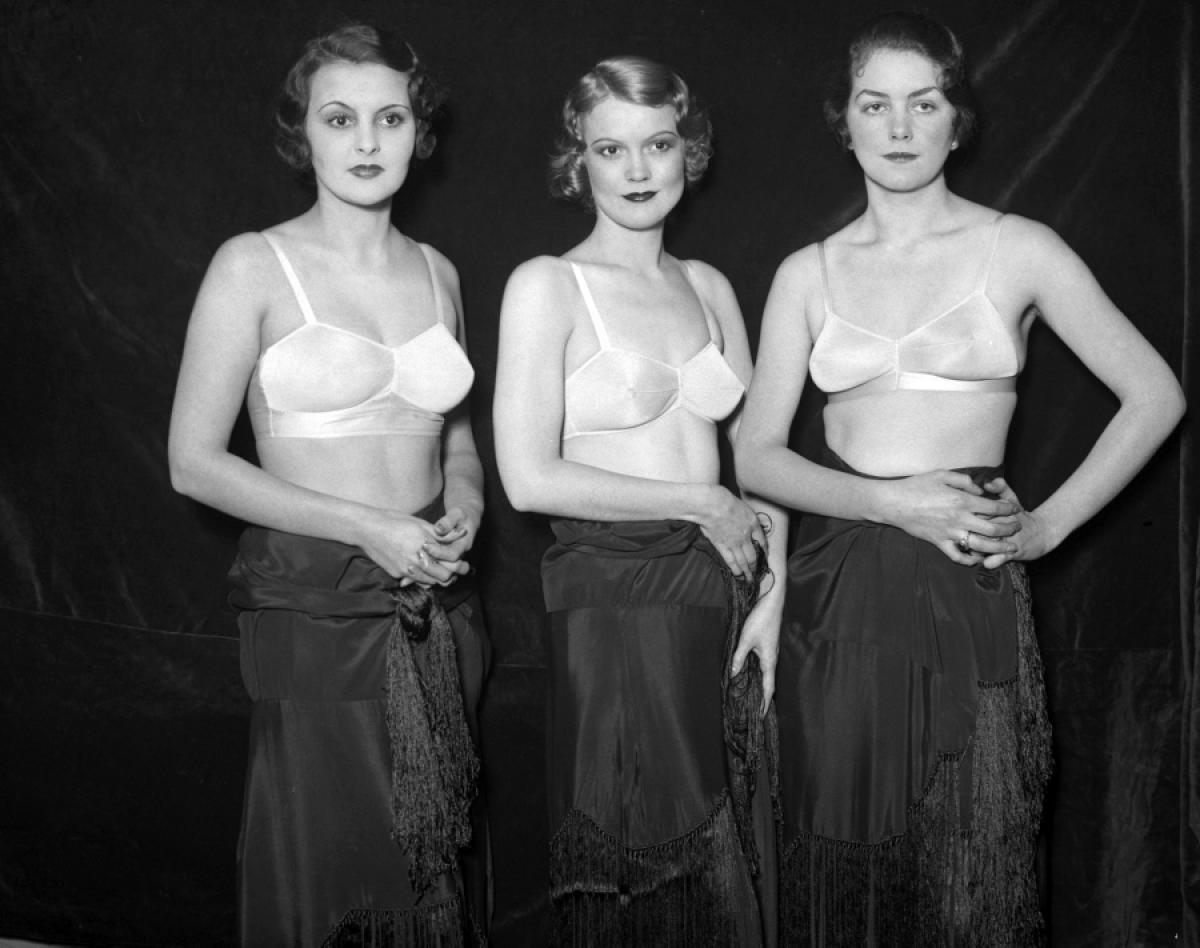
Caresse Cosby, a woman of charm and resourcefulness. Dressed always in vanguard, legs elegantly and expertly put on display in 1914 patented the progenitor of the bra, triangles of fabric, lace, organza and silk that make men and women dream and go crazy.

The intuition came while she was preparing for her debutante ball, she was 19 years old. She thought of two triangles of cloth that could cover, hold up, hold tight, but not "choke" the breasts of a woman that, until then, had been forced into corsets that repressed their breath, female armour.

Mary Phelps Jacob, later to be known as Caresse was the original American eccentric, a wise protagonist of the intellectual life of her time. Travelling always between America and Europe, as the final stop in her story, acquired Rocca Sinibalda, and for twenty years was the "caresser" of those locales, until her death in 1970.

In the magnificent Rocca, Caresse, taking a long and deep breath, realized and founded the "Center of the Citizens of the World" and the Association "Women Against War". She was a magnet inviting and hosting the leading intellectuals of the time: from Gregory Corso to Allen Ginsberg, from Ezra Pound to her extraordinary friend Peggy Guggenheim.

Three years ago, an intriguing historical exhibition was held with a nice illustrated catalogue. Many photos were included documenting the thousands of international famous people from around the planet that this lady attracted to her incredible artifact of Architecture and Italian Beauty.

Walking through the alleys, Lilliputian compared to the Cyclopean measures of the Castle, I was able to try out the delicious courtesy of the inhabitants of the village. One lady offered me coffee, another a freshly baked donut... the third, still sitting in front of her house, to even stay for lunch ... we shared a baked pasta for which I have inadequate adjectives!

I am not going to tell more so that everyone remains intrigued by the mystery or mysteries ... unrevealed!

powered by social2s
A sea of Elegance - Coral Jewellery

We have just toured a very special museum, for entry by invitation, a museum of coral jewellery and artifacts created since 1805, and especially since 1855 when the house of Ascione was created in Torre del Greco. It is still there, one of the proud companies in Italy that have survived the trials of military and economic war through the creation of beauty.

We sit on leather topped square stools at a glass table on the second level of the Galleria Umberto 1st in Napoli. Directly in front, across the road, you read ‘REAL TEATRO’ and then below it ‘DI S. CARLO’ – one of the great Opera theatres of the world from the time of the Bourbon Kings, San Carlo has stood since 1737.

Ascione jewellery is today as it was then nearly 160 years ago, beautifully fashioned deep water coral. Originally, from about 1400, the coral from the waters near Sardinia, Sicily and North Africa, was harvested by men from Torre del Greco, on the road from Napoli to Sorrento. In the renaissance, the coral was shipped from Torre del Greco to Marseilles, Livorno and Genoa where jewellers fashioned the ‘antlers’ of the coral. In 1805, an entrepreneurial Frenchman gained a royal decree to allow him to exclusively produce the coral jewellery in Torre del Greco.

As the years passed, the Italian craftsmen and women developed their own skill base and established jewellery manufacturing studios also importing carving skills from Rome and goldsmithing from Florence. The oldest factory in the town is that of the Ascione family, not just manufacturers and purveyors of beauty from coral, but also proud historians of the art and craft.

The coral represents the ideal that only God can create perfection. Tiny spots and changes of colour denote the authenticity. Different to shallow water coral, these ‘antlers’ retain their color, reds, pinks and whites, over the years. Seeing pieces nearly 200 years old still radiant, gives the assurance that these masters of coral produce ornaments to see the centuries. In the window of the museum, you find black material that is actually not coral but is a black underwater ‘bush’ growing among the coral.

The museum shows a painting of Napoleon’s sister adorned in coral jewellery, as well as marvelous coral carvings. The wedding dress and coral jewels of the grandmother of the current family are proudly displayed, the lace as resplendent as the coral. The living colour of the coral brings back to life the years gone by and entraps you in a desire to share a piece of the living history.

powered by social2s

Subscribe to Newsletter

Discover a territory through the emotions of the people that have lived it.