Churches & Places of Worship

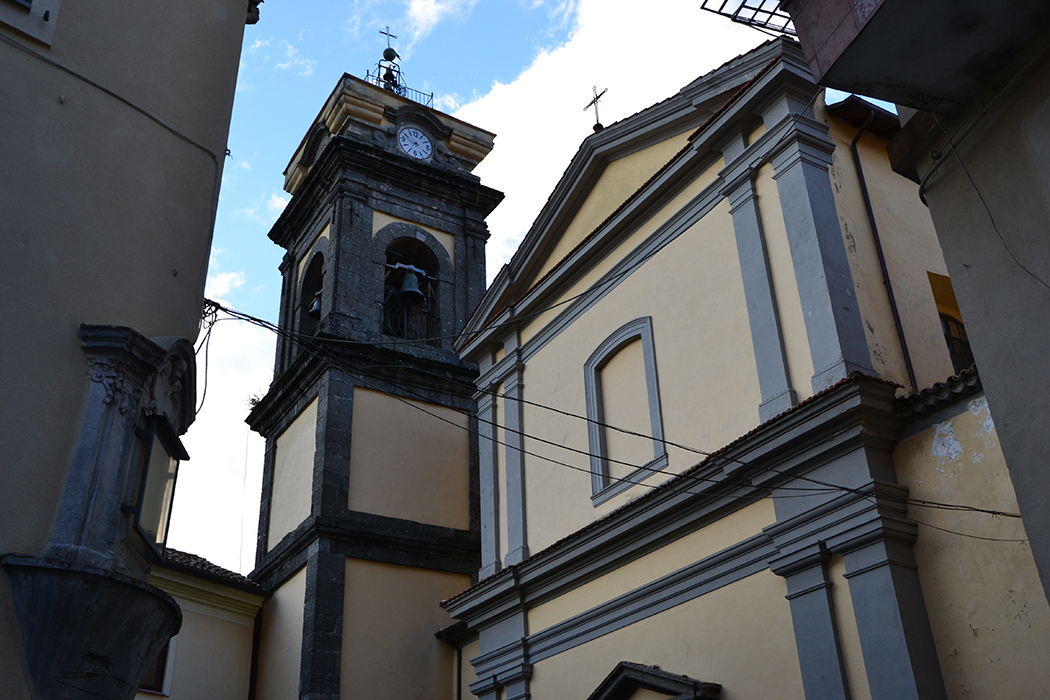
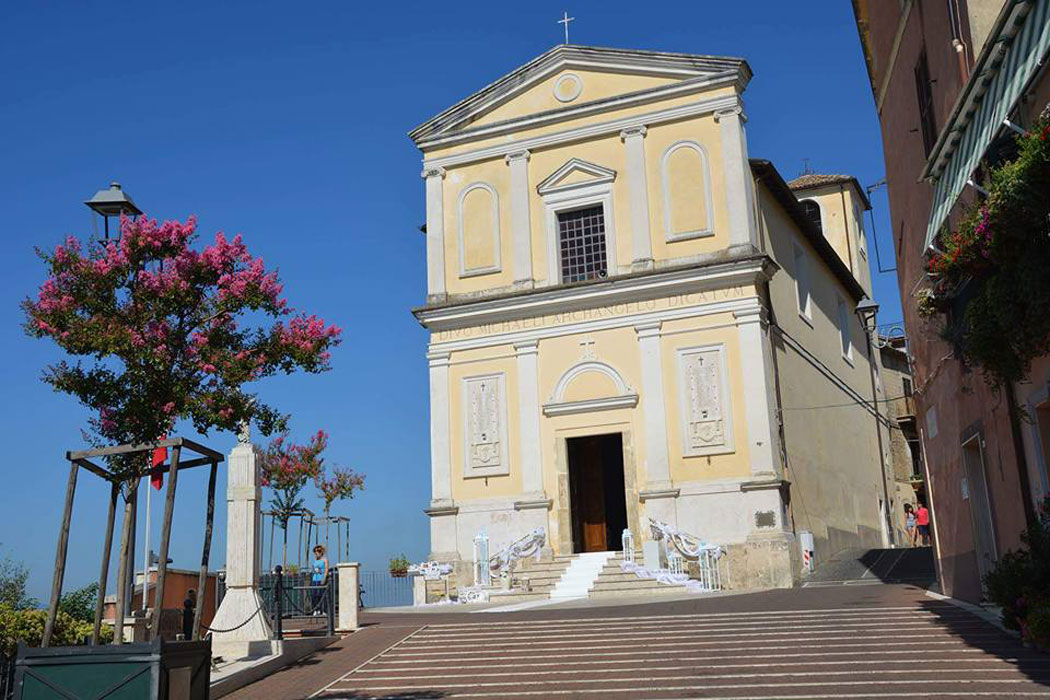
The church of Saint Michael Archangel probably dates back to the Lombard presence in Vallecorsa.

It is dedicated to St. Michael who became principal protector at the end of 1700.

The church has undergone many changes over time.

It has a nave with pillars and Doric order capitals and in the apse behind the altar, there is a niche with the statue of St. Michael the Archangel.

The church is enriched by fine oil paintings and a sixteenth-century altarpiece by Jacopo Zucchi.

powered by social2s

The collegiate church of Holy Mary of the Assumption - Santa Maria Assunta of Trevi nel Lazio is located in the upper part of the town, near the Caetani castle which before the Marsica earthquake of 1915 was much larger and occupied the center of the village.

The church therefore has medieval origins and has been renovated several times over the centuries. Its current form which recalls the softness of the baroque style and dates back to the seventeenth century while the previous medieval forms can be recognized in the underground crypt.

The facade has a single entrance door which is accessed by a staircase and two windows in correspondence with the side naves.

The church has three naves with a cross vaulted ceiling frescoed with decorations and along the side naves there are altars while in the main altar area there are still the wooden seats of the collegiate church and a precious baroque tabernacle.

Crypt

From a door on the main facade of the church, located next to the staircase leading to the church, you enter the crypt of the collegiate church of Holy Mary of the Assumption - Santa Maria Assunta in Trevi nel Lazio. The crypt appears simple and devoid of decorations apart from the area where the remains and relics of Saint Peter the Hermit are kept, the saint who lived and died in Trevi nel Lazio and who is today its patron saint. Saint Peter the Hermit was canonized in this crypt by Pope Innocent III in 1215.

The frescoes found in this area date back to the Baroque renovation of the church around the seventeenth century.

Bonifazi Organ

In the choir loft of the collegiate church of Holy Mary of the Assumption - Santa Maria Assunta in Trevi nel Lazio there is one of the best organs in central Italy. The organ dates back to 1633 and was built by Ennio Bonifazi, a famous 17th century organ builder, who was partly paid for by the entire community.

The organ has a façade with 3 bays, each of which has a central twisted pipe and powerful and sweet registers, which keep the timbre freshness intact.

The cost of the organ was partly paid by the Community of Trevi nel Lazio and the musical instrument is enriched with carved and gilded wooden friezes and placed on a choir loft of rare beauty.

powered by social2s

The church of St Lawrence - San Lorenzo in Torrice dates back to the eighteenth century.

The church has two floors as it was built over an existing confraternity oratory.

It has a Baroque facade with a beautiful portal.

The Greek cross interior is adorned with stucco decorations, eighteenth-century altars and valuable paintings attributed to Giuseppe Cesari and Ludovisi.


powered by social2s

The baroque church of St. Nicholas was built in Supino in 1774.

The facade is organized in two levels and the bell tower is very simple and straightforward.

The interior has a nave with an apse and two chapels.

On the back wall is an altarpiece with a wooden frame depicting St. Nicholas and the Virgin and a small canvas painted in oil depicting a Madonna and Child, dating back to the XVI-XVII century is worthy of note.

The church has a wooden choir and the decoration of the vault of the nave has typical eighteenth-century motifs.

powered by social2s

The large sanctuary of San Cataldo in Supino was completed in 1786.

It is a masterpiece of stereometry and one of the best examples of Baroque architecture of southern Lazio.

It has a polygonal shape, with a hexagonal array and a peripheral wall with12 faces.

The facade has three portals surmounted by lunettes.

The central has a multicoloured mosaic with the figures of St. Peter and St. Cataldo completed in 1966.

The main entrance is a bronze bas-relief by Saverio Ungheri in 1978 and is called the "Door of Hope".

The sanctuary has a large central dome vault and the interior is decorated with numerous stucco and multicoloured marble.

In the choir there is an old organ built in 1764 by Johannes Conradus Werle, that is of great artistic and musical quality.

The chapel of San Cataldo is enclosed by a wrought iron gate and is decorated in faux marble and on the vault is the fresco of "The Glory of San Cataldo" made by Monicelli in 1890.

The large wooden statue of San Cataldo, destroyed in a fire in 1870, was rebuilt.

powered by social2s
Supino. Church of Santa Maria Maggiore

The church of Santa Maria Maggiore in Supino does not reflect the original construction.

In fact, in 1944 the original church suffered from the bombing to the extent of the dome collapse.

The original plan of 1753 by architect Gerolamo Fontana was commissioned by the Colonna family.

The facade has a very simple and rational style with a bell tower divided into four levels.

Inside it has a nave with a vaulted ceiling and five chapels in Baroque style.

The dome has been faithfully reconstructed according to the original plans.

The church contains numerous paintings including one depicting the Assumption with San Lorenzo and San Sisto, of the eighteenth century Neapolitan school.

One of the apparition of the Virgin to St. Hyacinth of the Roman school of the seventeenth century.

The most recent work is the fresco by Italo Scelza, dedicated to the encyclical ‘Fides et Ratio’, realized in 1999.

In the counter-facade is a special wooden choir with an organ of Caesar Cantarinozzi of Subiaco, from the eighteenth century.

powered by social2s

Recommended

Subscribe to Newsletter

Discover a territory through the emotions of the people that have lived it.