Marino DOC Wine

The Marino DOC wine was already known in antiquity with the name of Albanum.

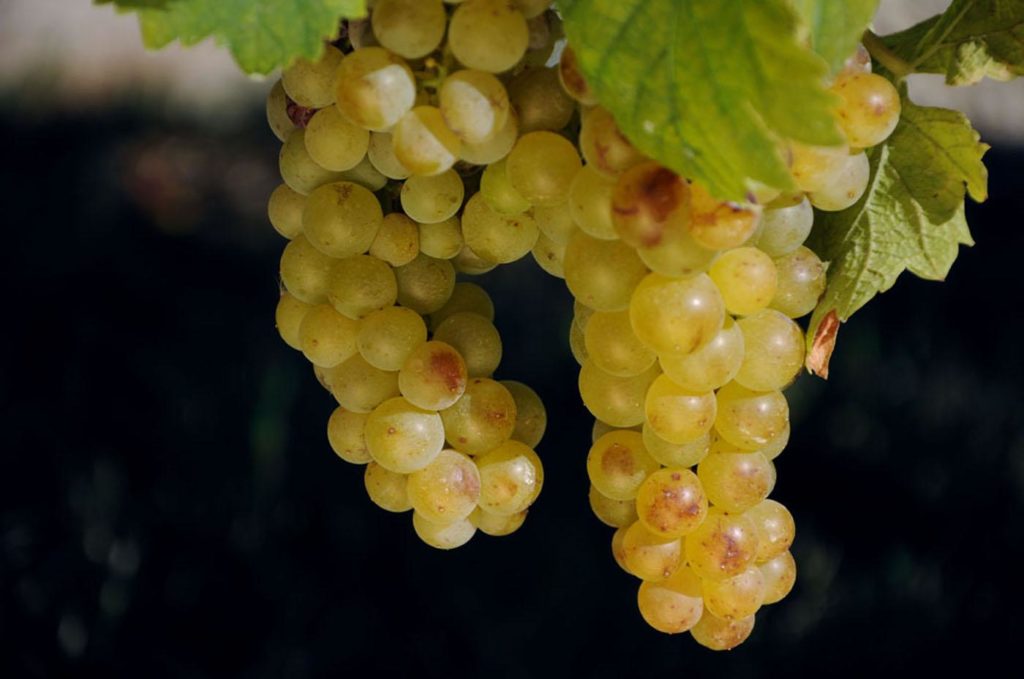
It has a colour from pale yellow to golden yellow. The bouquet is full and dry, typical of malvasia, while the taste has a good aromatic persistence and a slightly bitter aftertaste.


powered by social2s
Capena. Capena DOC wine

White Capena DOC wine, recognized since 1975, is a wine made from Malvasia del Lazio, Trebbiano Toscano, Bellone and Bombino grapes.

The colour is straw yellow with golden shades and green highlights. The aroma is slightly aromatic, fine, distinctive.

The grapes shall have been produced in the territory of Capena and in an area that includes Fiano Romano, Morlupo and Castelnuovo di Porto.

Of fundamental importance are the human factors linked to the production area, which by tradition have helped to get the "Bianco Capena" wine.

The cultivation of the vine in these areas has Etruscan origins and the poets Virgil, Orazione and Stradone sing praises of the products of this area.
 

powered by social2s
Cesanese di Affile o Affile DOC

The first cultivation of the Cesanese di Affile vine dates back to the Roman colony when vast hilly areas around Affile were stripped of trees to plant the vines.

Today Cesanese di Affile grapes are used to produce Cesanese del Piglio DOCG Wine, the only red wine in Lazio with this appellation.

The term cesanese means 'to cut' and probably is referred to the cut of trees to plant vineyards.

The coat of arms of Affile is just a branch of a vine of black grapes with an asp coiled along the trunk.

The grapevine was a very important element in the economic life of Affile and this wine was also popular during the Middle Ages in the neighbouring Benedictine monasteries.

It is said that women of Affile wrapped up cuttings (young plants) as a dowry when they married someone of the neighbouring countries.

In the thirties the Affile Cesanese won the gold medal as the best wine in exhibitions in Paris and Brussels.

powered by social2s
Terracina. Moscato of Terracina DOC

The Moscato of Terracina (Moscato di Terracina) is a DOC white wine and a grape native of the Latina area and one of the few aromatic grapes. 

Terracina is a city on the coast of Lazio Region and the proximity to the sea and the soil type makes the wine fragrant and particularly sought after.

4 types of wine are produced with Moscato grapes: dry, sweet, passito and sparkling.

All wines have intense floral notes, good flavor and good balance.


powered by social2s
Aprilia. Aprilia DOC Wine

The Aprilia DOC includes red and white wines made with Merlot, Sangiovese, Trebbiano and Abbuoto grapes. Abbuoto is a local variety dates back to roman time. 

In Aprilia and in Pontina Flatland, the presence of viticulture dates back to pre-Roman period while already at the time Pliny.

The careless deforestation had caused the arrival of swamps and marshy areas with the consequent emergence of malaria.

In the period of remediation, since 1932, arrived here about 60 thousand farmers from Veneto, Friuli and Emilia who were to populate the reclaimed sour soil.

They who have restarted the viticulture with the typical varieties of their native lands such as Sangiovese and Merlot.


powered by social2s
Tuscania. Tarquinia Wine DOC

Tuscania is part of the Tarquinia DOC Wine area where is produced excellent white wine, the dry and sparkling version, and red wine.

The grapes for the white wine are Trebbiano toscano (Procanico), Trebbiano Giallo, Malvasia di Candia and Malvasia del Lazio. For the red wine Sangiovese, Montepulciano and Cesanese grapes are used.

The cultivation of grapes in northern Lazio began with the Etruscans and is first documented in a fourth-century BC tomb in the necropolis of Molesino.

You see one Faliscan 'stamnos' with red figures representing Dionysus and Oinopion, i.e. a rounded vase with two handles, with which they brought the wine to serve to the guests at the table with a long bronze ladle.

Some writings of Pliny describe with greater detail the cultivation of grapes and production of wine that the Romans stimulated and developed.

At Gravisca (ancient port of Tarquinia) and Statonia (in the territory of Vulci) in 540-530 BC wine production was sufficient for local consumption and it was sold in other countries as proven by the discovery of the wreck of an Etruscan ship dated sixth-century BC in the sea in front of Marseille.

The Roman writer Martial describes the Cerveteri wine, 'Caeretanus' as good and with a flavour that resembled old Setino and of good quality. Columella instead celebrates the ancient Cere for its exquisite wine.

After the Middle Ages, before the abbeys and then the Papal States resumed, the production of wine was further promoted.

The Statutes of the city of Civitavecchia 1451 contained 20 chapters that regulated the production and trade of wine. They described the harvest period, the penalties for damagers of vineyards and the measures that the Tavernari (tavern owners) had to use for selling.

In 1761, the Marquis Frangiapani in the book 'Story of the ancient city of Civitavecchia' describes some local vineyards.

powered by social2s
Marta. Cannaiola Wine

Marta is an enchanting medieval town along the coast of Bolsena Lake where few of the Italian aromatic grapes grow.

The Cannaiola is a dessert wine of about 11 degrees obtained by the vinification of black cannaiolo grape, much like Aleatico which is the typical grape of the Lake Bolsena area.

The colour is red and the taste is sweet and full-bodied with an intense fruity aroma.

powered by social2s
Grotte di Castro. Aleatico Gradoli DOC Wine

Grotte di Castro is part of the Aleatico Gradoli DOC Wine production area. This is a dessert red wine from Aleatico grapes cultivated in an area next to the Lake of Bolsena. 

Aleatico grapes are among the 5 Italian aromatic grapes and wine has an intense and complex smell perfect to accompany desserts or cheese.

Viticulture in the Lake Bolsena area developed since the Etruscan period thanks to the microclimate of the lake.

The cultivation of the vine had a major expansion with the Romans and continued uninterrupted so that in 1627 Tassoni in De pensieri diversi' mentions it among the tasty wines.

The Aleatico of Gradoli was presented in 1861 at the Esposizione Italiana Agraria, Industriale e Artistica of Florence. In 1929 the Cantina Oleificio Sociale di Gradoli was foundedoil and the wine won over domestic and international markets.

In 1932 it won the Fiera del Levante in Bari, in 1934 the Show dell'Agricolture in Florence, the 1937 International Exposition in Paris, in 1938 at the Tripoli International Fair, in 1971 Wine Exhibition in Malta, in 1971 Siena and in 2004 in Rome.
 

powered by social2s

Subscribe to Newsletter

Discover a territory through the emotions of the people that have lived it.