Paliano's Cesanese del Piglio

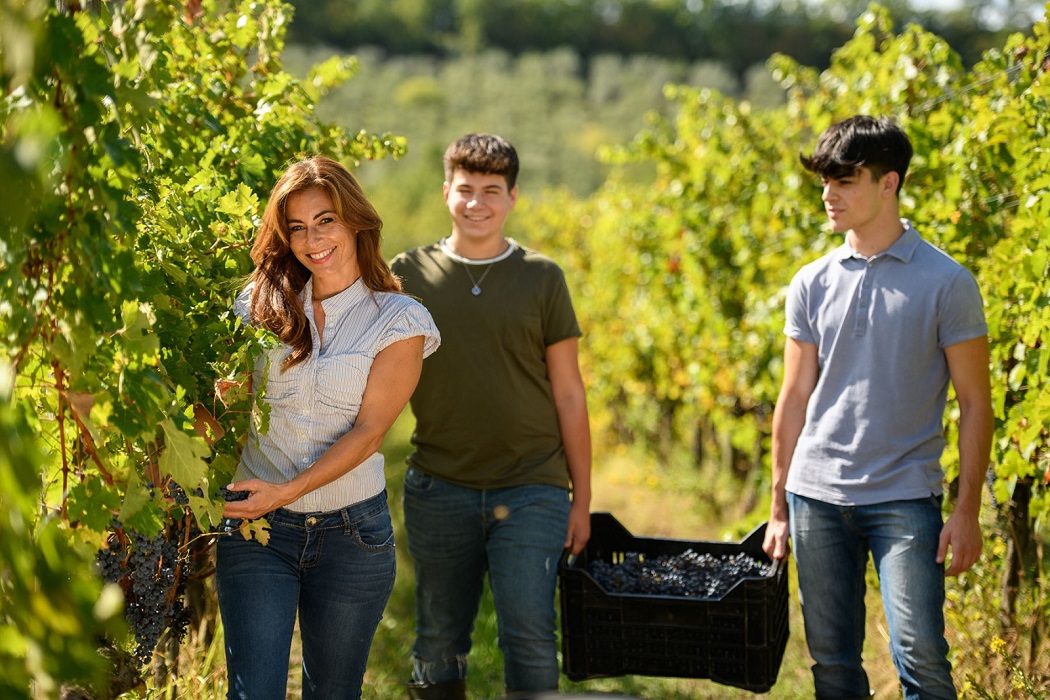
An original name for this Cesanese del Piglio DOCG wine produced by Maria Elena Sinibaldi. “If life puts you in front of crossroads (BIVI in italian), you crossroads (BIVI in Ciociaria's dialect means "to drink")! Always do ". "BIVI" is the name of the spearhead of the wines of the Boscocastello di Paliano winery. 

powered by social2s

The cultivation of grapes in Tuscia began with the Etruscans long before the birth of Rome.

Colli Etruschi Viterbesi Wine is produced from grapes grown in the municipalities Acquapendente, Arlena di Castro, Bagnoregio, Barbarano Romano, Bassano in Teverina, Blera, Bolsena, Bomarzo, Canino, Capodimonte, Castiglione in Teverina, Celleno, Cellere, Civitella d'Agliano, Farnese, Gradoli, Graffignano, Grotte di Castro, Ischia di Castro, Latera, Lubriano, Marta, Montefiascone, Monte Romano, Onano, Oriolo Romano, Orte, Piansano, Proceno, San Lorenzo Nuovo, Tessennano, Tuscania, Valentano, Vejano, Vetralla, Villa San Giovanni in Tuscia, Viterbo and Vitorchiano.

The production area is located around Lake Bolsena and is protected by the Cimini Mountains and the Sabatini Mountains.

Excellent red wines are produced from Multipulciano and Sangiovese grapes and white wines from Trebbiano Toscano grapes, locally called Procanico, and Tuscan or Lazio Malvasia.

The DOC (Protected Designation of Origin) designation was recognized in 1996.

powered by social2s

The town of Blera is part of the Tarquinia DOC Wine Area.

You can taste Tarquinia DOC wine in the red version made with Montepulciano, Sangiovese and Cesanese grapes. White version is made with Trebbiano Toscano (locally called Procanico), trebbiano Giallo, Malvasia di Candia and Malvasia del Lazio.

Tarquinia was one of the most important Etruscan Cities and its Necropoli is within the UNESCO Wold Heritage List.

The cultivation of grapes in northern Lazio began with the Etruscans and was first documented in a fourth-century BC tomb in the necropolis of Molesino. You see a Faliscan 'stamnos' with black and red figures representing Dionysus and Oinopion, i.e. a rounded vase with two handles, with which the wine was brought to the table to serve with a long bronze ladle.

Some writings of Pliny describe in more detail the grape growing and wine production that the Romans stimulated and developed.

In Statonia (in the territory of Vulci) in 540-530 BC wine production was more than sufficient for local production and was sent to Gravisca (ancient port of Tarquinia) and was sold overseas as evidenced by the discovery of the wreck of a sixth Etruscan ship century BC discovered in the sea in front of Marseille.

The Roman writer Martial describes the Cerveteri wine, 'Caeretanus' as of good quality and with a flavour that resembled old Setino. Columella instead celebrates the ancient Cere for its exquisite wine.

After the Middle Ages, before the abbeys and then the Papal States production and promotion of wine resumed.

The Statutes of the city of Civitavecchia in 1451 contained 20 chapters that regulated the production and trade of wine. They described the harvest period, the penalties for people who damaged vineyards and the measures that tavern owners had to use for sale.

In 1761, the Marquis Frangiapani in the book 'Story of the ancient city of Civitavecchia' describes some local vineyards.

powered by social2s
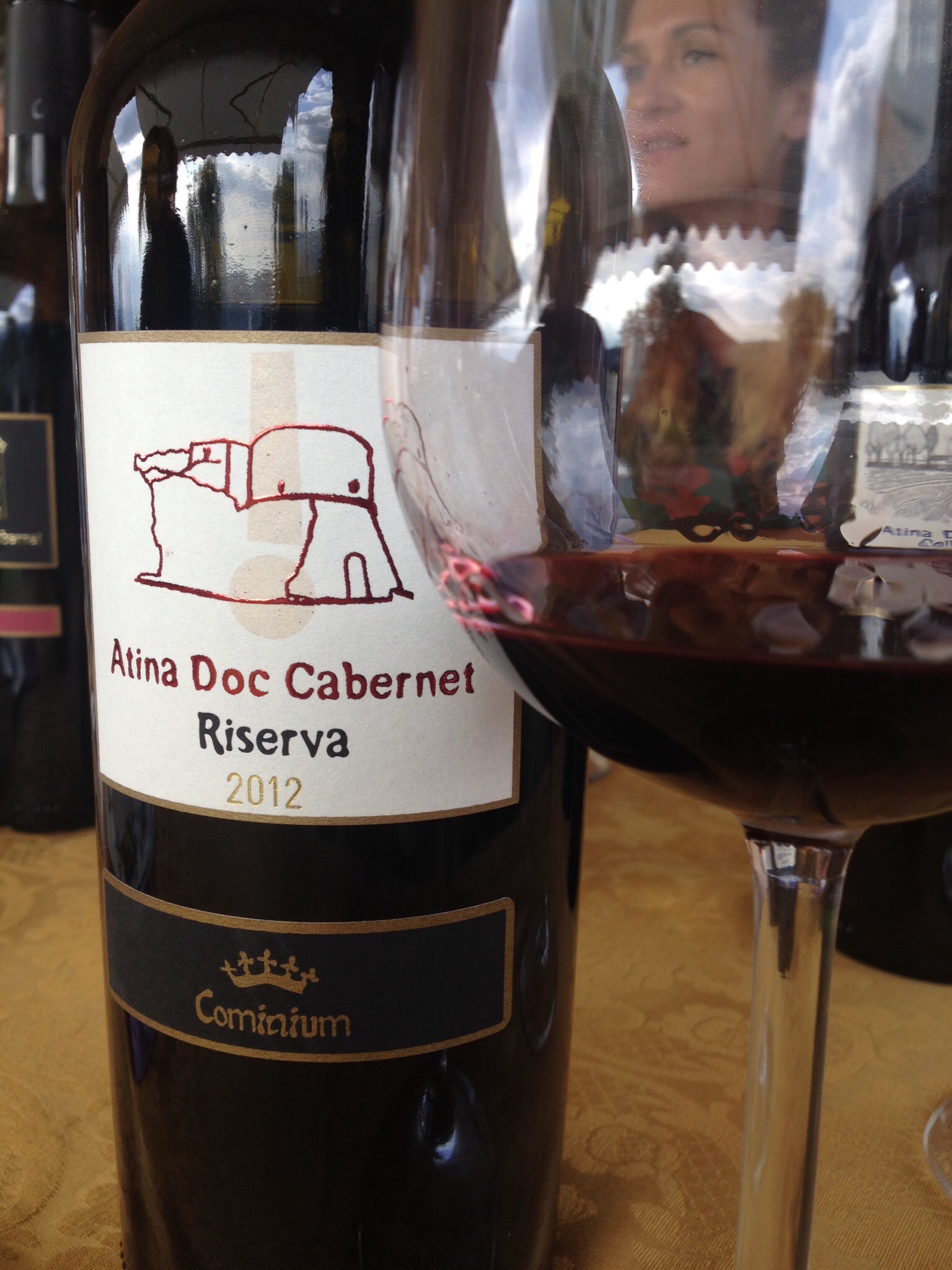
Vino Atina DOC Cabernet

The cultivation of grapes in Val Comino, the enchanting valley between Rome and Naples, started in the nineteenth century in Atina with select cabernet grapes for the production of Atina DOC wine.

It all began with the famous agronomist Pasquale Visocchi who was also mayor of Atina. Pasquale Visocchi often went to France and he imported both red grapes (cabernet franc, cabernet sauvignon, merlot) and white grapes (pinot, semillon, russane) and he successfully planted them in Val di Comino.

The ancient sedimentary soils with prevalence of limestone rocks of the Apennine range proved to be perfect for the Cabernet and other French vines.

The Cabernet is a vine native to the Medoc and the Bordeaux area and has good adaptability to different climatic conditions. The wine has an intense colour and is rich in aromatic substances that make it improve with aging, especially if in oak barrels.

Today two DOC wines are produced: Atina Rosso DOC and Cabernet di Atina DOC. Also on sale are Atina Rosso Riserva, Cabernet Riserva and Semillon. In Cabernet Atina DOC wine must be present at least 85% of Cabernet Sauvignon and Cabernet Franc grapes while the other 15% may be of black grapes grown in Lazio. Atina Doc wine must contain at least 50% Cabernet Sauvignon grapes and the rest of Merlot, Syrah and Cabernet Franc and up to 20% of other black grapes grown in Lazio.

The vines are cultivated in the towns of Atina, Gallinaro, Belmonte Castello, Picinisco, Sant’Elia Fiume Rapido, Alvito, Villa Latina, San Donato Val di Comino, Vicalvi, Casalattico, Casalvieri and Settefrati.

powered by social2s

Canuleio Wine of Bolsena is a white wine IGP - Protected Geographical Indication made by Azienda Agricola Mazziotti.

It is produced from various grapes such as white Malvasia, Procanico and Rossetto.

It is straw yellow in colour, has a soft, dry taste and a jasmine scent.

It takes its name from the Roman consul who abrogated the ban on marriage between patricians and plebeians in 445 BC.

powered by social2s
Monte Porzio Catone. Frascati DOCG

The Monte Porzio Catone area is recognized as an area where the Frascati DOCG wine is produced. This wine is one of the most famous white wine in Rome and is made with grapes from Malvasia Bianca di Candia o Malvasia Puntinata, Bellone, Bombino Bianco, Trebbiano Toscano e Trebbiano Giallo.

The countryside landscape is characterized by large vineyards and many manufacturers have equipped their cellars for wine tourism and banquets.

In some of these farms it is also possible to sleep and spend a weekend in the vineyards with a wonderful view of Rome.

Often the wine is accompanied by "Manine" or "Manucce", a puff pastry dessert special with cream interior, and which has a shape reminiscent of a small hand.

powered by social2s
Genzano di Roma. Wine Colli Lanuvini

Genzano di Roma is part of the area where the eponymous white wine Colli Lanuvini (Lanuvini Hills) is made.

The wine is produced from white grapes Malvasia of Candia, Trebbiano, Trebbiano of Soave and Malvasia del Lazio and can be taste in the dry and sparkling versions.

The wine Lanuvini Colli DOC has a pale yellow colour more or less intense, delicate and pleasant. The taste is dry or sweet, fruity, full-bodied, harmonious, velvety.

powered by social2s

Subscribe to Newsletter

Discover a territory through the emotions of the people that have lived it.