Churches & Places of Worship

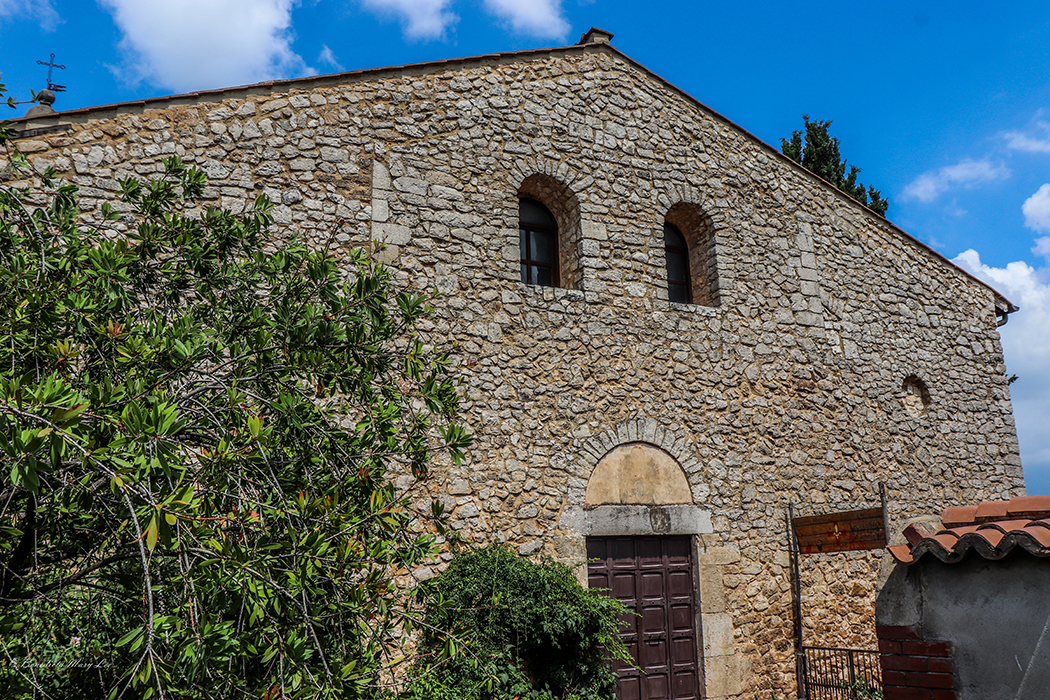
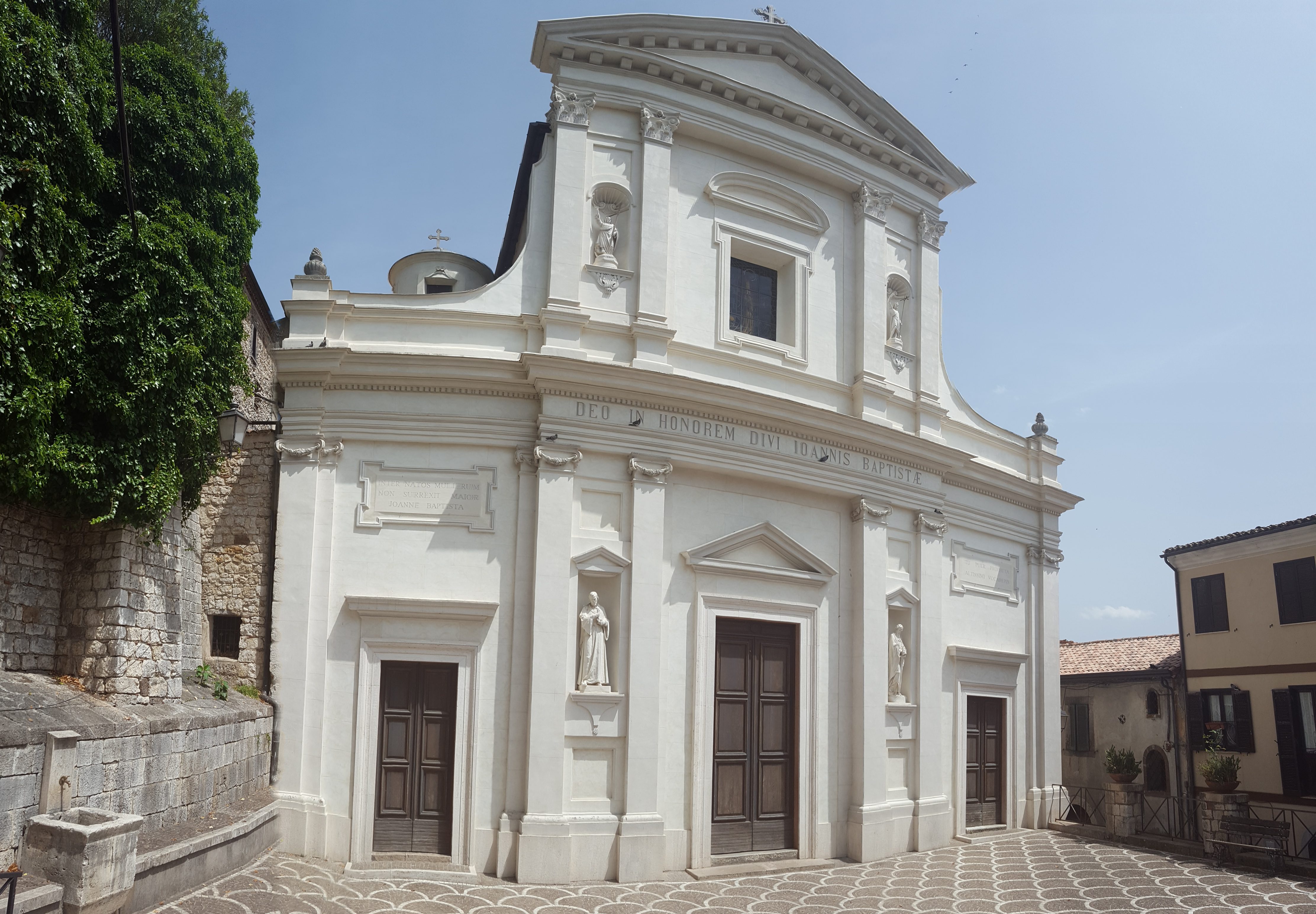
Ceccano San Giovanni by Matteo Odargi
Ceccano. Church of St John Baptist

The church of San Giovanni Battista in Ceccano was built on the remains of polygonal walls of pre-Roman times.

The first news we have is from the eighth century, when it is destroyed by the siege of the Lombards.

After 1000 it was often mentioned in the Annales Ceccanenses (Chronicles of Ceccano Counts).

The church appears in 1224 in the will of Count John I described as the "mother church" that is the main church of Ceccano.

The current building is the result of three restorations carried out over the centuries.

In the first of the sixteenth century when the facade facing the Old Town Square was closed and a new one created facing south (where there is now the apse).

In the second of the eighteenth century the interior was modified in baroque style and finally in the nineteenth century the facade was again changed realizing the apse facing to the south and the present façade to the north.

In 1845 it was declared Collegiate by Pope Gregory XVI. The interior is in baroque style with three naves.

Above the entrance there is the eighteenth-century organ made by an artisan company of Affile.

In the treasure chapel missals and reliquaries from the fifteenth century are preserved.

The first altar on the left aisle is dedicated to the Three Kings, and here is buried the Countess Rogasia (wife of Count John I).

According to oral tradition, epilepsy sufferers came here in prayer to receive healing through the intercession of the Countess.

On the main altar are a seventeenth-century painting of the beheading of St. John attributed to Guercino, the statue of Saint John, and a fifteenth-century crucifix.

The remains of the first structure with the original entrance portal are visible in the rooms of the sacristy to the side of an ancient medieval chapel with XIV century frescoes.

A stretch of polygonal walls and numerous Roman and medieval artifacts, and probably the tomb of Count John I, are visible in the rooms of the crypt.
 

powered by social2s
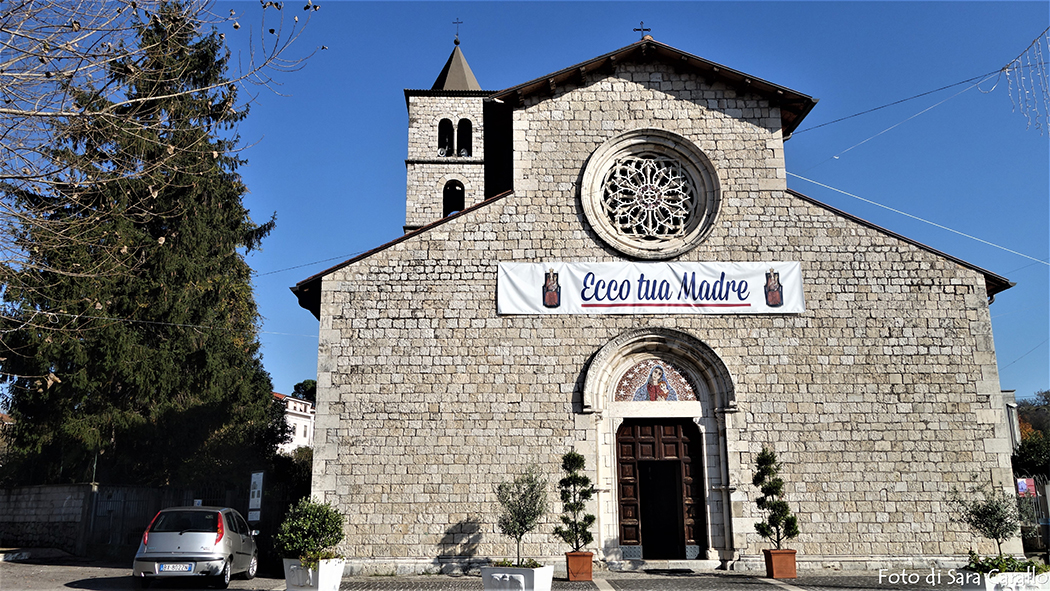
Ceccano- Santa Maria al Fiume by Sara Carallo

The church of Santa Maria a Fiume is located in Ceccano in an area rich in archaeological remains from the Roman era.

Among them, a pagan temple dedicated to Faustina, wife of Roman emperor Antoninus Pius.

The shrine was built by the Counts De Ceccano on a previous Romanesque church in the twelfth century.

The church was consecrated in 1196 in a solemn ceremony described in the Annales Ceccanenses, chronicles of the Counts of Ceccano.

The building was enlarged and restored in the late thirteenth and mid-fourteenth century.

Two side chapels were added and beautiful paintings created by artists from the school of Giotto.

Since 1891 Santa Maria a Fiume was declared a monument of national interest.

During World War II the church was completely destroyed by an Anglo-American bombing.

Only the wooden statue of the Virgin remained perfectly intact. Some days before, in fact, it was perfectly packaged by the Germans to be kept in Rome.

The sanctuary was faithfully reconstructed using materials from the rubble and reopened for worship on July 26, 1958.

The façade is comprised of local limestone while the interior is sober and elegant enriched by architectural details in the Cistercian style.

Inside there is a beautiful finely carved pulpit, the font of the thirteenth century and many antique Roman inscriptions embedded in the masonry.
 

powered by social2s
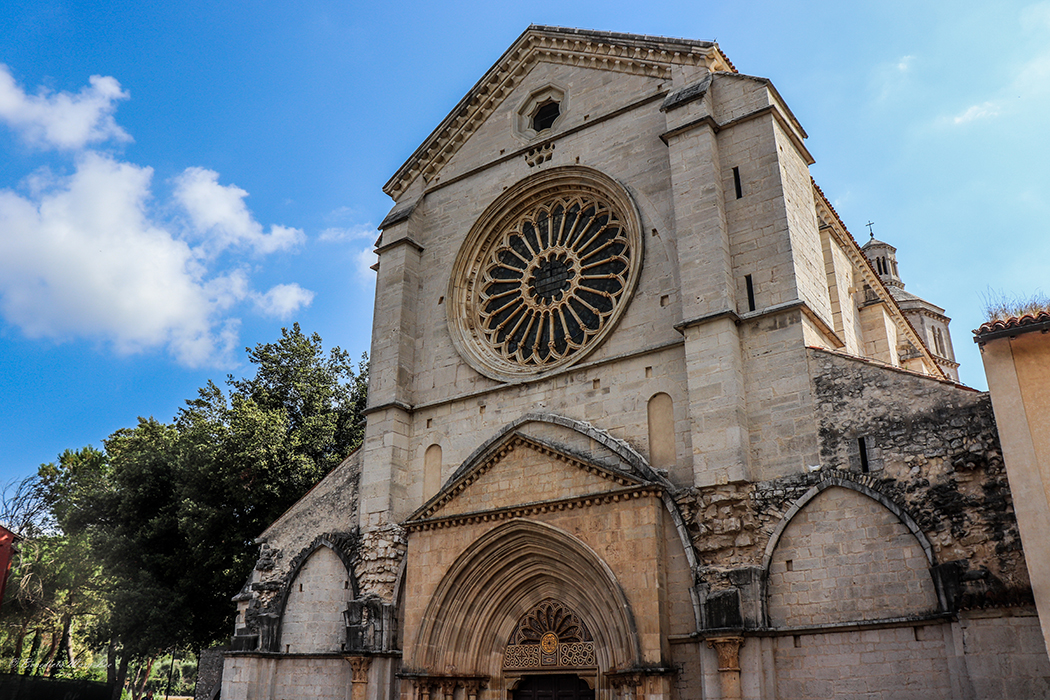
Priverno. Fossanova Abbey

The Abbey of Fossanova is in a medieval village in the Amaseno valley below Priverno.

It takes its name from an ancient waste water drain called Fossa Nova.

The church was founded on the remains of a Roman villa of the first century AD which was sold in 1134 by Pope Innocent II to some monks of St. Bernard of Clairvaux.

The church is a perfect example of the transition between Romanesque and Gothic Italian and was consecrated in 1208.

The interior is stripped of frescoes according to the austere 'memento mori' of the Cistercian monks.

Yet one must notice the magnificent rose window overlooking the front entrance.

Nearby is the room in the infirmary where St. Thomas Aquinas lived in the last days of his life.

He died here in 1274 and is remembered in the church by a simple empty tomb (the body was transferred by the Dominicans to Toulouse in the fourteenth century).

Next to the church is the cloister, from where you can access all the other rooms and the refectory which houses a reading pulpit with its own ladder.

In the village, there are all the necessary requisites for the sustenance of the monks: workshops, warehouses, stables, etc.

The entire centre was surrounded by high walls of which all that remains is the front door.

powered by social2s
Priverno. Church of Sant'Antonio Abate

The church of Sant’Antonio Abate in Priverno is of Gothic-Cistercian style.

It is among the most original of Priverno: it is a National Monument for the integrity of the original characteristics.

According to an inscription carved in a stone gateway, the church dates back to 1336 and was part of a hospital run by the Antonian monks.

The door was signed by Toballo de Ianni, a local master.

The hospital had been created to accommodate the pilgrims, especially those of Jubilees of the church.

The entrance to the church is located under a large archway with an overlying building that connects the monastery and the hospital to the dedicated worship area.

The church has preserved intact the old pulpit, the altar and the statue of St. Anthony made by local craftsmen.

Inside there are frescoes of the fifteenth century by Pietro Coleberti that reproduces a cycle dedicated to the "Virgin in Glory" and "Sacraments"

powered by social2s
Priverno. Church of St. Thomas Aquinas

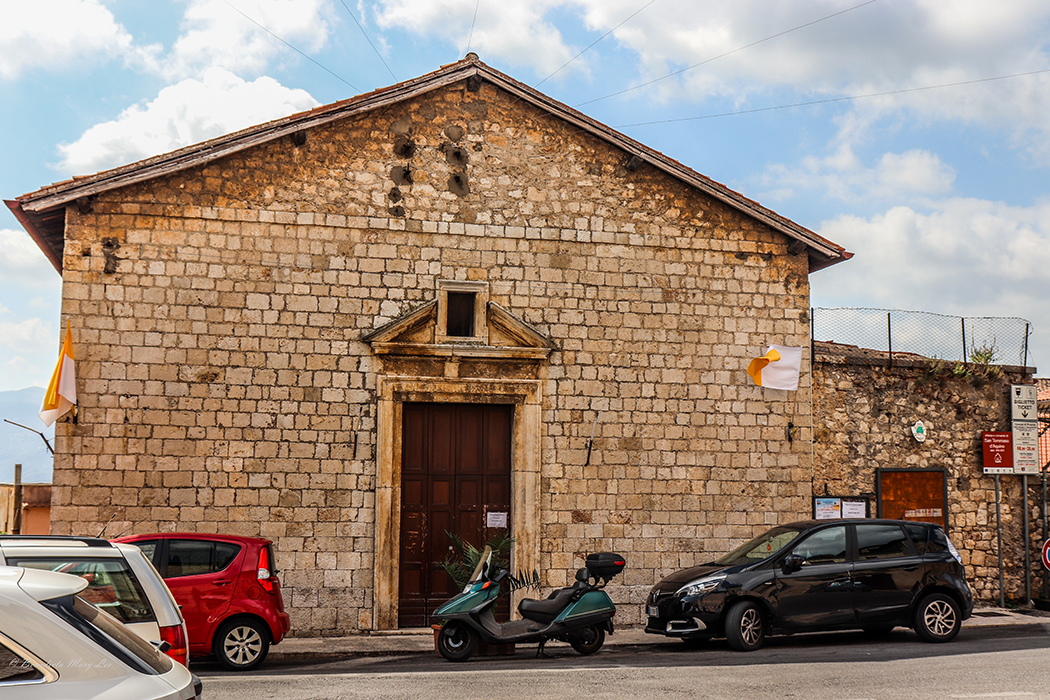
The church of St. Thomas Aquinas in Priverno dates from the thirteenth century and was part of an old Dominican convent.

The facade is of very simple local stone enriched only by a small decoration above the entrance door and a small bell-tower.

The interior has a single nave with four side chapels dating from the seventeenth century and has a Baroque style.

The more central altar is characterized by a large high-relief of the early nineteenth century depicting the "Glory of St. Thomas."

Inside you can still see a fragment of a fresco of the "Madonna del Latte" of the fourteenth century.
 

powered by social2s
Priverno. Cathedral of Santa Maria Annunziata

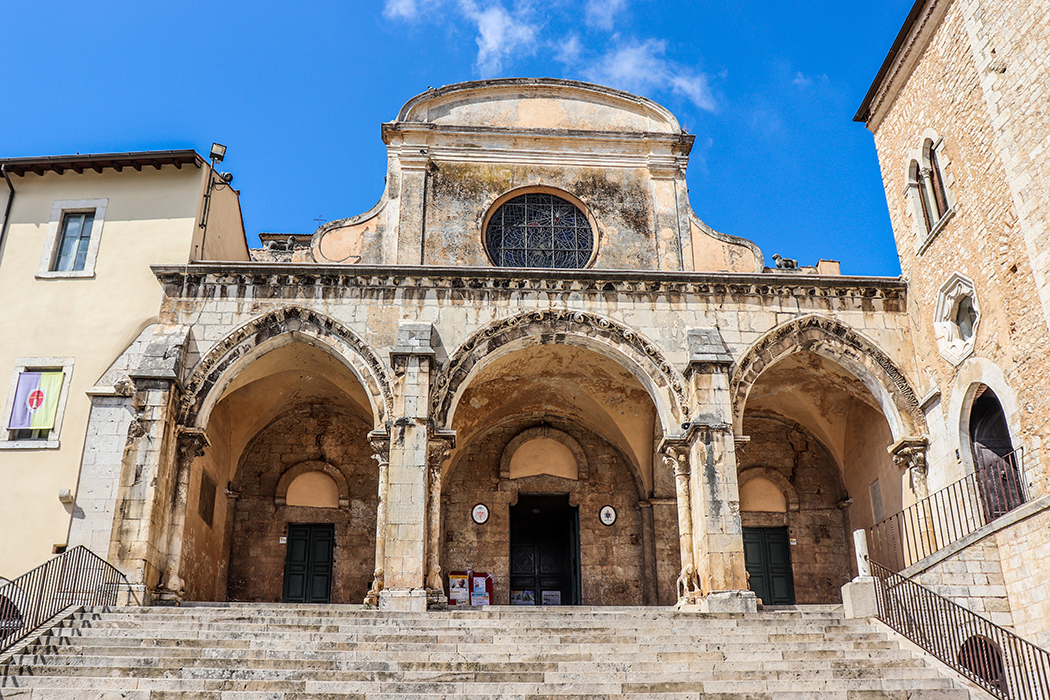
The cathedral of Santa Maria Annunziata of Priverno is located in the main square right next to the Town Hall Square.

It was consecrated in 1183 by Pope Lucius III, the pope of the Order of Cistercians who clashed with Frederick I and who condemned the heresy of the Cathars and the Waldensians.

The original church dates back to the twelfth century though the style of the façade.

The interior reflects much of a Baroque restoration that took place in the 1700s that has given rise to a unique and recognizable Gothic-baroque style.

You enter the church through a wide staircase arriving at a gothic portico with columns that are supported by typical medieval animals placed to protect the building.

The presence of a sculpture of a horse probably recalls the legend of the mythical Queen Camilla Volsci bred with mare's milk.

The interior of the church has three naves with numerous side chapels that preserve many works of art.

Among them, a painting of the Madonna of Mezzagosto, miraculously rediscovered in 1143 by a farmer while ploughing his field in a place called Mezzagosto.

Every year, on August 14, a procession is held in his honour and every five years this procession is characterized by a chariot pulled by two great white oxen.

In one of the side chapels is preserved the skull of St. Thomas Aquinas, patron of the city.
 

powered by social2s
Priverno. Church of San Giovanni Evangelista

The church of San Giovanni Evangelista of Priverno is the oldest together with that of St. Benedict.

It dates from the ninth century.

It was partially destroyed by a fire in the twelfth century and later rebuilt in a late Gothic-Romanesque style.

The facade is very simple, the entrance to the church is through a portico.

The church is connected to a bell tower adorned with mullioned windows.

Inside the plan is trapezoidal with three naves whose pillars are not symmetrical.

There are frescoes of the thirteenth and fifteenth centuries including a cycle dedicated to Saint Catherine of Alexandria and a Madonna and Child with Saint Vescovo of the fifteenth century.

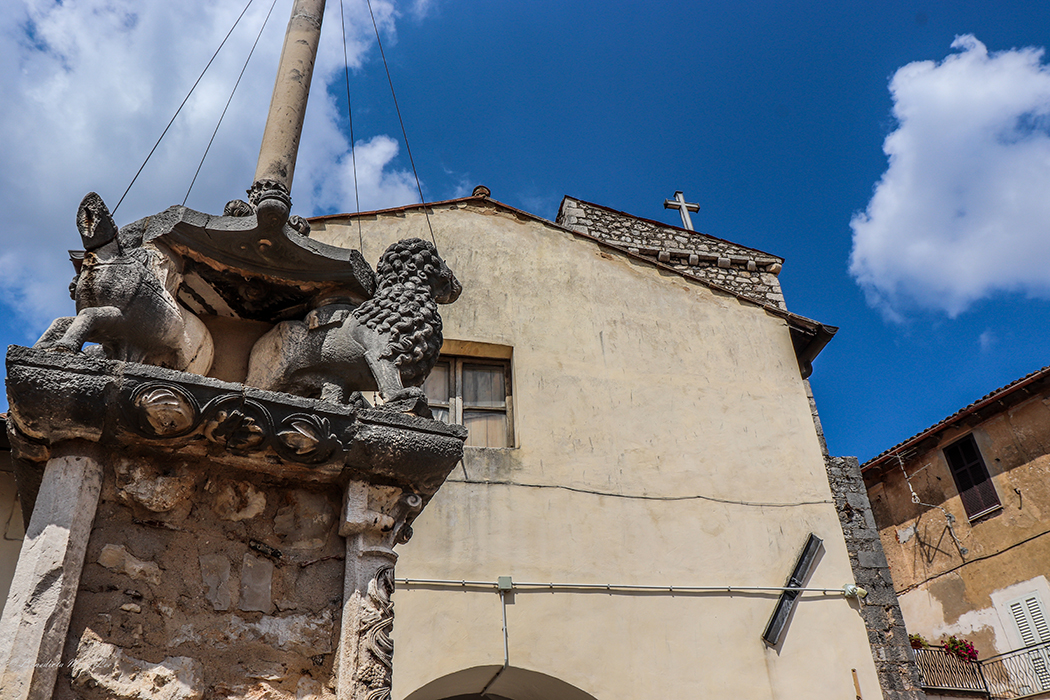
In the square across from the church is a sculpture with a small stele supported by four lions carved from the remains of the Romanesque pulpit.

powered by social2s
Priverno. Church of St. Benedict

The church of St Benedict in Priverno was the first building of the 'new Priverno'.

The medieval centre that was just being formed around the castle and this church that was built by the Benedictines in the seventh century.

The external facade is made of local stone with a very simple style and a part of the church is flanked by the ancient walls of the village.

The interior has three aisles and you can find frescoes of the twelfth century and an Annunciation by Pietro Colberti da Piperno of the fifteenth century while the apse frescoes date back to the sixteenth century.

The original bell tower was destroyed by lightning in 1785 and was rebuilt the following year.
 

powered by social2s

Recommended

Subscribe to Newsletter

Discover a territory through the emotions of the people that have lived it.