Churches & Places of Worship

Church of San Bruno by Gianni Macali

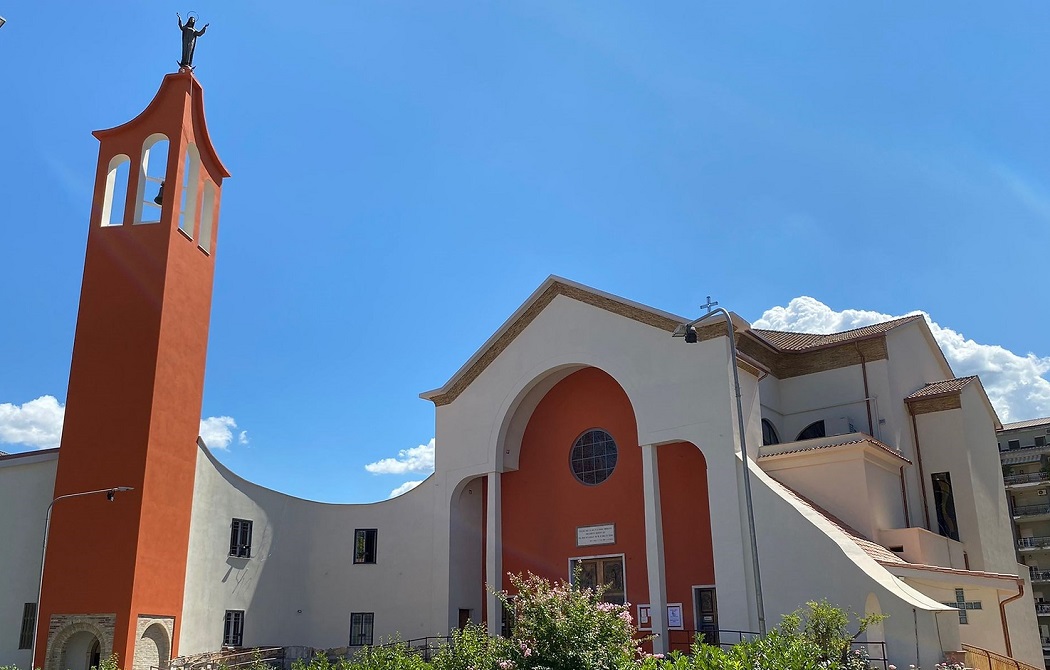
The church of San Bruno was founded in 1997 in Colleferro.

Its modern architecture is characterized by an interesting use of reinforced concrete and clay bricks.

The altar is made of stone and is adorned with an artistic cross carved in low relief.

The statue of St. Bruno was built in 2005 by Roberto Campagna while the right of the altar is a Madonna of the Jubilee by Salvatore Fiume.

The large wooden main door is decorated with panels showing the life and works of St. Bruno.
 

powered by social2s
Church of Maria SS. Immacolata

The church of Maria SS. Immacolata was founded in Colleferro in 1956.

The new church followed the expansion of the city and is entrusted to the Frati Minori Conventuali.

The building has a central plan of a Greek cross, and the facade of reinforced concrete is characterized by a curvilinear shape in the form of great triumphal arch with an air bell on the left side.

In the apse there is a large central mosaic depicting the Immacolata, realized by the Institute of mosaics of the Vatican, and on the altar the tabernacle reproduces the facade of the Church.

In the annex Oratory is the Auditorium "Maria Ss.ma Immacolata", a theatre to serve the community.

powered by social2s
Church of St. Joachim

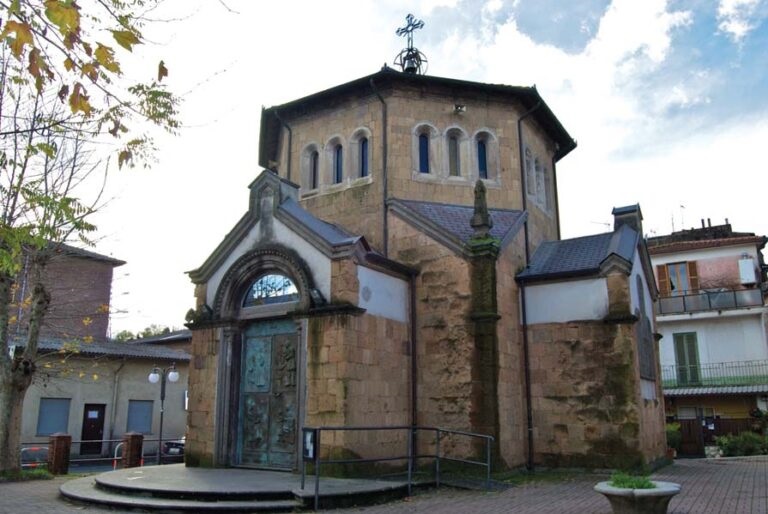
In 1899, after a petition, the church of St. Joachim was built in Colleferro on an area donated by the Doria family and with the contribution of Pope Leo XIII.

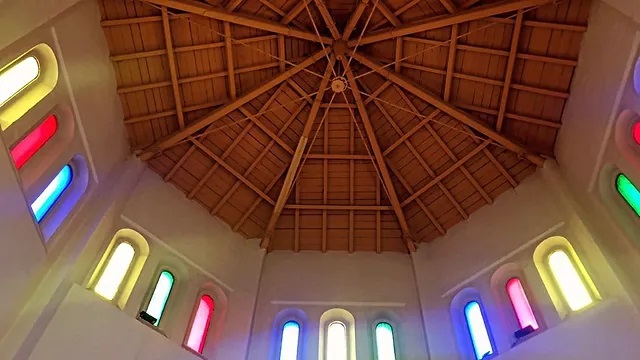
The church was finished in 1923 and has a simple style with a unique octagonal lay out.

The building is decorated with a bronze door with images of the saint.

powered by social2s
Piglio. Church of Santa Maria Maggiore or of Assunta

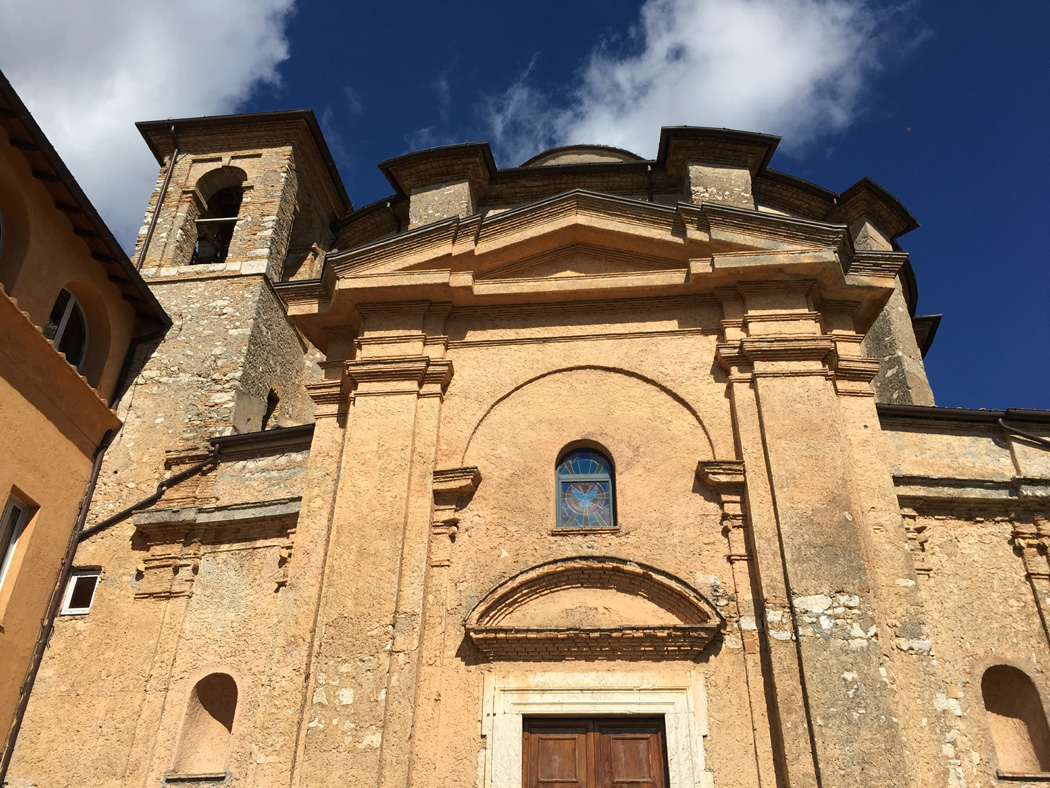
The collegiate church of Santa Maria Maggiore or of the Assunta di Piglio has ancient origins.

It is remembered since the years 1298-1301 in the list of tithes collections of the countries dependent on the Diocese of Anagni.

A small parchment preserved in the parish archive certifies that the church was consecrated in 1586.

Of ancient origin, partially destroyed by bombing during World War II,.

It has been recently renovated and is located in the town centre, in the square of its name, where you will come across a narrow alley.

The church is in the Romanesque style with a basilica plan with three naves.

It has a central rose window in the façade and is flanked by two twin towers, one being the bell tower and the other that once housed the clock.

On one side are still the remains of the old masonry, where one can see the traces of a door, now closed, framed by a pointed (ogival) arch.

It is recorded since the years 1298-1301 in the list of taxes of dependent towns by the Diocese of Anagni.

At one time, attached to the church, was the village cemetery.

A small parchment kept in the parish archive, attests that the church was consecrated in 1586.

In addition to the main altar, there are those consecrated to St. Joseph, to the Sacred Heart, St. John Bosco, St. Anthony, Our Lady of Pompei and the Madonna of Loreto.

In the sacristy there is the statue of the saint protector of Piglio, St. Lawrence Martyr, whose feast is celebrated on August 10.

At one time there were also the wooden archives of the 1600s.

From May until the end of October the church protects the statue of the Madonna of the Roses, which is taken toits Sanctuary in solemn procession on the anniversary of the liberation from the plague of Piglio, October 30.

The church has witnessed the exhibition of the worship of the remains of blessed Andrea Conti: firstly before 1400, in 1810 and in 1954, the year in which the blessed urn was placed back under the altar dedicated to him in the Church of San Lorenzo.

powered by social2s
Piglio. Church and Convent of Saint Lawrence

The franciscan church and convent of Saint Lawrence is located on the upper side of the town of Piglio, 850 meters above sea level, surrounded by oaks and laurels.

It is a particularly attractive place for the natural setting in which it stands and also for the atmosphere of recollection and spirituality that surrounds it.

Legend has it that it was founded by St. Francis, returning from the Holy Land and traveling to Subiaco, on land donated by Cardinal Giovanni Colonna.

The church, originally of the fifteenth century, has undergone many twists and turns over the centuries.

Completely rebuilt in 1773 it was later abandoned and suffered severe damage during the earthquake of 1915 and the bombings during World War II.

It was rebuilt and reopened in 1954.

The church guards the urn containing the remains of the Blessed Andrea Conti, the Exorcist brother, creator of the first Jubilee then proclaimed by Boniface VIII, his nephew.

The blessed Andrea Conti lived isolated for about forty years, near the Convent, in a narrow, dark, humid, cave which can still be visited.

On the rock was carved his effigy

powered by social2s
Piglio. Church of Our Lady of the Mount

The church of Our Lady of the Mount is located in Piglio at 976 meters above sea level to the highlands of Arcinazzo.

It remained for many years in a state of neglect and was used as a shelter for livestock.

It has recently been restored and in the square in front was set up a comfortable equipped rest area.

It was once guarded by "Romita", the hermit, a lone character on the edge of the monastic world, who had retired in solitude to wait with prayer and contemplation.
 

powered by social2s
Piglio. Church of the Oratory

The church of the Oratory is located in dell'Arringo area in Piglio, it is a small and simple church of ancient origin.

At that time, when there were not yet cemeteries away from residential areas, they interred the dead at the church.

The building has a single nave with an altar in Baroque style dedicated to the Immaculate Virgin.
 

powered by social2s
Piglio. St John church and convent

The church and convent of St John are located in the countryside of Piglio, on the side of the new cemetery, and are governed by the Minor Friars.

The convent was built in 1620 and over the years it was enlarged and modified.

The church has a single nave and was built in 1632. It had a main altar, with different coloured marbles, and three other minor altars dedicated to Our Lady of the Star, St. Anthony and the Holy Crucifix.

The wooden crucifix was carved by Brother Angelo d'Aprigliano.

The complex was badly damaged by the earthquake in 1915 and was later destroyed by Allied bombing in 1944.

The new church was rebuilt and consecrated in 1949 in the purest Franciscan style, it has a large central nave and two side aisles.

The complex is larger and different from the previous one.

The plan of the new cloister is rectangular, whereas before it was square.

The old bell tower was rib vault, the new one has a square base and in its interior there is a spiral staircase leading to the bells.
 

powered by social2s

Recommended

Subscribe to Newsletter

Discover a territory through the emotions of the people that have lived it.