Churches & Places of Worship

San Vito Romano Chiesa San Vito Martire by Benedicta Lee

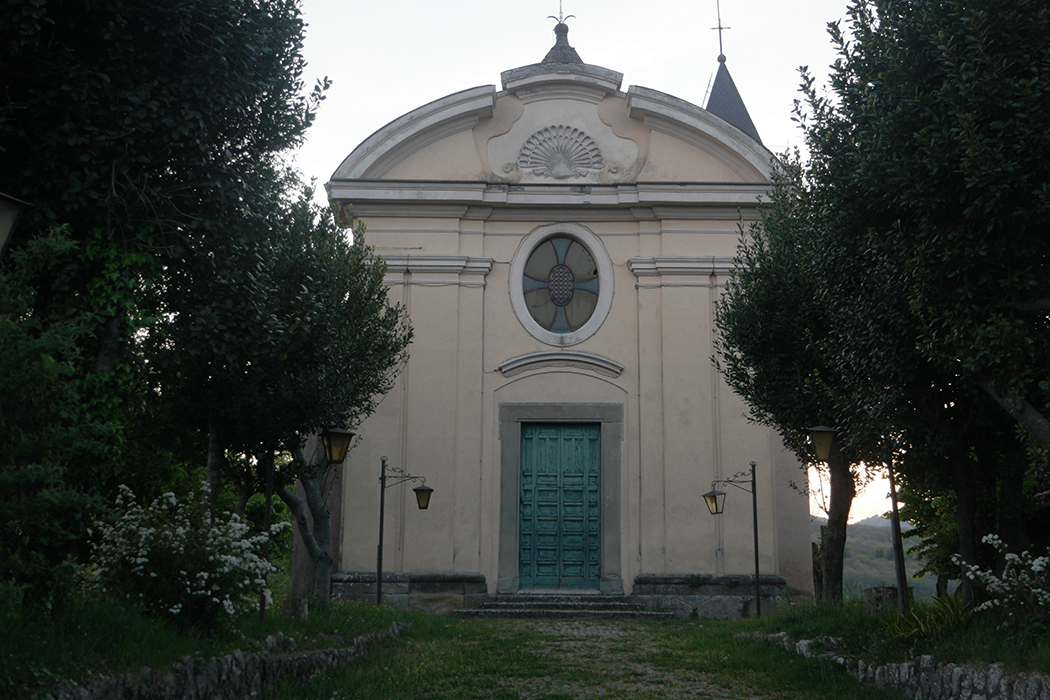
The first nucleus of San Vito Romano formed around this church of San Vito. This suggests that before one thousand here there was a rural chapel dedicated to the saint.

Around 800 all the hills around Rome began to be inhabited by people fleeing the incursions of the Saracens.

The present church dates from 1725 and has a single nave. On the main altar summit the crest of the House of Theodoli (the wheel with five spokes) can be recognised and all the internal structures are eighteenth century.

The church has no bell tower and the only bell present is contained in an elevated roof in the shape of a pyramid.

powered by social2s
San Vito Romano by Benedicta Lee

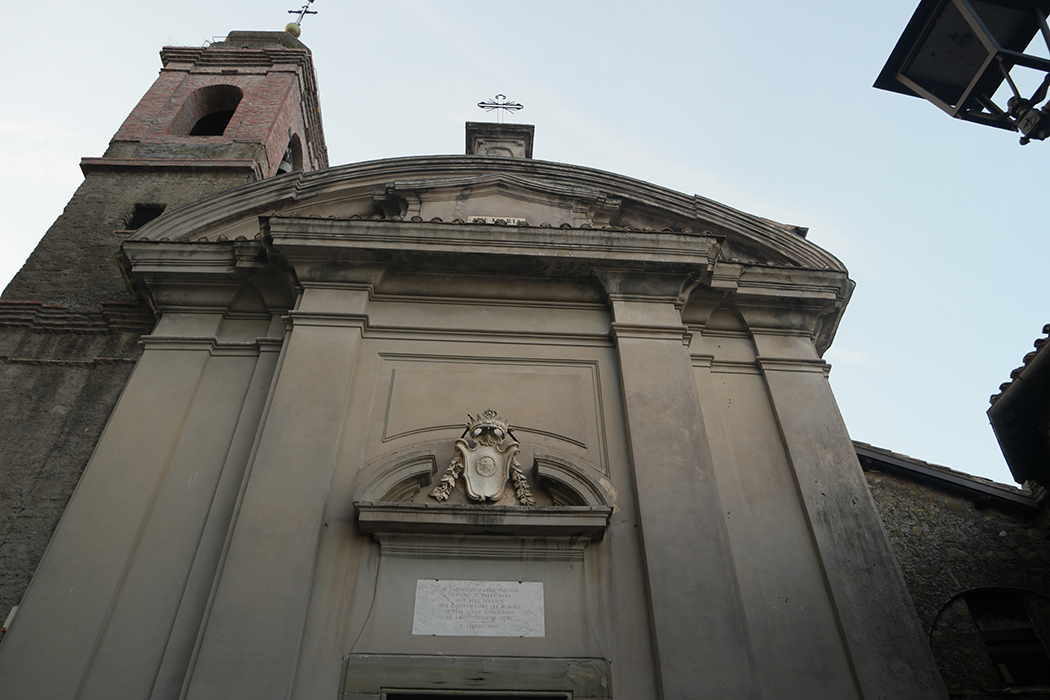
On the top of the fortress San Vito Romano is the church of Santa Maria de Arce that took its name from its location. Arx is Latin for fortress, high citadel.

The church originally was a simple single-nave building attached to the castle and was built only for the soldiers.

Only later was it opened to the public and after the middle of the seventeenth century it was enlarged and embellished by Theodoli with aisles.

In the right aisle, there is a chapel dedicated to the Passion of Christ in which Jesus is represented in Gethsemane. For this reason, a Sepulchre is set up here in the evening of Holy Thursday.


powered by social2s
San Vito Romano by Benedicta Lee

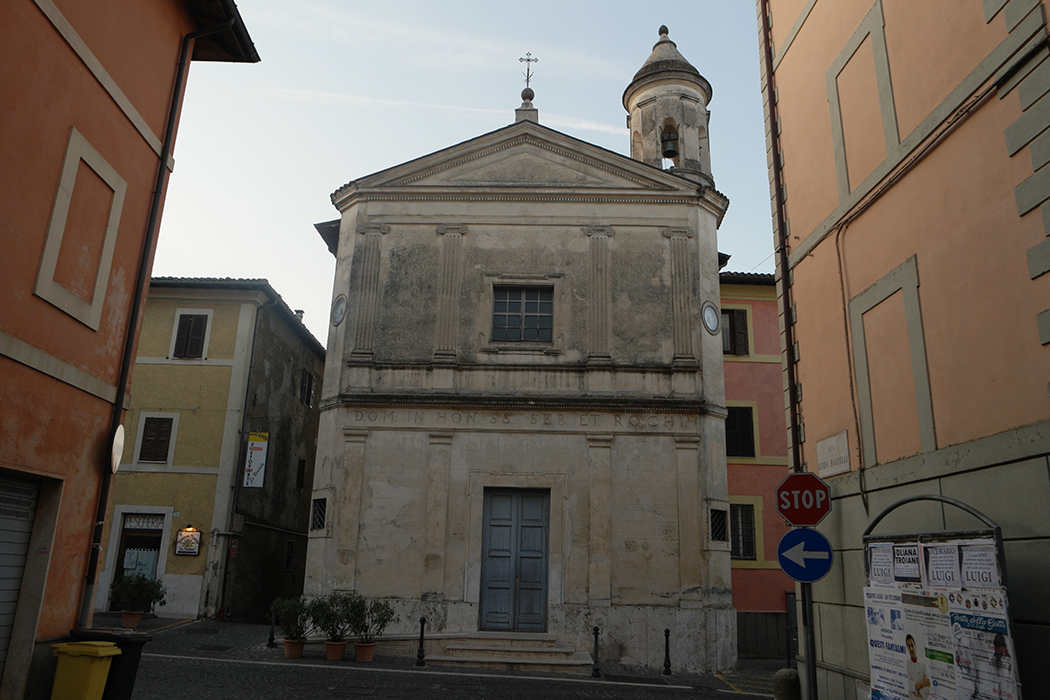
The church of Saints Sebastian and Roch in San Vito Romano is octagonal and is dedicated to St. Rocco probably in memory of the plague.

Saint Rocco was born in France in 1295 and died August 16, 1327 and is the patron saint and destroyer of the plague.

Saint Sebastian, however, is a martyr who, as saint Vito, died during the persecutions of the Roman Emperor Diocletian.

The central medallion of the octagonal ceiling is dedicated to Saint Sebastian and the eight segments are represented around eight Carmelite saints.

Over and above the main altar, the image of the Eternal Father looks at the audience of the faithful. On either side of the altar there are heraldic elements that represent the ancient ownership by Theodoli and the presence of the Carmelites.

powered by social2s
Maenza Chiesa di Santa Maria by Sara Carallo
Maenza. Church of Santa Maria Assunta in Cielo

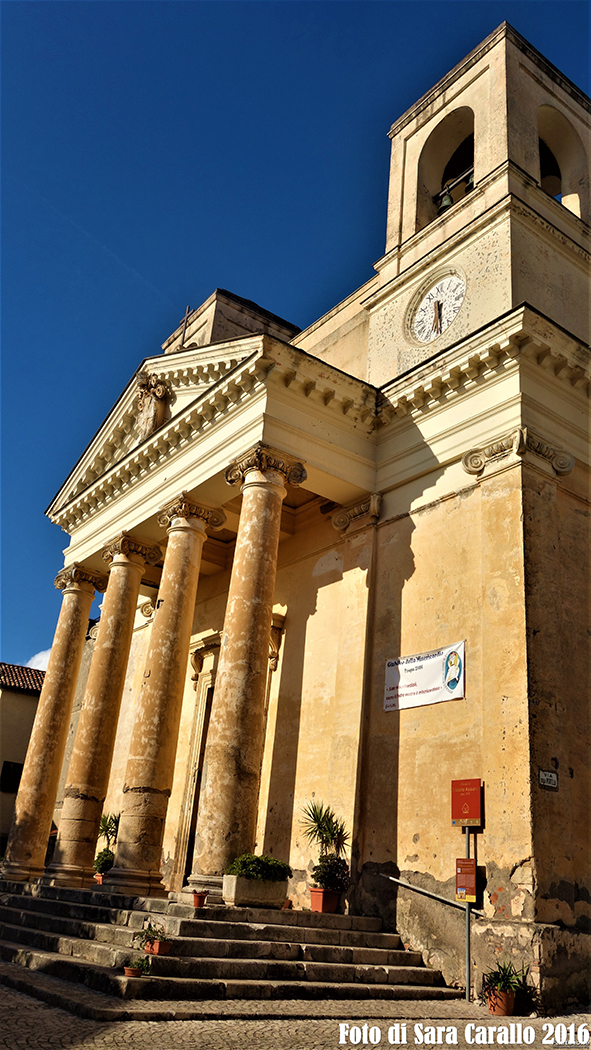
The church of Santa Maria Assunta, near the baronial castle of Maenza was restored in 1856, at the behest of Pope Leo XIII and has neoclassical lines.

The facade is characterized by a large portico with four columns with Ionic capitals and a pediment with the coat of arms of the Pecci.

The façade is characterized by its bell towers being visible from a distance.

The interior has three naves and the church ends with an apse where you can admire the painting of the Assumption of Mary.

Of particular interest is a fresco of the Madonna delle Cerase, a triptych depicting the Virgin and Child Enthroned with cherries, and some paintings depicting St. Thomas, St. Augustine and St. Rocco.

powered by social2s
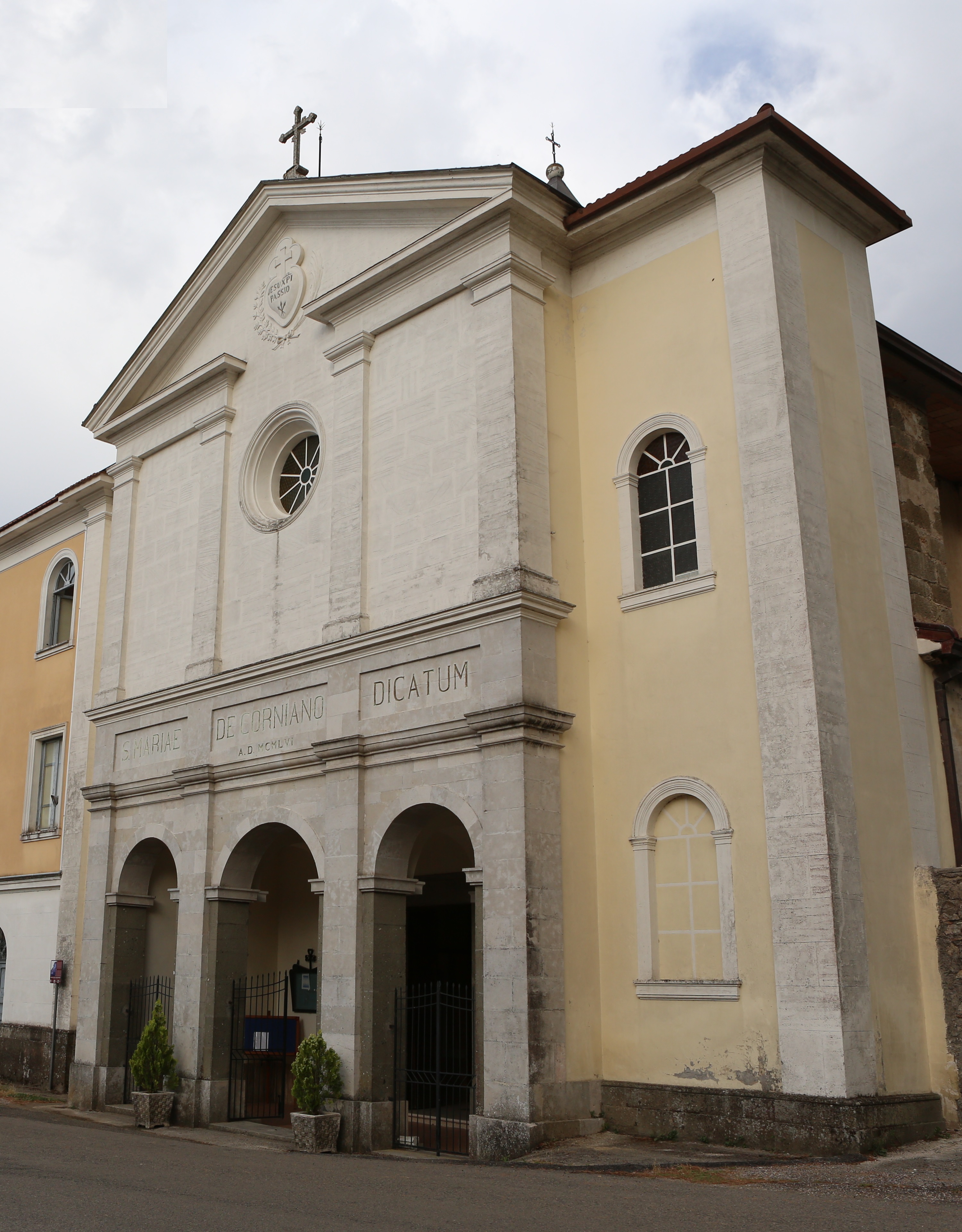
Ceccano- Badia dei Passionisti by Riccardo Giovannone

The abbey of the Passionist Fathers (Santa Maria Corniano) is located 5 km from the town centre of Ceccano in a beautiful panoramic position in the Sacco Valley.

It was built on a Benedictine monastery of the twelfth century. The convent chapel was dedicated to Santa Maria di Corniano, because the Virgin Mary appeared to a shepherd in the branches of a dogwood tree.

In 1747 the bishop Borgia of Ferentino commissioned the facility for St. Paul of the Cross, founder of the Passionist Fathers who began the renovation works of the convent.

St. Paul of the Cross had arrived in Ceccano January 13, 1748, and was received with enthusiasm by the people.

The story goes that after spending the night at Palazzo Angeletti, on 14 January a long procession accompanied him to the new premises.

The Passionist Fathers have offered hospitality and support to displaced people during the Second World War, after the bombings that hit the city.

In the convent were the Red Cross, first aid, the field hospital, the artillery, the police and the municipal offices.

Even the statue of Santa Maria Addolorata in Rijeka and the picture of St. Nicholas were transferred to the Passionist monastery after the bombings that struck those two churches.

Inside the church there is an eighteenth-century pipe organ and some of the twentieth century paintings depicting Marian mysteries and scenes from the life of St. Paul of the Cross.

In a side chapel is the urn of Grimoald Santamaria, young Passionist who died here in 1902 and was beatified in 1995.

In the monastery is the library collection of Santa Maria of Corniano, with more than 10,000 volumes.

powered by social2s
Ceccano- Chiesa Abbaziale di San Nicola by Alberto Bevere

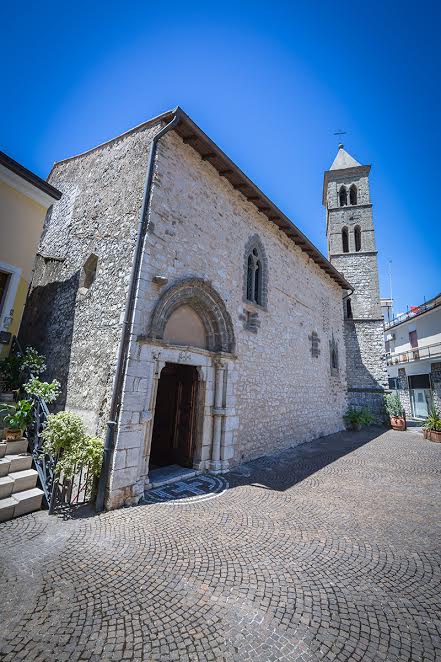
The origins of the churchof St. Nicholas are ancient but not known. It is mentioned for the first time in a document of 1096.

It was originally located in the middle of a forest, outside the walls of Ceccano and was dedicated to Our Lady.

In the thirteenth century, it was restored in the Cistercian style.

Further changes were made  during the nineteenth century when the altar was rebuilt the altar and the sacristy added.

In the 1920's it was declared a Monument of National Interest.

The building including the bell tower was damaged by American bombing during the Second World War. The lower limestone part is  the original, while the upper tuff blocks were rebuilt after the war.

Between the portal and the bell tower is a niche with a fresco of the Virgin and Child known as "Our Lady of the Forest" which dates from the fifteenth century. It was created in memory of the fact that the church stood in a forest.

The interior has three naves covered by large arches. On three pillars are inscriptions mentioning some of Ceccano Counts (Berardo, Thomas senior and junior) who favoured the restoration of the church.

The three rose windows of the old facade are only visible from the inside.

When the church was moved in the thirteenth century, in fact, the entrance was moved to one side and the main façade is hidden from the houses.

On the left of the entrance is a valuable font of the twelfth century, and a baptismal font made by local sculptor Domenico Peruzzi in the 1920s.

The church is decorated with an eighteenth-century painting donated by Prince Colonna, depicting the Sorrowful Virgin embracing the Christ just laid out.

Behind the altar there is a seventeenth-century painting depicting St. Nicholas, the Crucifixion and Saint Catherine of Alexandria while on the right aisle you can admire an eighteenth-century painting depicting the biblical scene of Tobias with the Archangel Raphael.
 

powered by social2s

The church of San Sebastiano is located in Piazza Municipio and was built in the fourteenth century by Annibaldo IV de Ceccano.

The Cardinal stipulated in her will (1348) the construction of a church just outside the walls that would be entrusted to the Minor Friars.

At the beginning of the sixteenth century, with the arrival of the Colonna, the church was rebuilt in Baroque style and then reopened to the faithful in 1597.

Since 1868 the building was entrusted to the Sisters of Charity who started a real work of transformation.

The religious organisation left the church in 1969.

The interior has a single nave with two side altars decorated with frescoes of the seventeenth century.

On the left one is painted a fresco depicting the stigmata of St. Francis, whereas on the right one depicting the Nativity, it is framed at the top by a decoration with the coat of arms of Cardinal Maurizio Caetani.

Behind the altar there is a dividing wall decorated with icons and enriched with gilded stucco and frescoes of the nineteenth century.

A niche in the middle of the wall houses the statue of Saint Sebastian of the XVI century and, at the top, there is a statue of the Madonna.

Note the small processional organ that was being carried through the streets of the town during religious festivals. It is the only one in south Lazio.

The instrument was commissioned to the organ building workshop "Catarinozzi-Spadari" Affile (Rome) in commemoration of the Jubilee of 1775.

It was restored in 2003.

powered by social2s

Recommended

Subscribe to Newsletter

Discover a territory through the emotions of the people that have lived it.