Churches & Places of Worship

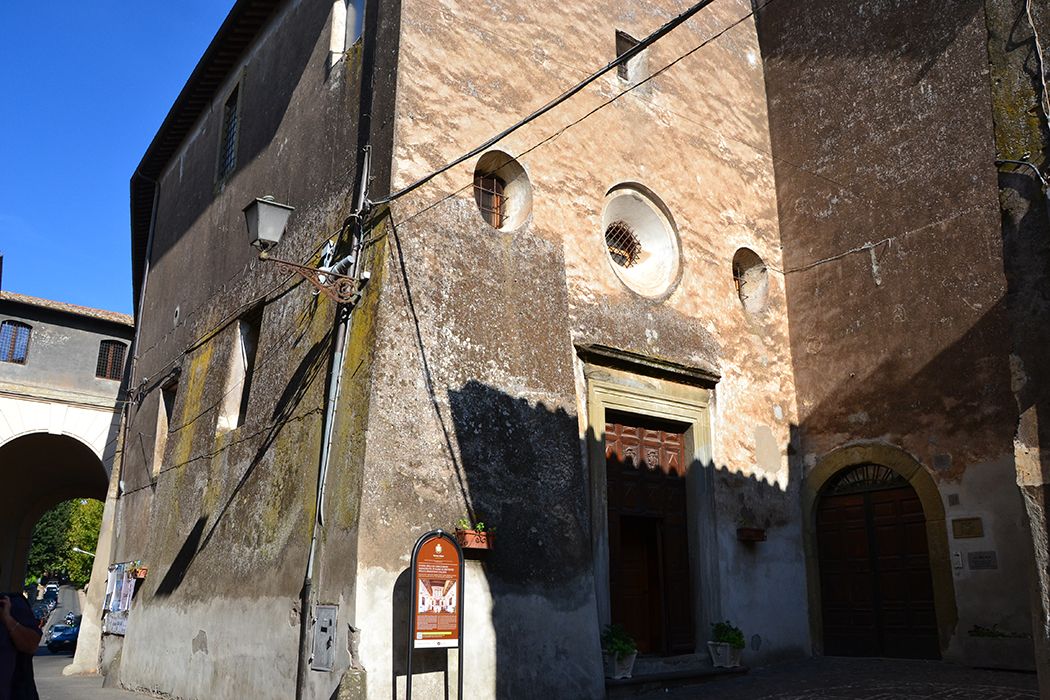
Sutri. Church of the Immaculate Conception

The history of the monastery and the church of the Immaculate Conception in Sutri begins with an old castle .

It  was cut in two in 1570 during the urban development works and the opening of Porta Morone.

Probably the church was the lateral aisle of a larger building that was destroyed.

On the main altar hangs an oil painting from the seventeenth century depicting the Madonna between angels and saints and a painting of the sixteenth century by Martino De Voes representing the Supper at Bethany.
 

powered by social2s
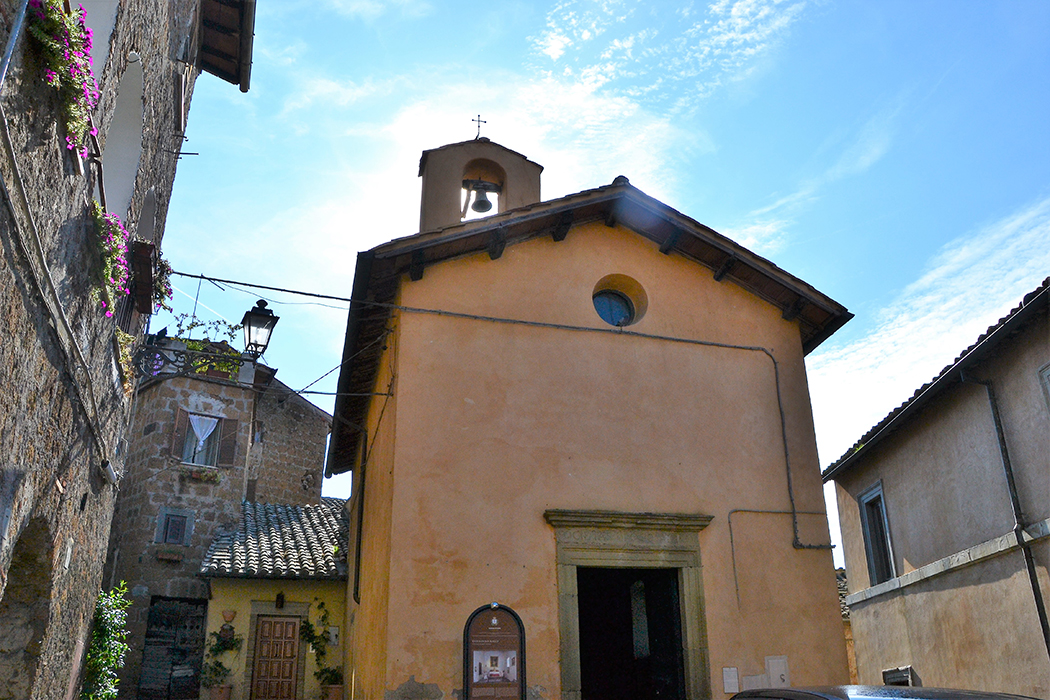
Sutri. Church of San Rocco

The church of San Rocco in Sutri is located near the old hospital which now houses the museum.

Having a church dedicated to San Rocco was very common because he is the patron saint of plague victims.

The facade has a very simple style and the front door is covered with a lava stone frame that shows the 1608 date.

powered by social2s
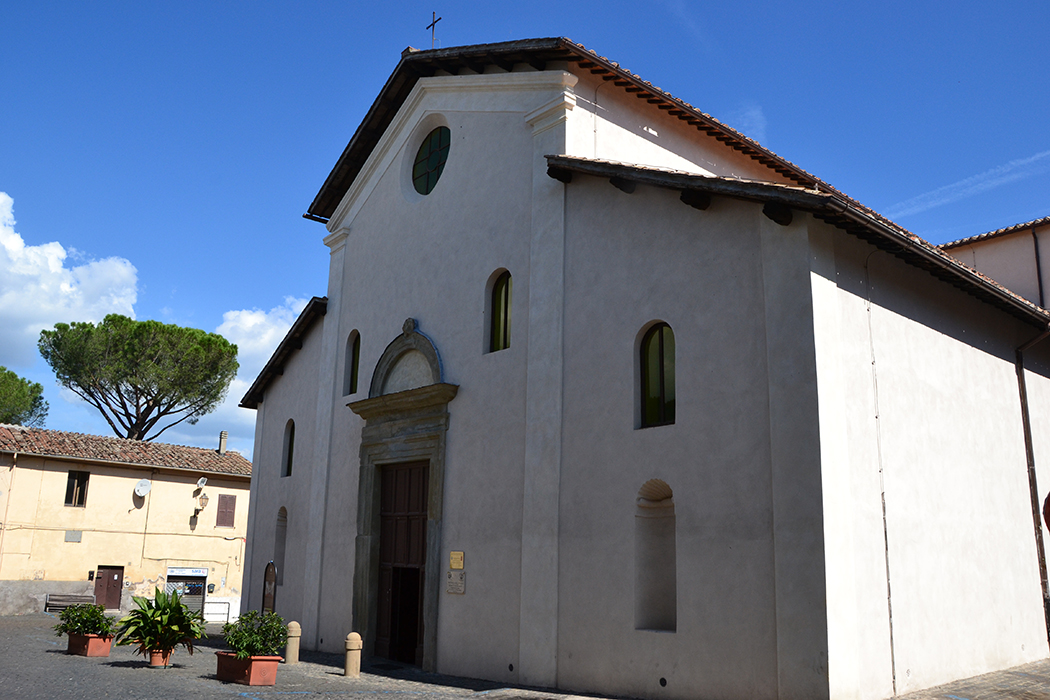
Sutri. Church of San Sebastian

The church of San Sebastian in Sutri dates from the thirteenth century and has a simple style so that the building is almost indistinguishable from the neighbouring houses.

Inside, above the altar, is a fifteenth-century fresco depicting the Madonna enthroned between San Sebastiano and San Rocco.

powered by social2s
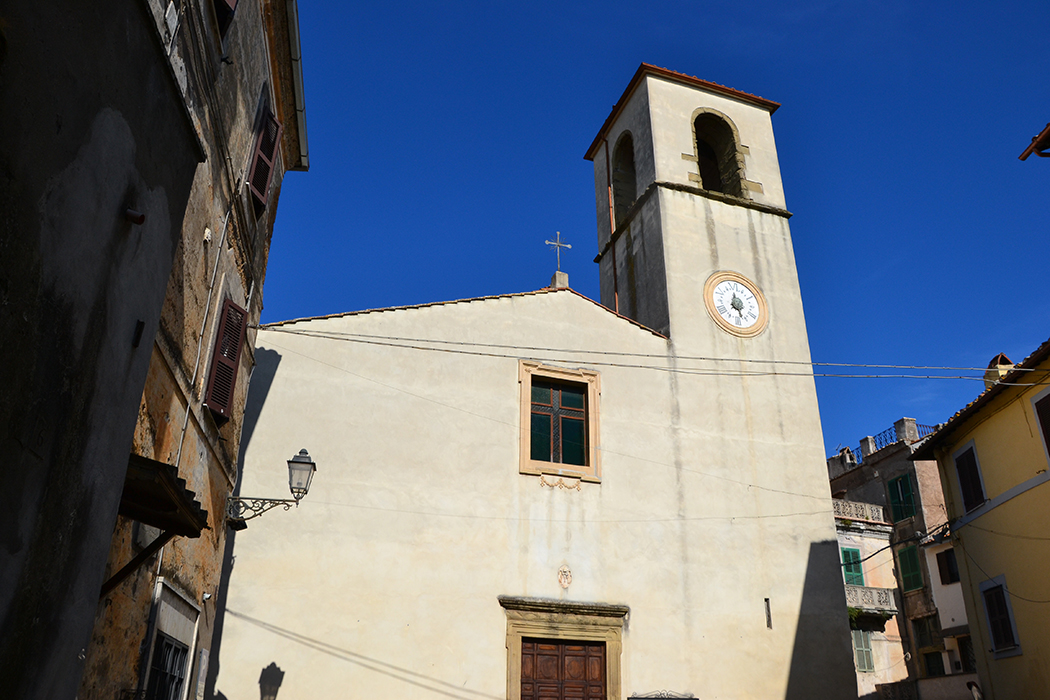
Sutri. Church of San Silvestro

This Romanesque church of San Silvestro in Sutri is one of the oldest and inside there is a fresco dedicated to Pope St. Sylvester and St. Anne and another depicting the Deposition of Jesus in the tomb.

In the bell tower is a bell dating from 1046 donated by Matilde of Canossa at the Council of Sutri.
 

powered by social2s
Sutri. Cathedral Santa Maria Assunta

In 1207 Pope Innocent III consecrated the old cathedral of St. Mary of the Assumption in Sutri bringing them the gift of a table with the Byzantine Christ still shown.

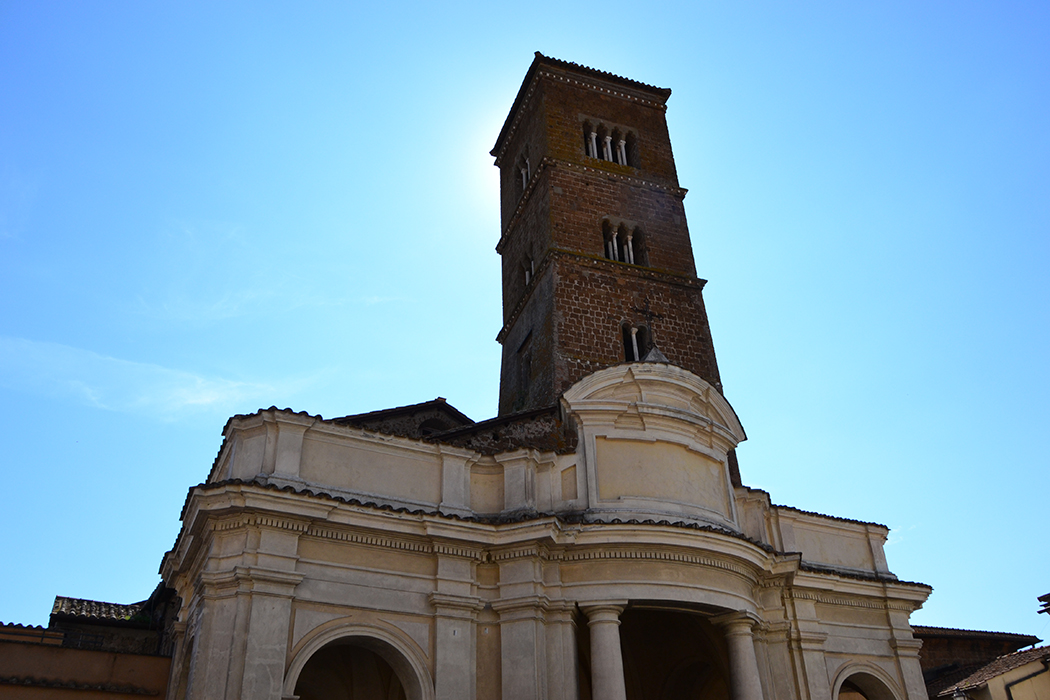
The splendid Romanesque bell tower is of note.

Inside the church has three naves and a baroque style contrasted by a splendid Cosmatesco floor.

In the side chapels there are paintings of the seventeenth and eighteenth centuries, and a table of the Most Holy Saviour of the XIII century.

The crypt has beautiful Roman columns and capitals, and one can see some medieval frescoes, probably from the Lombard period.

Sutri was one of the first bishoprics of the world and in the church is the bronze bust of Papa Clemente II, who was elected in Sutri in 1046.
 

powered by social2s
ph Laky 1970
Capranica Prenestina. Sanctuary of Madre della Grazie della Mentorella

The sanctuary of Madre della Grazie della Mentorella is an abbey served by the Congregation of the Polish Resurrection of Our Lord Jesus Christ and was built in Roman times by the emperor Constantine and is therefore the oldest in Italy.

The emperor, according to Pope Sylvester I, had it built on the site of the conversion of Saint Eustace, the Christian name of a Roman general named Placidus who had converted.

Here passed St. Benedict, who lived two years in a cave and then the sanctuary came under the control of the Abbey of Subiaco until the fourteenth century.

After a prosperous period, the monastery was abandoned from 984 and its rebirth is due to the Jesuit Athanasius Kircher who between 1665 and 1680 restored it thanks to the contributions of European sovereigns.

The remains of the Jesuit are still in the monastery.

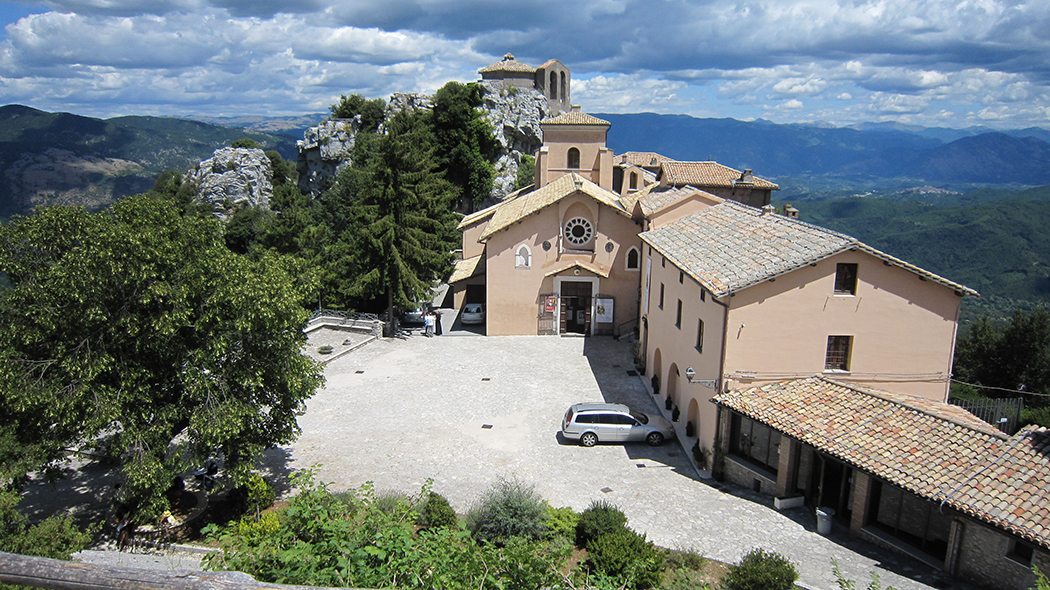
The shrine is dedicated to Our Lady and is located at 1020 meters on a spur of Mount Guadagnolo and consists of a convent, a church, a chapel, accessed from a Scala Santa, and a small cemetery.

Its name comes from a medieval watchtower, Morella Tower, or the General Wult of the Goths who had converted to Christianity.

The church has a simple façade with a niche with a small rose window above the main entrance.

Inside, the church is divided into three naves and initially was completely frescoed although today all that is visible is a small part of the complete work.

Above the altar there is a ciborium that protects the wooden statue of the Madonna with child dating back to the thirteenth century.

And 'one of the most famous statues in the region and today can be seen in its original form after a restoration eliminated the decoration that had been added in 1887.

Another work is a fine painted wooden table narrating the conversion of the general Placido and the consecration of the sanctuary.

It is believed that this table is from a previous building and, according to some historians, it was a part of a front door of an earlier church.
 

powered by social2s
Capranica Prenestina - Bettiol

The church of Madonna delle Fratte a Capranica Prenestina is also the called delle Grazie, and dates back to the sixteenth century.

It is said  that it was built on the site where was found a painting of the Madonna.

The story says that a farmer found this painting among the brambles and took it to the nearby church.

During the night the painting disappeared and was found again on the thorns which, in dialect, are called ‘fratte’ or 'thickets'.

On that site was later built a small temple, a simple church with a single nave and a roof 'hut'. Inside a small arch separates the area of ​​the faithful from the altar on which is a portrait of the Madonna and Child.

The painting is a copy because the original has been lost during the bombardments of World War II.

The simple façade is enriched with a door surrounded by stone slabs, a circular window above the door and a small staircase in the entrance stone. The church has two steeples with rib vaults.


powered by social2s

Recommended

Subscribe to Newsletter

Discover a territory through the emotions of the people that have lived it.