Churches & Places of Worship

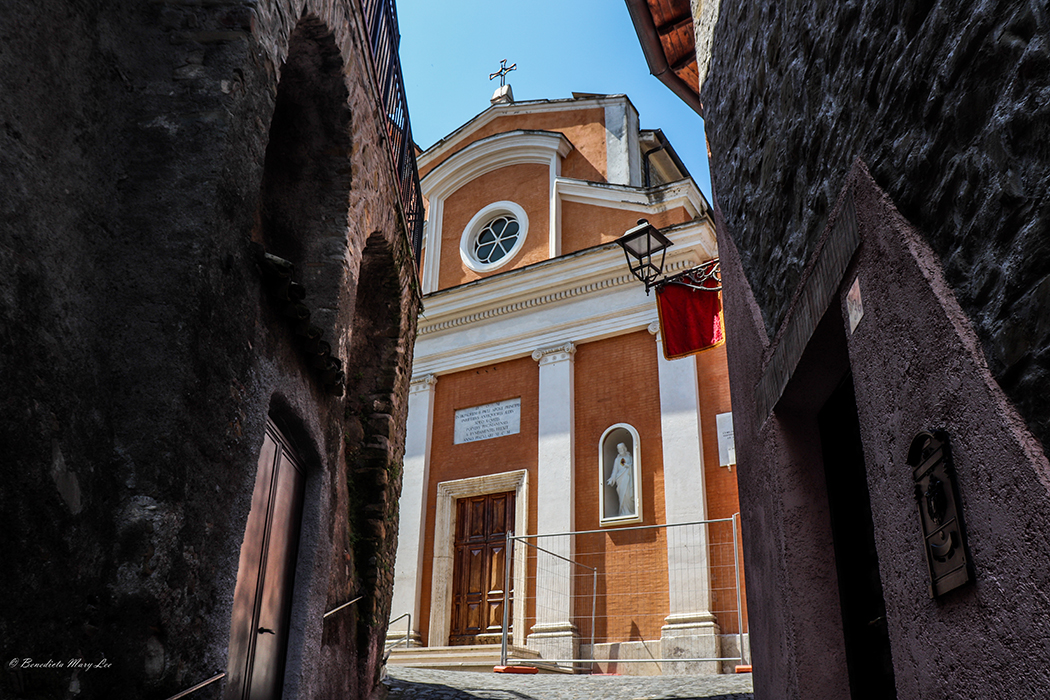
Cervara di Roma. Church of Mary Most Holy of the Visitation

The church of Mary Most Holy of the Visitation (Maria Santissima della Visitazione) is in Cervara di Roma in a steep area below the remains of the fortress.

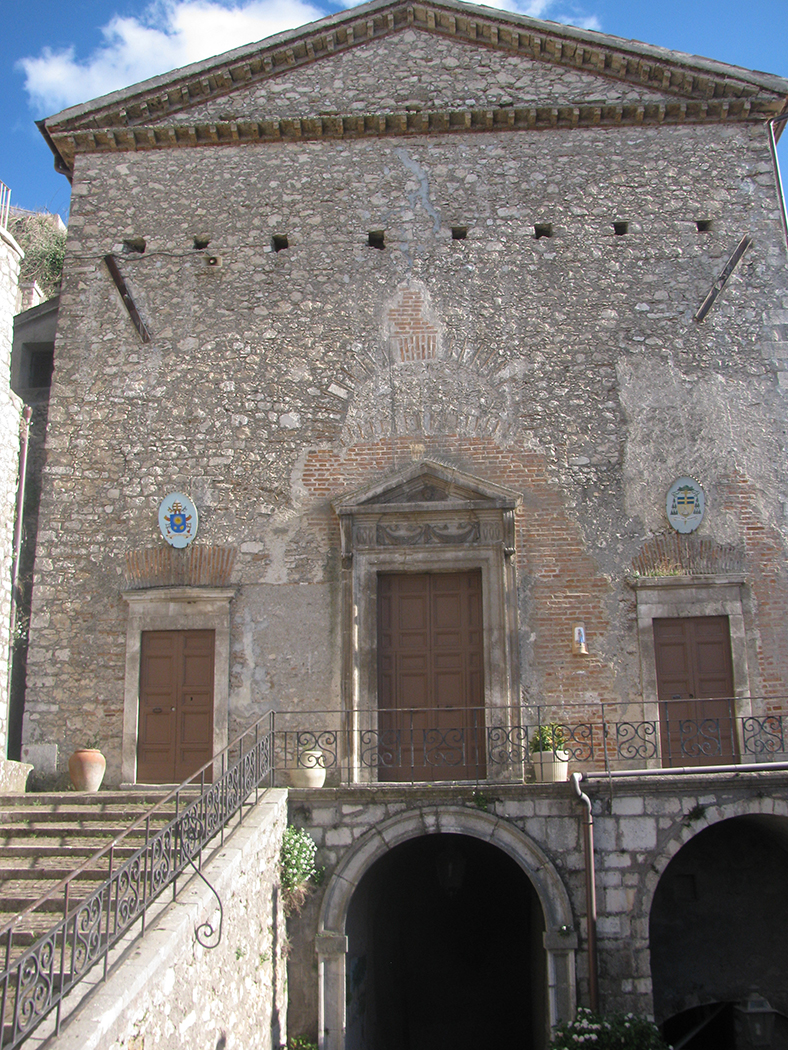
It is supported by stone arches, all built from local stone, with a high bell tower.

Some of the rooms under the Church that were once the barn where the peasants brought their money to pay taxes.

Now there is the museum and on the wall we can recognize the calculations for the payment of the dues to the Papal State.

The church is dedicated to the Most Holy Mary of the Visitation and its façade in local stone blends with the mountain. Three entrance doors lead inside and the central one has an elegant frame carved in white marble.

The building was last enlarged in 1872 and its interior is in Baroque style with a single nave covered by a frescoed vaulted ceiling and side chapels.

The nave ends with a richly decorated eighteenth-century altar above which there is a fresco of the crucifixion.

You can admire seventeenth-century works of art such as the paintings dedicated to the Visitation by Vincenzo Vanenti di Orvinio and a Madonna del Carmine.

Under the altar is the body of the town's patron saint Felice, a martyr found in the catacombs of San Callisto in Rome.

In the nearby bell tower there are two bells that show the date of a first casting of 1428 and a recast of 1785.

powered by social2s
Church of Santa Vittoria

The church of Santa Vittoria is located outside the historic center of Pisoniano.

According to tradition, it was built around the sixth century AD in the place where Santa Vittoria and her sister Anatolia took refuge during the persecutions of the emperor Decius around the third century AD.

A walled epigraph on the entrance door recalls a rebuilding that took place in 1681. The current appearance of the church is due to renovations of the eighteenth and nineteenth centuries.

On the main altar there is an 11th century table depicting Holy Victory carrying a dragon tied to a rope while blessing the population with the other hand.

According to a local legend, in fact, the saint saved the local population by asking for a dragon that spread terror and that had brought the plague in the municipalities around Ciciliano.


powered by social2s
Church of Saint Paul Apostol

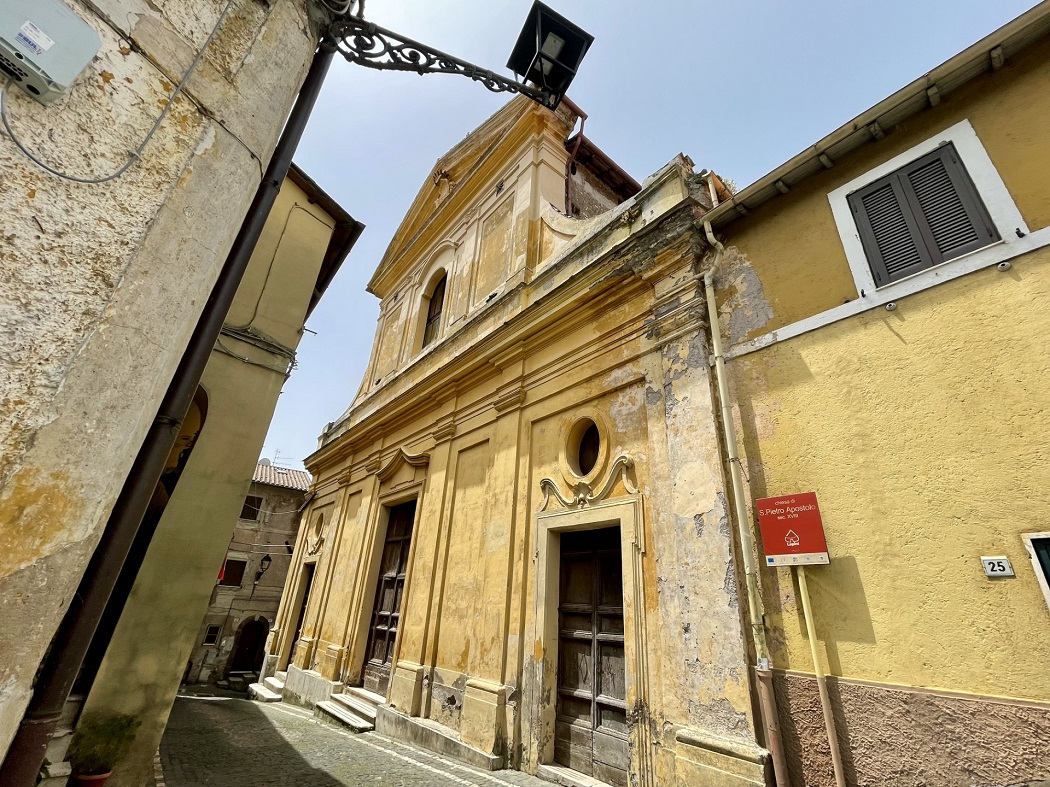
The original church of Saint Paul Apostol in Pisoniano dates back to the 12th century but has been changed so many times that it has lost its original characteristics. The church was in fact renovated in the seventeenth, eighteenth and early twentieth centuries.

The church is located in the historic center and has a facade marked by a succession of pseudo-columns with Ionic capitals. The interior is divided into three naves with faux marble painted pilasters.

Here we venerate the Madonna of the Snow carried in procession in August. Inside there are some interesting paintings of the eighteenth century.

powered by social2s
Montelanico. Church of Santa Maria del Soccorso

The church of Santa Maria del Soccorso is located in Montelanico at the foot of the village near the river Rio. 

It owes its name to the discovery of a painting of the Virgin of the fifteenth century.

Legend has it that the icon was found by a farmer while ploughing his field.

On the site of the discovery initially a chapel was erected before then being enlarged and transformed into a church in 1636.
 

powered by social2s
Church of Sant'Antonio or "Tigri"

The church of Sant'Antonio in Montelanico is also called Tigri Church in honour of the Marquis Francesco Tigri who built it at his own expense in 1702.

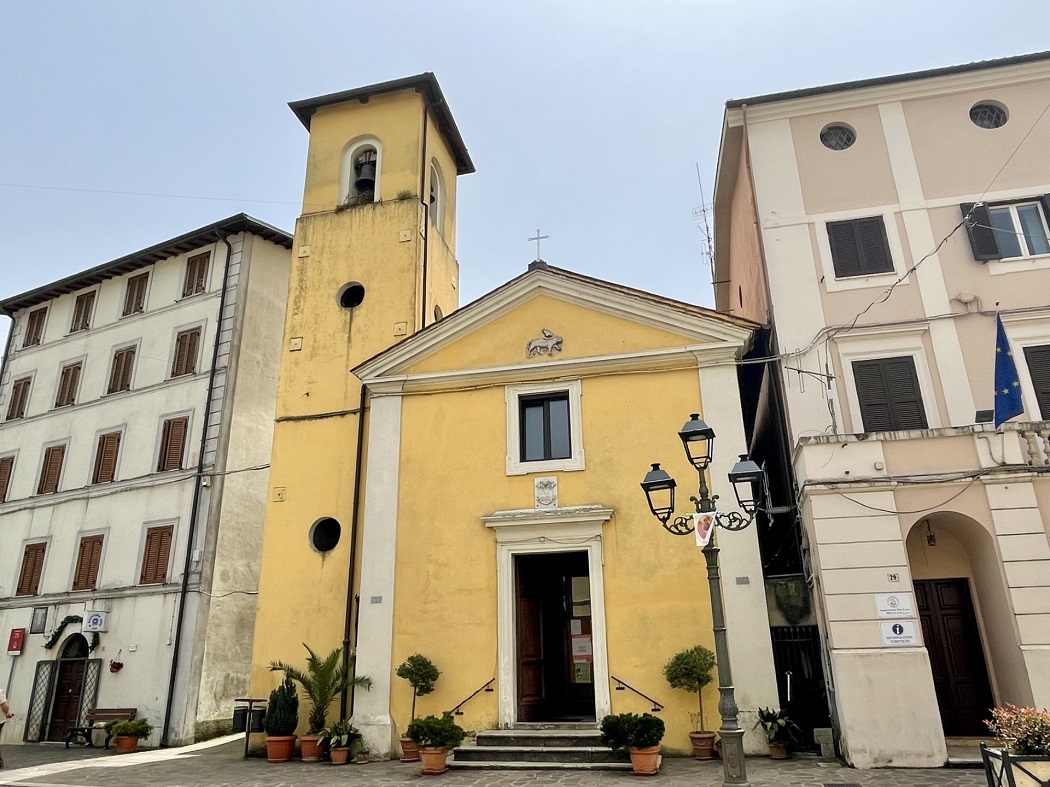
The building is neo-classical style and is located in the town's main square, Piazza Vittorio Emanuele, in front of the fountain by Biondi.

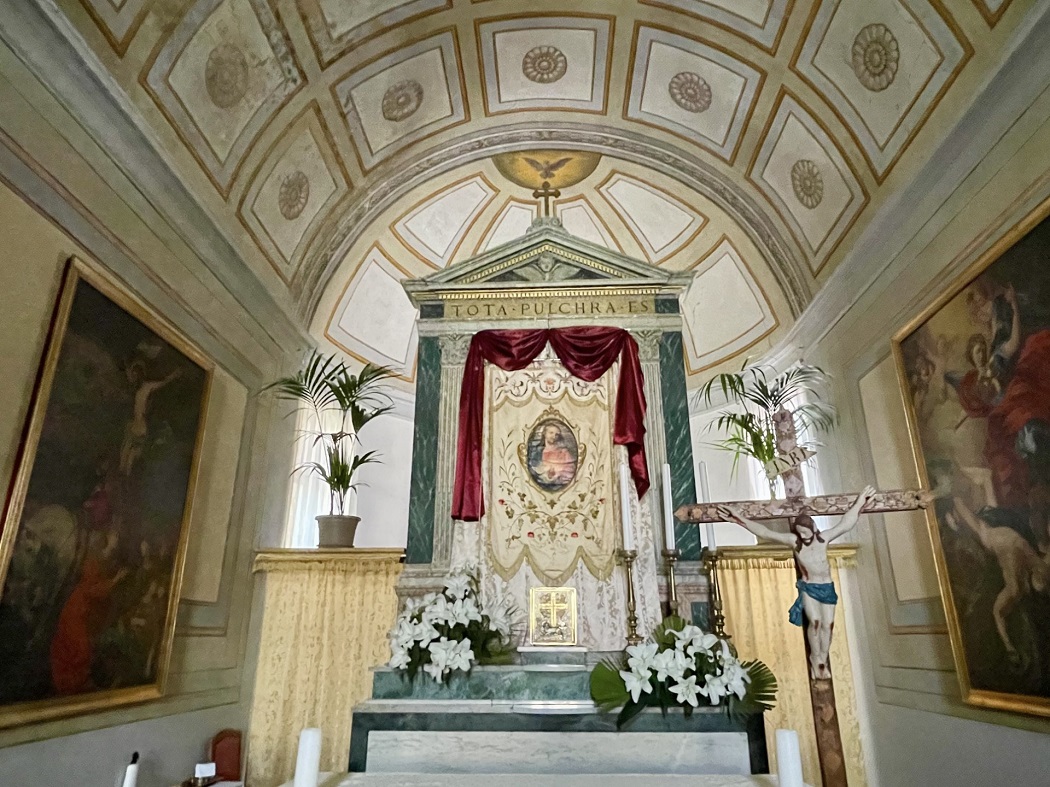
The interior has a single nave and the style is simple with a small decorated vault over the apse.

On the sides of the aisle are framed paintings and a small chapel with an altar on which there are three statues: Sacred Heart of Jesus, St. Anthony and St. Joseph.


powered by social2s
Church of St. Peter the Apostle

The church of St Peter in Montelanico is very ancient and was attached to the ducal palace near the castle gate.

In 1702 it was totally destroyed by an earthquake and in 1750 it was rebuilt larger by Gerolamo Pamphili.

Inside it has a single nave covered by a barrel vault and has two chapels on each side.

To the right of the main altar is a ciborium, a canopied altar, attributed to the school of Mino da Fiesole.

In a chapel is an oil painting in a neoclassical style that represents the "Madonna del Soccorso" painted by Vincenzo Camuccini.

The current organ dates from 1930 and under the floor of the church are the remains of ancient tombs as was the custom before the implementation of cemeteries.
 

powered by social2s
Arpino. Benedictine Monastery

The cloistered benedictine monastery of Arpino is adjacent to the church of St. Andrew.

The first news we have of it is in a notarial deed of 1249, although tradition says that it was founded in the sixth century by Saint Scholastica, sister of St. Benedict.

In the monastery of Monte Cassino, 86 scrolls are kept related to the monastery from which we learned about cloistered life over the centuries in all its aspects.

The functions of the abbess (director) are described, the 'consilium monialium' (council of nuns) which regulated relations with the outside world, the requirements to enter, and the life within.

The monastery is in use and cannot be visited.

Inside there is a cloister around which the devout nuns live.

Inside there is a crucifix of the fourteenth century Tuscany and Umbra School, perhaps donated by a Franciscan community.

powered by social2s

Recommended

Subscribe to Newsletter

Discover a territory through the emotions of the people that have lived it.