Churches & Places of Worship

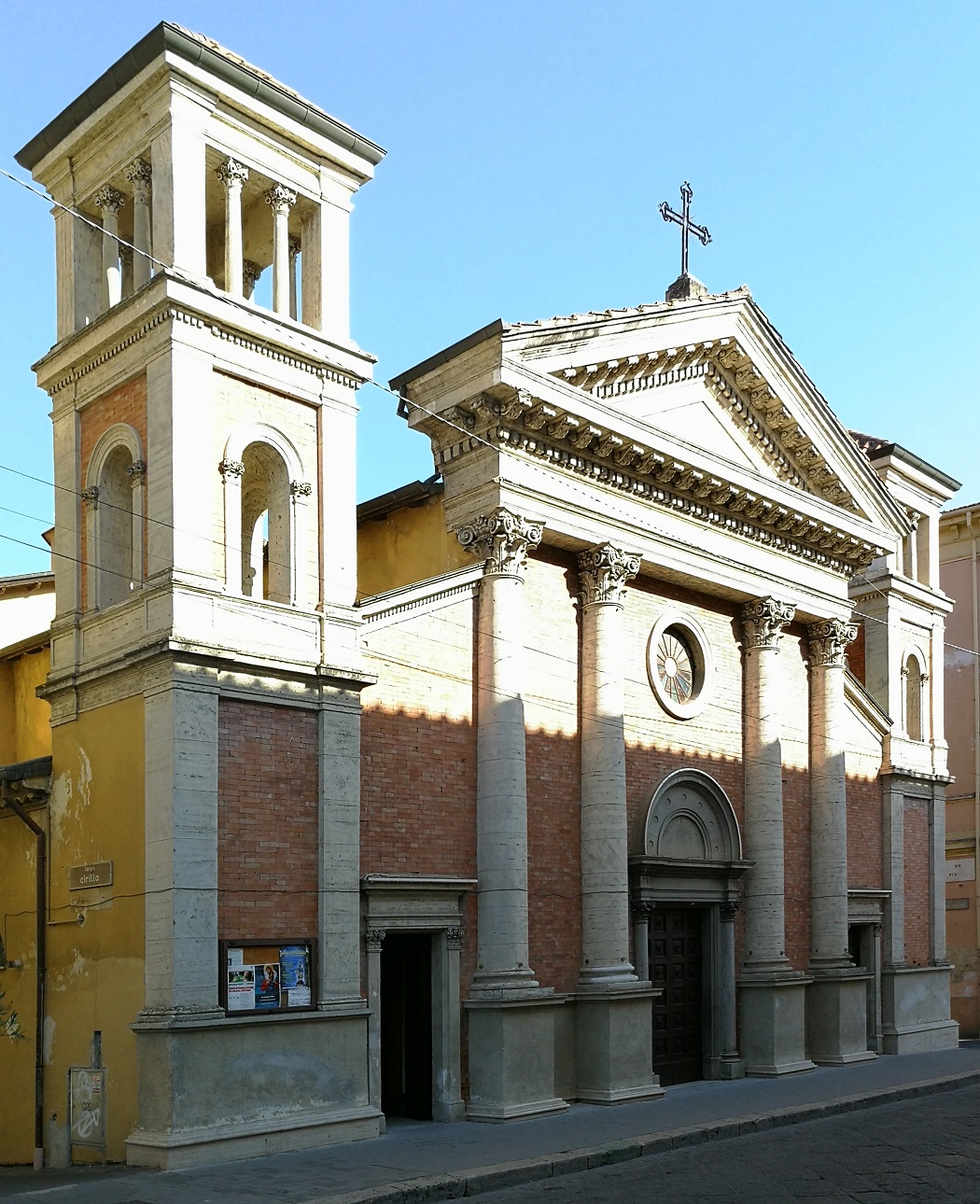
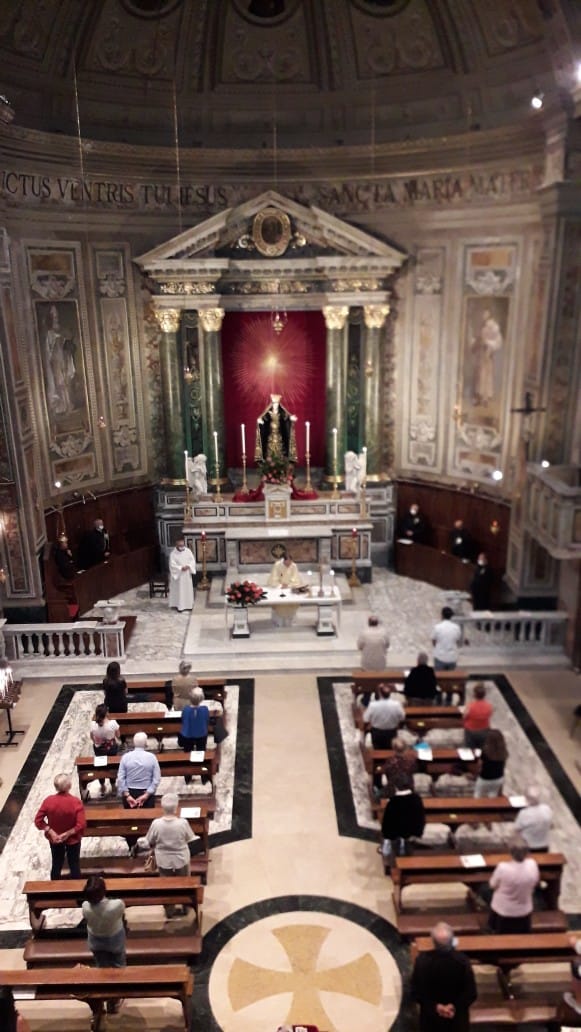
San Donato Val di Comino. Cathedral of Santa Maria and San Marcello Pope

The cathedral of San Donato Val di Comino is dedicated to Santa Maria and San Marcello Pope and dates back to the fourteenth century but then was changed in the Baroque period.

In the eighteenth century, the church was enlarged and embellished with simple, stylish, decorations, and an artistic chorus Colaianni praised by the bishop in his pastoral visit in 1800.

The church has a fine pipe organ built by Cesare Catarinozzi.

In a glass urn under the main altar, it houses the body of St. Constance, a Christian martyr killed with a sword to her throat.

The saint was buried in Rome in the Catacombs of San Callisto and in 1756 her remains were transferred in the cathedral. Since then, the last Sunday of August Santa Costanza is celebrated.
powered by social2s
Church of Saint Anthony Abbot

The church of Saint Anthony the Abbot (Sant'Antonio Abate) is located on the slopes of San Casto hill above Sora, near a well-preserved stretch of the polygonal walls. The shrine is dedicated to the hermit patron saint of the animals.

The interior has three naves and the main altar is the work of Neapolitan baroque school.

On January 17, in the square opposite, a trade fair takes place with the blessing of the animals.

powered by social2s
Sanctuary of Santa Maria della Figure

The sanctuary of Santa Maria della Figura was built in 700 near a cave in Selva di Sora.

An ancient image of the Madonna was venerated here.

Legend has it that a shepherd had lost a cow and ventured into the woods to look for it.

He found the cow kneeling in front of a rock where the image of the Madonna was.

The miracle attracted pilgrims and the faithful of Sora decided to build a small chapel.

The Sorani financed the church with donations or personally working on its construction.

The hermits went to build the first rooms to be able to sleep next to the image and keep the Madonna.

Today the church has three naves and some chapels.

A 'treasure' room houses all the ex-votos, that is the thanks of the faithful to the Madonna.

The bell tower dates back to 1937.

The dome is covered with a pictorial cycle in which the S.S. Trinity, the Virgin and the four Evangelists.

powered by social2s
Church of Maria SS. of Valleradice

The church of Maria SS. of Valleradice was first built in 1429 by some citizens of Sora for atonement of their sins.

It was partially built into the rock in an area rich in Palaeolithic finds.

In the church there is a fresco of the 1400s of the Madonna that was destroyed in 1943 by bombing by the Allied forces.

The church is full of memories of the life of Cardinal Cesare Baronio.

In 1960 it was completely rebuilt with the contribution of the local population and migrants to Canada.

powered by social2s
Sora. Church of Madonna di Valfrancesca

The churchof Madonna di Valfrancesca, along the bank of the Liri river in Sora, was built in 1679 on the design by the architect Francesco di Como Campione.

The church had an almost oval plan with a tall bell tower and a baroque style.

Following the destruction by the 1915 earthquake, the church was rebuilt in 1932.

Inside you can admire the image of the Madonna saved in the earthquake and a wooden statue carved at the end of 1600s “Maònna Ranna " (Madonna Grande) that was carried in procession through the fields in the event of prolonged drought.
 

powered by social2s
Church of Saint Bartholomew Apostle

The church of Saint Bartholomew Apostle in Sora dates from the thirteenth century but was modified after the earthquake of 1915. The church was shortened to enlarge Corso Volsci.

The facade has four columns of neo-classical style with two fake bell towers on either side.

The inside is at a lower level than the road. On the vault of the central dome you can admire a fresco titled Lost, by the school of Cavalier d'Arpino of the eighteenth century, depicting the expulsion of the rebel angels from Paradise.

In 1580 the mother of Cardinal Cesare Baronio was buried here. Inside is a wooden crucifix donated in 1564 by Cesare Baronio to the Congregation of Charity, and sculpted by Tiberio Calcagni, Michelangelo's disciple.

You can also see a valuable painting by Sebastiano Conca from the first half of 1700s depicting the Madonna of Divine Love.
 

powered by social2s
Church of the Holy Spirit

The church of the Holy Spirit in Sora was built in 1610 by the Duchess Costanza Sforza Boncompagni thanks to a bequest of 300 ducats after the death of her husband, Giacomo (James) the Duke.

The building was home to the Jesuit college and in 1614, at the behest of Bishop Jerome Giovannelli, the bones of the holy martyr Giuliano (Julian) were moved there.

Because of earthquakes, the church was restored in early 1700s in Baroque style.

In the second half of the 1800s, the vault was frescoed by the Neapolitan School of painters with the "glorificazione della Madonna con i santi Domenico, Giuliano e Restituta” (glorification of the Madonna with the Saints Dominic, Julian and Restituta), in whose background stands out a view of Sora.

The apse paintings are by the Sorano artist Domenico Biancale from1915 and depict St. Bonaventura and St. Bernardo.

There is a sixteenth century statue of Our Lady of Sorrows and wooden angels sculpted by Pasquale Fosca.

powered by social2s
Sora. Convent and Church of St Francis

The church of St Francis - San Francesco and the adjoining convent in Sora were founded in early 1300s.

In 1363, according to the testament of Cicco Omobono, the church was enlarged in the Gothic style.

Traces remain of this building in the rear wall of ashlar stone, the pointed arch mullioned windows in travertine with central column and curved decorations and frescoes of the XIV-XV century representing the Virgin and Child, San Savino and San Bonaventura.

In the fourteenth century a cloister with pointed arches was connected to the church.

The two buildings were damaged by the earthquake of 1654 and restored and expanded in the early eighteenth century.

The cloister was closed, destroyed by the construction of a grand staircase, according to the architecture and style of the eighteenth-century.

From 1806 the convent was abolished by the French under Murat and the building was transferred to the municipality who used it for various purposes and it now houses the town museum.

powered by social2s

Recommended

Subscribe to Newsletter

Discover a territory through the emotions of the people that have lived it.