Churches & Places of Worship

Fiuggi. Church of Santa Maria delle Tre Cone

The church of Santa Maria delle Tre Cone was originally annexed to the San Carlo Hospital, which housed sick and pilgrims in Fiuggi.

Also called Terconia or Vittoria because it was built to celebrate the success of Marcantonio Colonna in Lepanto.

Inside, Terenzio da Fiuggi made a wall painting on the upper altar representing the battle of Lepanto and the Virgin asking for peace.

On top it reads " Non Vires arma, sed Maria Rosarii fecit nos victores" (Not armed men, but Maria of the Rosary made us winners).

powered by social2s
sdr
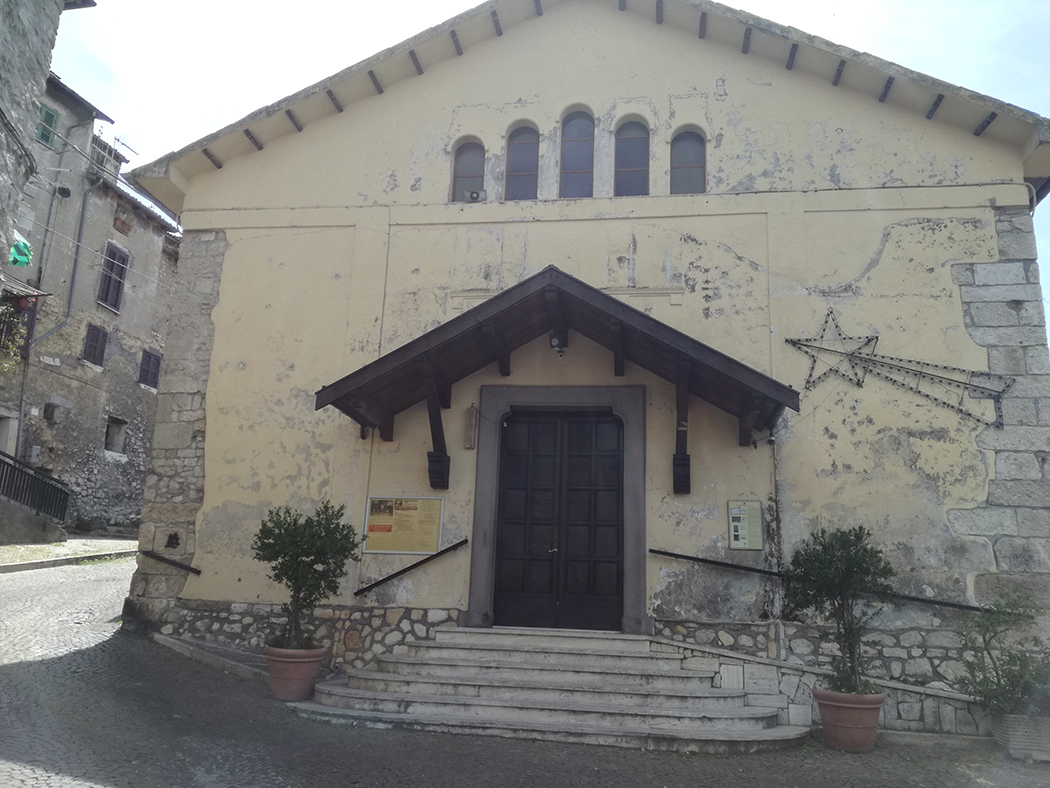
Fiuggi. Church of Santa Maria del Colle

The church of Santa Maria del Colle in Fiuggi was known as Santa Maria de Foris, because it was outside the "Colle" ward and probably had been built by monks.

It is cited for the first time in reference to an Abbot Oddone in 1333. The façade is a Romanesque ‘capanna’ with elements of Gothic architecture even though it has been redone several times.

Inside, in 1981, a fresco on the main altar that represents a Madonna and Child was uncovered.

The church has a choir, a Baptismal Source and an important oil painting of the Madonna del Buon Consiglio.

In 2006, Louis Severa embellished the Church with a bas-relief on the left of the altar of the Blessed Sacrament representing The Last Supper.

In the church are the statues of St. Anthony of Padua and Santa Rita da Cascia and a bust of San Domenico di Cocullo with relics.

powered by social2s
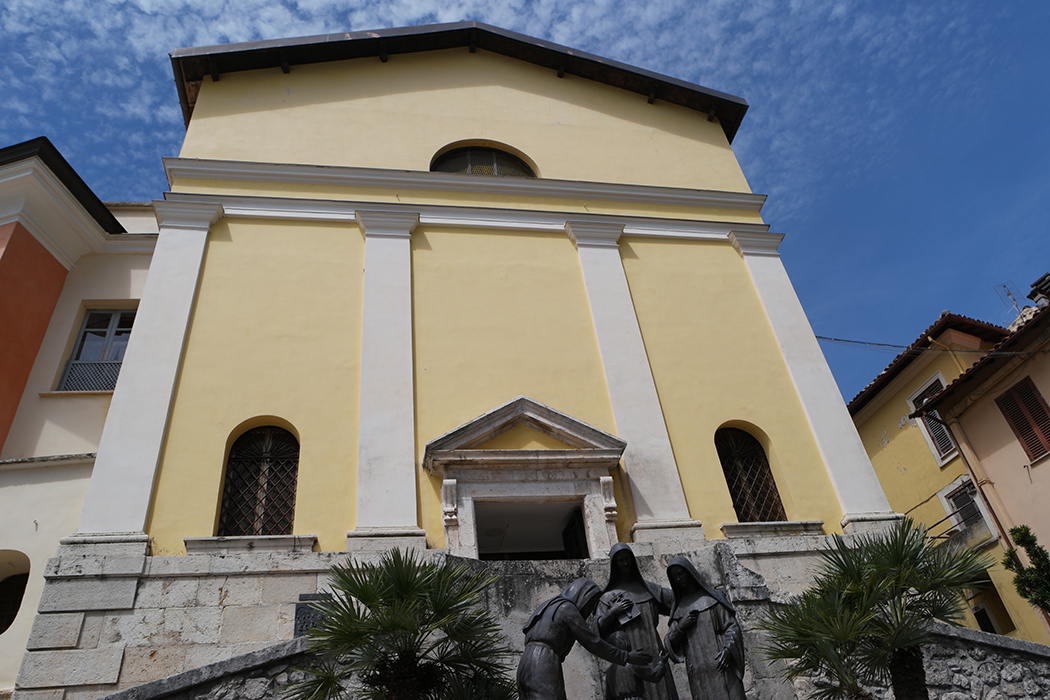
Fiuggi- Chiesa di Santa Chiara by Benedicta Lee

The church of Santa Chiara was built in the 18th century in Fiuggi to replace a former medieval church and named after the nearby convent founded in 1741 by the three Faioli sisters.

The church has an eighteenth-century appearance and the interior is a single nave with lateral chapels enriched with marble and stucco. Below the church lies the crypt where the sisters are buried.

In front of the church, under the access stairway, a bronze monument was built by the sculptor Angelo Canevari in 1989.

The monument represents the three sisters who welcome a little girl.

The Faioli Sisters

The Sisters Faioli, Teresa, Cecilia and Antonia, were originally from Fiuggi and once they were orphaned they devoted themselves to helping other girls who were alone by opening their paternal home in the old town.

Their fame grew and they moved to a larger building where they lived and served the orphaned girls for over 31 years.

In 1876 the bishop of Anagni consecrated the Rule of Saint Clare, with which the religious order is founded.
The process of beatification of sisters has begun.
 

powered by social2s
Fiuggi. Church of St. Stephen

The church of St. Stephen in Fiuggi seems to have been built around the 11th century on a Roman temple dedicated to god Apollo.

Its original Italian Gothic style was then changed into baroque style.

For centuries every morning Holy Mass was celebrated at dawn for the shepherds and farmers of Fiuggi and for this reason the church was known as the "Church of the Shepherds".
 

powered by social2s
SAMSUNG CSC
Fiuggi. Church of St. Peter

The church of St. Peter in Fiuggi was originally built outside the walls and dedicated to the SS. Apostles Peter and Paul.

In the seventeenth century it was demolished because it was in a difficult place to reach with bad weather and snow and the current church was built inside the walls by extending a previous building.

Today it is dedicated to the patron saint of Fiuggi.

The new church in Baroque style has a Latin cross-shaped plan with a large nave and six side altars. It was inaugurated in 1617 as a collegiate, and rearranged as a college of priests.

Next to the church there is a sloping bell tower, which is accessed from the Castle Square, and was the original castle watch tower.

powered by social2s
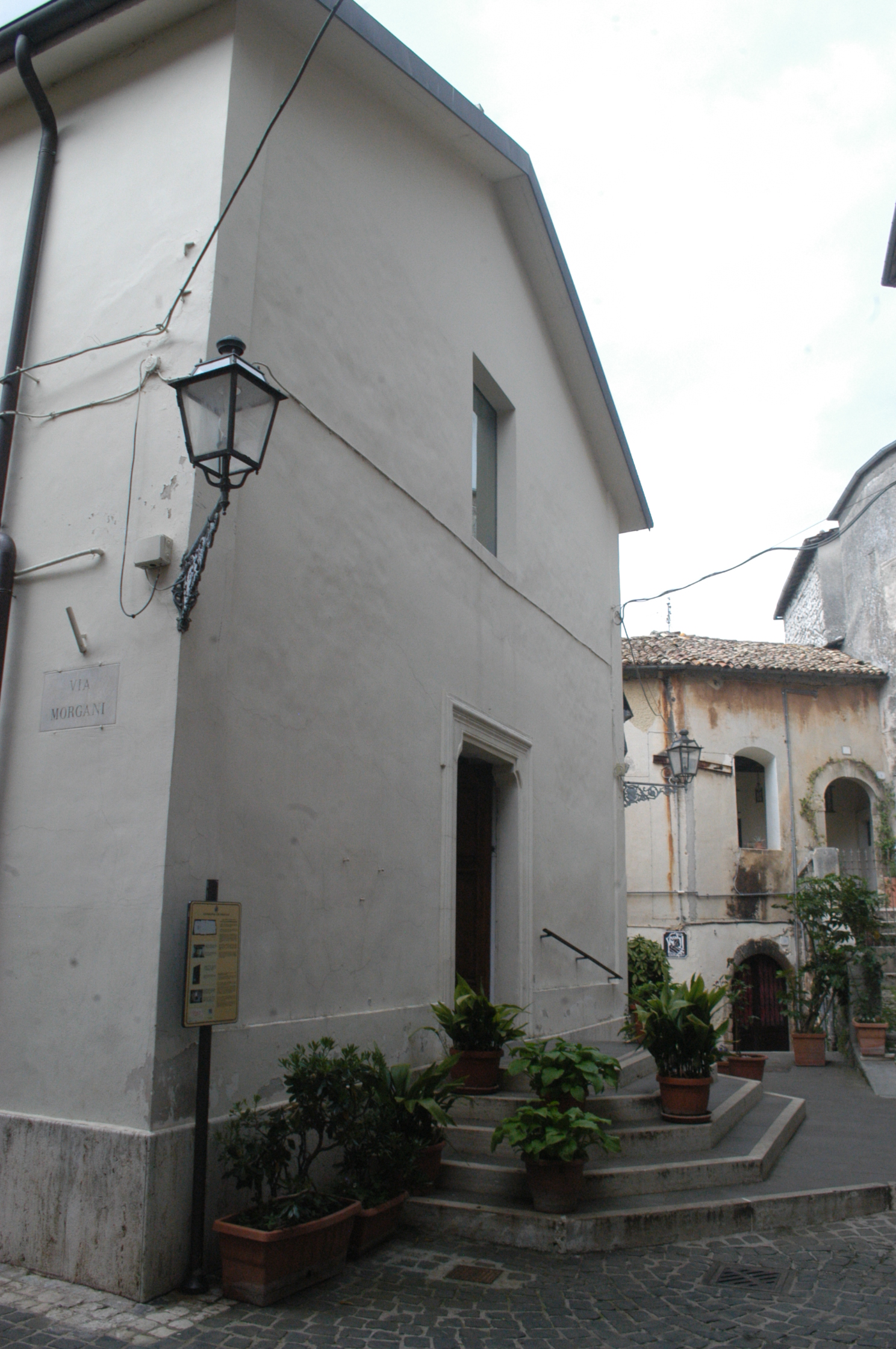
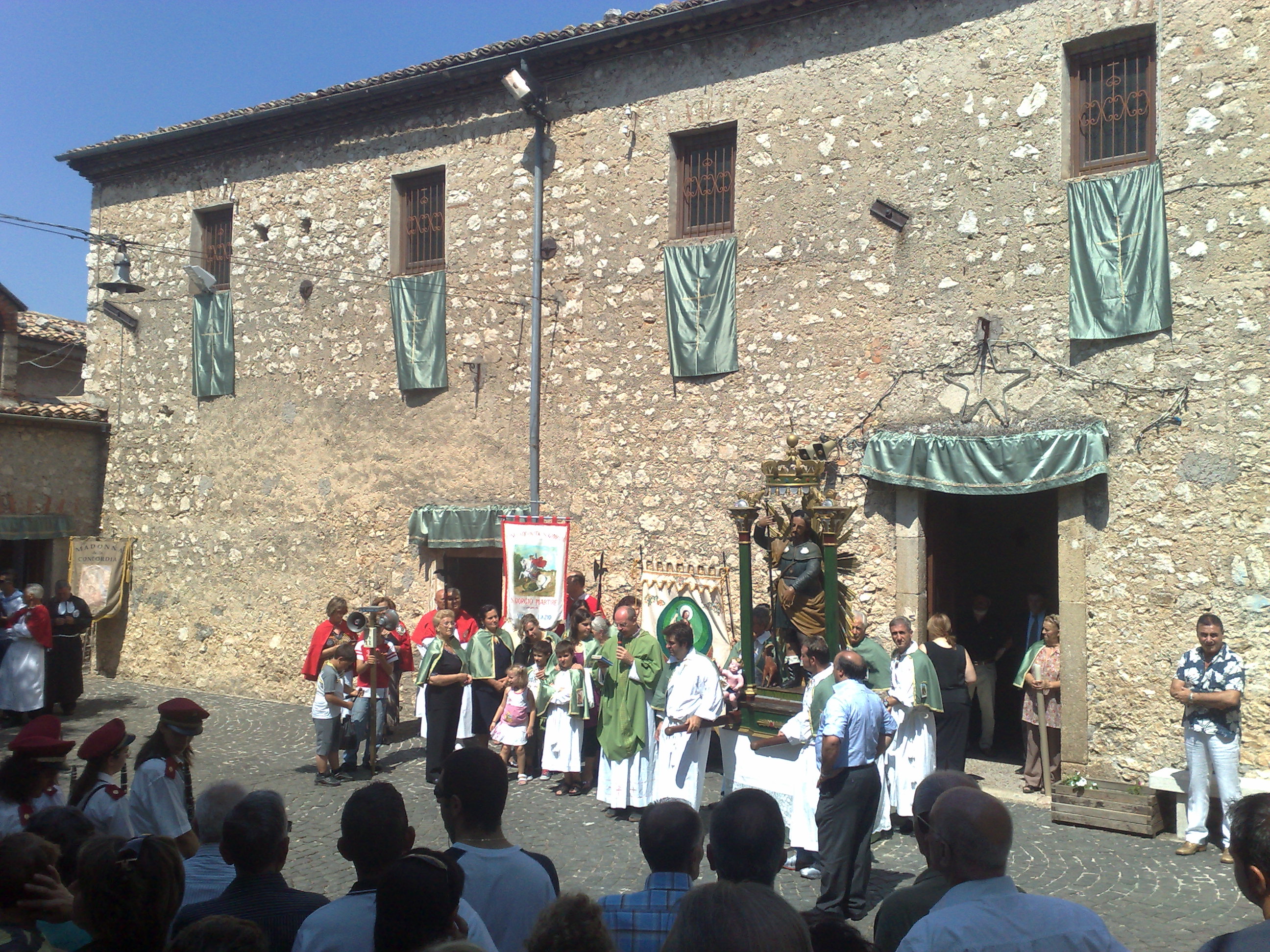
Vico nel Lazio- Chiesa di San Rocco by Luciano DAbbruzzo

The church of San Rocco is in the square of San Rocco in Vico nel Lazio and is easy to confuse with the other medieval buildings.

In fact, its appearance is very similar to that of a home with a simple door, a plain stone border and a double horizontal marble frame above the door.

You enter the church from a side entrance that brings you into a square room.

The hall has a frescoed barrel roof and near the altar is a beautiful statue of Saint Rocco with his inseparable dog.
 

powered by social2s
Vico nel Lazio. Church of St Barbara

The newly built church of St Barbara takes its name from the Santa Barbara district in Vico nel Lazio where it is.

It was realized thanks to funds obtained from the Panzanella Festival and the commitment of the local populace.

The feast of the saint is traditionally shifted to June in memory of when Vico's men followed the rules of stock movement with farms on the Pontine plains in winter and in the forests of the Ernici Mountains in summer.

powered by social2s
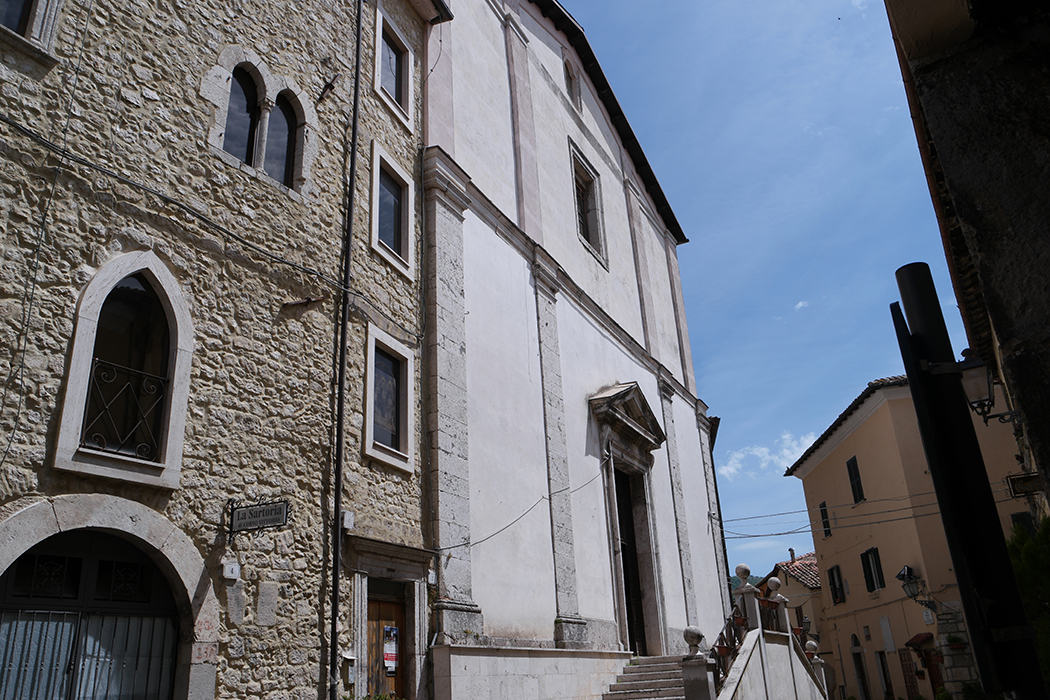
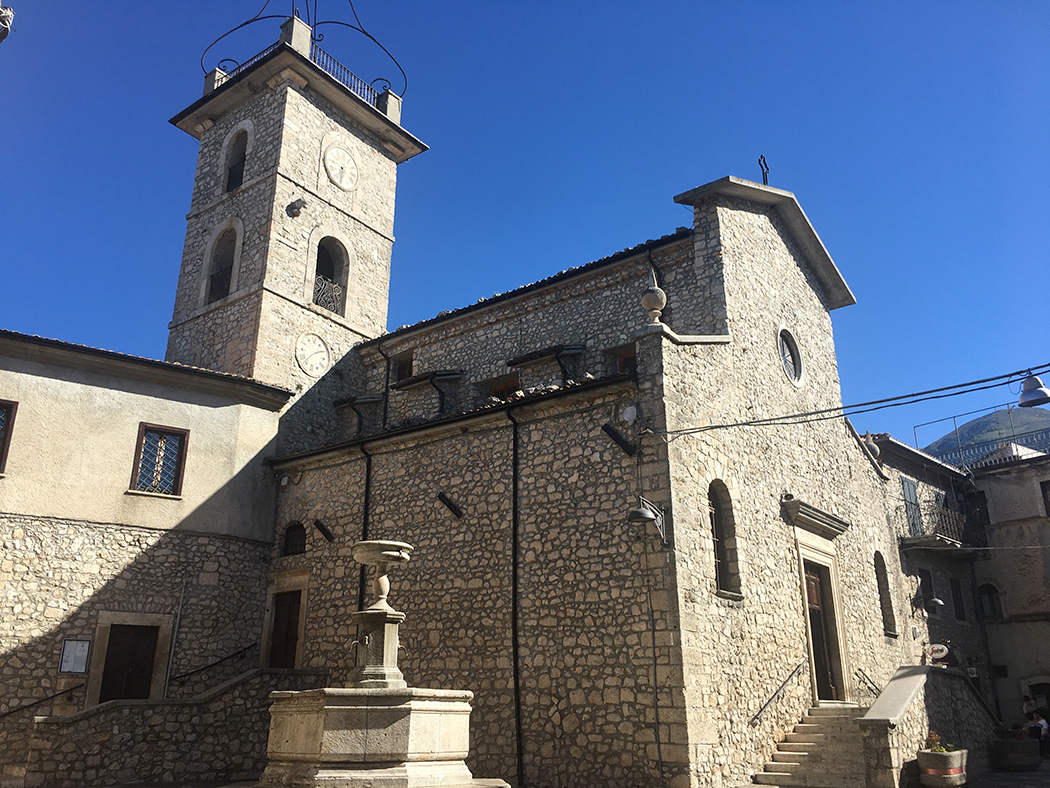
Vico nel Lazio- Chiesa San Michele Arcangelo - Bettiol

The original collegiate church of St Michael Archangel in Vico nel Lazio dates back to the Millennium and is quoted in the biography of San Domenico da Sora.

St. Michael the Archangel was very revered in the Byzantine period for his appearances in France, Rome and Puglia.

The current church was rebuilt in 1581 and has a special bell tower ending with a design made with iron work. In 1800 the interior was transformed into three naves by connecting the side chapels.

The central nave ends with a 18th-century wooden choir. Inside the altar lies the body of San Prospero, the saint who brings rain, and above the altar an altarpiece representing the Madonna on the throne with Child between Saints.

The vaulted ceiling is frescoed by Gagliardi and Monacelli, and above the entrance there is a choir with a 1700 organ made by the Spadari family of Affile.

Chapel of the Holy Spirit


At the end of the left nave there is the Chapel of the Relics or the Holy Spirit which contains a precious Byzantine altarpiece of the twelfth century coming from Santa Maria Maggiore in Rome.

It was brought to Vico by Cardinal Nardini who kept it in his home for a long time and it was then donated by the family to the church. A part of the altarpiece is in a museum in London.

Above this altar there are carved candlesticks from the barbarian time, while on its sides there are two splendid tortilla columns of the sixteenth century, an olive wood cross completely covered with mother of pearl and the silvery bust of St. George with the initials I (Inclita) M (Martyr) G (George) P (Patron) carved and dated 1716.

They complete the antique reliquary collection.

On the altar of the chapel lies an altarpiece, a canvas oil painting depicting the SS Trinity made by Cavalier d'Arpino at the end of the 16th century.

powered by social2s

Recommended

Subscribe to Newsletter

Discover a territory through the emotions of the people that have lived it.