Churches & Places of Worship

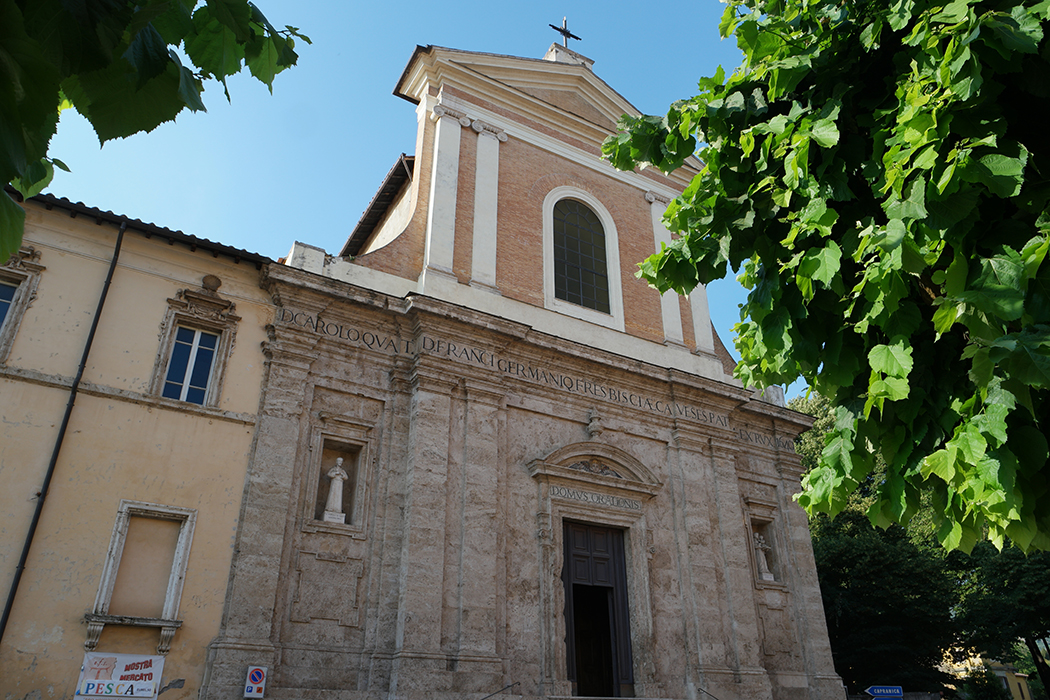
Cave- Chiesa San Carlo by Bettiol

The 17th-century convent of San Carlo Borromeo in Cave is built on the ruins of an imperial Roman villa.

Although the church had been dedicated to St. Francis of Assisi and San Carlo Borromeo, it was always known by the name of San Carlo, for the will of Prince Filippo Colonna, who was the grandson of the saint.

The complex was begun in 1616, inaugurated in 1640 and consecrated in 1729.

The facade of the Church has two levels: the first one has a Doric style with the marble portal and two niches to hold the statues of St. Francis and St. Charles. The second has a simpler ionic style and is built in brick. The bell tower was built by Giuseppe Giorgioli at the end of the sixteenth century.

The church has a Latin cross plan with a single nave with three chapels and a dome at the crossing of the transept.

In the dome are painted the glorification of the Saints, while in the apse are depicted the cardinal Virtues and a canvas with 'Approvazione della Regola'. The main altar is decorated with polychrome marble and with 2 pairs of columns near a splendid wooden crucifix of the fifteenth century.

In the church there are also the relics of San Clemente and Sant'Euplee, which is located in a glass urn and gold covered wood.

The cloister of the convent was begun in 1616 in Tuscan architectural style and features cross vaults of over twenty meters that are located around the central space.

The cloister is one of Cave's social life centres and hosts many events
powered by social2s
Cave. Church of Saint Stephen (Stefano)

In 1768, a new church of San Stefano was built to cater for the growth of the population of Cave from that of 1430.

The architect Nicola Fagiolo was a pupil of Vanvitelli.

The connection between the two churches ('original' and new) takes place through a porthole located in the ceiling of the original church.

The new church has a single nave with side chapels and it has an important fresco of the Baptism of St. Augustine by Taddeo Kuntze,

The artist also realized the Baptism of Jesus and Saint Thomas from Villanova, the baptismal font decorated with the coat of arms of the Colonna family and that of the Municipality of Cave.
 

powered by social2s
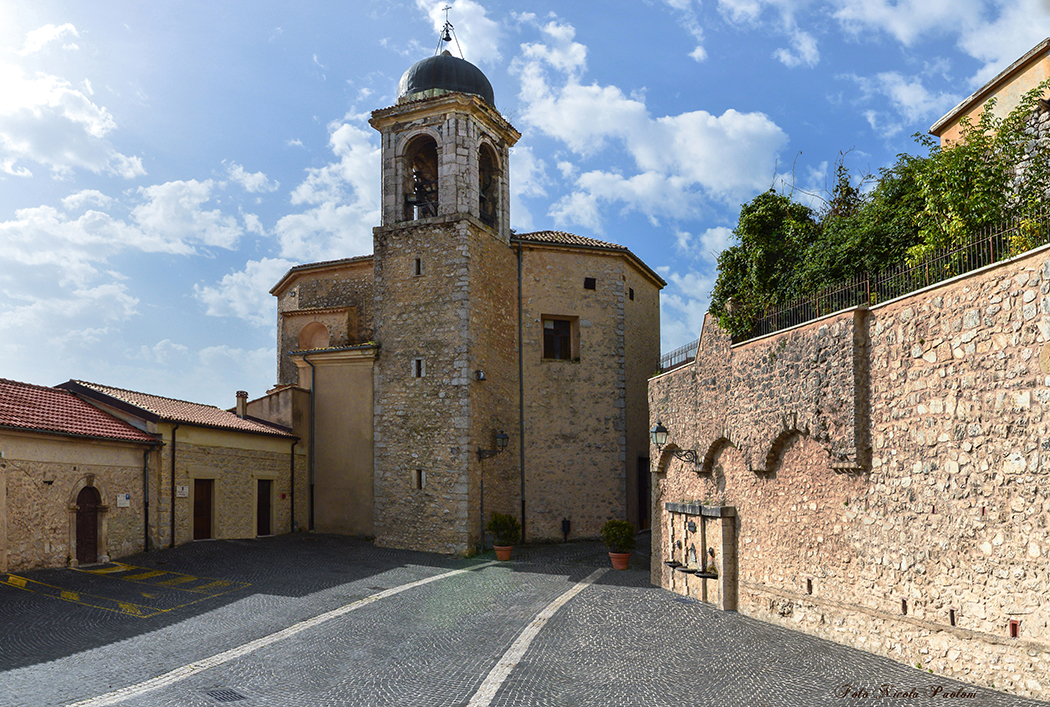
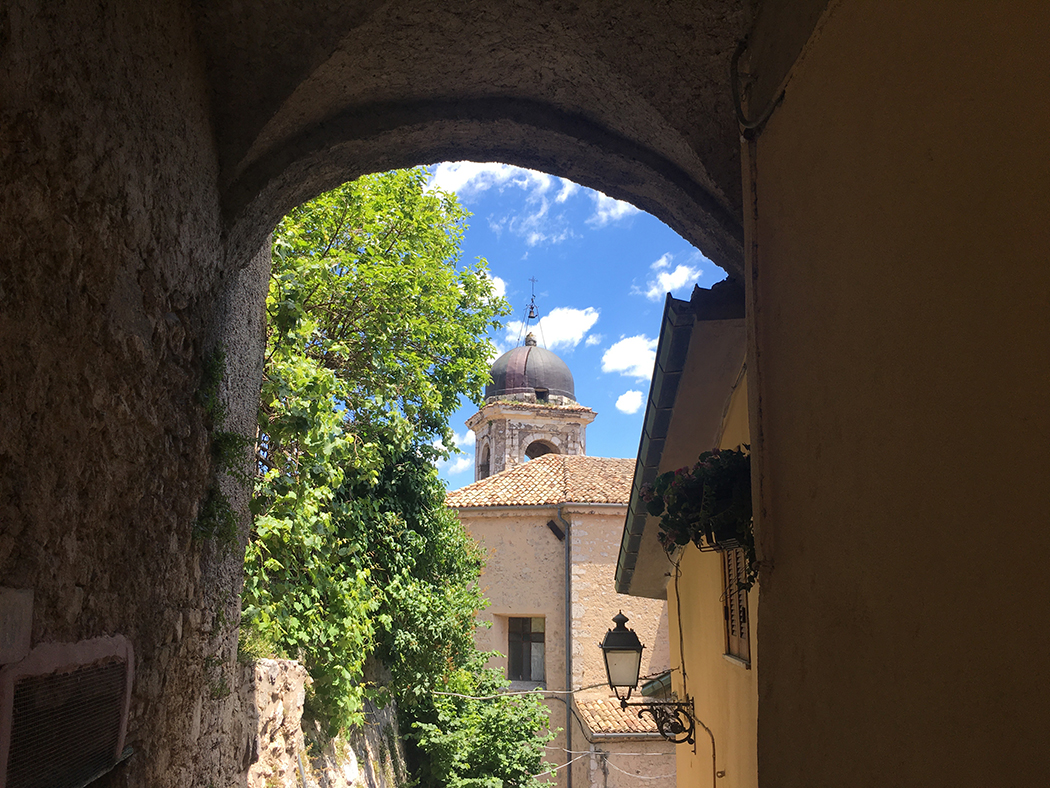
Torre Cajetani- SS Maria Assunta by Nicola Paoloni

The church of Santa Maria Assunta is located in the historic centre of Torre Cajetani just below the medieval castle and the first reports dates back from 1295.

It has undergone several restorations over the centuries and has its own unclassifiable style.

You enter from a simple stone facade adorned only by a modern door with sculpted bronze plaques.

The interior has a Latin cross-shaped plan with a decorated ceiling.

Above the main altar lies the painting of the " Santissima Vergine Assunta in Cielo" surrounded by Angels of the twentieth century and that of "Santissimo Salvatore" of Tuscany school.

On a side chapel dedicated to the protector San Michele Arcangelo there are three paintings of the saint and a sculptured carved statue that is brought to processions.

In the church are the relics of Father Marcello da Torre, a Franciscan friar who died in the breath of holiness living at the end of 1500.

powered by social2s
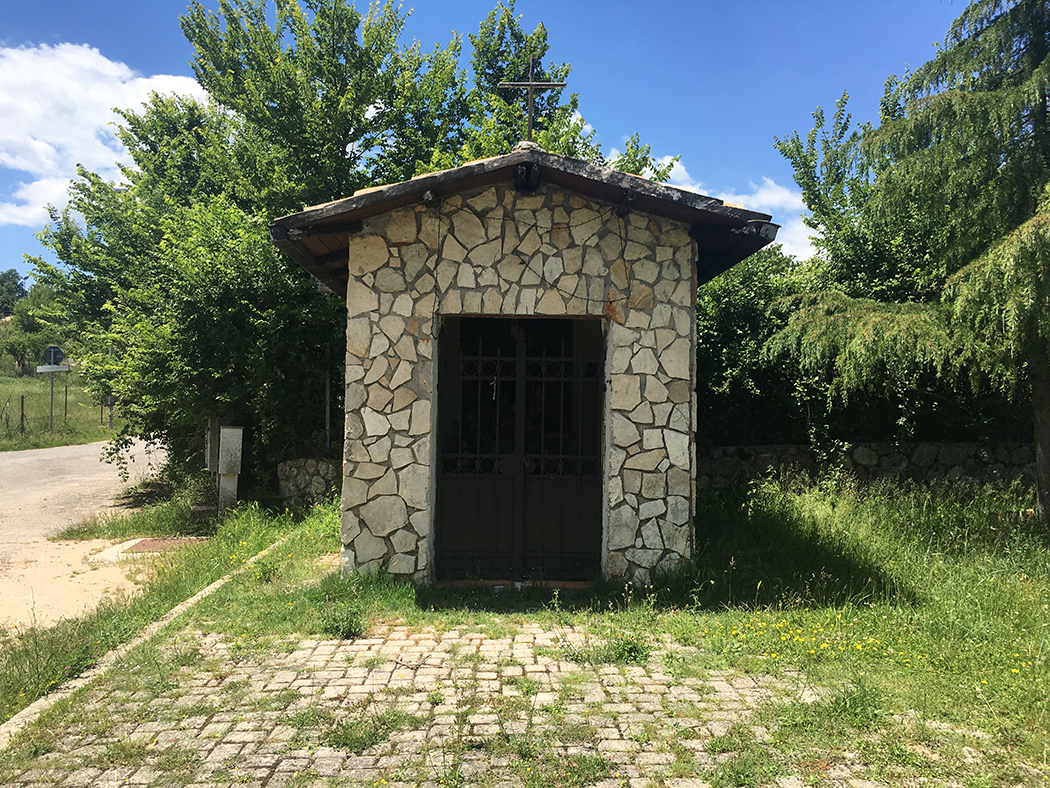
Torre Cajetani Chiesa SS. Trinit - Bettiol - 99

The population of Torre Cajetani is strongly linked to the Sanctuary of the Most Holy Trinity of Vallepietra, and every year in June it participates in the pilgrimage on foot.

The Torre Cajetani Company starts from this little church of the Most Holy Trinity after the celebration of a Mass.

The church is of medieval origin and in its interior there is a marble slab with the imprinted image of the Holy Trinity.

powered by social2s
Fumone. Chapel of St. Peter Celestine V

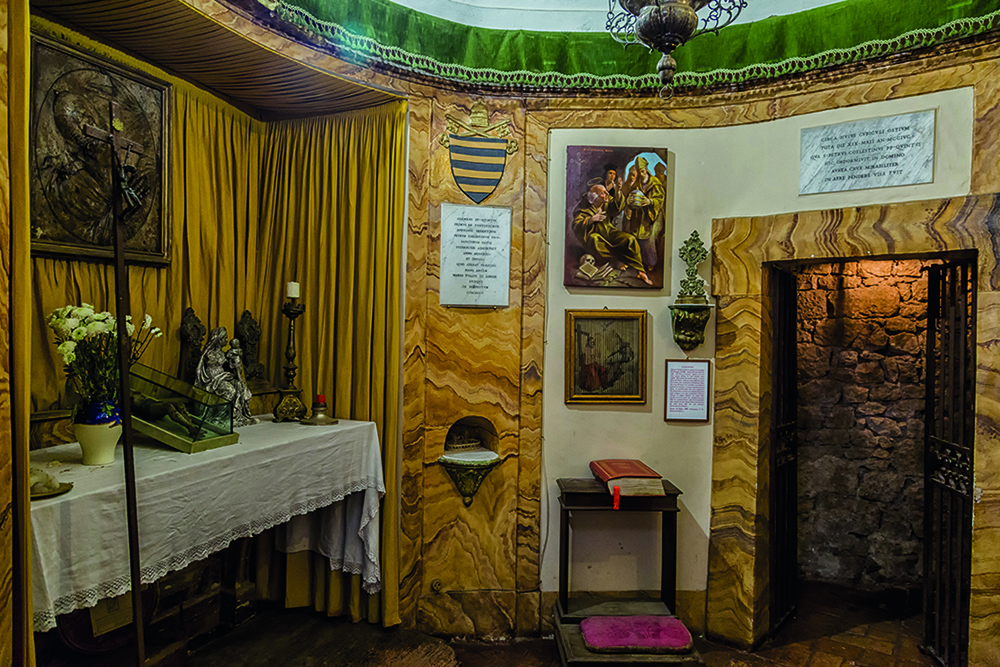
The chapel genitilion (private chapel) of St. Peter Celestine V is located inside the Longhi family palace in Fumone, and was erected in 1710 by Pietro Antonio Longhi.

It replaced that of the 14th century, that had become dilapidated and uncomfortable because it was located in the area of ​​the ancient fortress.

The date of construction is in fact uncertain: an ancient fortress plan of 1690 shows both chapels, and this suggests that at that date it had already begun its construction. In addition, a tombstone in the present chapel dates back to 1647.

The space is circular and has stucco ornaments with many epigraphic and heraldic images.

On the altar there is an artwork in terracotta coated in bronze depicting Celestino V in prayer, made in 1783 by Antonio Parasini.

The metal cross on a shaft was donated by Pope Paul VI during his 1966 visit, in which he defined it as a "Small Shrine".

Near the chapel, there is found a narrow building traditionally referred to as the Celestine V segregation site, although archaeological data excludes this possibility.

On the simple altar is a marble oval medallion made in 1777 by Celestino Rainaldi.
(Alessandro Potenziani)

powered by social2s

Recommended

Subscribe to Newsletter

Discover a territory through the emotions of the people that have lived it.