Churches & Places of Worship

dav
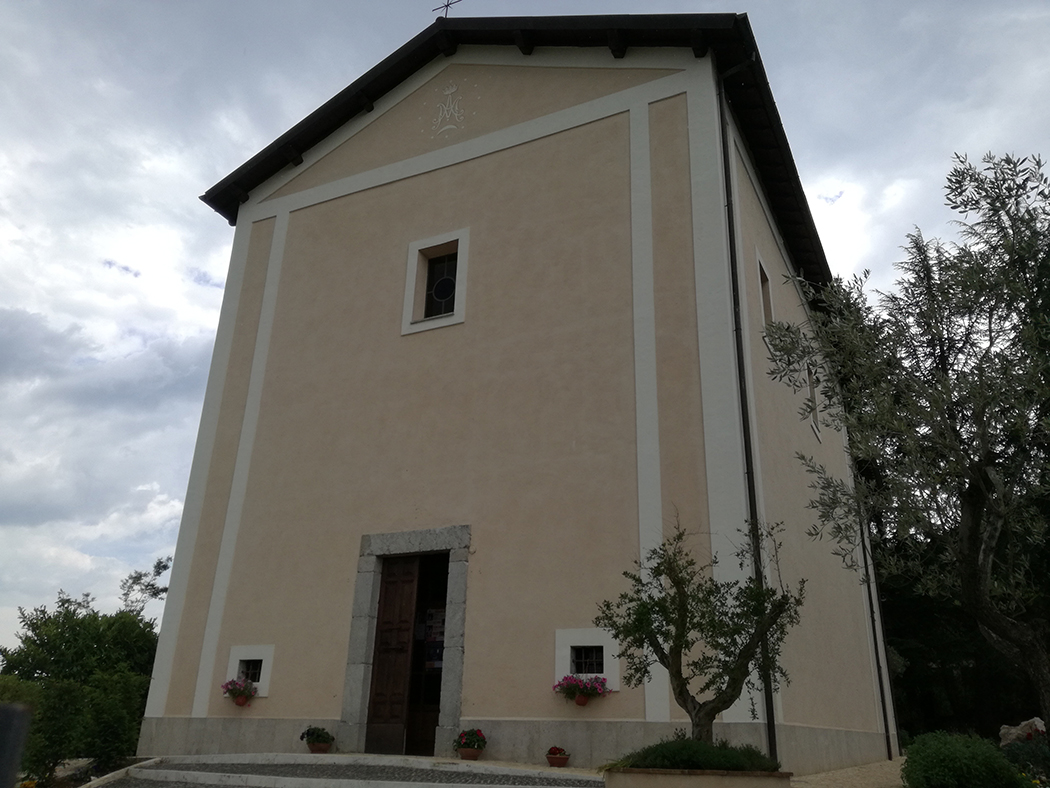
Ferentino. Madonna of the Star Shrine

The small Madonna of the Star Shrine is located near the Lake of Canterno and was erected in 1695.

In 1772 it was destroyed by a flood and rebuilt two years later adorning it with a fresco that came from an old church on the mountain of Porciano.

According to tradition, the church is built on the spot where a pious spinster of Fiuggi, Felicia Colarossi, saw the Madonna appear in 1690 and where Antonio da Alatri heard a voice.

His cow was drowning, and the voice said to him, "He commands in the name of Mary, who takes away all danger." Antonio obeyed the voice and the beast was saved.

The name comes from another episode that happened to the shepherd Sebastiano Ambrosi of Fiuggi, who heard a celestial voice from the bush of Mount Porciano and followed the voice and found a big boulder with an image of the Madonna with the inscription "Ave Maris Stella".
 

powered by social2s
Isola del Liri- Chiesa San Lorenzo by Bettiol

The church of San Lorenzo Martyr is the most important in the town of Isola del Liri and dates back to 1630.

In that year, the Boncompagni family destroyed the church of San Lorenzo that was inside the castle and rebuilt it in the centre of the village, thus avoiding the constant pilgrimage of people into the castle itself.

The church has a square façade with columns and two niches at the sides of the front door where the statues of St. Peter and St. Paul were built by Giuseppe Ranaldi in 1960.

The door has a marble frame worked with an inscription that shows the year of restoration of 1727 and the doors are by Giuseppe Ranaldi in cast bronze with relief sculptures representing the martyrdom of San Lorenzo

The church is also remembered for a serious episode during the Napoleonic period, when the buildings of worship were confiscated and sold, as also occurred with the convent of Saint Francis and that of Santa Maria delle Fratte.

The church of San Lorenzo was used by the French army and there 533 people were shot dead after hoping to have found shelter from Napoleonic barbarians inside a building of worship.

It was 1799 and a group of French soldiers fleeing from Naples besieged Isola del Liri.

The Islanders had raised the drawbridges and resisted on the island but when the food was finished they surrendered and let the troops in. 

A few shots were fired and the French felt encircled and began to destroy, steal and kill the population that in the meantime had taken refuge in the church. 

Blood stained all the walls and it took 7 months to clean them and reopen the church for worship. 

It was the day of Pentecost and in memory of this episode even today during the month of May cultural events and days of reflection on history and life are organized. 

The church was looted and robbed by German troops during the last world war.


powered by social2s
Isola del Liri- Chiesa Madonna delle Grazie by Bettiol

The small church of Our Lady of Grace is located inside the Boncompagni castle built on a rock spur that is part of the historic centre of the town of Isola del Liri.

The church dates back to the eighteenth century and is a small circular building and was built out of the apse of the former church of San Lorenzo destroyed by an earthquake.

Inside you can admire an inlaid marble altar above which there is a seventeenth-century canvas representing a Madonna with a child between San Domenico and San Tommaso.

In a niche of the church there is an eighteenth-century terracotta sculpture that represents the period of rest after the escape into Egypt.

The chapel is used to celebrate weddings or events and is open to the public during the Feast of Our Lady of Grace in September.

powered by social2s
Isola del Liri - Chiesa SantAntonio by Bettiol

In Isola del Liri, the church of Sant'Antonio was originally called the Church of the Saints Crucifix (Crociforio) and was part of the Convent of Saint Francis, which was expropriated and became a woollen mill.

The church was damaged by the 1915 earthquake and destroyed by American bombings in WW2.

After the war, the churches of St. Francis, Saint Anthony and Saints Crucufix were joined together and this church was built. 

Inside it houses the wooden statue of the SS. Crucifix which is celebrated during the month of July and the statue of Our Lady of Sorrows which is carried in procession by the Holy Verdi of Easter.

The history of the crucifix is suggestive and is still celebrated in July with one of the oldest festivals felt by the population.

It is said that it was the end of 1500 and in one of its floods the Liri brought a willow trunk downstream.

A carpenter took it to work it and noticed that blood was coming out of the trunk.

He then decided to make a cross on which a Christ made with the paper of ancient missals was subsequently placed.

The statue was later replaced by a wooden one.

The statue is normally covered with a red cloth that is raised with a particular rite, called the 'unveiling, on the occasion of particular events or ceremonies.

powered by social2s
Isola del Liri- Chiesa Santa Maria delle Forme by Bettiol

The little church of Santa Maria delle Forme in Isola del Liri is part of the Fibreno-Lefebvre complex in Isola del Liri and is currently closed for restoration.

Its origin dates back to the nineteenth century when it was built by Lefebvre, the owners of the old paper mill,  to return to the population a place of worship.

It replaced the original church of Santa Maria delle Forme that was part of the convent that the French despised and sold to a private company that turned it into the Fibreno paper mill.
 

powered by social2s

Recommended

Subscribe to Newsletter

Discover a territory through the emotions of the people that have lived it.