Churches & Places of Worship

Settefrati. Sanctuary of the Madonna di Canneto

The Sanctuary of the Madonna di Canneto is located in the Canneto Valley in the Abruzzo National Park at an altitude of 1020 and at the foot of Mount Meta and is documented for the first time in 819 AD.

It was built by Benedictine monks probably on the remains of a previous temple. From the archaeological excavations this place was a pagan place of worship dedicated to the Goddess Mefiti who in 400 AD was adapted by Christians.

It can be reached via paths from Settefrati or Picinisco and all summer is a destination for pilgrimages.

Legend says that the Virgin Mary appeared to a shepherdess to whom she asked to build the sanctuary.

Over the centuries, this church had particular papal privileges: those who worked there had the right to indulgence, to the forgiveness of sins

Beyond the facade, the church is modern and has the particularity of having the opposite wall, that of the altar, totally glazed with a suggestive view of the woods.

Inside is the stature of the Black Madonna of Valle di Canneto.

It is a pilgrimage destination with a centuries-old tradition.


The Canneto Valley

The Canneto valley since ancient times was frequented both for the extraction of iron and for the cult of the goddess Mefite, whose temple probably stood near the copious springs of the Melfa. Evidence is found in a votive capital from the 4th - 3rd century BC.

The pagan cult was replaced in the Middle Ages by that of the Madonna to whom grandiose celebrations are paid during the festival of the "four regions" in which pilgrims from the four regions participate: Abruzzo, Lazio, Campania and Molise.

According to legend, the church was built after the apparition of the Madonna to the humble shepherdess Silvana.

The lady dressed in white told her to go to the village and tell her to build a temple dedicated to her in the valley. When the shepherdess said that she had to water the animals and that she was afraid for their health, the lady touched a rock and made water flow.

The shepherdess went to the village and when she returned with some villagers they were surprised to find a lake formed by the waters of this new source, from which the river Melfa then originates.

The inhabitants also found a statue of the Madonna with the Child enthroned, now kept in the church, and decided to bring it to the village to put it in one of the churches.

As they moved away from the point of discovery, the statue became heavier and heavier to the point that it fell and they could no longer move it. In a rock along the path the imprint of the statue's head left on a stone is still visible.

The statue was then brought back to the valley and the construction of the temple began, which since then has been the destination of incredible pilgrimages every year.

It is said that the Madonna threw a ring at the point where the Melfa river flows, witnessed by many specks of gold that were found in the waters until the middle of the last century when the Aurunci aqueduct was then built.

The small pieces of gold were called 'the stars of the Madonna'.

powered by social2s
Picinisco. Church of St Roch

The church of San Rocco in Picinisco was built in 1500 and initially it was dedicated to San Carlo Borromeo.

Then it was dedicated to the Madonna delle Grazie and finally, from 1800, has been dedicated to St. Rocco.

Inside is a single nave with a vaulted ceiling and has five altars dedicated to the Madonna delle Grazie, San Giuseppe, San Carlo and San Rocco.

The San Rocco altar is decorated with statues carved in cedar in Romanesque style and is placed in the centre of the Church.
 

powered by social2s
Picinisco. Church of San Lorenzo Levite and Martyr

The church of San Lorenzo Levite and Martyr in Picinisco dates back to 1305 and was sometime later enlarged and restored.

Inside it has three naves, a sacristy, two choirs and a cappella.

In the church there is a pipe organ built by Catarinozzi in 1739.

The carved stone bell tower with a spiral interior staircase dates back to eleventh century so was probably an earlier watchtower.

powered by social2s
Picinisco. Church of Santa Maria Assunta

The church of Santa Maria Assunta in Picinisco is one of the oldest and is in the Romanesque style.

It is located outside the historic centre.

It is first mentioned in a document of 1110, a bull of Pope Paschal I to the Bishop of Sora Goffrido.

The church is built on previous Roman remains.

It has three naves and a wood-beamed ceiling. It preserves a fourteenth-century fresco.

powered by social2s
Church of Saint Nicholas

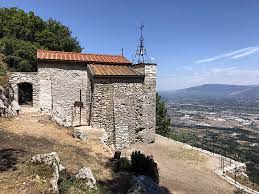
The Church of Saint Nicholas of Sgurgola dates back to the thirteenth century and it's located along a cliff on the outskirts of town.

It originally had two floors of which now only white stone walls remain.

Next to the small church there is an opening in a rock from which water seasonally comes out in a continuous stream, Bonifacio VIII was extremely fond of this water.

From Saint Nicholas you can take different paths on the Lepini Mountains, rich forests, water springs and karst caves.
 

powered by social2s
Hermitage of San Leonardo

The hermitage of San Leonardo dates back to the 13th century and is located half way up the mountain, at an altitude of 693 meters.

It has been built on top of the ruins of a thirteenth century monastery. In its vicinity a natural mountain water spring can be found, since the hermitage is located close to the Acero Spring.

Insite the hermitage there is the statue of San Leonardo of Noblat (sixth century), patron saint of Sgurgola since 12000.

powered by social2s

Alongside the church of San Michael in Guarcino there is a special type of belltower with bell.

This refers to the two-dimensional tower with a 'flat bell', just like the sail of a boat, that was typical of the 13th century.

This is one of the few examples left in the Lazio region as most of these bell towers have been destroyed or modified in successive ages.

powered by social2s
Ariccia. Collegiate Church of Santa Maria Assunta in Cielo

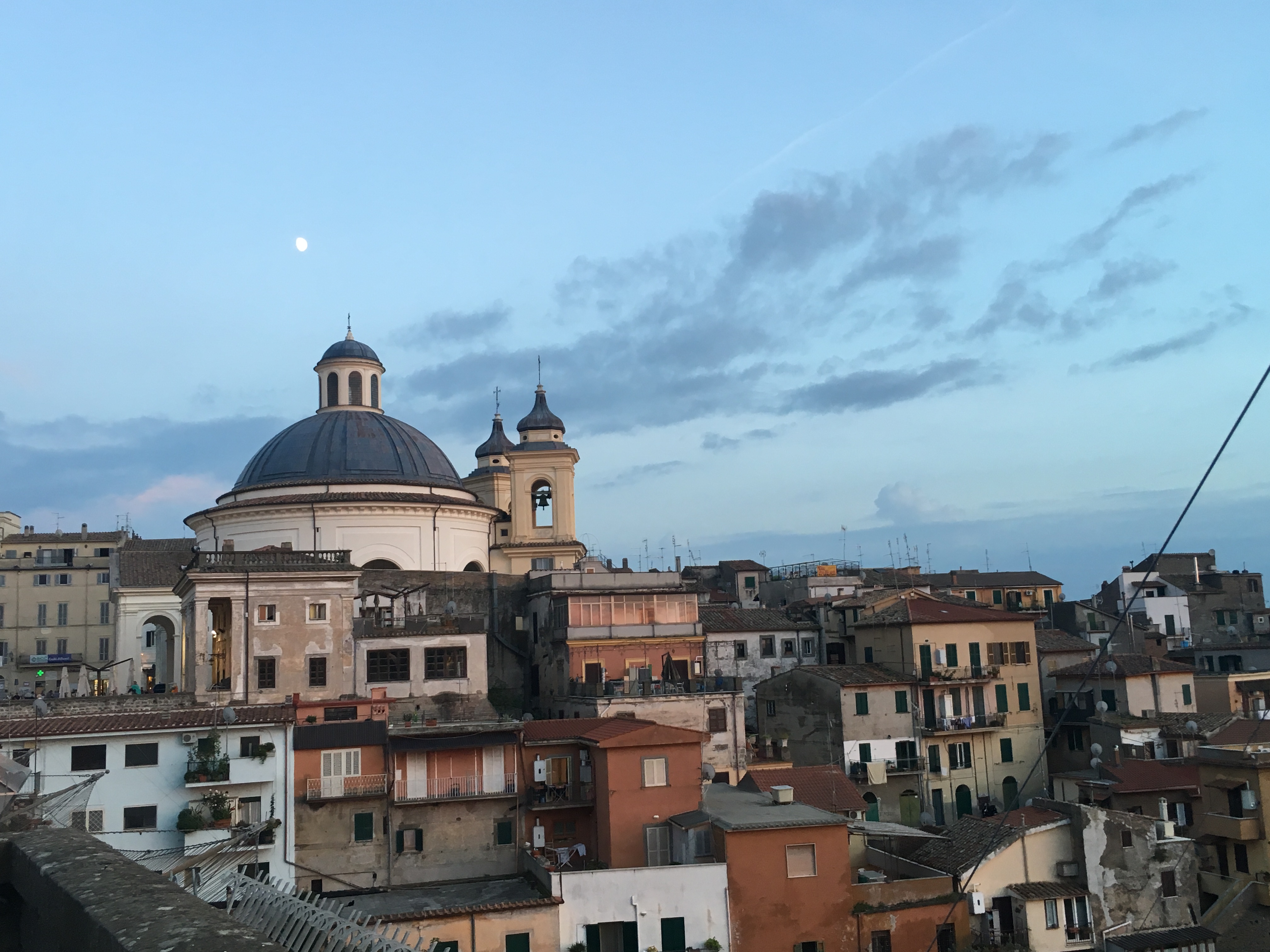
The Collegiate Church of Santa Maria Assunta in Cielo in Ariccia is the last masterpiece of Gian Lorenzo Bernini.

The famous architect designed every architectural detail including the furnishings.

The shape is reminiscent of the Pantheon, a round plan with portico and cupola.

The paintings and frescoes make it a baroque masterpiece.

The remains of the previous church, demolished in 1665 were incorporated into the church of St. Nicholas.

powered by social2s

Recommended

Subscribe to Newsletter

Discover a territory through the emotions of the people that have lived it.