Churches & Places of Worship

Sora. Church of Santa Restituta

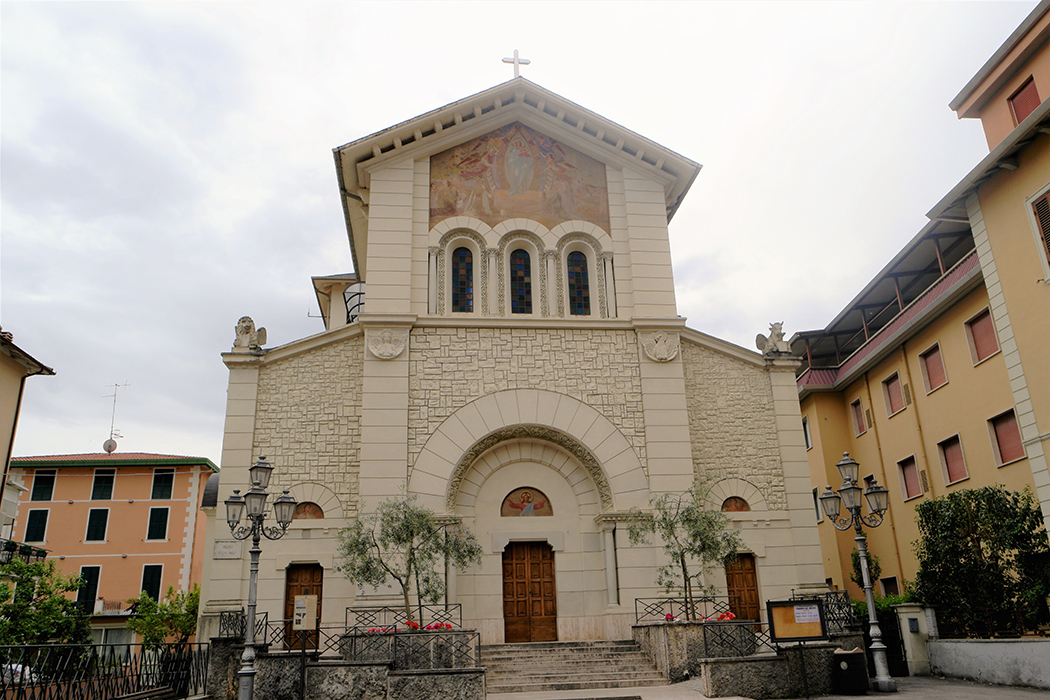
The church of Santa Restituta in Sora was rebuilt in 1928 in past style.

The primitive building dedicated to Restituita, a 275 AD martyr, stood on the northern side and was built between the ninth and eleventh centuries.

The church collapsed in the Dark Ages and was rebuilt and re-dedicated by Pope Adrian IV in 1155.

In 1229 it was set on fire and destroyed by the army of Frederick II and rebuilt after the 1250 according to the instructions in his will. The church had three naves and a crypt and a cloister.

In 1654 the church was destroyed by an earthquake and rebuilt by G.B. Rodoli with a single nave with columns of Corinthian order and a magnificent portal decorated with acanthus leaves and floral garlands.

This church was destroyed by an earthquake in 1915.

The new church was built on the eastern side of the square on the ruins of a building of three hundred of which there are a few architectural fragments preserved today in the Civic Museum of Sora.

The current building has three naves with three bronze doors and a façade with a central rose window.

The doors were melted and sculpted by Tommaso Gismondi in 1975.

In the façade wall is the Privilege of Charles II of Anjou with which the city is declared royal, subject to the Kingdom of Naples and Sicily.

On the same side is walled a fragment of a bas-relief of the Egyptian goddess Isis, covered by nemes (striped headcloth), surmounted by the lunar disc.

powered by social2s
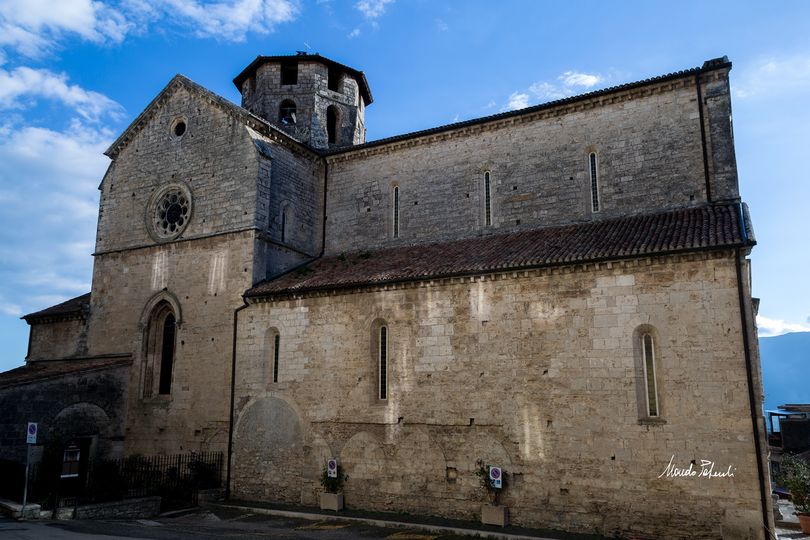
Sora. Cathedral of Santa Maria

The church of Santa Maria in Sora was built on the ruins of a pagan temple of the god Sole-Sorano (Sun-Sora) of 111 BC.

A date of the year 1100 is engraved in the architrave of the portal. At that time the church was outside the walls. The building has undergone considerable vicissitudes.

The Frederick II of Swabia had it destroyed in 1229 and rebuilt in 1250 according to his testamentary dispositions.

A fire in 1916 destroyed the gilded ceiling and a valuable painting of Zuccari.

Of particular interest is undoubtedly the access portal work of Master Giovanni.

Attached to the cathedral there is the Bishop's palace of the XVI century and the seminary, one of the oldest in Italy.

Inside the church there are two triptychs: one from the fifteenth century representing the Holy Trinity. The other Trinity, more recently, by the Norwegian artist Christian Mayer Ross.

powered by social2s
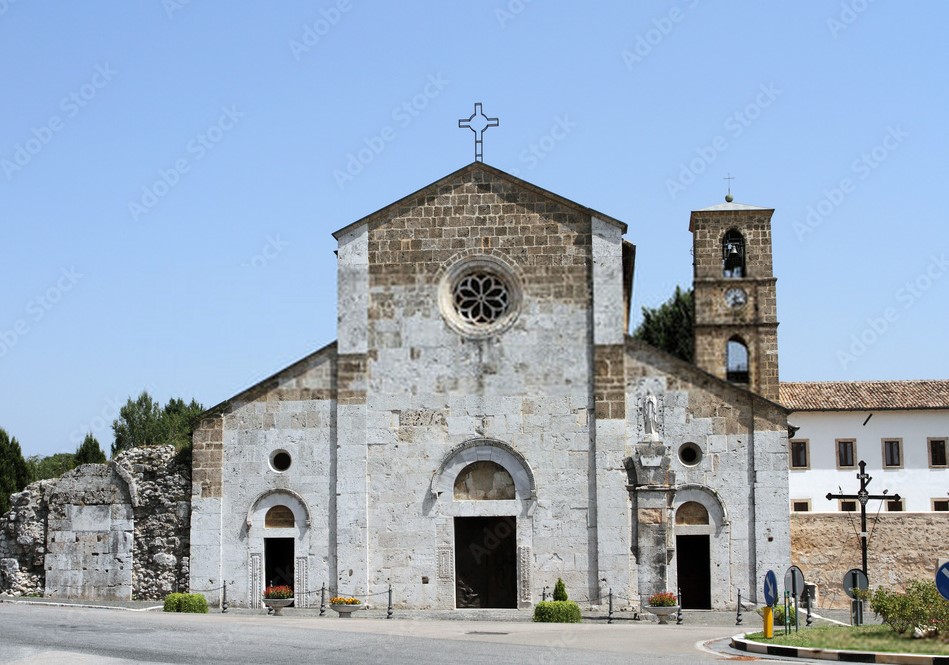
Abbey of San Domenico

The abbey of San Domenico in Sora was founded in 1011 on the remains of a large Roman public building, and in this area was the house of the father of Marcus Tullius Cicero

The church was dedicated to the Mother of God and San Domenico. In 1030 the church and other goods were donated by the steward Pietro il Maggiore to the Benedictine monk Domenico di Foligno.

The monastery, however, has not reached us in its original appearance, because of the multiple restorations partly due to devastating earthquakes such as that of 13 January 1915 that destroyed the vaulted ceiling.

Today the abbey is presented with a rather sober main facade, with three doors and a beautiful rose window.

The jambs of the door on the left and the left of the portal are made of limestone blocks with rural motifs which probably adorned the Roman villa.

The church has three naves separated by two rows of columns different from each other and under the fifth column is a milestone of the Roman emperor Marcus Aurelius Maxentius (306-312 AD).

According to tradition, San Domenico died in the crypt once he lay on a layer of ash, prepared according to the Benedictine use. The sacred remains of the saint are kept in the altar of the crypt.
 

powered by social2s
Fiuggi- Chiesa Regina Pacis by BenedictaLee

Regina Pacis is the first church built in Lower Fiuggi, the area of the Fonti and dates back to 1922 with a Neo-Romanesque style.

The designer, Ing. Garibaldi Burba, also realized the great liberty hotel of "Palazzo della Fonte".

Its construction had begun during the First World War and the name was given to it as a wish for the end of the conflict.

Inside it has the peculiarity of having interiors completely covered with mosaics, with no square centimetres uncovered.

powered by social2s
dav
Fiuggi. Church of San Biagio

This church of San Biagio dedicated to the patron saint of Fiuggi, is the oldest church in Fiuggi and was built before 1000 by the Benedictine monks of Subiaco.

In the seventeenth century it was restored and enlarged in the Baroque style.

Inside is a fresco of the thirteenth century Giotto school representing the "Madonna and Child".

The stone of holy water font was made from the capital of a Roman column, from the Villa of Nero at Subiaco.

Also among the paintings "Madonna and Child with St. Francis and St. Augustine" by Giuseppe Cesari (1568-1640), called Cavalier d'Arpino.

powered by social2s
Fiuggi. Chapel of the Cappuccini

This monastery is outside Fiuggi in the valley of Diluvio towards Arcinazzo.

It belonged to several monastic orders, the Knights Templar, the Benedictines, the Conventual Franciscans and finally to the Capuchins, still owners of the complex.

The body of the Venerable Francesco Maria Tittelmans is preserved here.

In 1537 he was visiting the monastery declaring that he came to die. No one believed having regard to his good health. Yet two days afterwards he was seized by fever and ceased to live peacefully. After his death there have been many miracles in Fiuggi.

In this convent San Felice da Cantalice was a novitiate, subsequently whose tomb is located in Via Veneto in Rome.

powered by social2s
Monastery of Saint Anthony Abbot

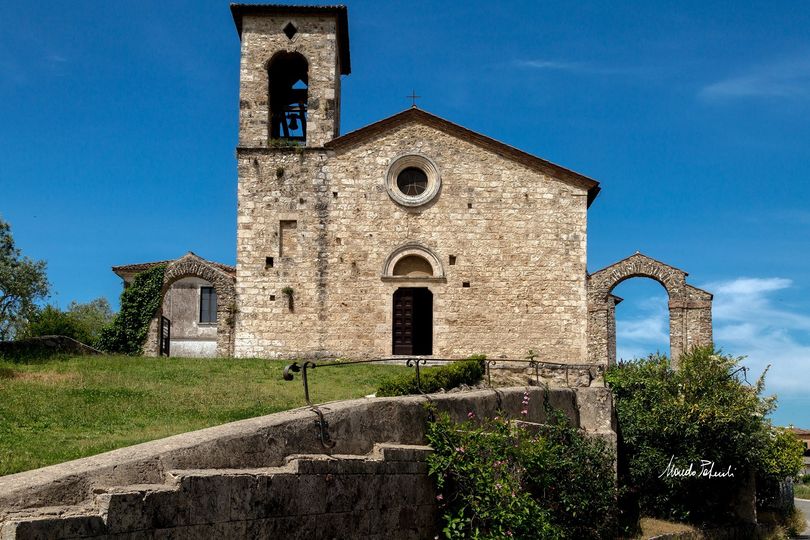
The Romanesque style monastery of Saint Anthony Abbot, was founded by Pope Celestine V in Ferentino.

It held his remains up to 1327 and became a pilgrimage site.

The church was ruled by the Order of the Celestini until the seventeenth century when, for a shortage of monks, it was attached to Saint Eusebius in Rome.

The exterior comprises a façade with lintel doorway crowned with a simple bezel setting, a circular window and simple bell tower.

The poor architectural character is obvious as is the Cistercian style recovery.

At the centre of the monastery there is a cloister, around which are arranged the rooms of the monks.

In Ferentino, Celestine V heart still remains, kept in the monastery of the Poor Clarisse.

In honour of the saint, the patron of the city, every year the traditional Palio or ring joust is celebrated.

powered by social2s
Church of Santa Maria Maggiore

The church of Santa Maria Maggiore in Ferentino is one of the most beautiful monuments of southern Lazio.

it is one of the first churches in the Cistercian Gothic style along with Fossanova and Casamari.

It is believed that formerly the abbey wasconnected with that of Casamari and should possess a cloister, the remains of arches on the north wall being testimony.

It was built in the second half of the thirteenth century and the building is the work of the Cistercian monks.

The monks were in the area since 1135, when St. Bernard of Clairvaux, with the protection and support of Pope Innocent III, came to renew the Benedictine order.

powered by social2s

Recommended

Subscribe to Newsletter

Discover a territory through the emotions of the people that have lived it.