Churches & Places of Worship

Cave- Chiesa San Pietro by Bettiol

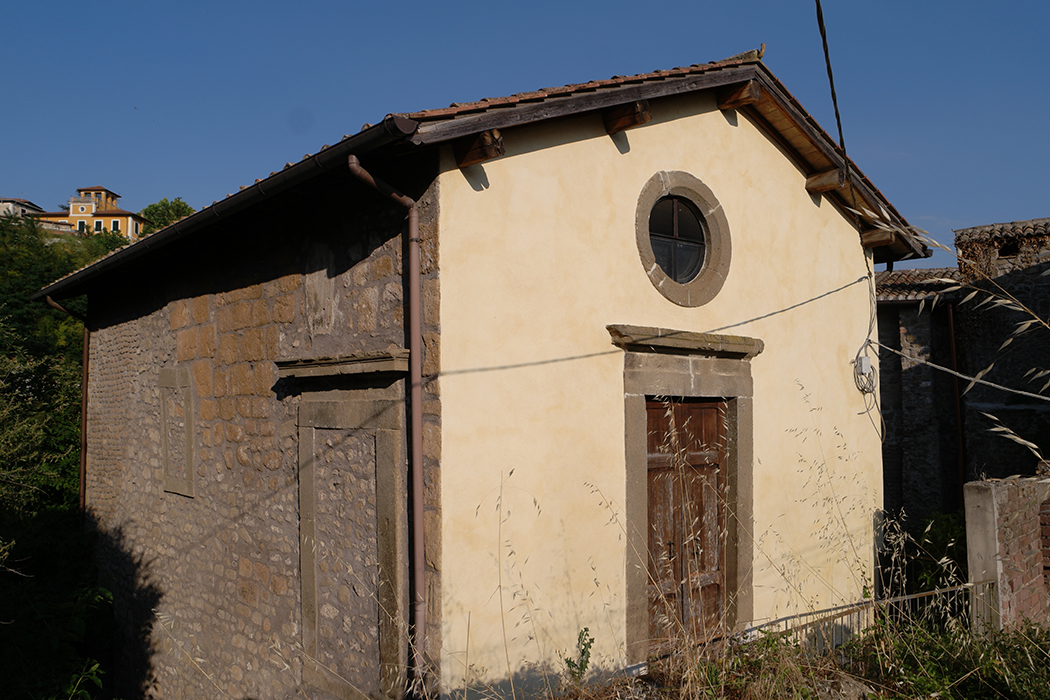
The ancient church of St Peter in Cave was consecrated by Pope Symmachus in the early 6th century.

Some scholars argue that this church dates back to the year 1000 and was built after the destruction of the former church by the Barbarians.

The church is very simple and has a unique ambiance with an A-frame roof covering, an altar and a window overlooking Via Del Fossato.

powered by social2s
SAMSUNG CSC
Cave. Church of Santa Maria in Plateis

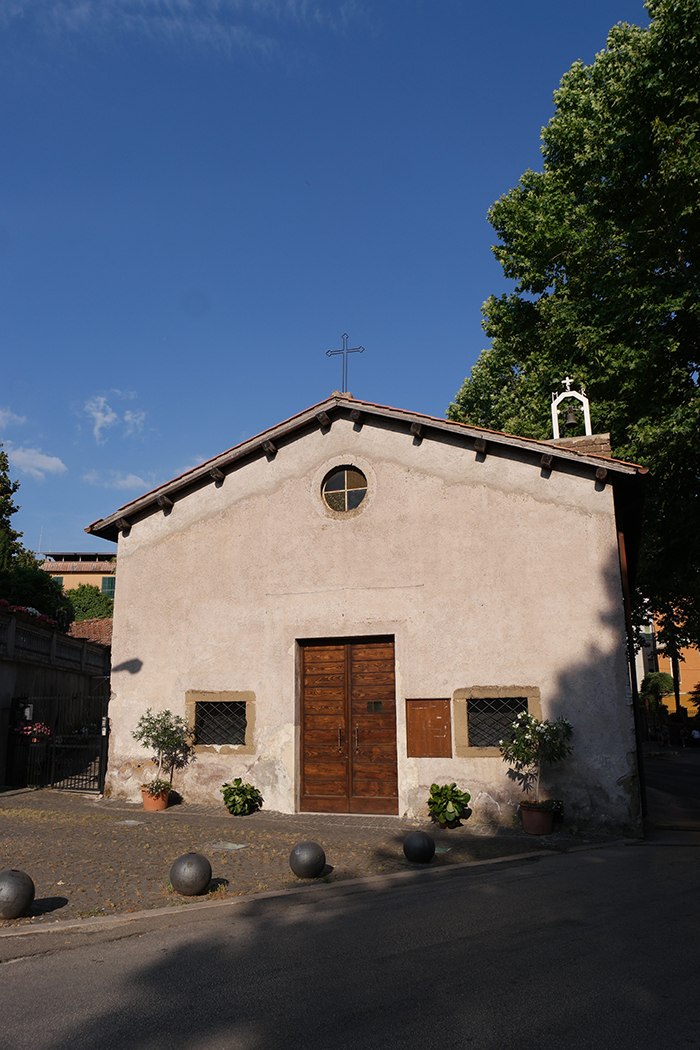
The church of Santa Maria in Plateis in Cave was built around the 14th century in the place of passage of the territorial control armies.

The building has a rectangular shape with a gable roof and is rich in frescoes.

Inside it is the fresco of the Madonna nursing the Child of the late 1300s, contained inside a marble tabernacle.

It was probably originally an icon that was placed inside a small oratory and was worshiped by pilgrims and travellers passing along this stretch of the current Via Giorgioli.

powered by social2s
Cave- SAN LORENZO by Giuseppe Mosetti

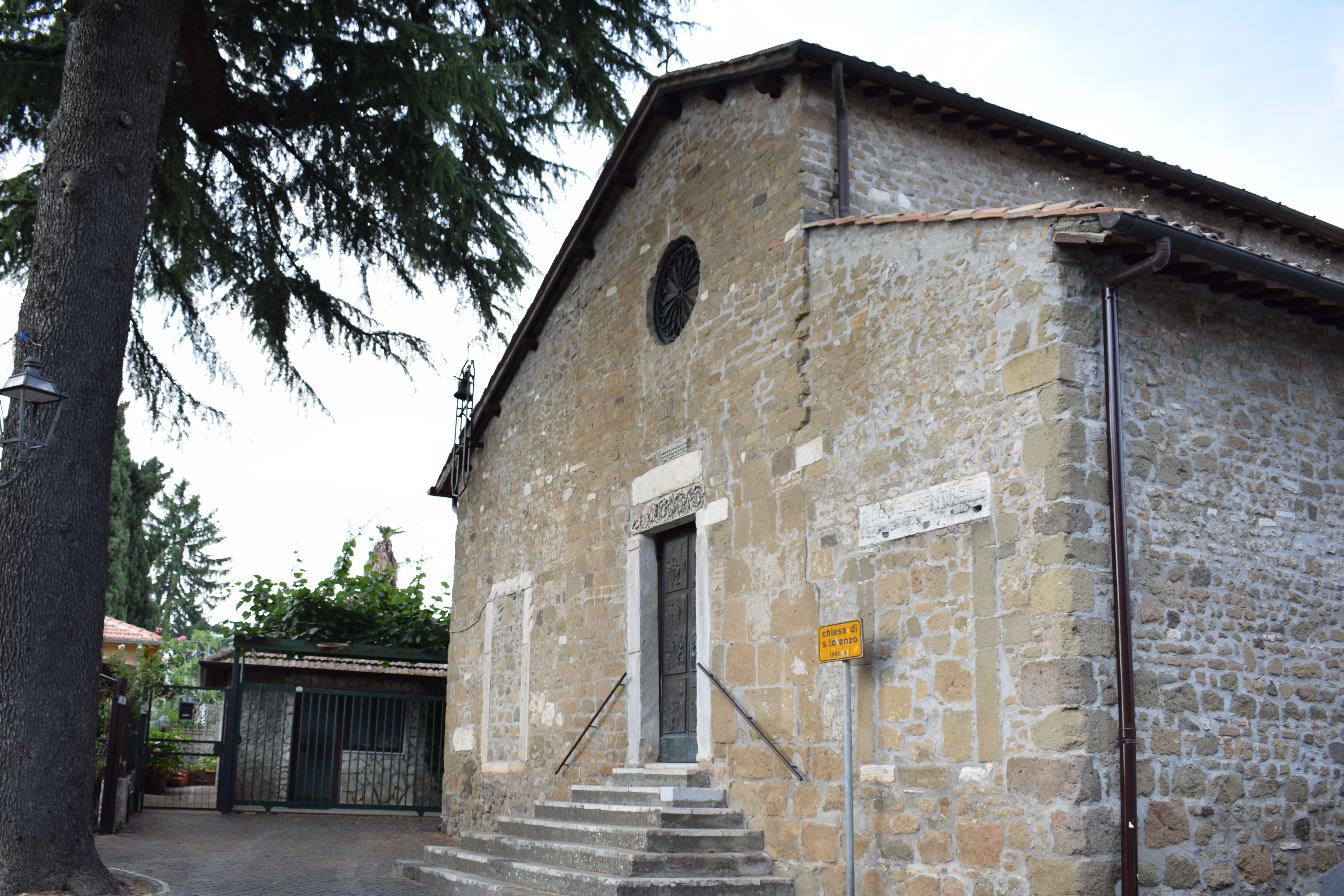
The small church of San Lorenzo was the first of Cave and was built on a catacomb complex.

Initially it also had a small monastery of Benedictine monks.

It is quoted in a 988 document by the Abbey of Subiaco.

The church was expanded in the XIII and XVI centuries.

The interior is three naves separated by columns, clearly made up of Roman remains, and is covered by frescoes from the 15th and 16th centuries.

Under the church is the original catacomb frescoed between the X and the XIII century, which is accessed by a trapdoor in the floor.

powered by social2s
Fumone- Edicola Icona Madonna dellArringo by Af128

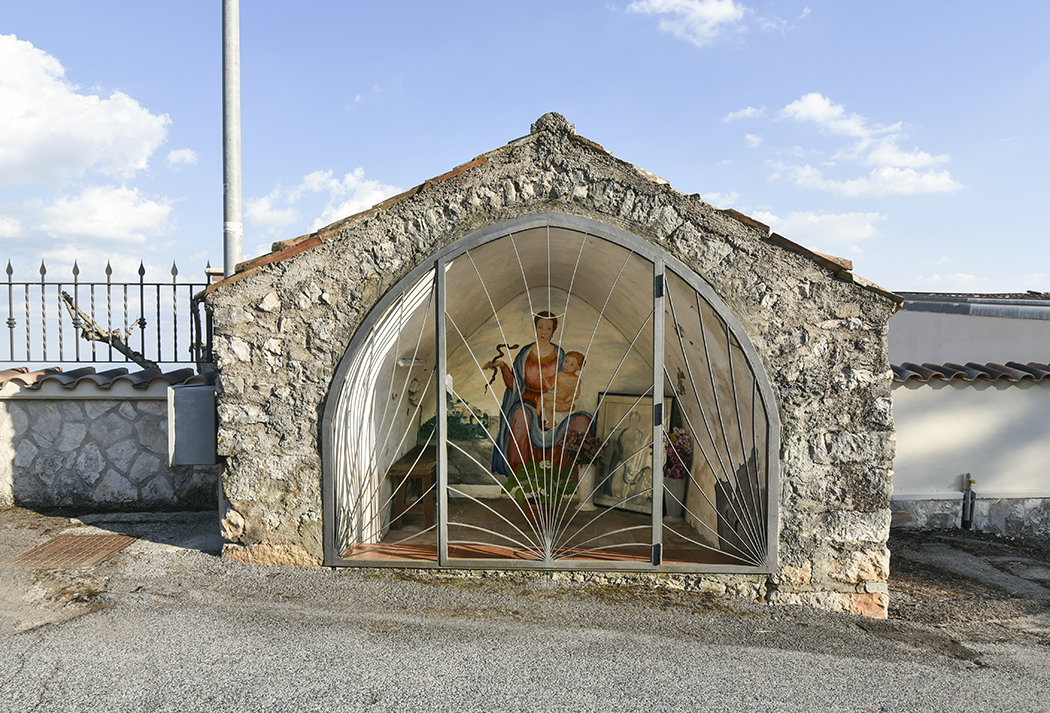
The aedicula  of the Madonna dell’Arringo is from medieval times and is about 2 km from the village of Fumone along the ancient road from Anagni that climbed towards Fumone, right at the crossroads with the road leading to Trivigliano.

The aedicula is square-shaped and had an image lost in time.

The present image is by the painter Mariangela Calabrese and depicts the Virgin holding in the left arm Jesus Christ and holding in her right hand a snake symbolically representing a request for protection from serpents by travellers.

The term "Arringo" seems to referred to less than to its literal meaning of exhortation, and more to prayer.
(Alessandro Potenziani)

powered by social2s
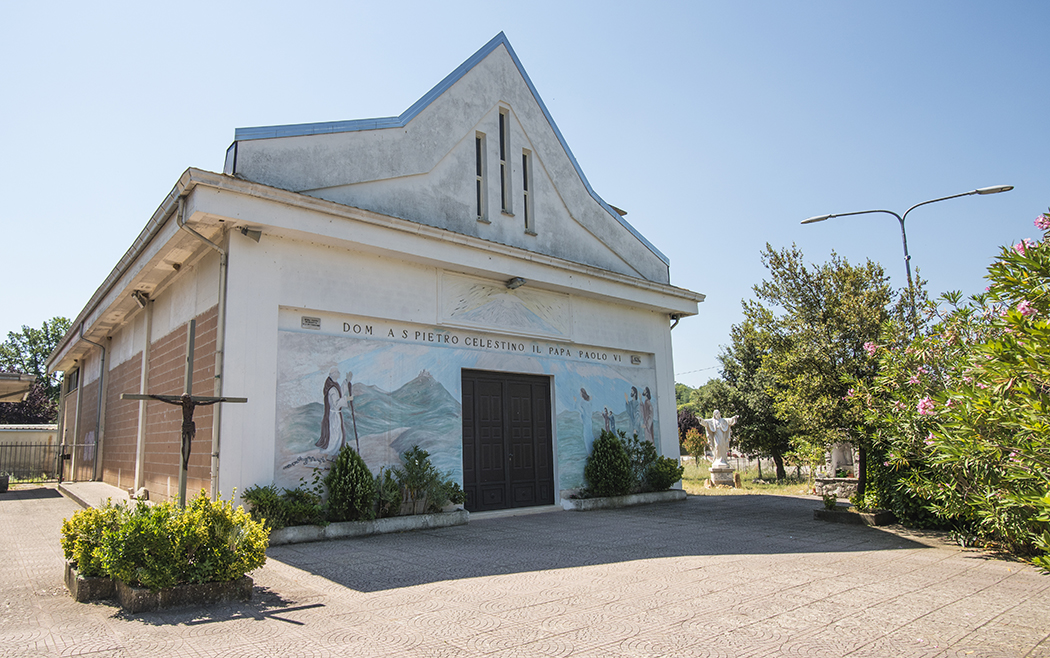
Fumone- San Pietro Celestino V by Af128

The modern church of San Pietro Celestino V is about 3 km from the village, in Pozzi di Fumone district.

It was sought and donated by Pope Paul VI after his visit to Fumone in 1966, as a sign of his veneration for the holy hermit.

The church was built in 1968 and inaugurated on the occasion of the seventh centenary of the death of Celestino V.

Pope John Paul II, today saint, granted plenary indulgence as of August 29, 1996.

The interior is a single nave and is enriched by large paintings by the vibrant colors of local artist Benedetto De Santis.

The façade has a decoration depicting the descent of the Holy Spirit on the figures of the Madonna, the Apostles and San Celestino V, made in 2001 by the master Alessandro Potenziani.
(Alessandro Potenziani)

powered by social2s
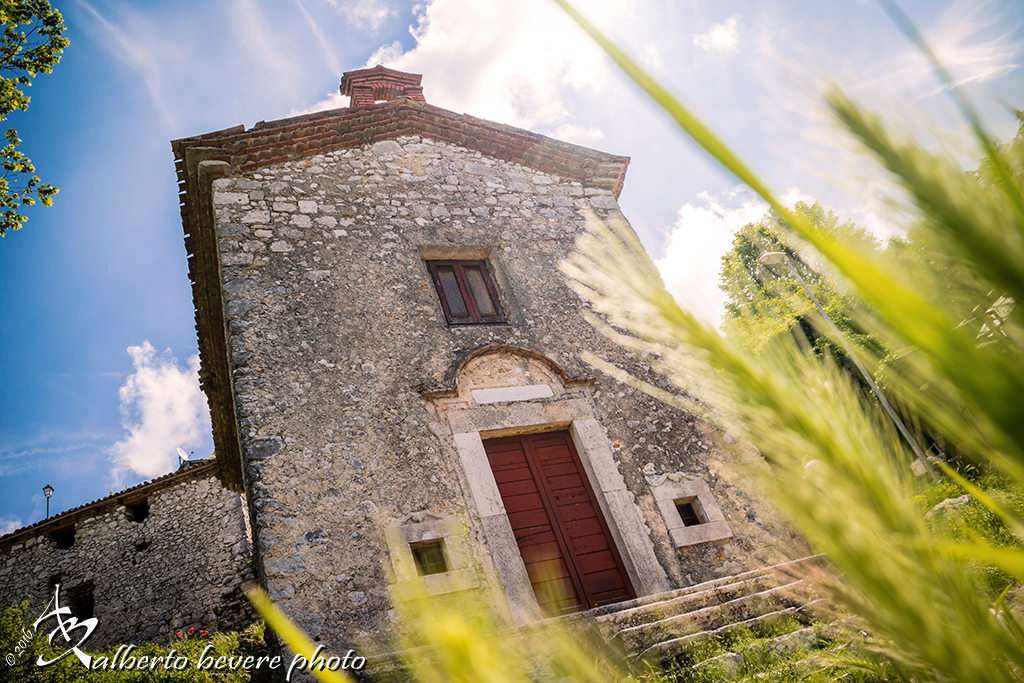
Fumone- Chiesa Santa Maria degli Angeli by Alberto Bevere

The church of Our Lady of the Angels in Fumone. church is just outside the village, along the ancient fortified path leading to the fortress.

It was erected in 1743 by Anna Maria Cocchi, of the oldest noble family of Fumone.

Pope Pius VI, with the "Forgiveness" Bull of 1783, invested the church with the cult of plenary indulgence.

The building was erected for the protection of an old 15th century aedicula (wall shrine) representing the Blessed Virgin who holds in her arms the Child Jesus while two angels support the Virgin's crown.

The stuccos framing the fresco were made at the beginning of the twentieth century by the artist Umberto Fiorani.
(Alessandro Potenziani)

powered by social2s
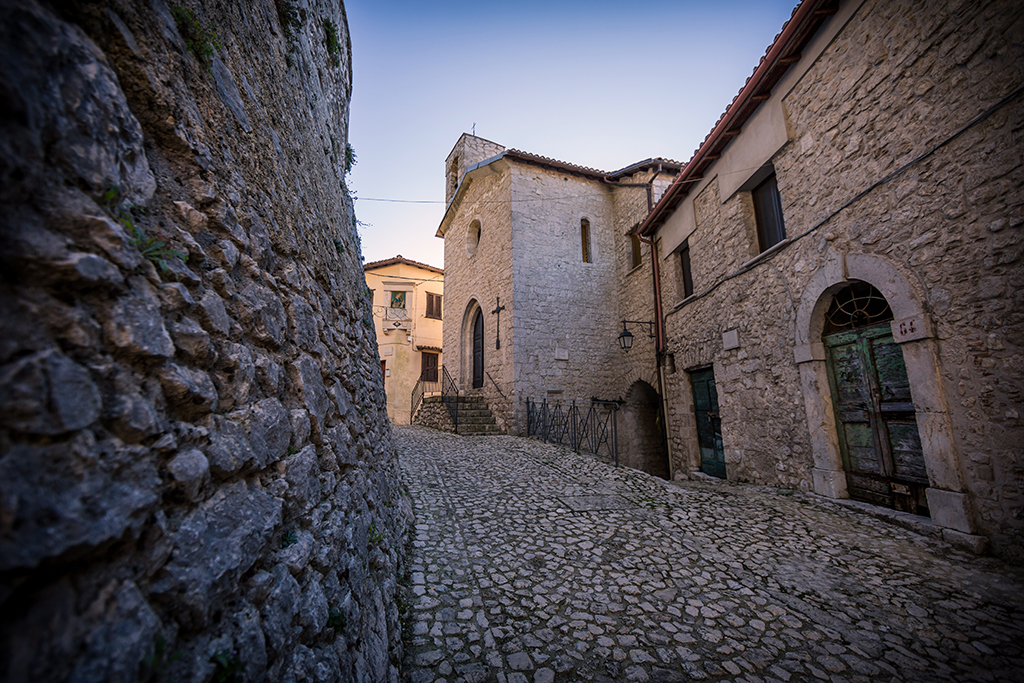
Fumone- Chiesa di San Gaugerico by Alberto Bevere

The church of San Gaugerico in Fumone was erected in the first half of the 14th century on a former structure, by the canonical "magister Iohannes de Fumone" of the homonymous church of St. Gaugerico in the diocese of Cambrai.

Giovanni da Fumone was the apostolic writer of Pope John XXII, when in 1332 he returned to Fumone.

The history of this church intertwines with that of the oldest of Sant'Angelo outside the walls that in 1585 was closed due to its inconvenience.

The façade has a beautiful gothic portal and pointed arch (‘sesto acuto’) with various moldings, topped by a small round window.

In 1909 the building was restored and re-opened to worship by then pastor don Angelo Celani.

The church has two naves, and inside is found the altarpiece of the main altar that depicts San Gaugerico from the early 18th century, the painting of the Madonna del Rosario fromthe beginning of the twentieth century by master Vincenzo Cerica surrounded by stuccos, and the painting of S. Michele Arcangelo made by Arsenio Cocchi.

In 1920 the title of St. Michael the Archangel was added.

The lectern and an astonishing wooden cross are made by the local master Paolino Cialone.
(Alessandro Potenziani)

powered by social2s
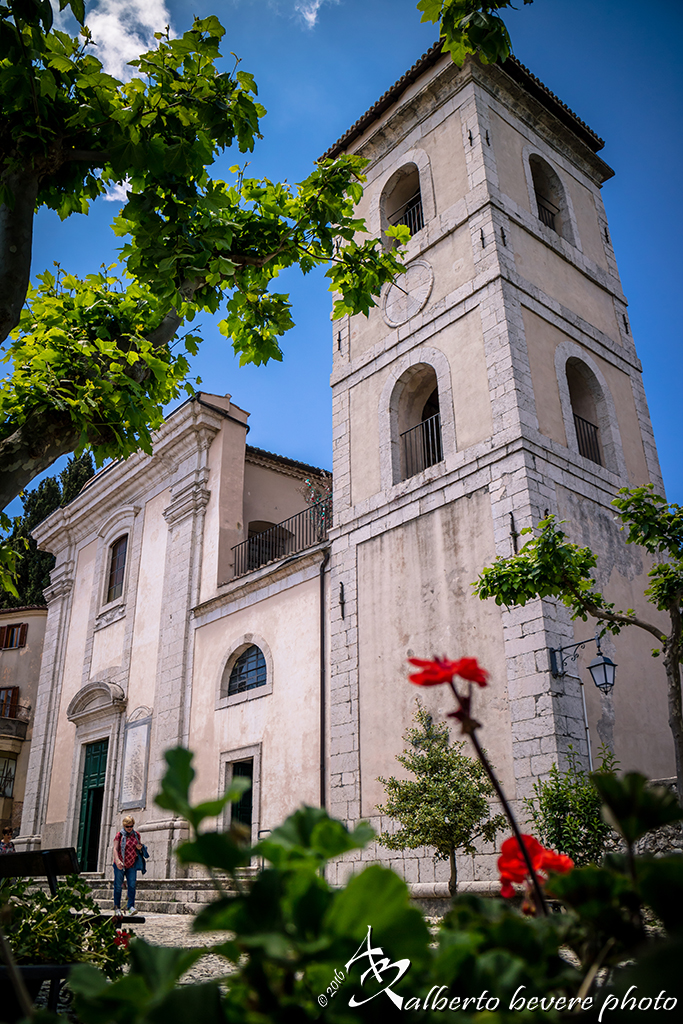
Fumone- Chiesa Santa Maria Annunziata by Alberto Bevere

The Collegiate Church of the Most Holy Mary Annunziata originally was part of the "castrum" of the lords of Fumone and its first mention dates back to the 12th century.

At the end of the 18th century it was completely restored and in 1781 Pope Pius VI raised it to collegiate.

During the nineteenth century, the church underwent further modifications that led to the assumption of the current forms.

The neoclassical façade is characterized by two imposing pilasters of giant size, framing the portal with its bezel and a rectangular window. Next to the church there is a mighty bell tower.

The church has two naves, and inside it there is a canvas of the Buttaragi of 1786, representing the Annunciation.

The lower nave ends with the chapel of SS. Sacramento in which is housed the image of Our Lady of Perpetual Assistance, an icon venerated since 1886.

At the center of the ceiling of the main aisle is the fresco depicting the death of Pope Celestino V while opposite to the facade there is the organ, from the beginning of the nineteenth century, that has recently been restored.

From the original church remains the baptismal font and the sixteenth-century wooden statue of the patron Saint Sebastian.

Among the noteworthy works of art, but not visible in the church, are: the amazing 14th century silver cross, the 14th century gold diptych with numerous relics, a late baroque silver sculpture of the patron Saint Sebastian made in 1697 by the jeweller Giovanni Giardini, on the model of the famous sculptor Camillo Rusconi.

The new wooden altar, made towards the end of the twentieth century, is the work of the local master Paolino Cialone.
(Alessandro Potenziani)

powered by social2s

Recommended

Subscribe to Newsletter

Discover a territory through the emotions of the people that have lived it.