Churches & Places of Worship

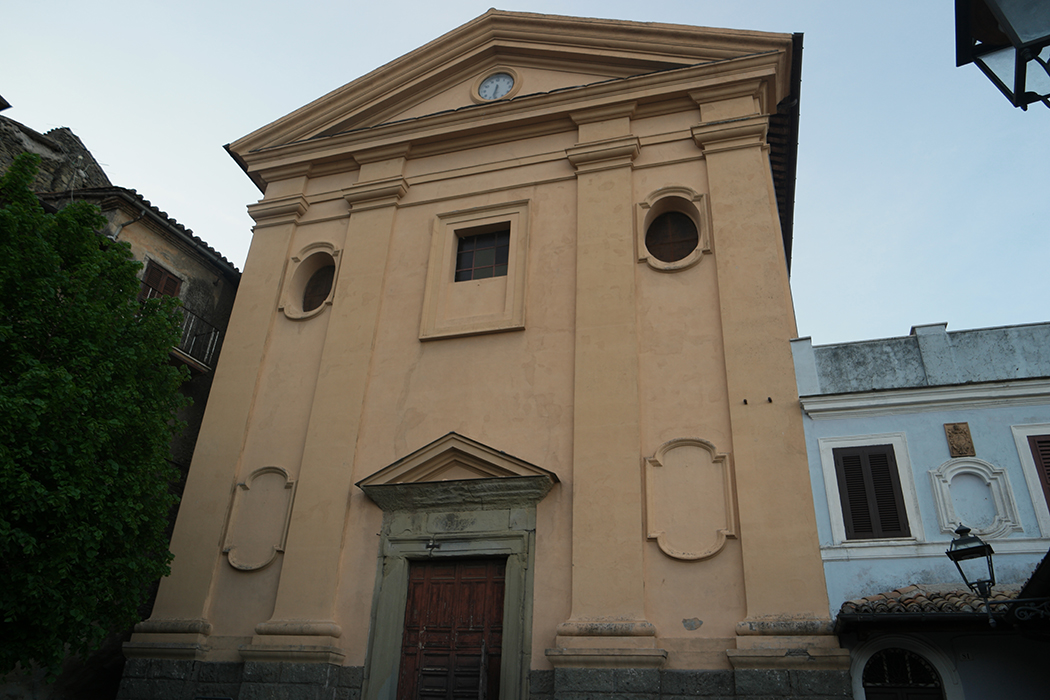
The church of Our Lady of Loreto is located just outside the village of Guarcino to the south, and dates from the fourteenth century, although it has been remodelled several times.  

Inside one finds on the main altar the most important fresco of Guarcino, the mural of Our Lady of Loreto of the fifteenth century from the Perugino School of Peter of Alatri.

powered by social2s

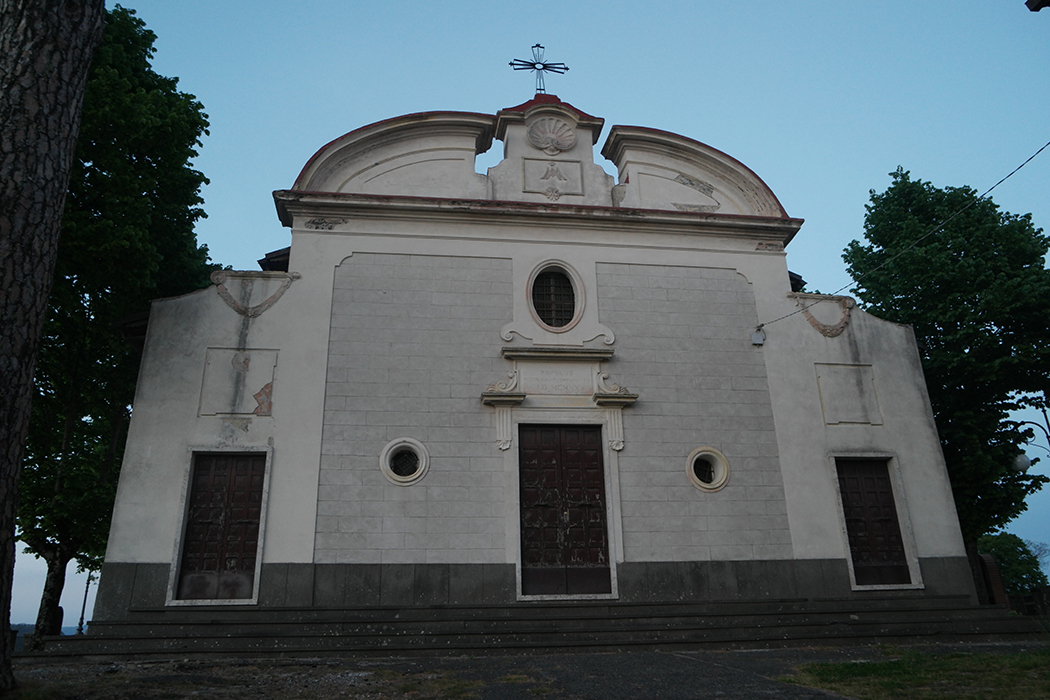
The church of St Michael Archangel - San Michele Arcangelo in Guarcino was erected in the late middle ages on the ruins of the pagan temple of Mars and was modified in 1587 to house the Benedictine nuns.

Despite numerous interventions from the sixteenth and seventeenth centuries, the Church keeps the rib vault bell tower, the only one in the Lazio region.

The church was later rebuilt in 1790.

Inside it has a nave and you will find many frescoes of 1600s, while in the crypt there are preserved other valuable pieces of frescoes of the high middle ages.

powered by social2s

The Collegiate Church of St. Nicholas in Guarcino was consecrated in 1760 and is lined with late Baroque decorations.

Inside there are numerous paintings of the 1700s, including a Ranucci, of the school of Cavalier d'Arpino, and some Balbi.

Also, of great artistic importance are the wooden ceiling of the sacristy, the pulpit and the choir of the canons with the episcopal chair.

In the church there is a magnificent pipe organ of 1800 with excellent register, and a statue of the patron Sant'Agnello Abate that is carried in processions celebrating the saint.

powered by social2s
Villa Santo Stefano. Shrine of Our Lady of the Holy Spirit

The church of Our Lady of the Holy Spirit in Villa Santo Stefano was built in 1733 in an area where miraculous apparitions occurred.

It was then rebuilt in 1872.

The Madonna with the child in her arms appeared to the priest Antonio Petrone on March 4, 1721.

She brought him healing of his illnesses.

Later in April Our Lady appeared to another priest Archpriest Gentiles.

Every year, in May, the image of the Madonna is uncovered and the church is a place of pilgrimage.

The many miracles, of which there is extensive documentation, appear to be associated with anointing with the oil of the Madonna lamp.
 

powered by social2s
San Vito Romano by Benedicta Lee

The sanctuary of the Madonna di Compigliano was built on the Campigliano hill in San Vito Romano.

In 1500, here the Virgin appeared to a young deaf-mute shepherd who regained his speech and hearing.

The Virgin began to be venerated on the site of the miracle, and a Wayside Shrine was built.

At the end of the sixteenth century the rural church was built that was accessible only by a small country road.

Initially the church had a single nave.

Between the late eighteenth century and the mid-twentieth century, the church was enlarged and finished by adding other aisles in each of which there are four altars.

The paintings at the end of the aisles represent images from the history of faith of San Vito.

The organ faces the inside of the church.

It was named a sanctuary only after recognition of the Virgin Mary in 1948.

powered by social2s
San Vito Romano by Benedicta Lee

The church of St. Biagio in San Vito Romano was built on an ancient pre-existent oratory in about 1200. Then it was rebuilt and extended around 1607.

It was designed by a member of Theodoli family and was an example of their artistic merit.

In 1830, two chapels were added that were decorated between 1927 and 1929.

In the altarpiece is the image of a woman with child asking the saint to heal the child suffocated by a fish bone. For this reason, San Biagio is invoked for the ills of the throat.

The church has a single nave and is filled with decorative elements.

The decorative mosaic before the altar recalls the valuable contribution of Theodoli to the construction of the church.

powered by social2s

Recommended

Subscribe to Newsletter

Discover a territory through the emotions of the people that have lived it.