Churches & Places of Worship

On the hill of Santa Maria, 3 km from the town of Vivaro Romano, is this 13th century sanctuary of Santa Maria Illuminata.

It is dedicated to the sacred image of the Madonna that is conserved inside.  

A local legend tells that a ray of light showed the place where the image of the Madonna.

It was to be found and from that story the name ‘Santa Maria Illuminata’ derives.

In memory of this event, on the night between the 4th and 5th August a procession is held with flashlights and torches that departs from the Sanctuary and arrives at the town.
 

powered by social2s

The church of Saints Cosmas and Damian (San Cosimato) in Vicovaro was built on the ruins of ancient Roman walls.

It has been altered over the centuries and is now situated within the convent of San Cosimato.

Its facade is Renaissance and characterized by a portico, with a cross vault with frescoes.

The frescos depicting the battle against the Saracens, executed by Rosati in 1670.

Inside, the nave has five chapels on the left side and one on the right.

Each chapel has its own different style.
 

powered by social2s

The church of Sant'Antonio Abate was built on an old Roman by the Brotherhood of the SS. Croce di Vicovaro in the fifteenth century.

It was later enlarged by the architect Pietro Torelli between 1743 and 1755.

The church has a central altar and three side chapels.

On the main altar there is a wooden crucifix of the XVI century and a polychrome terracotta statue of Sant’Antonio Abate of the sixteenth century.

The external Renaissance portico was created with four Roman columns with Doric capitals.

At one time in the sixteenth century, in front of the church, was hospital where the sick with herpes were welcomed, shingles was known as ‘il fuoco di Sant’Antonio’.

powered by social2s

The octagonal temple of St. James the Minor in Vicovaro dates back to 1448 built at the behest of Giovanni Orsini and is one of the most significant examples of the Gothic Renaissance.

The portal has a feature that makes it unique. Carved in marble it has an arched vault, a bezel and two overlapping rows of niches, which are home to ten statues on each side.

On an octagonal pillar you can identify a marble carving which represents the heraldic rose of the Orsini.

Inside one can recognise the two periods of construction of the building: the late Gothic style of the bases and the renaissance style of the chalices of the capitals. On the altar there is the image of the Madonna venerated under the title of Our Advocate, in an oil painting from 1738 by Giacomo Triga.

powered by social2s

The original church of Saint Peter was of medieval origin and connected to the castle of Vicovaro.

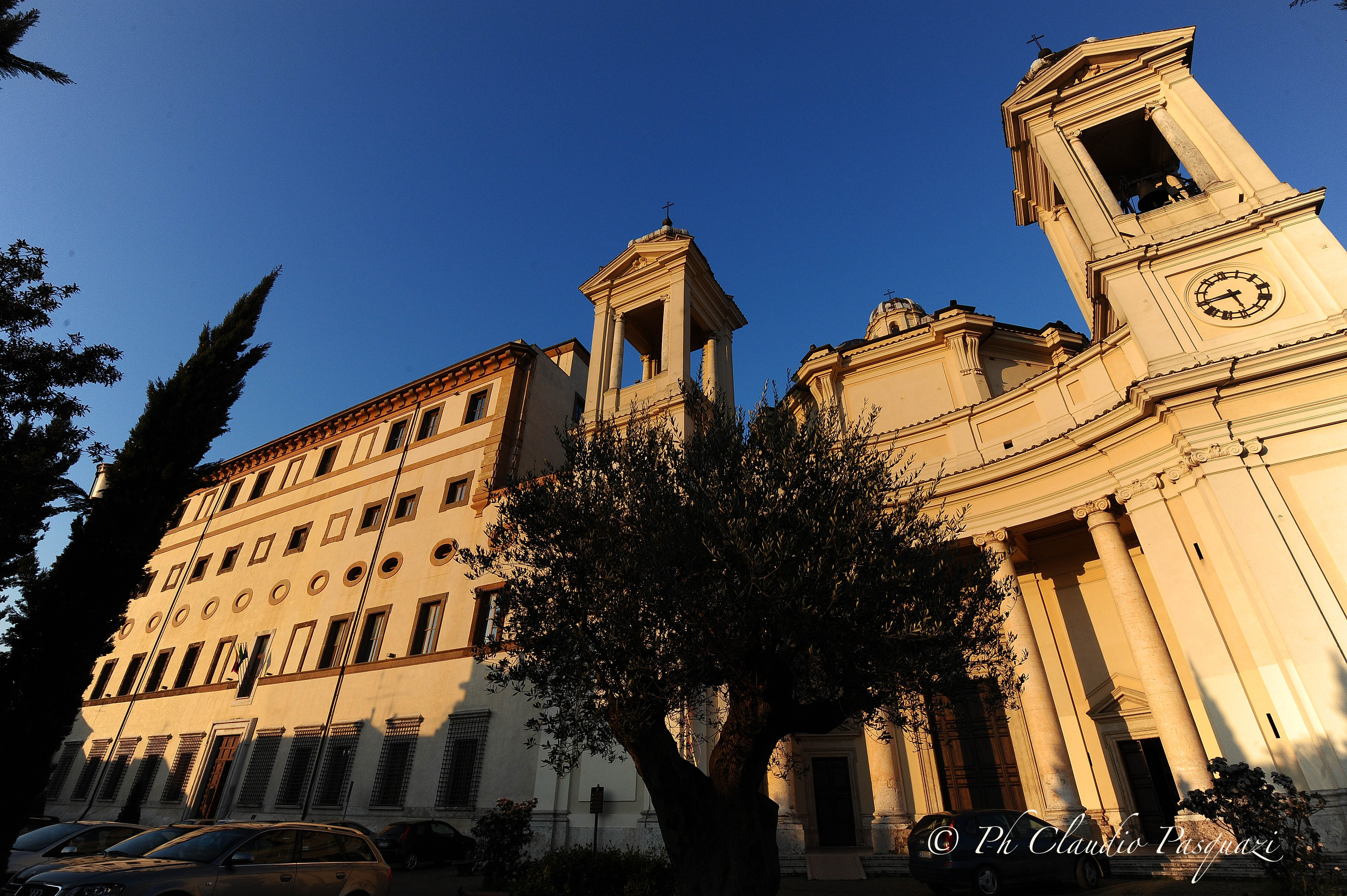
The new church of St. Peter the Apostle, under architect Gerolamo Theodoli, was started in 1745 and finished in 1755.

It is still connected to the palace by a gallery frescoed by Salvatore Monosilio.

The church has the plan of a cross, a double entrance and side chapels.

The facade has a particular style with a spectacular Baroque effect and two bell towers in the entrance of St. Peter's piazza.

Inside are paintings of the Zuccari school and a fifteenth-century icon preserved in the baptistery.


powered by social2s
FOTO CLAUDIO PASQUAZI
Valmontone. Collegiate Church of Santa Maria Assunta 

The collegiate church of Santa Maria Assunta is the main place of worship in Valmontone and is adjacent to Palazzo Doria.

For its grandeur and its original formit is considered the most significant work of Valmontone.

It was commissioned by Prince Giovanni Battista Pamphilj-Aldobrandini, to continue the grandiose work of rebirth begun by his father with the construction of the palace. 

The architect De Rossi, a pupil of Bernini, was inspired by the already realized project of Sant'Agnese in Agone in Rome, thus completing the great baroque complex right on the highest point of the city and the heart of the ambitious project of an ideal "pamphiliana city".

The construction work began in 1685 and lasted about four years, intervening with a new construction on a pre-existing Gothic building.

The church was consecrated by the bishop of Segni Pietro Corbelli on May 27, 1703.

The facade is framed by two twin bell towers on the sides and is preceded by a staircase leading to the large portal.

The substantially Baroque church, with an elliptical plan, is surmounted by an imposing octagonal dome that gives an immense light inside.

The church has eight chapels, six of equal size and covered with barrel vaults, and two larger ones with paintings by famous painters (the Holy Crucifix by G. Brandi, the Virgin of the Rosary by Mattia Preti, St Francis of Assisi of P. Pozzi and the Holy Virgin Assumption in Heaven by L. Gramiccia).

Worth a stop for a moment of admiration, the beautiful picture of the Blessed Virgin Mary holding Baby Jesus painted by Giovanni Conca.

But the most impressive picture is that of the Nativity which represents the birth of the Redeemer painted by Bassano Da Ponte in 1622.

Of great importance for the Valmontone community, is the statue of San Luigi Gonzaga, patron saint of Valmontone, located in a niche of the seventh chapel.

The Collegiate Church of Santa Maria Assunta suffered enormous damage during the war.

Since 1981 has received a new organ and an electronic clock that have made it even more beautiful and a bit more modern.

powered by social2s
Church of St John the Baptist
 Church of St John the Baptist

The church of St John the Baptist - San Giovanni Evangelista is in the center of the small village of Vallepietra and its history dates back to the Middle Ages. It was originally the chapel of the Caetani castle and its current appearance comes from a renovation in 1764.

Once upon a time, near the apse, there was the noble chapel with the tombs of the Catani’s family.

Among the most important works of art, we must mention the fresco in the apse by the master painter Ranucci which represents the Virgin Mary surrounded by numerous angels and crowned by the SS. Trinity, the symbol of Vallepietra.

The facade looks like a simple plastered wall and the entrance door is enriched by a lunette with the image of St John the Baptist to whom the church is dedicated. The interior has a single nave with 5 altars.

St John the Baptist is celebrated on December 27th.

powered by social2s

Recommended

Subscribe to Newsletter

Discover a territory through the emotions of the people that have lived it.