Churches & Places of Worship

Sanctuary of Vallepietra

The sanctuary of the Santissima Trinity is a building of the fifth century in Vallepietra.

It is partly dug into the rock of Monte Autore at 1300 mt.

It still attracts thousands of walking pilgrims especially on the day of Pentecost.

It is located at the convergence of ancient sheep routes, right at the source of the Simbrivio, and there are various legends about its foundation.

A parchment now destroyed tells of two men who escaped the persecution of Nero and met here the apostles Peter and John.

An angel appeared from heaven bringing them food and causing water to spring from the ground.

The next day Most Holy Trinity appeared the who blessed Monte Autore under the same conditions as Sinai and the holy places of Palestine.

The villages of Sion and Cappadocia are two nearby locations.
 

powered by social2s
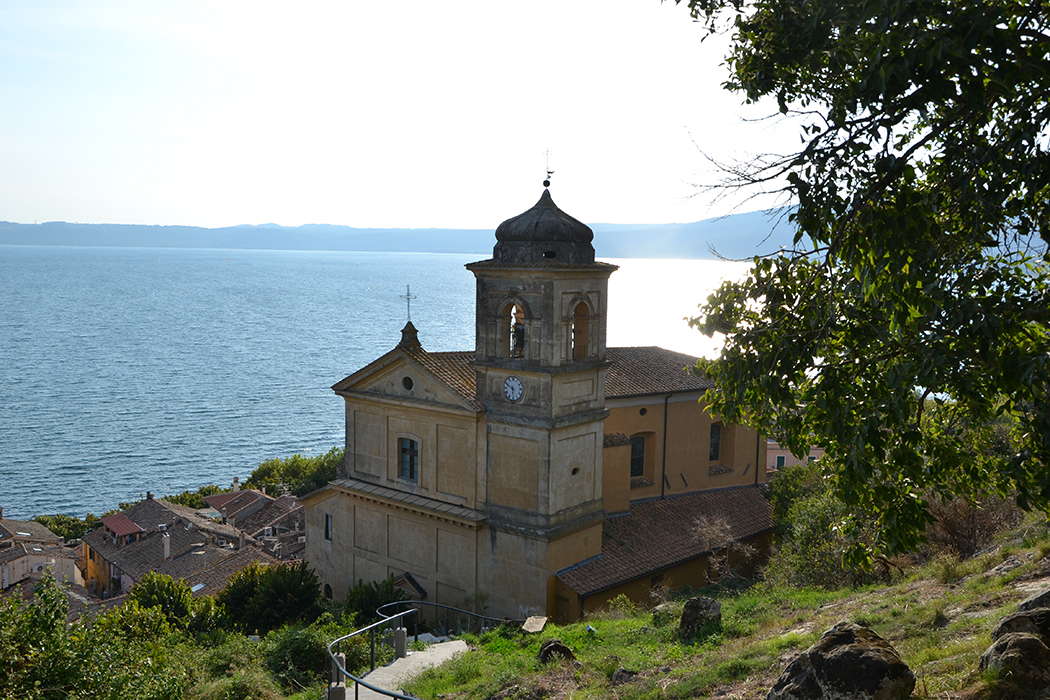
Trevignano Romano. Church of Our Lady Assumed into Heaven

The church of Our Lady Assumed into Heaven has a charming view of the landscape of Trevignano Romano.

It was built around 1500 on another Gothic building dedicated to the Virgin Mary in heaven.

It was renovated around 1794 by architect Pelucchi.

The bell tower was originally one of the fortress towers.

Inside you can see the apse fresco representing the death of the Madonna, and her assumption into heaven and coronation.

The work dates from 1517 by a painter of the school of Raphael.
 

powered by social2s

The church of St. Catherine of Alexandria was built in the second half of the fifteenth century in Trevignano Romano.

It has been built incorporating and renovating an existing XI-XII century church.

The irregularities of the walls in reticulated work and the facade with pilasters in axis, categorise the medieval origins of the church.

The 'cubilia' (lower courses) of lava stone were derived from a Roman building.

powered by social2s

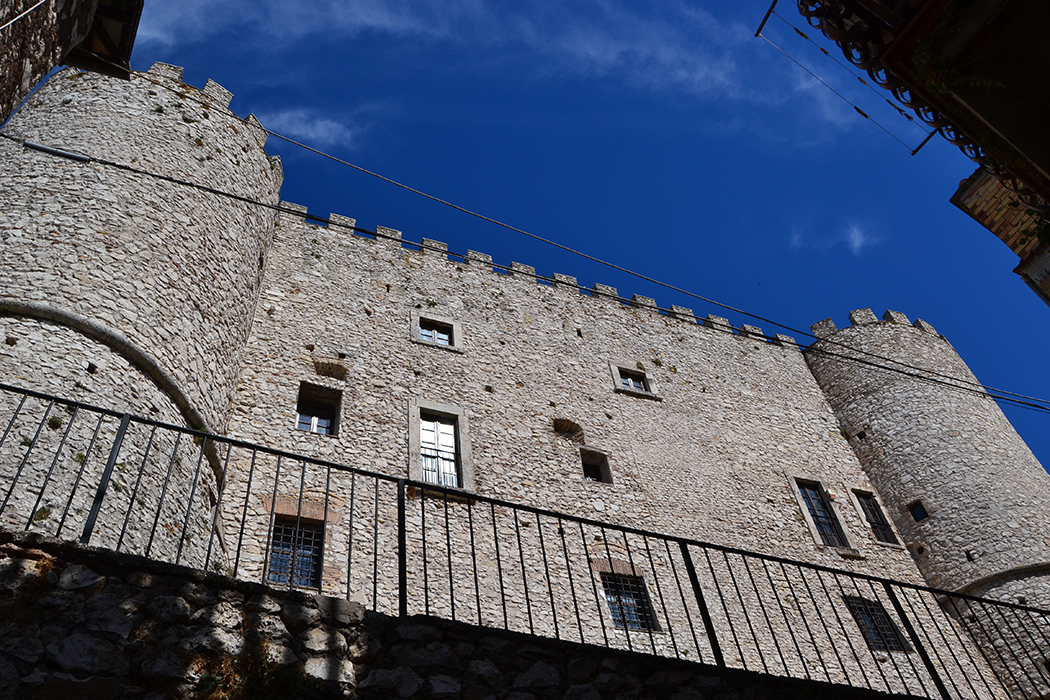
Originally the church of St. Thomas the Apostle was the chapel of the castle of Torrita Tiberina.

In fact, the church is incorporated into the walls.

It has changed considerably during the Fascist period and today is no longer possible to recognise its initial structure.

The original part is represented by the impressive exterior walls that include a cylindrical tower.

Inside are the reminder of the fresco of the 'Circumcision of Jesus', the tabernacle of the fifteenth century and paintings by Pinturicchio and Maratta.

The baptismal font is made from a fragment of a column with two opposing Corinthian capitals.

powered by social2s
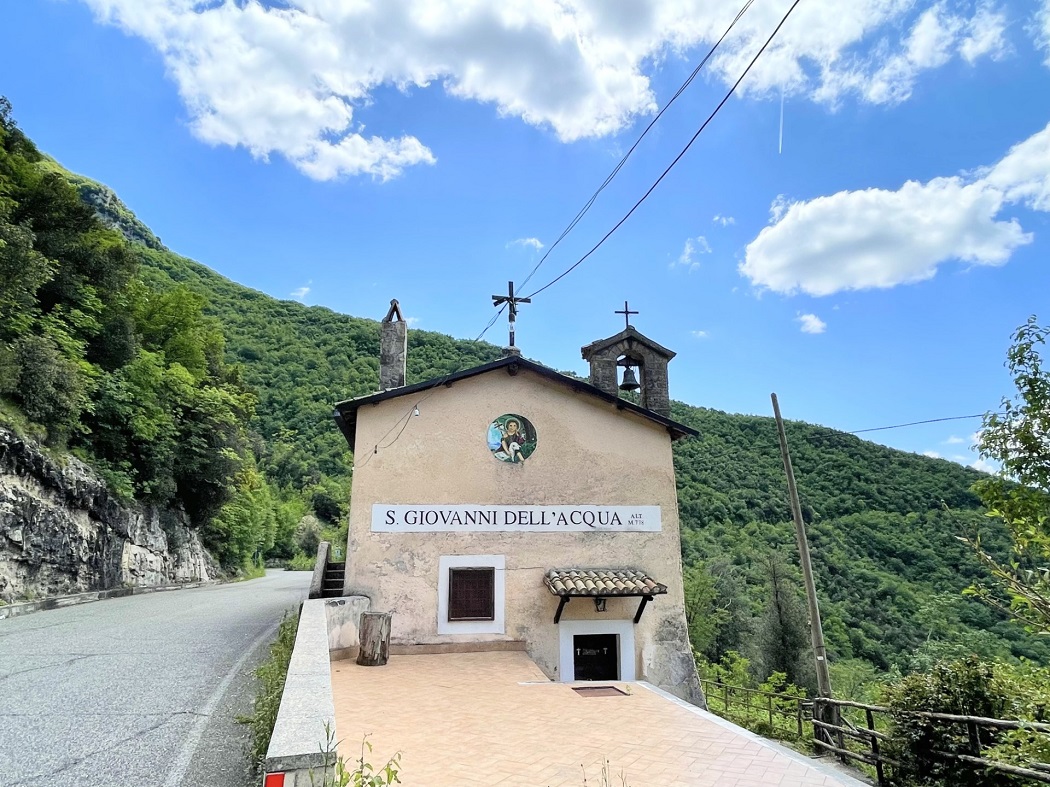
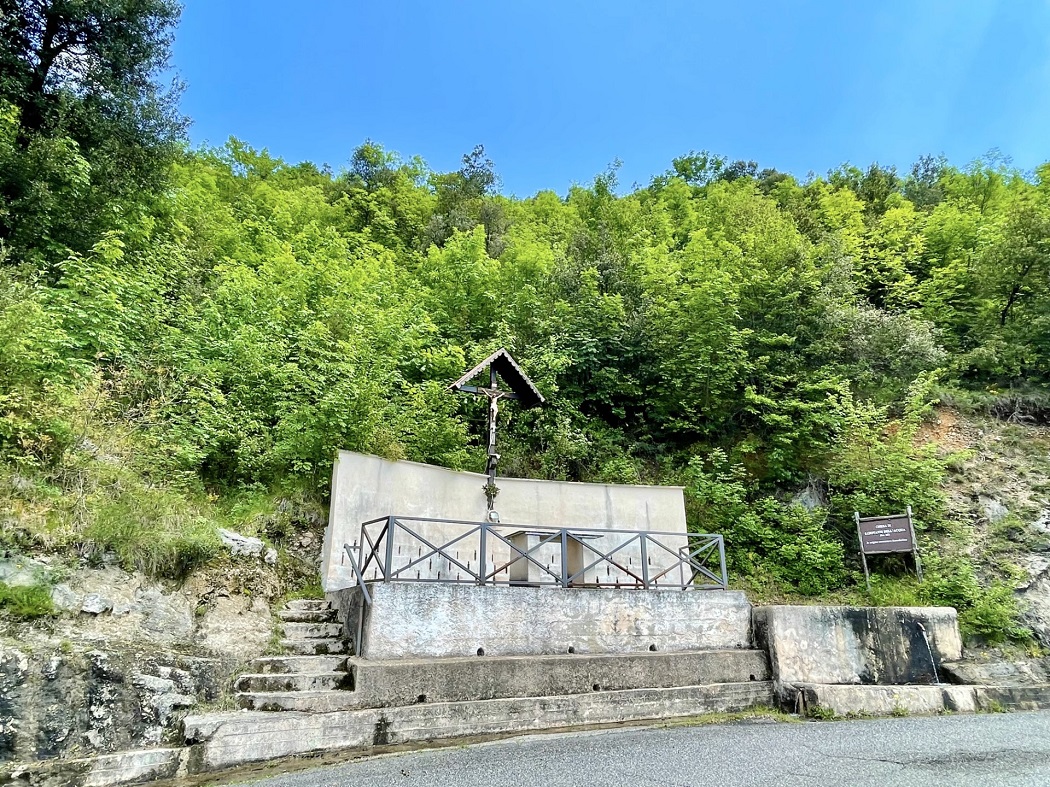
Church of St John of the Water

The church of St John of the Water - San Giovanni dell'Acqua is located in one of the most beautiful roads in Lazio region built in 1930 to connect Subiaco with Jenne. The road crosses the woods and was built by digging tunnels in the rock and it is so charming that is increasingly chosen by cyclists, motorcyclists and trekking enthusiasts.

About 6 km from Subiaco is the small church of St John built on the site of one of the 12 monasteries founded by St Benedict in the Aniene Valley. On the nearby rock wall you can observe the water flowing, which is said to be one of the miracles of St. Benedict to feed the small monastery, and which gives the church its name.

The dedication to St John the Baptist hides its most ancient origins. In fact the saint is celebrated on June 24th in correspondence with the summer solstice and often the places of worship dedicated to him had been built on previous pagan places of worship.

In this place a very ancient religious rite was practiced to treat children who had problems related to hernia and testicles.

The rite was tied to trees and a branch was opened so that a child could pass through the opening. The children were first taken in a nocturnal procession and at midnight the parents entrusted them to whoever had the task of making them pass through the opening of the branches. This rite was called 'passata' and had to be repeated three times.

Then the branch was tied and reassembled and if the opening strengthened it meant that the ritual had been effective, otherwise it had to be repeated the following day.

The day of San Giovanni is then dedicated to the rite of the 'comparanze', deeply felt throughout lower Lazio in which people celebrated their friendship by bonding through a ceremonial that also included bathing in the sacred waters.
powered by social2s
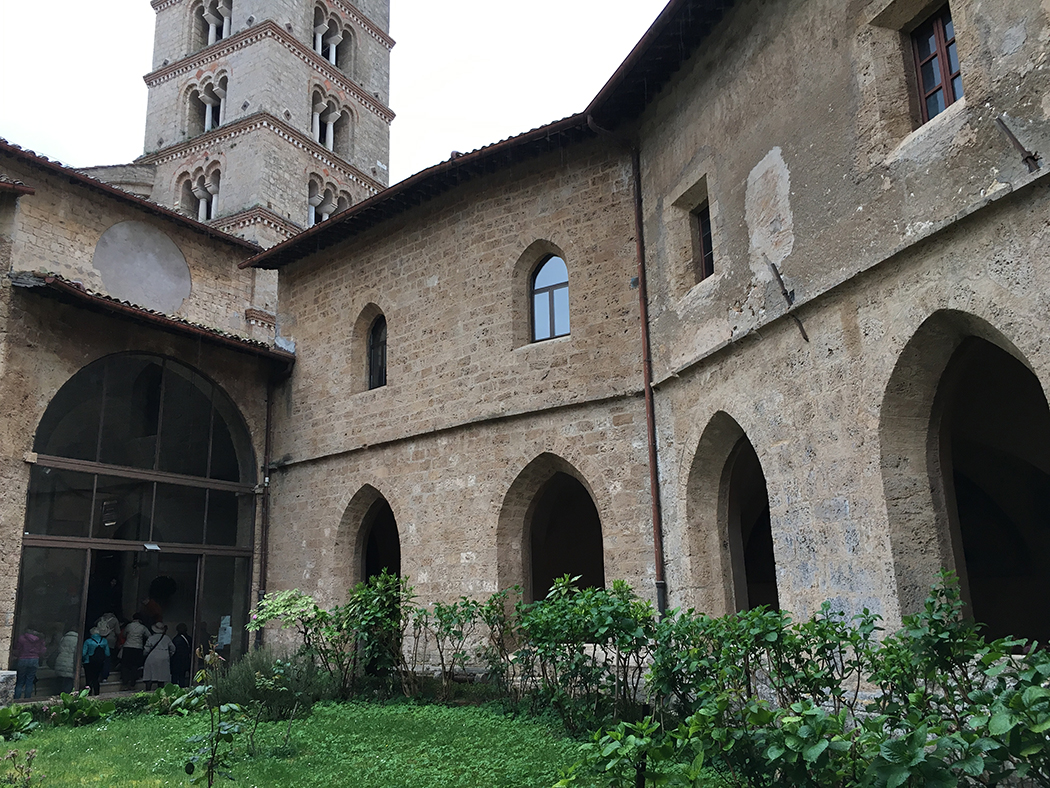
Subiaco. Monastery of St. Scholastica

The monastery of St. Scholastica, twin sister of St. Benedict, is the only one of the twelve monasteries founded for the saint in this valley (called the 'Holy Valley'), which has withstood the earthquakes and destruction by the Saracens.

It is a complex of buildings constructed in different eras and styles in Subiaco.

From the entrance, on which stands the inscription "Ora et Labora", the building goes through various architectural styles.

As you go across in the opposite direction you find three cloisters : first Renaissance Cloister of the sixteenth century, then Gothic Cloister of the fourteenth century and, finally, Cloister Cosmatesco, of the thirteenth century.

The bell tower is from the twelfth century and the last of the last version of the church is actually the 1700 Church.

Here, in 1465 two German clerics Pannartz A. and C. Sweynheym prepared the first printing in the Papal States (and Italian).

powered by social2s
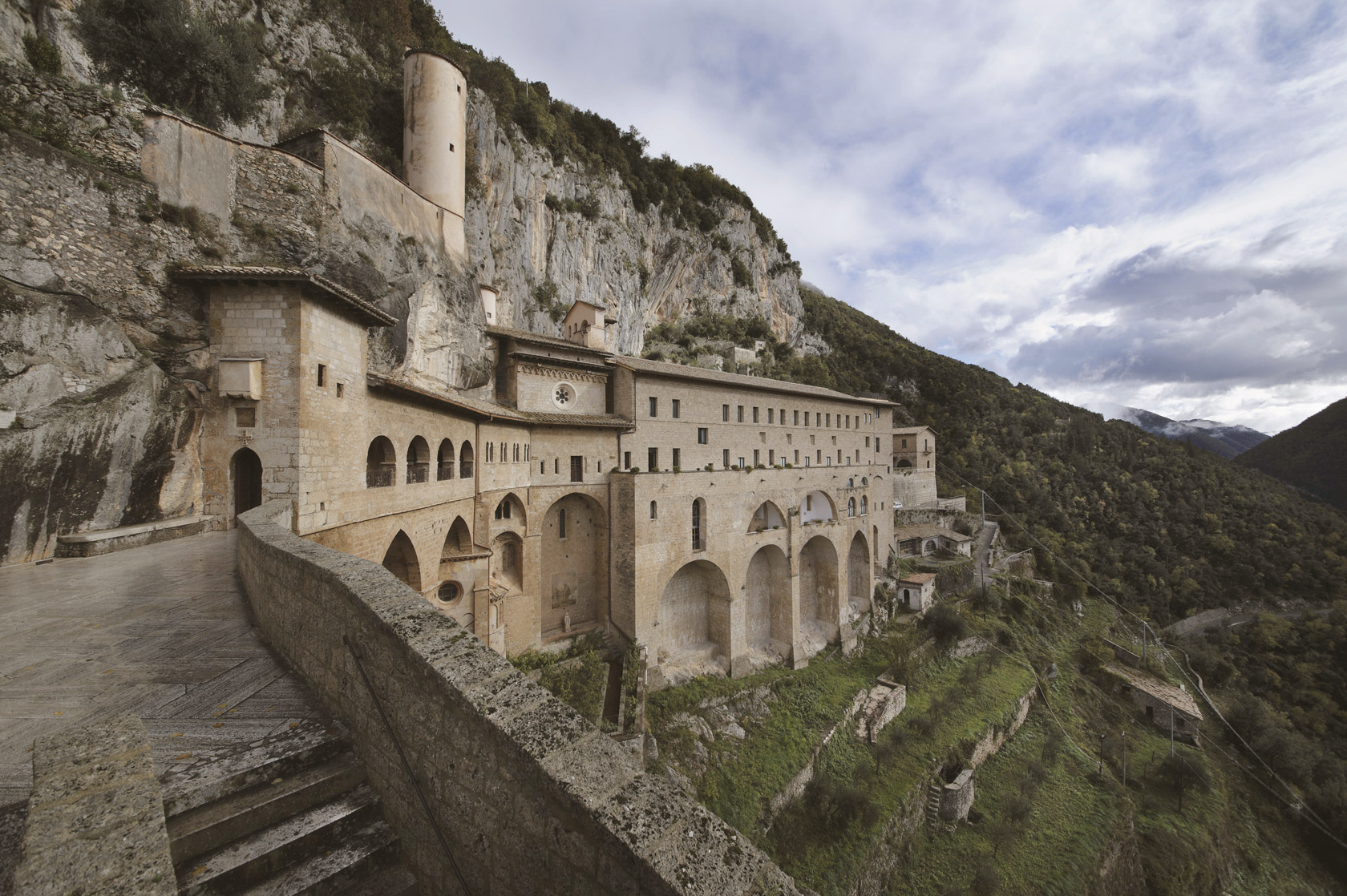
Subiaco. Monastery of St. Benedict or Sacro Speco

This monastery of St. Benedict or Sacro Speco is a monument ‘in memoriam' built in memory of the hermitage of Saint Benedict.

The saint lived in a cave (now part of the monastery) in Subiaco for about three years.

The cave was visited by pilgrims in the eleventh century and this monastery was built at 650 meters height on the side of Mount Taleo.

You enter from the Sacro Speco (sacred cave) upper church, from the fourteenth century.

The church has medieval frescoes of the Sienese school (XIV century) related to the episodes of the last part of the life of Christ.

Other frescoes (XV century) are about the life of St. Benedict by the Umbria-Marche school.

The floor of the church is adorned with cosmati style mosaics by Italian master craftsmen.

powered by social2s
Sant'Angelo Romano. Church of Saint Mary and St Blaise

The church of Saint Mary and St Blaise was originally the church of the castle of Sant'Angelo Romano which was destroyed and rebuilt in 1742.

The story goes that the citizens asked Prince Borghese for permission to build it but ran out of money before it was finished. They then asked for a loan from the monastery of Humility in Rome and in 1759 they managed to have the new church consecrated.

The building is raised from the place where it is located, and the facade looks like a simple neoclassical building and is enriched only by 4 pilasters that end with a tympanum.

The interior has a single nave with a barrel vaulted ceiling and 5 side chapels. The church ends with an apse which houses the altar area and the choir. In the asp an opening lets a beam of light filter in and among the works there is a Virgin with Child by Federico Barocci and a triptych made by Antoniazzo Romano from the 15th century.

powered by social2s

Recommended

Subscribe to Newsletter

Discover a territory through the emotions of the people that have lived it.