Churches & Places of Worship

The early church of Saint Anthony Abbot in Castelnuovo Parano documents date back to the fourteenth century.

It is believed to be contemporary with the construction of the fortress. There are frescoes in the Byzantine and Cassinese styles.

The frescoes on the walls of the nave and three apses represent at least two distinct pictorial campaigns.

The oldest dating back to the early years of the thirteenth century while the latter is mainly constructed from votive panels with saints and dates back to the fourteenth century.

According to tradition, the wooden group of the Madonna and Child miraculously came here from Castro dei Volsci, beating three times the opposition of Castresi.

The statue is worshipped at the shrine of Our Lady of the Plane of Ausonia and every three years in Castelnuovo Parano.
 

powered by social2s

The church of Santa Maria Salome is a small church in Castelliri dedicated to the patron saint, disciple of Jesus.

According to popular belief, the saint was martyred here at Castelliri.

Her remains were then transported to the town of Veroli, where she is also the patron.

The church dates from the thirteenth century,.

It is in the very place where the Holy Mother of Saints Apostles James and John the Evangelist, would die after having evangelized the people of Ciociaria region, along the banks of the Liri river around 40 AD.

On the high altar is a painting of Saint Maria Salome holding the jar of herbs in her hand.

Inside, a wooden crucifix of 1600 that the on third Sunday of July is carried in the parish for solemn celebrations.

powered by social2s
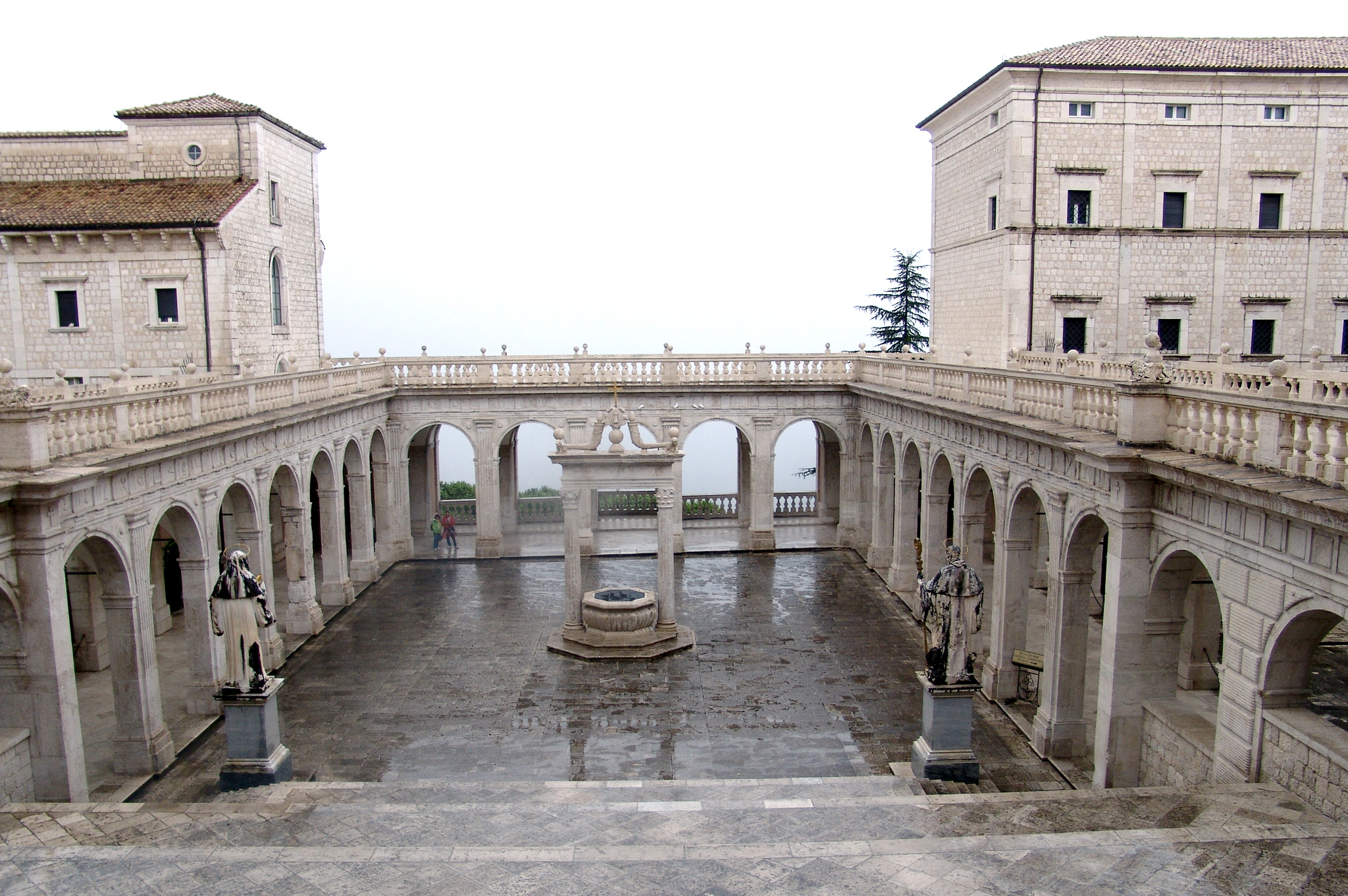
Cassino. Abbey of Montecassino

On the acropolis of ancient Casinum, on the slope of a mountain, is the Abbey of Montecassino, the most famous monastery of Christianity, founded by Benedict of Nursia in the year 529.

The saint dictated the Regula (monastic rules), that added study and manual labour to prayer, and it created the basis for the entire Western monasticism.

The abbey of Montecassino has suffered several devastations and four total destructions: in 577 by the Lombards, in 883 by the Saracens, in 1349 by an earthquake and in 1944 by Allied bombing.

Montecassino has always been an extremely lively cultural centre thanks to the patient work of the scribe monks, whose works are collected in the scriptorium, the archive and the library that preserve precious documents including rare incunables (pre-1501 printed books) and illuminated manuscripts (decorated and illustrated in miniature).

The entrance to the monastery consists of the cloister where once stood the first chapel dedicated to St. Martino, which then leads to a Bramantesque Cloister, with Renaissance plant, with the eighteenth-century statues of St. Benedict and his sister St. Scolastica at the foot of a wide staircase.

You enter the basilica through three bronze doors and the central one, executed in Constantinople in sec. XI, has carved in it the list of possessions of the abbey.

Inside the main altar houses the mortal remains of St. Benedict and St. Scolastica. Behind the altar there is a wooden choir and an organ with over 5000 pipes.

The museum houses precious traces of artistic, cultural and religious history of the abbey, of the surrounding area as well as a beautiful Nativity by Botticelli.
 

powered by social2s

Around 1032 the small Benedictine monastery along the Melfa River was authorized to build a mill in Casalattico.

It was in operation until the 1950s, when the great emigration emptied the country.

Of the monastery today, remains the church and Mill of San Nazario, now private, and the mill transformed into a farming museum of Casalattico.

powered by social2s

Like many churches, including this one, also church of Santa Maria della Pace was built on a former pagan temple dedicated to Bacchus.

The devotion to Our Lady by citizens occurred in 1837 during a violent outbreak of cholera which brought death in the country.

On July 29, the each citizen of Casalattico asked for mercy to the Madonna in a procession and the outbreak of cholera ended.

They are dressed in rags and barefoot with a rope on his neck and a cross of thorns on his head.

powered by social2s

The peculiarity of the church of San Barbato Bishop is certainly its bell tower converted from a medieval tower of Casalattico, probably one for guarding the village assets.

Inside it are kept the statues of the Immaculate and San Barbato of 1700s and a painting of the 1500s.

The organ is a Catarinozzi of 1695 completely restored in 2003 thanks to the contributions of all citizens.

powered by social2s

Recommended

Subscribe to Newsletter

Discover a territory through the emotions of the people that have lived it.