Churches & Places of Worship
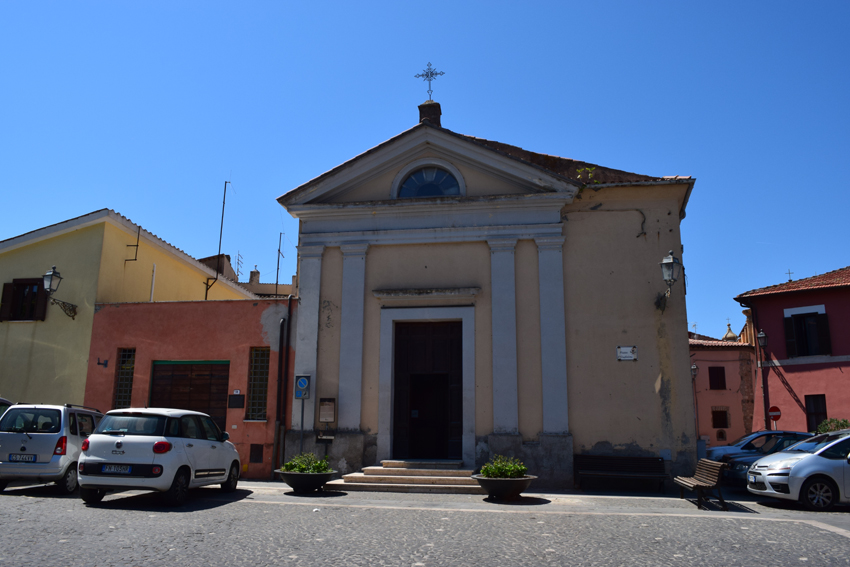
The church of the Holy Cross was built in Montalto di Castro in 1400 and then renovated in the seventeenth century.
The building has a neoclassical facade and in the past was oriented in the opposite direction, as shown by the pointed arch portal with capitals that today is walled.
The building has a single aisle and inside you can admire the image of Our Lady of Victory, the object of great devotion on the part of the population.
The Madonna is celebrated on the last Sunday of April with the solemn mass and a Infiorata - floral display in her honour.
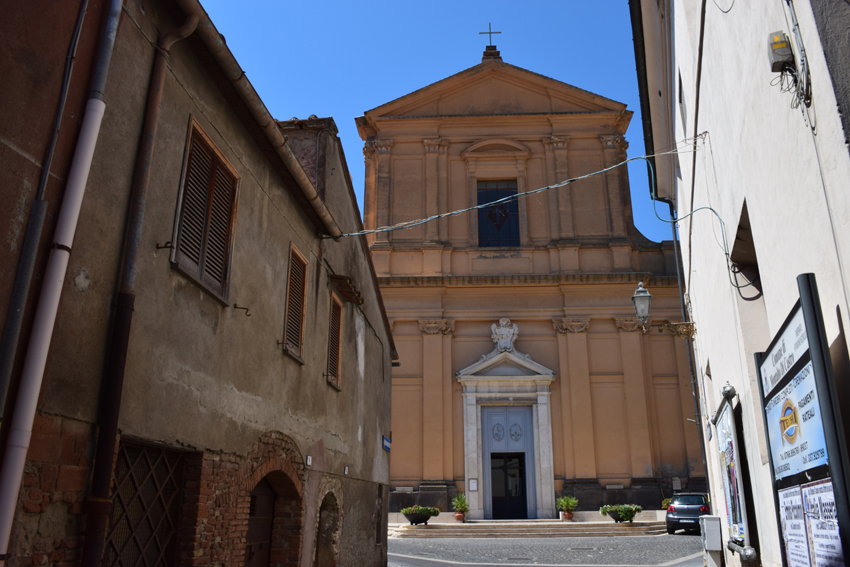
The church of Santa Maria Assunta was built in the eighteenth century on a pre-existing religious building in Montalto di Castro.
On the entrance way you see the coat of arms of Pope Pius VI Braschi who renovated it in 1783.
The classical façade is adorned with a stained glass window which allows light inside.
The church has a single nave, and the interior is decorated with eighteenth century paintings.
In a display case are the relics of San Quirino and San Candido.
The church of Santa Marta and San Biagio is dedicated to the two patron saints of Marta.
It was inaugurated in 1627 after the previous church had collapsed.
The building has a single nave and on the altar are the busts of the two patron saints.
At the altar you can admire a wooden statue of St. Blaise.
The two patron saints are celebrated on February 3, with a procession with the bust of San Biagio is carried in the procession, and on July 29 with a night procession on the lake on boats.
The church of Santa Maria in Marta dates back to the eighteenth century.
Inside is a precious chalice in gold filigree of the sixth century and a precious reliquary with a fragment of the arm of St. John the Baptist.
The sanctuary of the Madonna del Monte was built near the village of Marta and was initially wanted by the Benedictine monks.
It is located not far from a source of water.
It was made to house a sacred image of the Madonna that had appeared to a baker.
Our Lady had asked her to build a sanctuary for her on that very spot.
The place that had become a destination for pilgrimages that flocked after the story of the apparition.
The church in Romanesque style then partially remodeled in the fifteenth century by the Farnese family whose coats of arms can be seen on the facade.
The interior is in Baroque style with three altars and on the main one you can admire an image of the Virgin of the Florentine school.
From up here you have a beautiful view of Lake Bolsena.
The church of the Madonna SS. del Poggio in Lubriano dates from 1500 but was only completed in 1737 and is a rare example of Baroque architecture in this area.
Its construction is due to the discovery of an image of a Madonna painted on a tile.
Inside there is a wall painting depicting a Madonna and Child from 1619, which was the object of veneration.
To enhance this image, a high altar was created, in stucco, which frames the painting with a magnificent canopy of 1732 made by the brothers Pietro and Antonio Cremoni from Lugano.
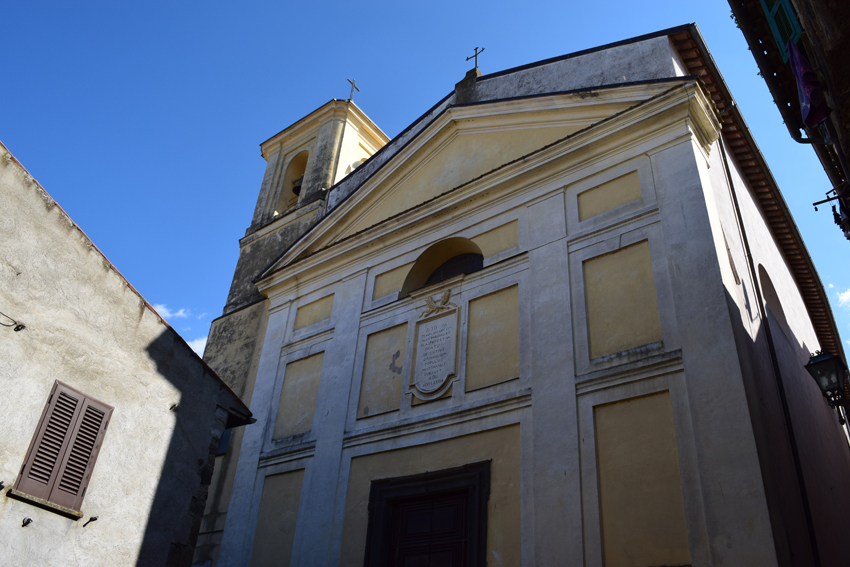
The church of San Giovanni Battista in Lubriano was created around a Benedictine cell of the ninth century.
The church is Romanesque but was damaged by the violent earthquake of 1695 and the restoration work was entrusted to Giovan Battista Gazzale from Vignanello.
The bell tower was rebuilt in 1800 after the destruction due to lightning, the architect was Paolo Zampi.
Inside are seventeenth-century murals depicting the SS. Paul and Andrew Apostles, St. John the Baptist and the statue of the patron St. Proculus, by artist Faenza Gaetano Vitenè.
Here is also the tomb of the saint.
The church of San Rocco in Latera was built around 1400 based on a promise made during the plague and
It was dedicated to St. Rocco, the patron saint of plague victims.
The small church has a unique marble altar-piece, with a fine fresco of the saint with the wound on his leg, and the little white dog that had nurtured him during his recovery.




Follow us