Churches & Places of Worship

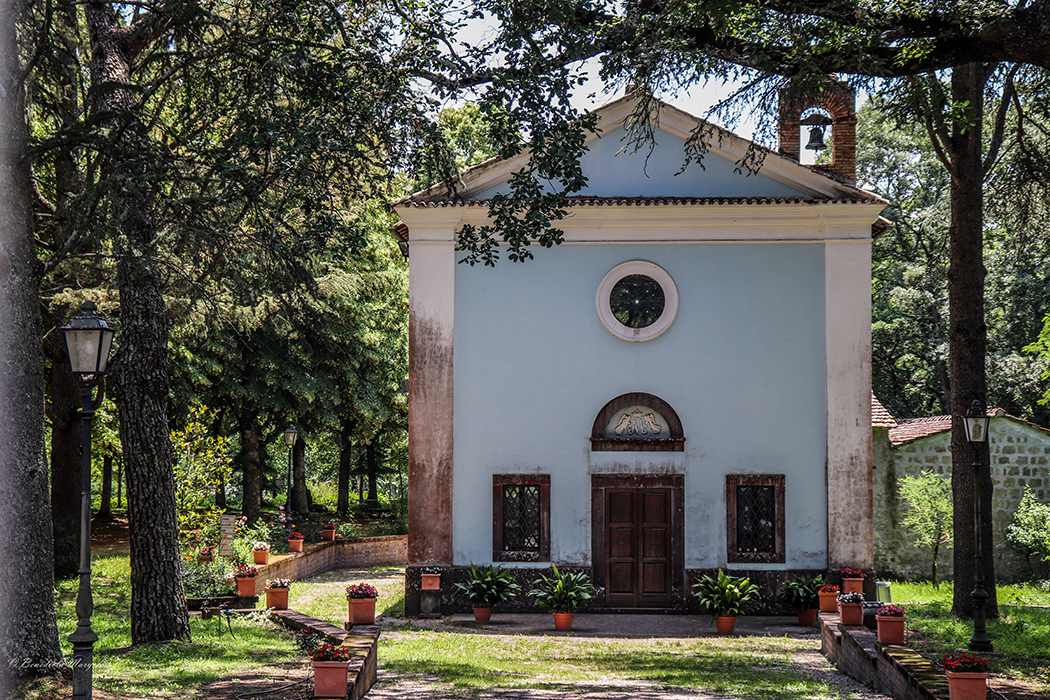
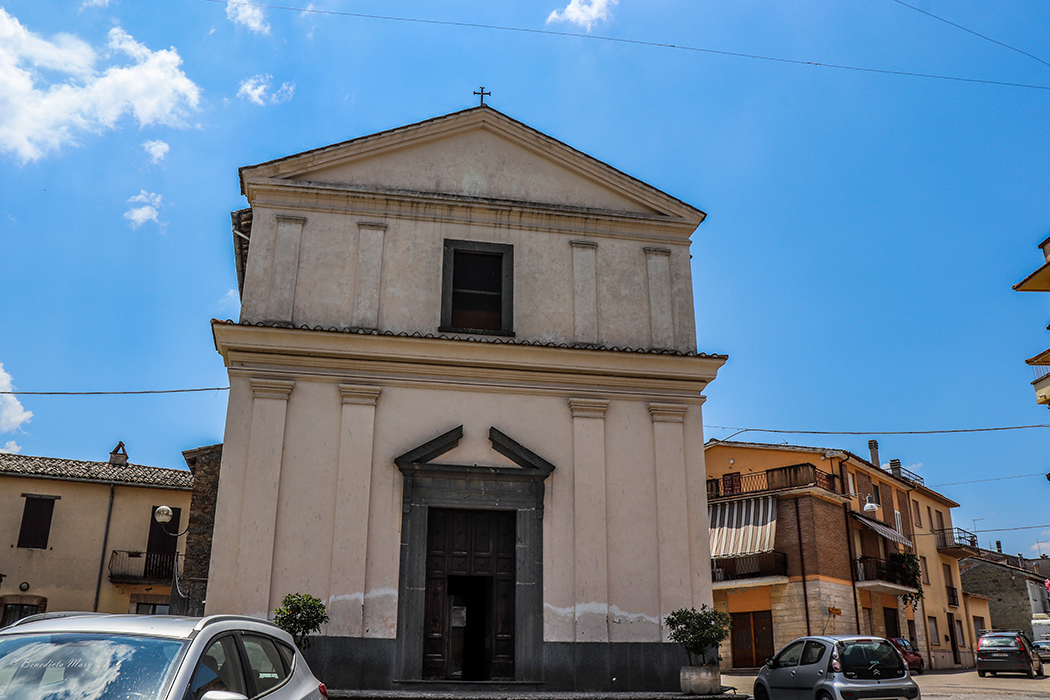
The church of St. Joseph is located in the heart of the village of Latera.

It is a small religious building in masonry similar to the surrounding houses dating back to the thirteenth century.

Every year Latera celebrates a miracle that happened in this church where a painting of the Madonna opened her eyes in the presence of some of the faithful.

powered by social2s

The Romanesque church of San Clemente in Latera was one of the first and was the only baptismal site in the area.

This first building is the old Romanesque façade and a Gothic arch incorporated in the Palazzo Farnese.

The present church dates back to 1598 from the efforts of the dukes and Mario Ferrante Farnese.

The façade has simple lines with a rose window and the Baroque bell tower designed by Ridolfi dates back to 1789.

The interior has three naves and the central one has a beautiful wooden coffered ceiling paintings of the 1600s.

The church contains many works of art, paintings and carved crucifixes all well executed.

Noteworthy is the baptistery made of basalt stone in 1590, which today has become the Eucharistic tabernacle.

The church has an organ of 1799 which replaced one of 1626 donated by Duke Pietro Farnese.

The organ was then adapted by Angelo Morettini in the late 1800s.
 

powered by social2s

The sanctuary of the Madonna del Giglio is located outside the village of Cellerano di Ischia di Castro and is located above a source of beneficial water.

It was built to protect the frescoes of the sacred image of a Madonna and a scene from the Resurrection.

A legend has it that a woman nursing a baby in a lily field appeared to a shepherd boy looking for a lost sheep.

Our Lady told him to build a church where a lily would bloom in the middle of winter.

This story gave the shrine its name. And the same lily is also in the symbol of the Farnese family who ruled these territories for many years.

The plant dates back to the early 1400s but today's result is the succession of interventions that have taken place in various eras.

It has a single nave with an open facade wall.

powered by social2s

The church of saint Hermes in Ischia di Castro was rebuilt in the second half of 1700 by architect Filippo Prada of Viterbo.

The facade is of Baroque style and the interior is divided into three naves with side chapels.

Inside there are many works of artistic interest, including the travertine baptismal font of 1538 which was donated by the Farnese.

The water source is inserted in an octagonal pool with carvings made by sculptor Antonio Canova who had been appointed 'Marquis of Castro' by Pope Pius VII.
 

powered by social2s

The church of St. Peter the Apostle in Grotte di Castro was built on the land given by Matilda of Canossa in the eleventh century and has undergone several alterations.

Today the building has a classic eighteenth-century style and the facade is divided into two levels.

The lower part with the entrance portal and the top with a window that depicts St. Peter.

On each sides of the facade there are clocks.

The interior has a single nave with five chapels on each side and ends with an apse that houses the main altar and its wooden choir stalls.

powered by social2s

The church of Our Lady of Suffrage was built in Grotte di Castro over a previous fourteenth century church.

It was designed in the seventeenth century by Gerolamo Rainaldi and completed in the eighteenth century on a design by Andrea Selvi with the construction of the oval dome.

The church is in the Baroque style and in the basement, which houses a Museum of Sacred Art, one can find traces of the previous building.

The church was decorated by Luigi Fontana between 1886 and 1888.

In it there is the polychrome wooden statue of the Virgin of the Suffrage of the seventeenth century, which is still highly venerated throughout the area.

Every ten years the statue is carried in procession through the streets of the town.

On the top of the entrance proch (bussola d’ingresso) is an organ built by Morettini in the nineteenth century.

Among the other works you admire a seventeenth-century altarpiece by Francesco Nasini representing a 'Madonna of the Rosary and the fifteen mysteries'.

Another one of the school of Reni representing 'Crucified Jesus, St. Mary Magdalene and St. Francis of Assisi'.
 

powered by social2s
Graffignano. Sanctuary of the Madonna of Castellonchio

The sanctuary of the Madonna of Castellonchio is located on a plain not far from the town of Graffignano.

Next to the place there is a spring of water called Water of Madonna (acqua della Madonna).

In this shrine for over 400 years a miraculous fresco of the Madonna has been revered.

The new church was built at the beginning of last century modifying the ancient one and changing its orientation.

There are other frescoes, various votive offerings and a painting of the Umbrian school depicting the 'Madonna between the Saints Sebastian and Rocco'.

powered by social2s
Graffignano. Church of Saint Martin Bishop

The church of Saint Martin Bishop in Graffignano is famous for a copy of the painting by Guido Reni depicting San Filippo Neri.

In addition to this there is a wooden bust with gold and silver of the eighteenth century with the relics of the saint, an eighteenth-century picture of 'San Carlo Borromeo', a relic of the Holy Cross and a wooden crucifix of the Confraternity of the Blessed Sacrament.
 

powered by social2s

Recommended

Subscribe to Newsletter

Discover a territory through the emotions of the people that have lived it.