Churches & Places of Worship
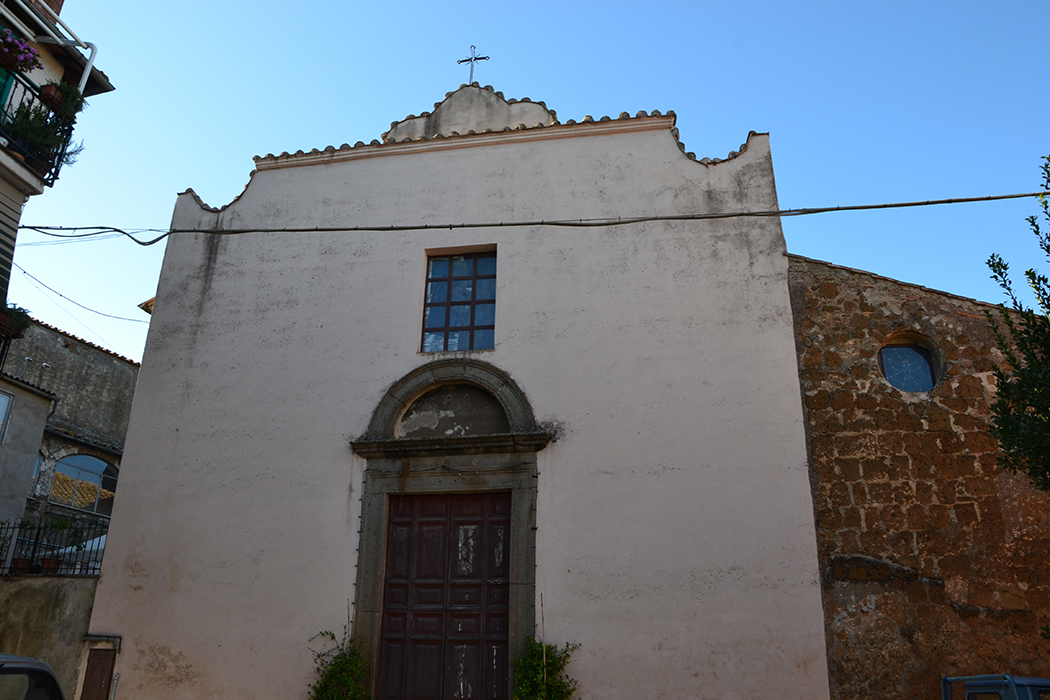
The small church of San Vittore in Gradoli is linked to a miraculous event that took place when the Saracens were wreaking havoc in the area.
They were going up the river to get Marta Gradoli when a very thick fog enveloped them and forced them to turn back.
Many citizens in the fog saw the image of San Vittore so the church was built there and a painting of the Madonna delle Grazie called "Madonna di San Vittore” is preserved.
The church of San Magno was built from tuff in the fifteenth century in Gradoli on the banks of Lake Bolsena.
It was erected under the Order of the Knights of Malta that sold it to the City in 1908.
On August 19 of each year, there is Mass with the rite of the "forgiveness of S. Magno".
It is a plenary indulgence granted the first time in 1611 by Pope Paul V Borghese and renewed by Pope Benedict XIV in 1774.
The first document that mentions the church of Santa Maria Maddalena is from December 2, 1296 and it was the chapel of the castle Gradoli.
It was rebuilt in 1440 and in 1535 Pope Paul III declared it to be highly valuable.
In the second half of 1600 it was destroyed by fire and was rebuilt in Baroque style.
The façade is integrated with the bell tower and the main entrance has two columns and an arched pediment and the two side doors have a triangular pediment.
Inside it is divided into three naves and ends with an apse decorated in the early eighteenth century by Francesco Alippi and Luca Rubini.
The dark walnut pulpit is by German craftsman Matteo Siler "faber ligniarius excellens" and was not finished for the death of the artist who had taken refuge in Gradoli in 1678.
The confessionals, the choir, the processional street lamps and the sacristy date back to 1700.
The convent and the church of Santa Chiara date back to the early seventeenth century.
It lost the monastery function in 1804 when the French of Napoleon drove the nuns away.
Since then it has hosted the Oratory of the Confraternity of the Holy Rosary, the orphanage, the Episcopal See and the City Hall.
Only the convent remains as the church was destroyed by bombing during the Second World War.
The church of St. Lorenzo in Gallese is older than the fifteenth century and is the seat of the Confraternity of the Holy Name of Jesus.
Mass is celebrated there on Good Friday and on August 10, day of San Lorenzo.
Inside you will find some seventeenth-century paintings and a collection of objects related to the Good Friday liturgy.
The church of St. Augustine in Gallese was originally dedicated to St. Benedict.
In the IX-X century was part of a large monastery that included the convent now occupied by the Suore del Preziosissimo Sangue and the so-called "Mill of the Duke".
The Annunciation chapel was painted by artists of the school of Antonio Del Massaro da Viterbo, called the Pastura, with scenes of the Annunciation, the Nativity, the Adoration of the Magi and the Massacre of the Innocents.
Above the altar is a table painted with the image of Madonna del buon Consiglio and on the sides are placed oil paintings depicting St. Benedict and St. Augustine.
The church of San Famiano was built in 1155 over the grotto in Gallese where the patron saint was buried, near the river Rio Maggiore.
It was remodeled in 1244 and again between 1624 and 1723.
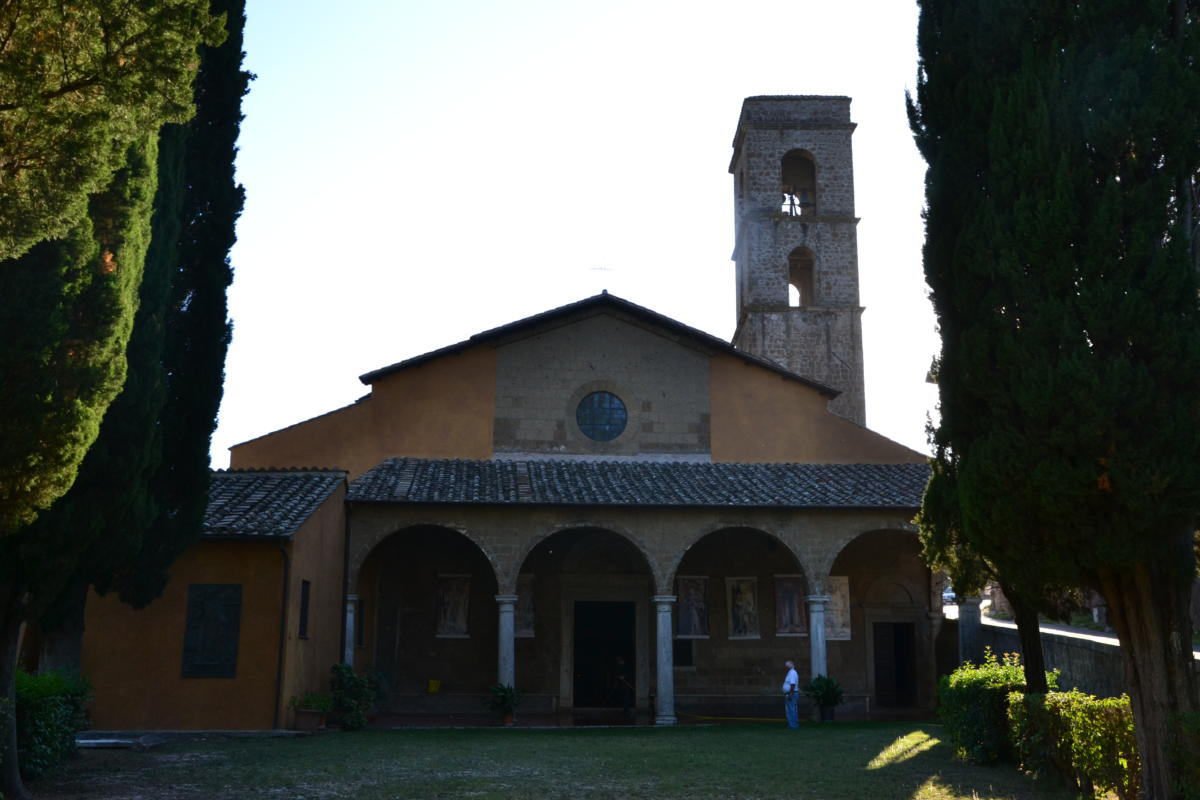
The church has a portico of the sixteenth century on four arches that correspond to the four inner aisles on the first level.
The upper level consists of a unique space and is accessed by two staircases.
Inside there are frescoes dating back to the sixteenth century.
The crypt is the saint's body in a marble sarcophagus of 1733.
The bell tower is a continuation of the fourth nave.
The convent attached to the basilica was the guesthouse where pilgrims were housed during their journeys.
The cathedral of Santa Maria Assunta, in neoclassical style, was designed by Pietro Camporese and was built on the foundations of an older church of Gallese.
It was completed in 1796 and inside there are many works of art such as the altar built in 1861 with marble and a large altarpieces of the early nineteenth century and a table of Veneto-Cretan School of the sixteenth century, depicting the Adoration of the Magi.




Follow us