


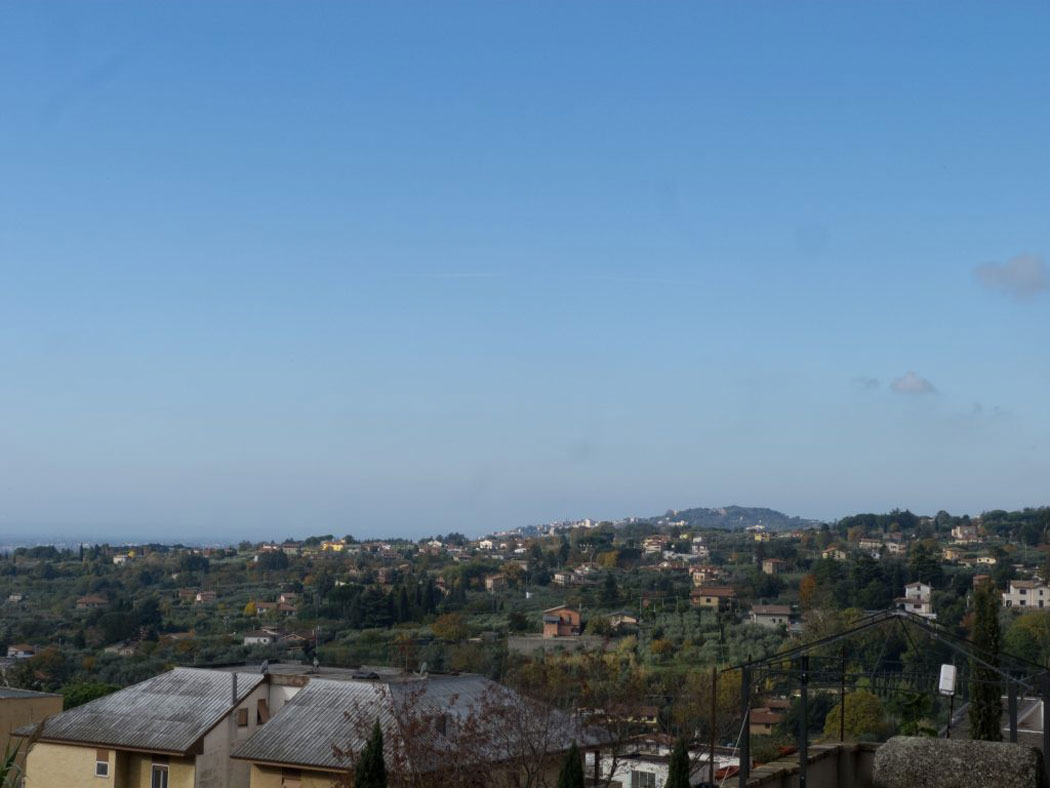
Velletri is an important town located on a volcanic hill at the foot of Monte Artemisio, just outside the Alban Hills area south of Rome. From its position it dominates the plain that leads to the Tyrrhenian Sea coast and in particular to Anzio and Nettuno and you can breathe sea air.
The area has been inhabited since prehistoric times and Velletri was an important center of the Volsci who, inevitably, came to clash with Rome during its first expansion still in the early period of monarchical Rome. It was defeated by King Anco Marzio of Rome but his Gens Octavia, which will later be that of the emperor Octavian Augustus, soon obtained Roman citizenship with all its related rights.
However, the Volsci maintained their independence and when the last Etruscan king of Rome was expelled, they allied themselves with the Etruscans in the Latin League to bring the monarchy back to Rome. The League was definitively defeated in the famous battle of Lake Regillo and Velletri was conquered and declared a Roman colony. But the belligerent and autonomous character of the Veliterni manifested itself in a desire for autonomy which led to several other battles against the Romans between 443 BC. and 338 BC when he finally lost political freedom and began his decline.
Due to its proximity to Rome, Velletri immediately suffered the consequences of the arrival of the barbarians, a social upheaval that the nascent Catholic church sought to stem. Velletri was one of the first dioceses and already a document of 465 mentions a bishop, a certain Adeodato.
Over the years the diocese expanded to include areas around the Via Appia which would soon have become a swamp without the maintenance of the Romans. With the period of the creation of castles and feudal lordships, in the 10th century Velletri was controlled by the powerful family of the Counts of Tusculum who until the 12th century governed the entire area south of Rome of the Castelli Romani. The belligerence of Velletri was demonstrated once again when he opposed the march of Roberto il Guiscardo towards Rome. The defense of the papacy was rewarded by an official commendation of the Pope in 1101.
Since the Middle Ages, Velletri was one of the few free municipalities of Italy that was administered by internal organs such as a mayor, a mayor and a sort of council even if it was part of the provinces of Campagna and Marittima of the Papal States. Perhaps even the famous pope Boniface VIII was for some time the mayor of Velletri. In 1408 another conqueror passed who moved from the south to conquer Rome, it was Ladislao I of Naples, but his passage did not last long and was respectful of the statutes of the free municipality.
In 1434, Velletri supported Pope Eugene IV in the conquest of the castle of Lariano and was rewarded by expanding its territory. In fact, Lariano was part of Velletri until 1967. In the clashes between papal families, Velletri paid his loyalty to the church after the sack of Rome with the sacking of the Lanzichenecchi in 1527 and with heavy requests for money by Ascanio Colonna.
Although with alternating vicissitudes, the town has always maintained its own city life until 1591 when the pope decided to appoint a cardinal bishop. In 1744 in Monte Artemisio the famous Battle of Velletri was fought between the Austrians and King Charles of Bourbon, who turned out to be the winner, and you can still see the signs of the roads made by the military genius.
In 1798 Velletri proclaimed the Republic together with Albano Laziale and Frascati following the example of Rome which had proclaimed the Roman Republic. But it was only one episode and immediately returned under the control of the Papal States until the unification of Italy. Technology arrived in the second half of the 1800s with one of the first telegraphs, the Rome-Velletri railway and the first banking institution in the modern sense, the Cassa di Risparmio di Velletri.
In 1806 an earthquake with an epicenter in Velletri destroyed the city but there were no deaths and for this reason the Feast of the Madonna delle Grazie is celebrated. The most difficult page for Velletri happened during the landing of the allies in Anzio during the Second World War. Velletri is located right on the first hills after the coast and the Germans erected the Caesar line of defense along a line that goes from Valmontone to Torvaianica.
Velletri was heavily bombed and destroyed by the allies and a battle was fought right on Monte Artemisio.e il 338 a.C. quando perse definitivamente la libertà politica e iniziò il suo declino.










Follow us