The popular theatre of Bellizzi's Zeza

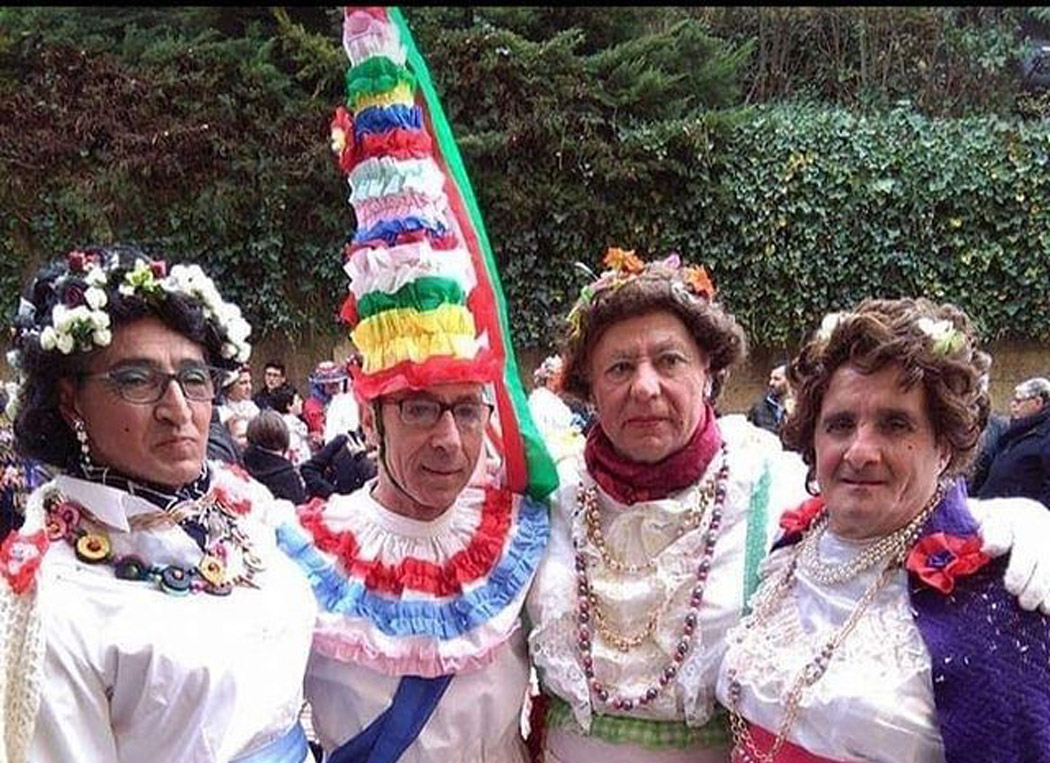
The 'Zeza di Bellizzi' is a form of popular square theatre of ancient origins and takes its name from one of the characters, Zeza, and from the village of Berlizzi, a village of Avellino.

The show focuses on folk dances and songs that take place along the streets of the city and has Neapolitan origins but had its true splendour in Irpinia.

The first shows date back to the 1600s in Bellizzi, which was a splendid summer hunting residence of the Caracciolo family, the rulers of Avellino, so much so that it was called the 'House of Beauties’.

The event was intended to brighten the stay of the nobles who, having enjoyed the first popular event, favoured their replication and therefore the birth of a true local tradition. It could be considered an ancestor of the 'Neapolitan drama'.

The characters in the play are Zeza (Lucrezia) and Pulcinella, both played by male actors because at the time it was forbidden for women to participate in performances both in the theatre and on the street.

The story is always the same and tells of Pulcinella, his wife Zeza and their daughter Porzia who embarks on a "love story" with the medical student "Don Zenobio".

Pulcinella cannot bear her daughter's independence and wants to 'protect her honour'. Instead, Zeza, the girl's mother, supports her daughter but a quarrel breaks out between Pulcinella and Don Zenobio. Pulcinella is first wounded and then treated by the doctor in exchange for Portia's hand.

At this point, there is great peace and cheerful songs and dances.

The show was learned by the peasants and then repeated for the enjoyment of the people who over time made it their own. In this way, costumes and scenes have been faithfully preserved and become a local heritage and tradition while the language, initially rather colourful, has been diluted over the years.

The 'Zeza di Bellizzi' has received numerous critical accolades and has been performed in various Italian theatres, including the Mercadante in Naples, at the Carnival of Venice, Pisa, etc.,

The text, however, was written only a few decades ago by the master Roberto De Simone, who inserted it in the famous "Cinderella Cat" by winning the Festival dei Due Mondi in Spoleto.

Bellizzi's Zeza is included in the Intangible Assets of the Campania Region.

powered by social2s
The enchanting Root Arts by master Bishwomver Lamichhane from Nepal

Art is a worldwide language and expresses our own feelings in a beautiful and attractive way. It must have emotion and it should be near the truth of humanity. So, art is weightless if it is without beauty and emotion and creation.

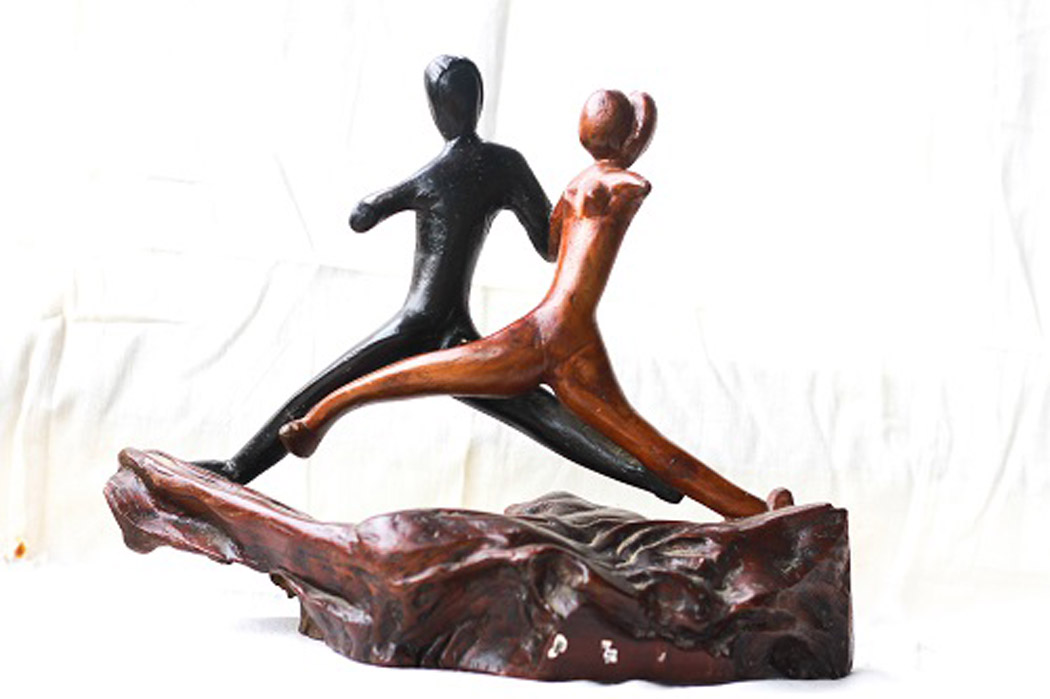
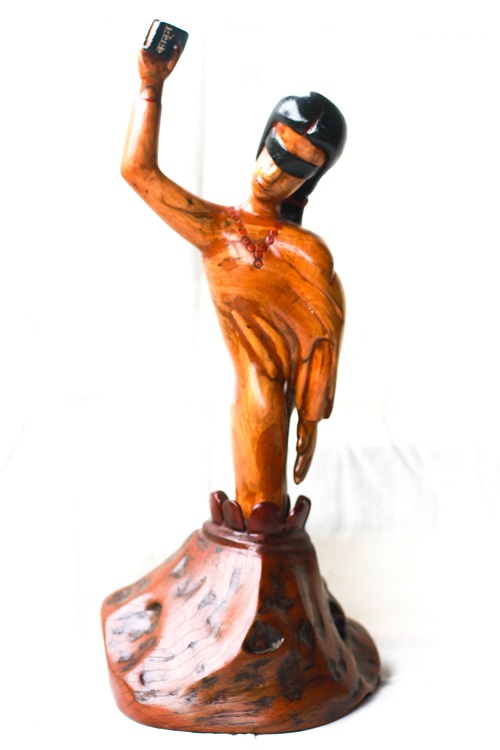
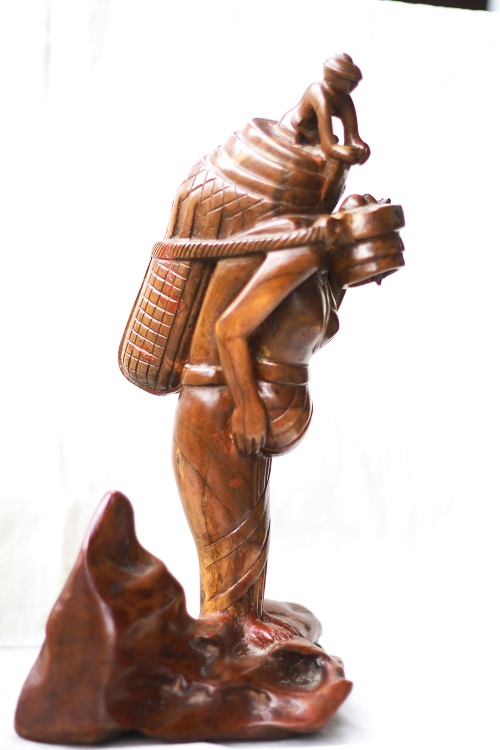
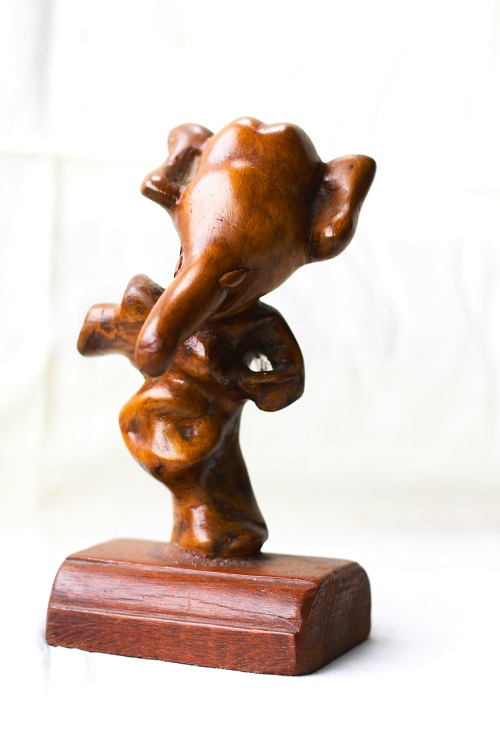
From among the arts, there is a rare practice of conceptual idea of arts from roots called Root Arts.

In Nepal there is remote district called Sindhuli, with the village of Dhakalgaun. Here there is a rare museum of Root Art that delights local tourists.

The works of art are made by Mr. Bishwomver Lamichhane, a 58 years old man, and are located in his house formed over almost 3 decades, that is since when he started making them.

What is Root Art? Why is it called root art? How it all started?

Even if it is a new art to come to light, it was a kind of art that was been there for centuries. But has always been effectively underground both metaphorically and literally.

Roots are the parts of trees that lie below the ground invisible to humans.

You can find them when you cut down a tree - which is against nature earth in every way - or when you go into the woods or rivers or landslide areas in search of dead trees with roots that are not decayed yet.

Bishwomver Lamichhane has been doing this for years now. He goes out there trying to find roots and he is helped by family and friends. Then he tries to see what the root can possibly symbolize and he brings them home.

The artist himself is a lawyer by profession but his passion is finding those dead roots and giving them a meaning according to what he saw. He says the beauty of knots in the roots that were left as useless - or probably were waiting to be found - attracted him.

In these roots he saw a medium to express his feelings and desire and that is how it all started. Without any prior knowledge and study about root art it is like a miracle of Lord Buddha getting enlightened about life without a guru.

His first art was named antlers which looked like a deer’s head, the second was a white mountain with black inside implying the effect of global warming on beautiful nature.

After few more works of art he was motivated by his family and friends, so he wanted to find more and also wanted to know more about the history of their origin.

In that remote place with no internet and very few books, all he could find was that root art was an ancient practice in countries like Germany and China for centuries.

The roots have also been used as furniture and some as art, but he could not find any museum for such works of art. There are no known famous artist and this gave him more motivation such as, what if he is the only one who has started practising it solely as art made only from roots.

The roots are simply carved, they are mostly just given the final touch.

We can see social life in his arts, it has been a good way to reflect the draw backs, hindrances suffering in the art, culture, politics around the world as well as beauty in the world of love and religious goodness.

In this kind of art, the spiritual form of the matter is displayed in the place of drawing visual physical form of the matter according to our own experience.

What makes the works of root art unique is that a wood artist or a painter can duplicate his arts as much as he wants but every piece of root art has a peculiar shape just like thumb print that cannot be matched to another.

The museum is a simple museum as the artist has blended two room from his residence home for storing his art and it is free to visit to any art lovers anytime of the day.

His works of art are not for sale because he believes that one legacy he wants to leave behind is that he helped somehow to promote root art in the world.

If he were to sell his art, those pieces may give him good money but will end up being room décor. In future, if someone wants to study about that piece of root art it will be impossible.

The appeal of the artist is for a donation to create a real museum for this more than 300 plus works, where people can come and visit. A museum promoting Root Art and tourism. And for that I believe such rare art are to be promoted initially and possibly helped by the art enthusiast.

His root art also can be seen on Instagram on ID: Rootartgallery


powered by social2s
Daniele Paris, musician and founder of the Frosinone Conservatory

Browsing the internet among the sites of the municipalities or on wikipedia you can always find something dedicated to the illustrious characters of certain places. And in Torre Cajetani? Apart from Fra Marcello da Torre, one of the leading figures of music in the second half.

His parents were all from Torre Cajetani , except grandmother Santina who was from Filettino where Mastro Cesare met her, married her and took her "to the top" of the Tower (Torre Cajetani) riding a mule.

Daniele was born in 1921 from a very humble family and immediately everyone understood that he was inclined to music. His father, Nazarene, made the whole family make unheard-of sacrifices to allow him to study. At first he was tutored by the organist Germani and then by many other masters until he became a fundamental and relevant figure for the new Italian and international style music.

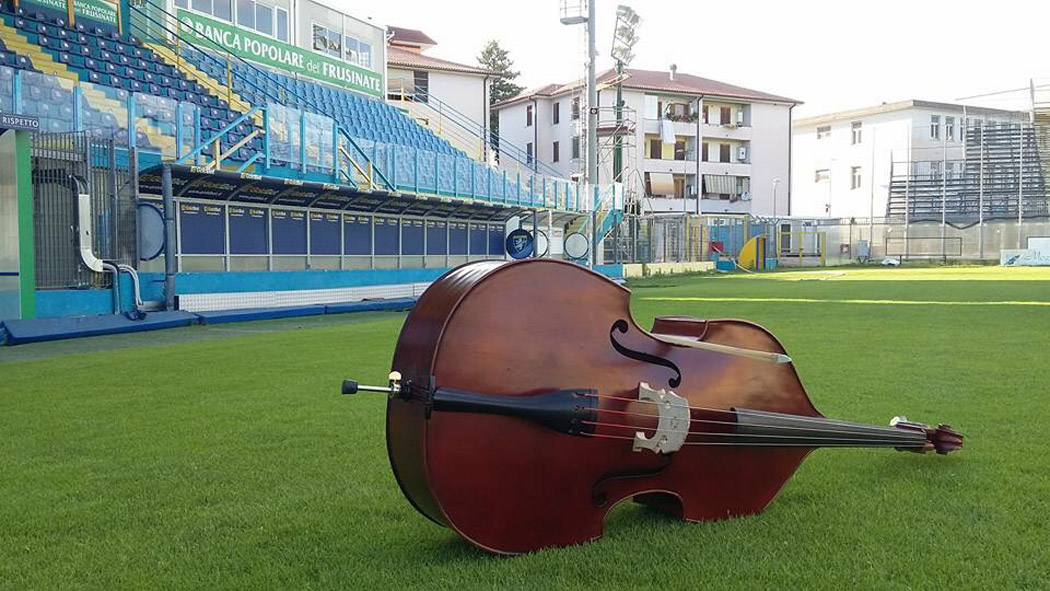
However, the sacrifices of his parents were rewarded by the success and by the prestigious musical artistic career that led Daniele to be among the founders of the prestigious Licinio Refice Conservatory of Frosinone in 1972 and to direct it from 1974 to 1989.

Daniele was an excellent pianist, he was compared with Arturo Benedetti Michelangeli, but he preferred composition and conducting. He had a very shy character and sometimes artistically 'furastico' (or maybe outlandish).


During the International Weeks of New Music, an important international event dedicated to experimental music was held in Palermo from 1960 to 1968, where, under his direction, various composers performed for the first time who later became prominent figures for the music of the second mid-1900s.

We are talking about artists like Guaccero, Bussotti, Cage and Stockhausen.

In addition, he was one of the founding members of the Nuova Consonanza association and was one of the promoters of the birth of the music school of Frosinone, the current conservatory. It is no coincidence that the Conservatory auditorium is named after him.

He was also the author-composer of soundtracks for films such as Beyond Good and Evil, by Liliana Cavani, documentaries and television dramas such as Dante's Life with Giorgio Albertazzi.

To get more information on his roots, I asked his cousin Luciano Scarsella for information, and remembers him in this way:

"I'll tell you an anecdote: we were in the 60s and one summer evening I returned to Rome from Torre Cajetani with my family in my  600 at around midnight to travel in the cool of the evening. On the highway we encountered beastly traffic and at Monteporzio Catone we proceeded  at walking pace.

Suddenly in the emergency lane I saw a man walking alone and quickly and I wondered what that madman was doing, he travels at night on foot on the highway.

Observing him better I saw that it was Daniele.

I called him to ask him what had happened to him and if he needed help and he, all pissed off, told me that he had left the car with his wife, got out and preferred to continue on foot! "

Daniele was very sensitive and attached to his origins, his land, his people and villagers.

For this reason, on August 13, 1987, he organized a ‘Torrigiana’ summer, a prestigious classical music concert inside the Teofilatto Castle in honour of Torre and its Citizens.

All admired and silent, our villagers enjoyed this fantastic event, the only one granted by Maestro Paris:

“I remember that in that magical unrepeatable evening, after the endless and passionate applause, I noticed many shining eyes. It was a small miracle ”.

Reading these few lines you are catapulted into a world that hardly exists anymore, made up of great sacrifices to make your dreams or those of your family come true. It was a more difficult world to live in but where dreams guided people's choices.

With this we want to pay tribute to him but also to his family who, with great sacrifices, gave the musical world a prominent figure who has always remained linked to our town.


powered by social2s
Montevago, a scent of the future from Belice thanks to artistic murals

Saturday 6 January 1968, the last day of the Christmas holidays.

Also that year I celebrated the Holy Epiphany in Montevago with my family. Mass at the Sanctuary of the Madonna delle Grazie, a visit to the friars, a stop to admire the magnificent nativity scene and, finally, a hot tea at a friend's house. I loved and have always loved that church, a place rich in art and mysticism.

That day, during the holy function, I was very distracted and insistently admired the interior of the church, as if I wanted to fix in my mind in perennial memory everything that my eyes saw.

That was the last mass, the last visit to the Sanctuary.

I returned to Montevago on February 3, 1968. No more orange blossom scent. No more green and long asparagus. No more Aunt Rusalia (Aunt Rosalia) with fresh eggs from her hens. No more lu zù Caloiru (uncle Calogero) with good salami and sasizza (sausage) obtained from the slaughter of his pigs.

After the earthquake there was nothing left, only stones and mud. Around only emptiness and, a lot, a lot of frost. With difficulty, my legs turned between stones and snow, while with my eyes I looked for people and houses that were no longer there.

I returned after many years. I saw under a veil of tears, a new and unknown town.

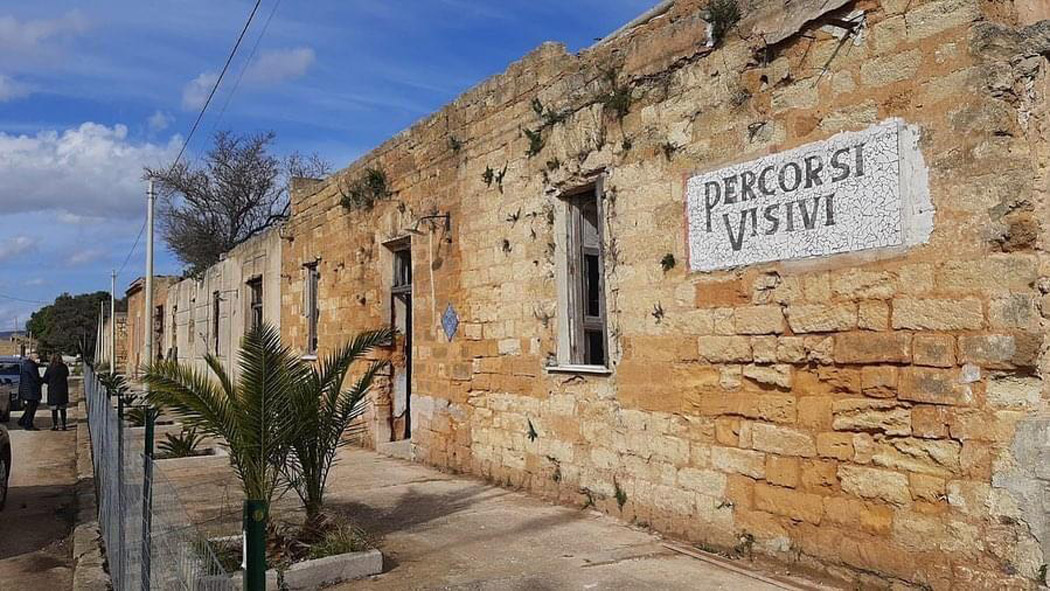
On the outskirts, next to the new houses, there were some very shabby houses: the old historic centre. Small dilapidated houses, which for half a century have defied time, bad weather and scorching heat.

Before 1968, those walls were the silent guardians of a happy community, but on that cold night of January 15, a roar turned them into grieving ghosts.

I returned on January 24, 2021. It is always a joy to see a place that recalls childhood. It's raining, there are no people on the streets and a misty silence envelops me. Instinctively I head towards the old centre, there, as always, I feel the past. Step by step I reach the places dear to me.


Suddenly I realize that the old road has been cleared, now it is cleared of stones and rubble. The sidewalks are immaculate. The flower beds are squared and planted with palm trees. Piazza Belvedere, Corso Umberto I, a look at the valley and the certainty of being in a special place, where the past meets the present and together they go towards the future.

Memories move away in a few moments to give way to the reality of the moment. An exciting visual walk that awakens hope and dreams. The shadows of the evening slowly fall, but suddenly the light of the street lamps illuminates everything around.

Those street lamps that have remained off for 53 long years, now illuminate a path of art, history, affections, traditions, flavours, aromas and popular culture.

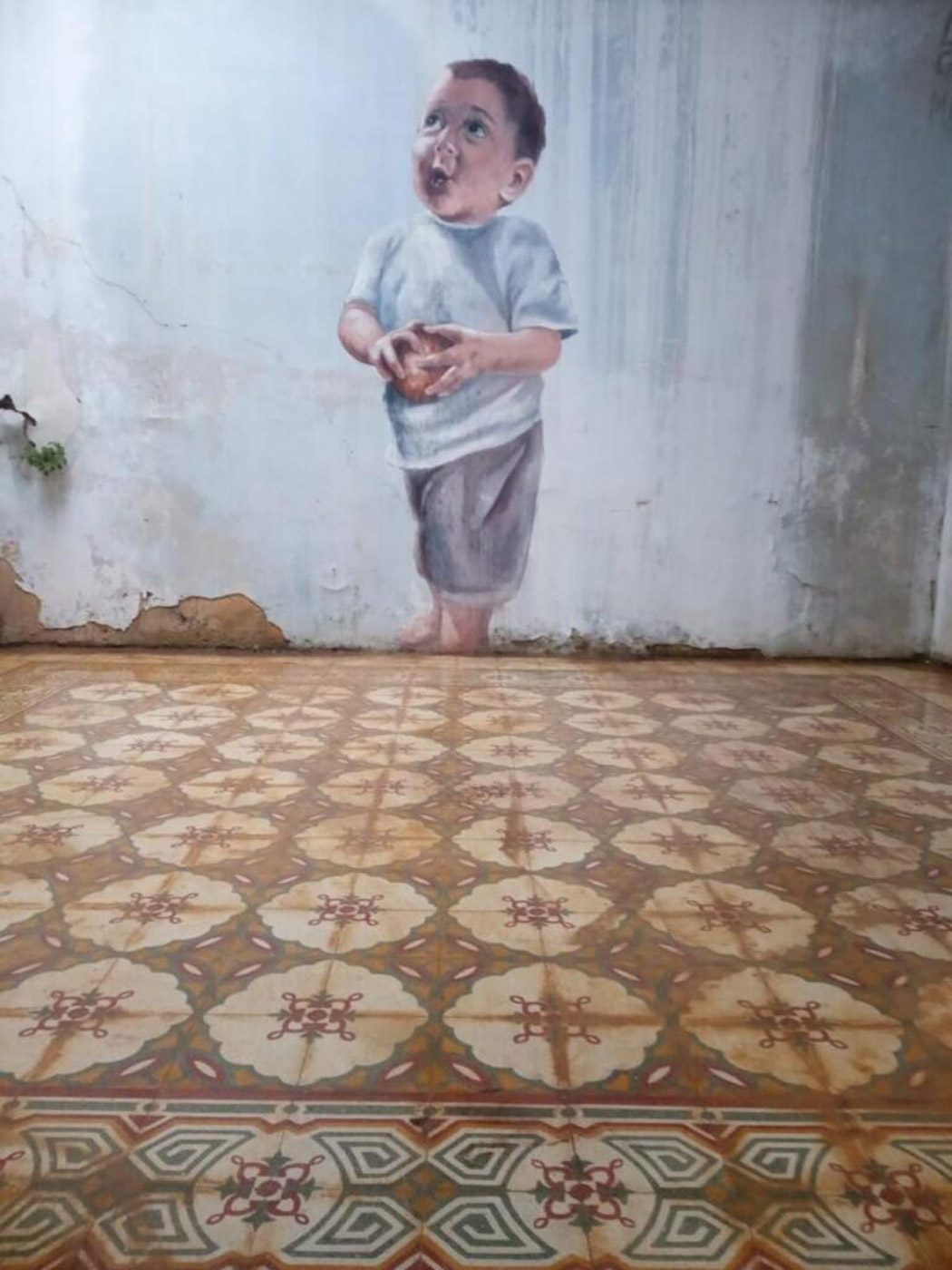
I approach the houses and they welcome me with smiling faces and nostalgic expressions, gestures of affection and moments of everyday life, they are beautiful murals that tell of a quiet town in Belice, unknown until the tragic night of 1968.

The people of Montevago with great willpower have rebuilt their town,, took back their life and maintained their identity. Along the external walls other works stand out for their disruptive force of colours and figures. I feel immense joy in watching that place come back to life.

There, where the fury of nature has destroyed, now the skilled hands, the sensitive intelligence and the ability of inspired young people has given new life. An open-air museum dedicated to the past, to those who are no longer there, but also to young and future generations.

I leave the museum with a great sense of serenity, I would say of joy, because each work that is made is a small piece of culture and history. I feel in my heart that the construction of this open-air museum is the beginning of a larger project which will not only include the artists of Belice, but also the artists of the world.

Each artist who comes will give new life and will go away regenerated by the beauty and serenity of the places, suitable for hosting various forms of contemporary art.

Montevago is the natural place to carry out any cultural initiative. The local products are of excellent quality and lend themselves to giving life to many food and wine tours.

The tourist visiting Montevago will enjoy the many facets of a place where nature, art, culture, good food, and a great desire to do, meet.

The realization of these Visual Paths has some architects and it seems to me only right to thank: Francesco Mauceri, the cultural association "The yearning for it" with the inexhaustible Michele Giambalvo and the artists: Ligama, Bruno D'Arcevia, Patrick Ray Pugliese, Pascal Caterine.

Thanks to the industrious municipal council led by the tenacious mayor Margherita La Rocca Ruvolo.


powered by social2s
Articolo-Galileo-Galilei-2-225x300.jpg

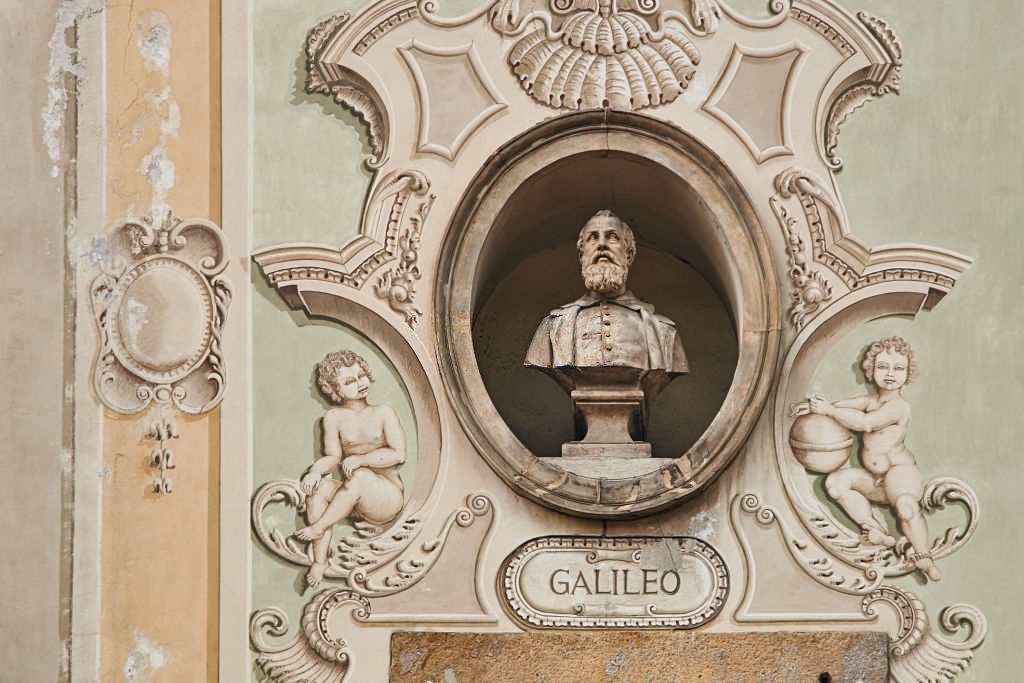
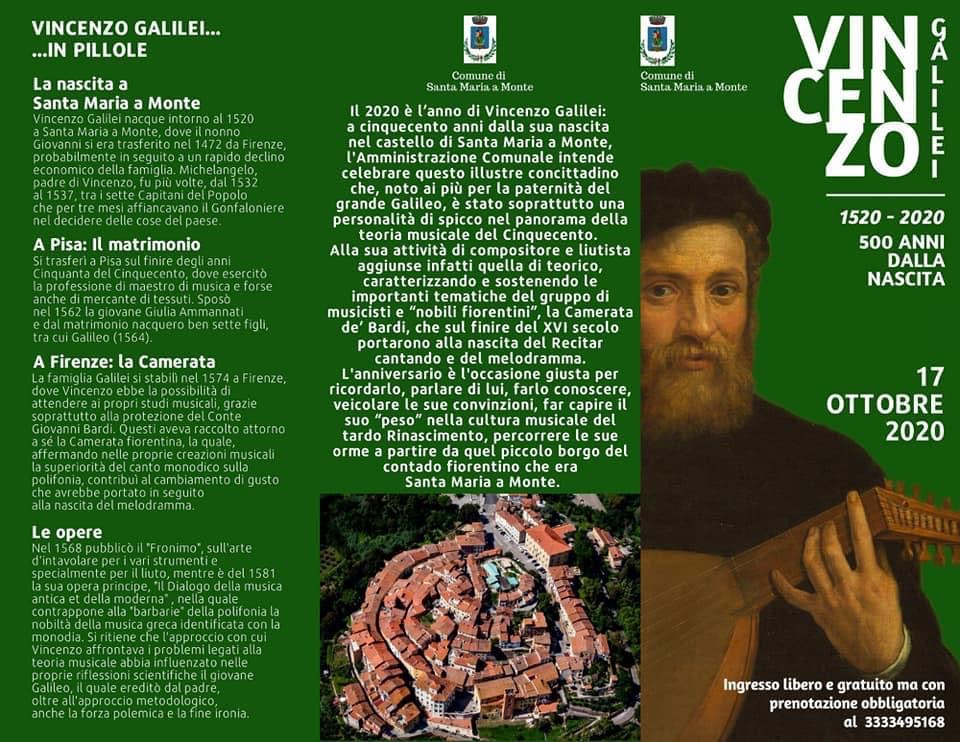
The beautiful village of Santa Maria a Monte, in the Lower Valdarno in the province of Pisa, paid homage to Vincenzo Galilei, Galileo's father, on Saturday 17 October.

Vincenzo was a talented musician and a musicologist with unparalleled skills.

The occasion was the fifth centenary of Vincenzo's birth, which took place in Santa Maria a Monte in 1520. Here in fact was where Giovanni, Galileo's great-grandfather, in 1472 had decided to transfer the family from Florence, belonging to the ancient Florentine nobility, perhaps following an economic meltdown.

In the centre of the Lower Valdarno, the Galilei family found its right dimension by inserting itself into the local social context.

Michelangelo, the son of Galileo's progenitor and grandfather, played important roles in the civil life of Santa Maria a Monte. Between 1532 and 1537 he held the position of Captain of the People several times, a post that lasted three months and consisted of supporting the Gonfaloniere in the administration of the town.

Little is known about Vincenzo Galilei's early years. He probably sang in the church choir as a boy and must have learned great lute-playing skills from competent teachers. In fact, already in his early years as an adult he had earned a reputation as a skilled lutenist.

Around the middle of the sixteenth century Vincenzo moved to Pisa where he worked as a music teacher and, perhaps to supplement his earnings, also as a textile merchant.

In 1562 he married the young Giulia Ammannati, with whom he had seven children, including Galileo in 1564.

In 1574 the Galilei family returned to Florence and Vincenzo Galilei thus had the opportunity to insert himself in that formidable cultural context.

He especially strove to restore a balance between music and poetry precisely through single-line vocal music. While he was writing polyphonic works, he tended to favour music for a sole singer accompanied by the lute, of which, as we have already said, he was a great interpreter.

With the help of Giovanni de 'Bardi, he began his musical studies in Venice with Gioseffo Zarlino.

In 1568 Galilei published his first important treatise on theoretical music, the Fronimo. About two years later he produced some song arrangements with lute accompaniment, which he modelled for his own performance purposes. He was also an excellent bass singer.

He probably died at the end of June 1591 and his burial took place that year on July 2 in Florence.

Eugenio Giani, Governor of Tuscany, intervened to recognize the musical stature of the "father ... of the father of science". Together with the mayor Ilaria Parrella of Santa Maria a Monte, he placeed a plaque on what was the birthplace of Vincenzo Galilei.

Then they inaugurated at the Casa Carducci Museum a temporary exhibition entitled “Moving oneself into others. Vincenzo Galilei and the music of affections”. In this space some elements have been welcomed that refer to the main works of the musician.

Among other things, you can admire documents from the Historical Archive and which for the first time become part of an exhibition.

powered by social2s
Articolo-Firenze-Antonella-Zanotto-2-225x300.jpeg

We are in Florence in the church of San Lorenzo created by Brunelleschi and  great wish of Cosimo the Elder, the progenitor of the Medici family.

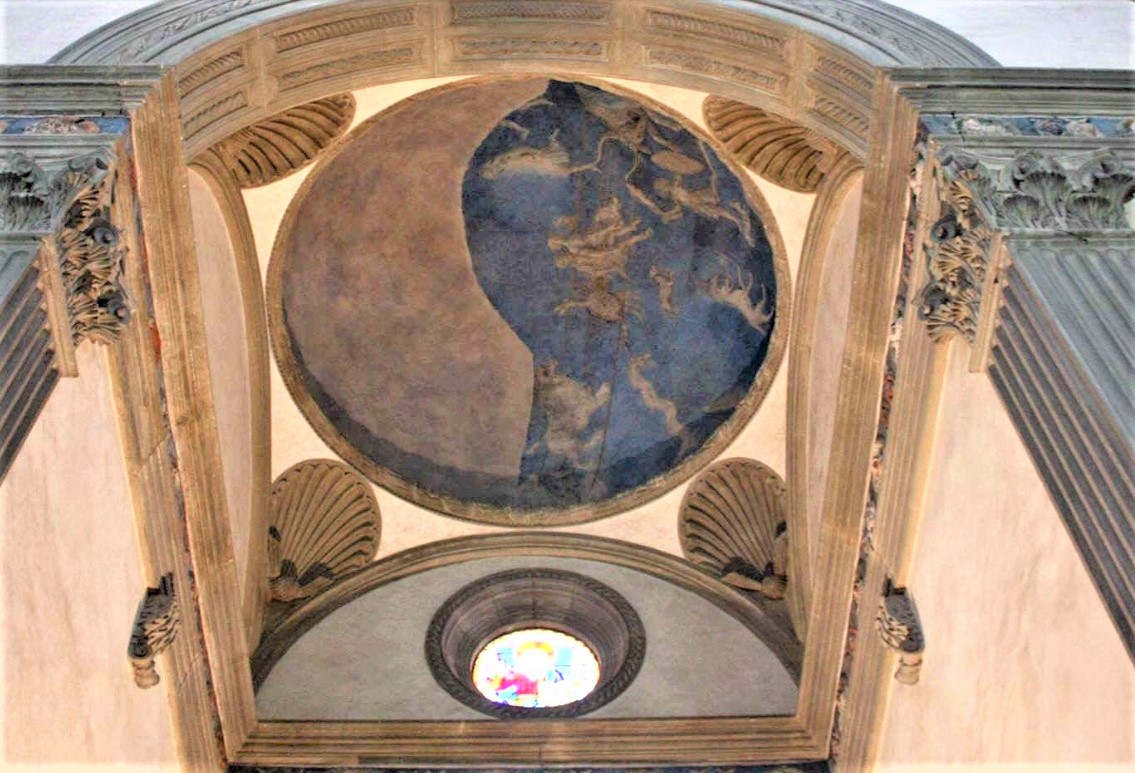
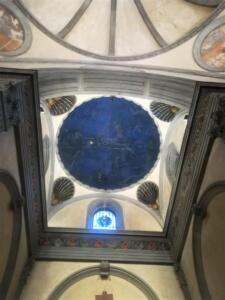
On the vault of the dome of the old sacristy there is a celestial vault that faithfully reproduces the map of the sky above the city on the date of July 4, 1442.

The work was created by a decorator painter of the time, Giuliano d’Arrigo known as Pesello, on the recommendation of the mathematician astronomer and cartographer Paolo dal Pozzo Toscanelli.

What happened on that day to be immortalized for everlasting memory?

To deepen the mystery even more, is added the fact that the exact same sky is painted in the Pazzi Chapel in the cloister of the church of Santa Croce. This too is a church built by Brunelleschi.

What extraordinary event led two powerful and, always antagonistic families to immortalize the same date in the vault of their chapels?
 
Perhaps a secret agreement between the two families of which there is no documentary trace and of which history is not yet aware.

Or perhaps an event that involves both of them but which has never been officially disclosed for reasons unknown to us.

Many assumptions have been made, but none that fully satisfy.

After all, if it had been an official event, there would be traces, at least in the chronicles of the time.

Instead, nothing appears to have happened on that precise date.

Yet something exceptional, so important as to be secretly celebrated by two frescoes in as many chapels, must have happened.

Maybe after centuries someone would find its traces and shed light on the mystery.

The mystery remains unsolved, the search is still ongoing but the two splendid celestial vaults remain to remind us that July 4, 1442 has a place of honour in the history of the two families.

powered by social2s
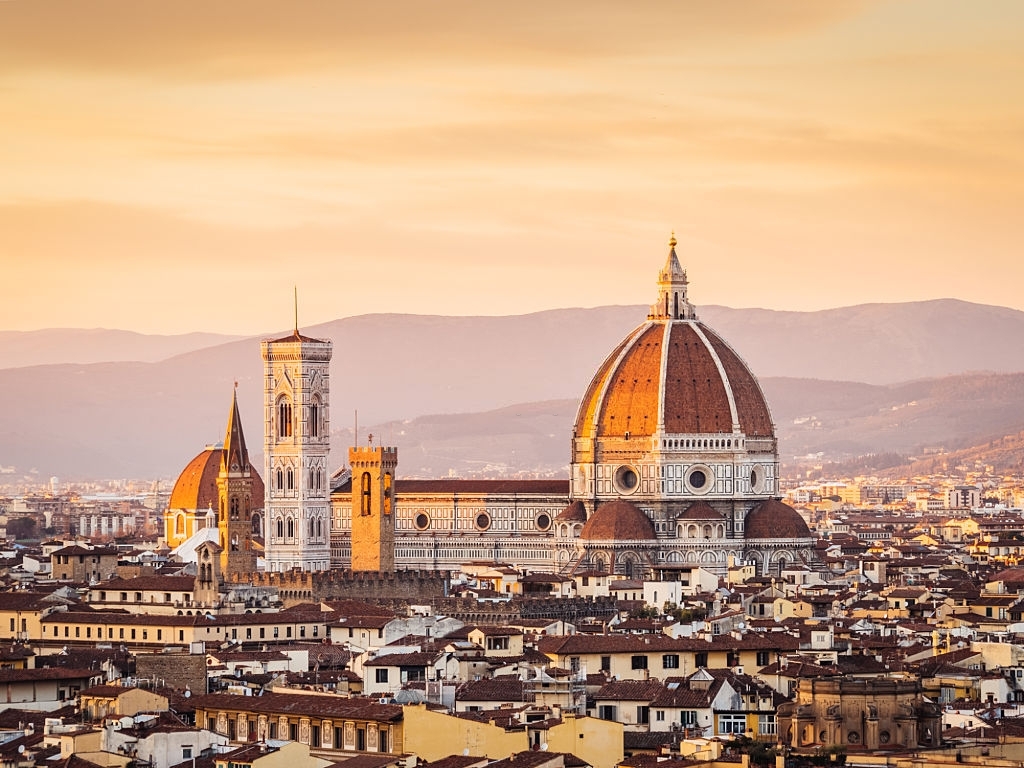
Florences cathedral and skyline at sunset
Florence, Brunelleschi and the mother of all domes

An anecdote reveals the consideration that other great contemporary personalities of Brunelleschi had for his extraordinary dome.

In fact, as reported by Vasari who was about to leave for Rome where he would direct the work for the construction of the dome of St. Peter, Michelangelo would have commented as follows, referring figuratively to that of Brunelleschi:

"I'm going to Rome to make your sister, yours may be bigger, but not more beautiful".

There was therefore awareness, already among contemporary geniuses, not only of the extraordinary nature of a work that is the 'sum’' of technical and theoretical knowledge and which contributed to represent that formidable epic that was the Renaissance.

Another element made it a model for subsequent generations: the commitment and complexity of its realization, which required a fundamental organizational effort to complete the work in a very short time.

All this materialized just 600 years ago, on 7 August 1420.

On that day the construction site that would lead to the construction of the dome of the cathedral of Santa Maria del Fiore in Florence officially started.

The building would mark a series of innovations that anticipated the future. Starting with the choice of the project design which took place, as we would say today, after a competition for ideas.

In addition to Filippo di ser Brunellesco, Manno di Benincasa, Giovanni dell'Abbaco, Andrea di Giovanni, Giovanni di Ambrogio, Matteo di Leonardo, Lorenzo Ghiberti, Piero d'Antonio, Piero di Santa Maria a Monte, Bruno di ser Lapo, Leonarduzzo di Piero, Forzore di Nicola di Luca Spinelli, Ventura di Tuccio and Matteo di Cristoforo, Bartolomeo di Jacopo and Simone d'Antonio da Siena, Michele di Nicola Dini, Giuliano d'Arrigo (Pesello) were competitors.

Later, in 1419, Giovanni d’Antonio di Banco (Nanni di Banco) and Donato di Niccolò di Betto Bardi (Donatello) also registered interested.

The construction of the dome was a great opportunity for technological innovation and work organization. The construction site proceeded so quickly that in 1436 the dome was completed and became part of the Florence skyline with its incredible dimensions: 45.5 meters in diameter and 116 meters in height.

But what were the innovations that allowed these results to occur?

There were a number of them, but two construction strategies in particular deserve to be mentioned. The first was the constraint not to use scaffolding. For this it was necessary to work on a self-supporting structure. A revolutionary challenge that required solid knowledge of geometry and materials technology.

Ordering a structure of this magnitude without the use of internal wooden reinforcements was possible by resorting to the construction of a double cap: one internal and one external.

The other constructive choice lay in the use of corner bricks and, above all, in the "herringbone" wall system. This technique required the use of horizontal elements, alternating with others arranged vertically.

Leon Battista Alberti celebrated the dome structure placed "above the sky, wide enough to cover all Tuscan peoples with its shadow".

While Giorgio Vasari noted: "seeing her rising to such height that the mountains around Florence seem similar to her".

In reality, the challenge started earlier, in 1418 when the work of the Duomo launched a competition for ideas to create a truly formidable project.

Once in charge, Brunelleschi, who did not really have a nice character, hinged on the organization.

Another anecdote reveals his resolve.

Invited to present his project, Brunelleschi refused, alternatively proposing a test of skill. Victory would have been won if one was able to keep an egg standing on a marble table. Thus, while the other competitors failed, Brunelleschi did nothing but flatten the lower part of the shell by tapping it on the table.

As the others objected, complaining about the obviousness of the test, he showed how to find solutions to problems one must think of the most obvious ones.

As Timothy Verdon, a great connoisseur of art history and lecturer at Stanford University, declared, the construction of the Florentine dome marked the beginning of the modern era and marked the beginning of the modern concept of progress.

Brunelleschi worked in a difficult context, as Vasari relates, between suspicions and continuous accusations.

In fact, it reveals how virtually every week anonymous or signed letters came to the work of the Duomo which attributed gross errors to Brunelleschi and warned against the structural collapse of the dome.

When the work was nearing completion, it was clear to everyone that the accusations were unfounded.

Brunelleschi confided in Buggiano, his. adopted son and professional heir, that he had seen during a walk in the hills the swollen and reddish sails of the cathedral suspended in the sky of Florence long before he started to work.

On that occasion Brunelleschi experienced what the ancient Greeks called "theoreoin": the ability to see what will be.

And again, Brunelleschi, who used to spend a lot of time on the construction site, claimed to know every single brick used for the construction of the work.

In fact, he affirmed that there can be no equal. Each of them is made to be placed in the only space where it should be. The stability of the dome is guaranteed by every single element.

powered by social2s

Subscribe to Newsletter

Discover a territory through the emotions of the people that have lived it.