Larissa Museum Thessaly
Two Million Years Living in Thessaly

The great cities of the ancient world such as Rome and Athens are but babes in relation to the cities and towns of Thessaly in central Greece.

The area of Larissa, the capital of Thessaly, has been continuously occupied since the Neolithic Age, and areas to the east have discoveries dating back to the Paleolithic period. Thessaly today is the province of central Greece and its borders vary little from those of the ancient times, while some towns have disappeared and others have been formed, yet the geology and geography remain.

The Thessaly plain is bordered on the south by mountains and lakes of Karditsa. To the west stand the giant monoliths of Meteora supporting the fabulous Byzantine monasteries. To the north soars Mount Olympus and its range. To the south east are the waters of the sea with Volos and the ancient Thebes, the founding towns for Jason’s adventures.

So the people of Larissa and Thessaly have much to remember and to be proud of as the source of civilisation in Greece. They have been people who took advantage of working the rich soils of the plains and worshipped their gods on the mountains.

Some 30 years ago a competition was held for the design of a museum to record the ‘passing of time’ in the Thessaly and particularly the Larissa area. The museum construction was completed ten years ago and the museum was completed in 2013.

It is a fresh museum though the pine trees in the park outside date from up to 40 years ago, so fresh that there is not yet a museum shop, photographic book or catalogue. But this Diachronic Museum of Larissa tells the story of the region as the different tribes, peoples and conquerors came and went and left their imprint.

The museum is articulated into 11 sections of archaeological findings injecting geographical and cultural history into the time line. The spaces, beginning with the Paleolithic, leaps to the Neolithic and slides into the bronze age before meeting the grand classical and Hellenistic periods. The arrival of the Romans is followed by the advent of Christianity and then the relatively long Byzantine period.

Each space opens eyes as the culture of the period and region are described in an easy to comprehend style that creates interest and the visitor must be impressed by how the human race developed being cultivated by the environment of this region.

Time is compressed as we delve into the past with a seemingly logarithmic progression. One million years of Paleolithic, ten thousand of Neolithic, one thousand, one hundred years, we record the changes of the peoples and the development of technology and lifestyle as we race towards the twenty first century AD.

One of the most striking exhibits is the range of fine ceramic bowls from the Neolithic Age, up to 8,000 years ago. These decorated bowls were fired in open ovens at about 850 degrees. The Thessaly area is renowned for its horses since antiquity and we are reminded that the magnificent stallion of Alexander the Great, Bucephalus, came from here.

We move forward to the period of Turkish control and are captured by the town of Ampelokia that for less than one hundred years after the mid 1700’s was the first cooperative in the world, and a grand success.

Yes, many others were formed more recently, and Ampelokia failed due to several mainly external forces, but its existence brought great wealth to the town and prosperity for all the population showing that a non-capitalist model can create wealth. The catalyst for this was a naturally occurring scarlet red dye that was not affected by the sun. It is erythrodamon, known as rizari.

Today, driving though the plains of Thessaly in October, you are struck by the many fields of cotton being harvested and every road has a white border of cotton blown from the wagons used to cart the harvest. The wealth of Ampeloki came from dyeing this cotton with their rizari dye and exporting the spun dyed cotton through their agents in major European cities.

The market expanded more rapidly than the supply and the producers agreed to form a cooperative to more effectively address the market place. Unfortunately aniline dyes replaced rizari in the 1800’s but history may yet tell us that rizari was the better product.

Not just for the dye is the Diachronic Museum of Larissa a truly absorbing experience, nearly every exhibit has a story that captivates. While holidaying in Thessaly, don’t rush past Larissa to Meteora, Olympus or Philipp’s tomb, take a day or more in this town and enjoy its truly expansive history and its museums, including the statue and small museum remembering that Hippocrates died in Larissa.

While enjoying a coffee, look up Antonis Karakonstantakis on Fb, meet him and start your collection of fabulous stone mosaics from the slopes of Mount Olympus.

powered by social2s
Horse Museum Collection paintings
Family Memories in A Collection of Toy Horses

The horse has occupied a unique role in mankind since the first human bestrode one of these magnificent beasts.

It is remembered in the myths of far distant past such as Pegasus, the flying horse, the magnificent Centaur which shows man’s desire to share the beauty and power of the horse, or the magical Unicorn, a joyful toy horse gift to many a young girl.

Claudia Bettiol fell in love with horses as a young woman during recovery from illness and has been captivated by the superb elegance, power, speed and grace of the horse ever since. When her family crumbled following tragedy, she turned to the horse to give her daughter Maria a source of strength and purpose, and that is where the story really starts.

From an initial small collection of artistic representations of the horse, a collection started of model and toy horses, a collection that is now possibly too large to be shown in one exhibition. Yet, it must be shown, to share the joy with others, the very young, children, adolescents, parents and grandparents.

The Museum of Toys in Zagarolo, housed in the wonderful Palazzo Rospigliosi on the top of the spur in Zagarolo, is an ideal place to share toy horses. It has selected a range of toys and works of art, models and games that each involve the horse.

The growth of the collection refected Maria’s growth from a young girl to now as a young adult. From baby toys, rocking horses and soft toys to Barbies and My Little Pony. In parallel Claudia expanded her collection of classical horses from Greece, Etruria and the Roman era. As Maria’s interests in riding blossomed, the collection expanded to encompass Eventing and Ranches.

Meanwhile the geographical spread included China with the glazed ceramic horses and central Asia. Collecting moved in parallel to toy horses of childhood to include a library of horse literature balanced by the horse in art. Some of Claudia’s passions of the artistic world are reflected in copies of works by Van Gogh, Degas, Dali and others.

In more recent years the eclectic nature has included one of the finest works of Turkish silk carpet art, an exquisite small piece of amazing fineness that took the hand weaver some 18 months to create.  Other miniatures such as Iranian enamelling also attract the careful eye.

Of course, one stand of the exhibitioon represents the horse in Italian art and artisanship, but it barely touches on the wide range of art forms and materials applied to the horse in all regions of Italy, including wood, alabaster, marble, bronze, brass, silver, gold, ceramic, Murano and other sources of glass.

In summary, a visit to see the toy horses will surely bring a smile to the face of all ages, and for many the exhibition of toy horses will be just one thrilling memory of the joys of childhood and of collecting.

powered by social2s
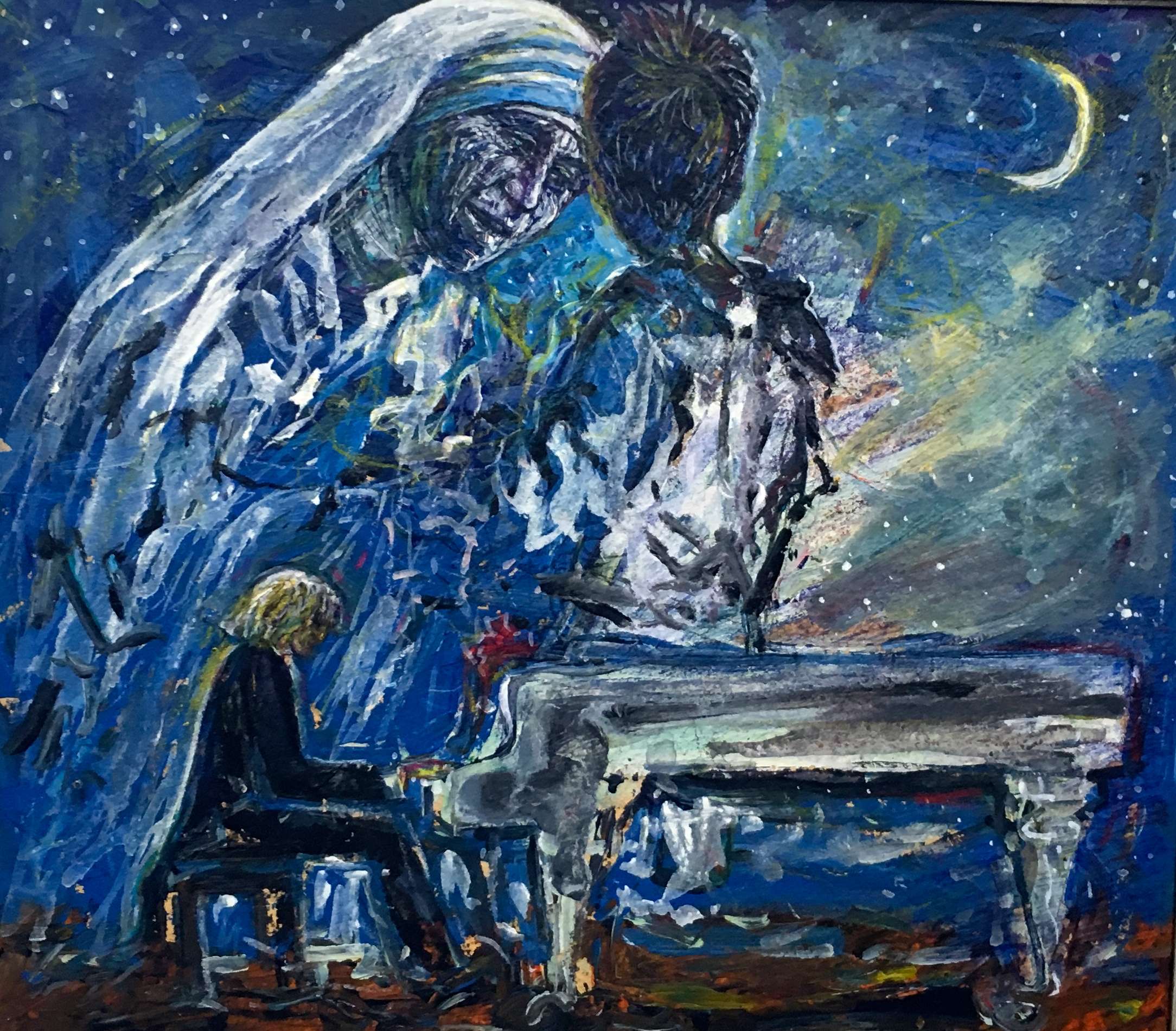
Gashi painted by Gjergj Kola
Exploring Albania with its great contemporary artists

Artists and an art exhibition of the Holy Mother Teresa by Gjergj Kola and sculptor Hevzi Nuhiu help Albania to be discovered along with its great contemporary artists.

The occasion of the exhibition was to celebrate 25 years of diplomatic relations between Albania and the Holy See which had been interrupted during communism. In recent years two popes have visited Albania: Pope John Paul II in 1993 and recently Pope Francis while the holiness of Mother Teresa has joined the shores of the Adriatic Sea.

One of the most moving speeches of the exhibition was that of the poet Visar Zhiti, who is also the Ambassador from Albania to the Holy See. The story of Visar is very touching because as a youngster he was imprisoned for ten years due to a poem. Ten years in a cell to the words that, after all, are words of love dedicated to life. But those ten years of suffering are found in the peace of his voice and his look that goes beyond the moment and will affect the heart.

The pictorial part of the exhibition, with portraits of Mother Teresa, has been entrusted to the skill and sensitivity of Gjergj Kola, an Albanian artist specializing in portraits. Gjergj paints people as if in a trance, getting into the spirit of those whose faces he portrays. His visions grasp the deeper aspects and arrive directly at the heart of the viewer.

Alongside the portraits, the exhibition continues with the sculptures of Hevzi Nuhiu work directly carved in olive wood that bring a more physical dimension of Mother Teresa, and that create a link between man and nature, between the divine and the earthly.

Exploring Albania is to discover more and more an effervescent country, where culture has assumed a key role in the new image that is being built. Poets, musicians, painters and sculptors are called to change prejudices and superstitions linked to the image of a closed country and not open to the world.

Not surprisingly Albania's prime minister is that Edi Rama, painter and artist himself, who became famous when as mayor of Tirana he has started to paint with bright colors all the gray houses built according to an anonymous style during the communist regime.

The celebrations continue with a concert piano of maestro Alexander Gashi for whose skill he received an honorary Italian citizenship. The Gashi music penetrates with the same force of Gjergj Kola brushstrokes who ideally has depicted him in a portrait with Mother Teresa.

Albania's greatness is to be discovered and the high level reached by its artists is now an established fact. One major contemporary artist is surely the sculptor Helidon Xhixha, whose works are exhibited in major museums around the world.

Recently the artist has been collaborating with some works in the collection Fiam, a major Italian company active in the glass design. Vittorio Livi, company founder of Fiam in Pesaro, says that he wanted to enrich its offer of works and mirrors intended for refined international markets.

Culture has assumed such a vital role that the musician and composer Admir Shkurtaj created the work 'The Shipwreck' dedicated to the tragedy of the sinking of the Albanian patrol boat Kater I Rades in 1997. The work has already been presented at the Venice Biennale with great success

powered by social2s
Priverno
Museum of Priverno Remembering Privernum

The main road from the motorway at Frosinone to the Tyrrhenian seaside resort of Terracina is a continuous stream of cars and trucks on a summers day, and nearly all the travellers give not a second thought to the towns of the Lepini Mountains spread and dotted over the low hills and higher mountains.

But on this very warm summer’s day just before Ferragosto, our objective is not the seaside, but the old town of Priverno, with its medieval old centre and its archaeological history of the Volsci and the Romans.

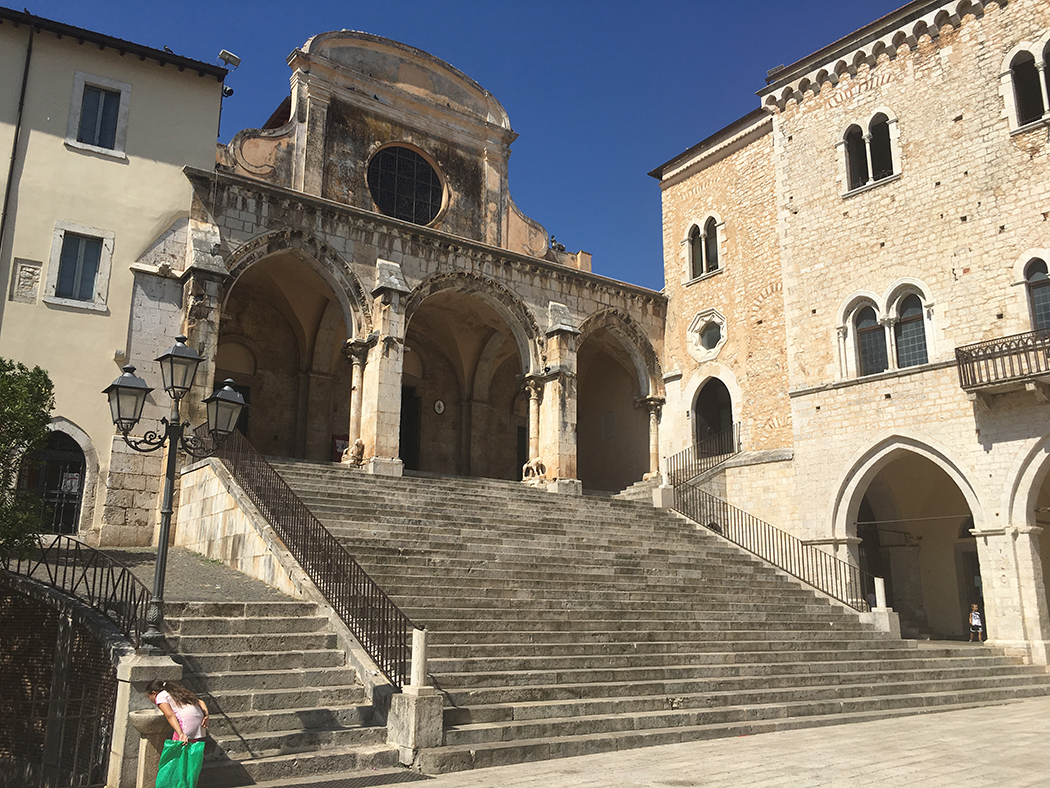
There are three stone benches on the left hand side as you drive through the old town square (Giovanni XXIII), each bench at least partially protected from the late morning sun by old trees standing at the edge of the road. Seek a parking place. A coffee in the bar is followed by the chance to relax on one of the benches facing the cathedral and, slightly to the right, the city hall. Behind us are the local police station and the Archaeological Museum.

Mothers and children and businessmen walk past each giving a friendly welcome to the officer of the local constabulary standing near the kerbside. He knows his job and eyes off the few cars parked irregularly in the square, but grants an ‘indulgence’ to the one with a disability pass.

We seek to know just a little more of this square that is dominated architecturally by the cathedral and the Antonelli Palace (now the City Hall), so we move into the sun, cross the ‘corso’ and climb the 31 steps to the church.

The first impression is of walking into a dark room, as eyes adjust to the ambience, and of a welcome cool air in the calmness underneath the organ loft and choir. A slow circumnavigation of the church reveals an altar on the left of the nave, but a better lit chapel is at the end of the side aisle on the right, with bas relief statues of St Thomas Aquinas and St Sebastian. On the left hand side aisle is a statue of Madonna Assumption into Heaven.

There are many paintings, a little difficult to discern in the unlit environment, and a modern circular stained glass window is centred in the facade above the portal.

Two youngish teenage girls are seated on the floor in a side chapel, maybe just relishing the cool, and respecting the peace of the cathedral. We ‘light’ three candles and offer a silent prayer. Then, outside again we experience that the heat of the day seems to have expanded. Immediately a few metres to our left a stairway rises to the inner workings of the city hall.

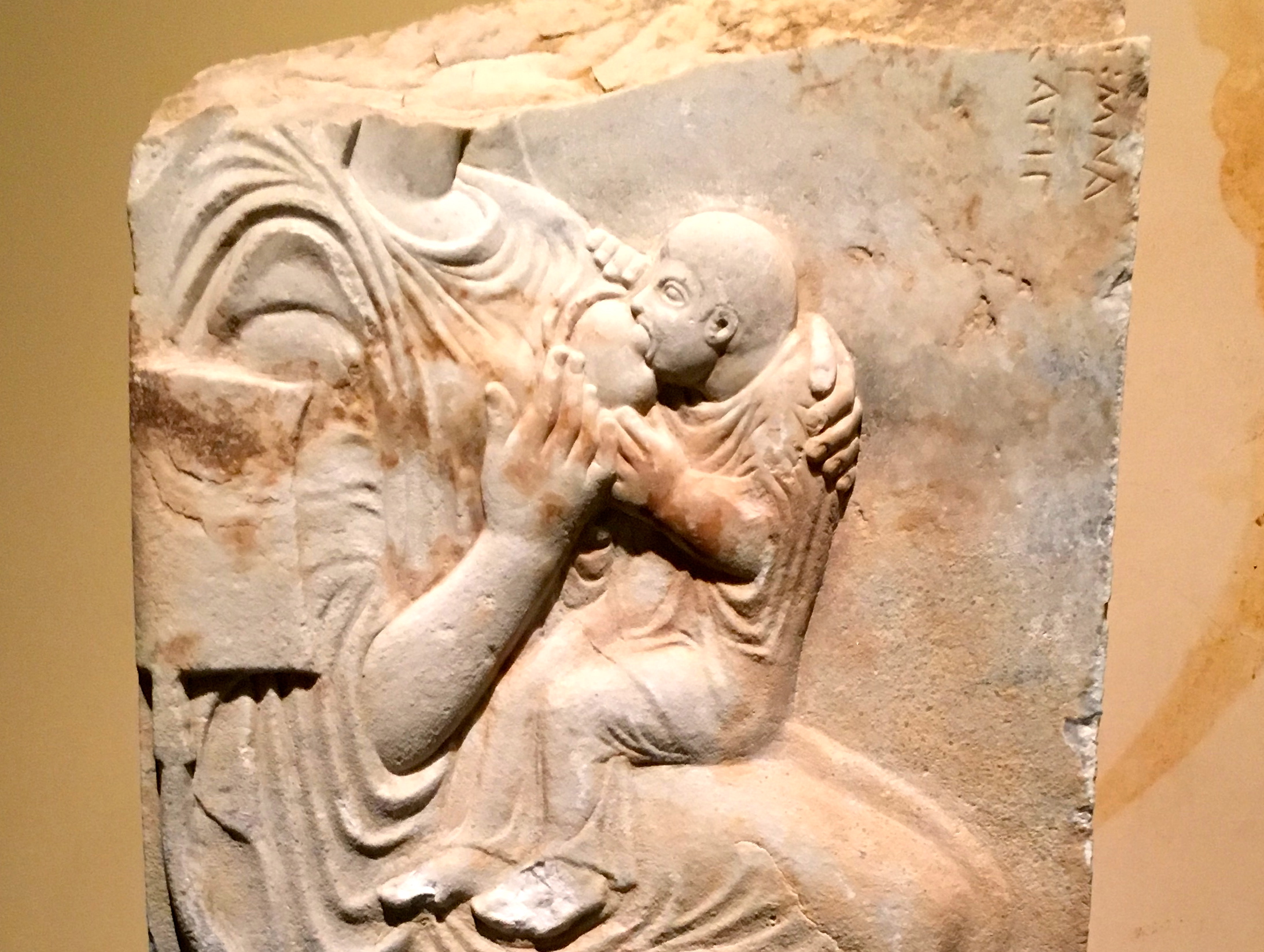
We return to our ‘base camp’ and enter the Archaeological Museum of Priverno. It has three levels and derives all its display ‘wealth’ from the ‘diggings’ around Privernum. It is an excellent museum, without peer, that, in about 20 rooms covers the history, mythology and archaeology of the city from the time of the Volsci and their Queen Camilla to the end of the Roman empire. Every item in every themed room is declined and explained and relationships are presented.

There are unfortunately only a few benches where you can rest and absorb the ambience. It is obvious that this exhibition has been carefully planned in every detail. The director proudly declares the museum of Priverno to be a centre of, and for, women, though I notice but one room dealing exclusively with the feminine gender. Maybe the present is making up for millenia of failure to adequately recognise the power and roles of the second sex.

For the international traveller, there is only one challenge, all the detailed descriptions are elucidated only in Italian – so there is one project still available to further enhance the attractiveness of this museum and the old town of Priverno to the experiential tourist. Yet for the many thousands of Italians who tour past Priverno to the sea, there is a wonderful memorial to your Roman past standing in the Giovanni XXIII cathedral square in Priverno.

(This article is reproduced under licence from Energitismo Limited)
powered by social2s
La Selva, a park born from the dream of a prince

La Selva is a forested bird park in Paliano, about 30 kilometers south of Rome, that has an amazing story which suddenly came back alive a few days ago during the opening of a 'holy door' in nature.

The opportunity to celebrate a Holy Year in a green environment had attracted a lot of public and civic institutions and more than 4,000 people had gathered to hear a Mass celebrated by the bishop in a clearing in the trees. I found many friends but my attention was drawn to an elegant gentleman dressed in white staring at the stage with trepidation.

It was Mr. Manfred Massimi Berucci, the best friend of Prince Ruffo with whom for many years he had shared the dream to develop the agricultural area in a park intended for tourist and business accommodation. For some years I had shared this dream with them and gave me great pleasure to go and pay homage to Mr. Berucci.

As I approached, however, I felt a particular tension and after welcoming me with a traditional Italian kiss, he excused himself, saying "I have to go and say something, I cannot miss this moment, I have to be focused." And he returned to stare at the stage and the movements of many priests intent on the celebration.

After the Mass, the bishop gave the floor to the mayor and the regional councilors for their greetings. A priest was putting the microphone back when Mr. Berucci elegantly but determinedly moved onto the stage and took the microphone for his greeting. All remained a little puzzled, but understanding that the intent was not violent, he was given time to say something.

He could have said many things, tell millions of anecdotes but his choice was to bring the greetings of the aged prince, who no longer lives in Paliano, and remember with misty eyes, rosemary seedlings, lavender and mimosa planted by citizens of Paliano following the landscape architectural lines desired by the prince. Million seedlings that are now part of the landscape but which then were only small twigs on a lawn with no particular natural order were planted by citizens involved in the dream.

I could not say goodbye to Mr Berucci to thank him for his words. He dissolved into the crowd after performing his duty to bear witness to passing the baton from the Prince to the new owners, from his generation to the current young people who sought to open this season in the park with an important moment.

This moment of poetry brought to mind my years of relationship with La Selva which has never been forgotten. From the windows of my house I have the view of the park every day, and every day I feel new emotions and I always had the hope to see it reborn.

It was about thirty years ago when I had just graduated and I had left my mother's house 'abruptly' and a gentleman of noble bearing, with a look that passed quickly from the slightly crazy to rational, offered me a job and a house in the park. He was Prince Antonello Ruffo di Calabria and I had no idea how he would change my life.

The job was to support his family in an urban transformation plan, working between designers and local administration, and to support an Israeli company that was working on the marketing plan and the development plan of the district.

But how was the park La Selva born?

I had not assisted in the formation of ponds that Prince had made many years before damning a tributary of the river Sacco, and I had not taken part in the arrival of the birds that were the result of an agreement with Fidel Castro. I had not taken part in the involvement of artists to create original structures where the birds could find food or shelter. I had not taken part in the planting of the vineyard or mimosas.

But some days I could see Don Antonello in an open jeep that went around the estate following a tractor that was to move a hill or create a scene from some new perspective. I have assisted the shifting of many small oaks to be able to enlarge a wood on one side and create a space for play activities on the other side. I saw planting kilometers of bamboo to follow the paths that the prince had marked with chalk on the countryside. I had tickets to the park when the exit of Colleferro was the most clogged in Italy on Easter Monday and May Day.

Creating La Selva was not a cost effective operation for the prince. And whenever he found himself close to solving his economic problems he escaped from the solution for fear of losing his 'toy', or that someone could ruin him. His was not an easy life with this dream that hung in front of his face like a carrot in a race of rabbits that can never catch up.

He was afraid all his life that speculation prevailed over beauty. Art and Nature were combined in his head and he never bowed to the lure of money, even demanding sacrifices from his family.

The words of Manfred Berucci Massimi have had a profound significance for me. A blessing on what you are doing and a wish for continuing on the path of La Selva begun with the love of a visionary prince.

powered by social2s
Atocha Sunken Treasure gives birth to Golden Eagle

To find sunken treasure is the dream of many a boy and buccaneer.

One man’s dream became a reality when in 1985 after 16 years searching Mel and Deo Fisher discovered, buried in the sands near the sunken wreck of the Spanish galleon ‘Atocha’ a cache of 13,500 carats of emeralds from the legendary Muzo mines in Columbia.

After recovery of the sunken treasures, buried for over 360 years, the second largest of the emeralds from this treasury was christened the Atocha Star. Some years later Deo had the emerald cut from its raw 26 carats to a magnificent 12.72 carat gem in which she saw life reflected.

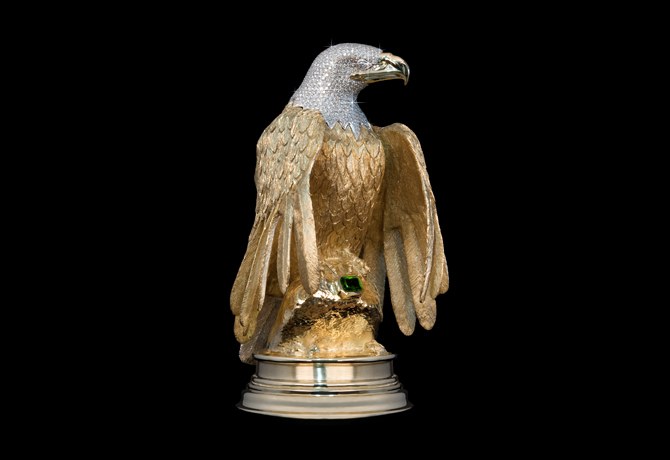
The allegory of the sunken treasure had another path. Ron Shore, a man with a passion for treasure hunts, had a dream of the Worlds Greatest Treasure Hunt – Search for the Golden Eagle. His dream was to create a solid gold Maltese Eagle, the biggest of its kind in the world, a collector’s piece of exquisite art and enormous value, a strictly unique piece.

His incentive had come from tragedy when his sister-in-law passed away from breast cancer. The challenge he set himself was to create this golden eagle and to promote it as a pinnacle of sculpture in gold.

So he needed the best sculptors and goldsmiths in the world and he found them. Four years passed with thousands of hours of research and experimentation before the eagle spread its wings. Three high hurdles were faced and leapt.

The structuring and casting of the Maltese Eagle with over 8kg of gold of various carat, such as the 14 carat gold beak on an 18 carat white gold head, were faced and overcome by Kevin Peters, a sculptor of great renown whose works sit in the most prestigious and regal galleries. Two lost wax casting moulds were created over a six month period, and the first was trialled with silver.

For those who understand casting with bronze, the challenges of working with gold of different carats will be apparent. For the rest of us the 10 stage process is a technological and artistic tour de force. The technical mistakes found in the silver casting were rectified and the perfect gold eagle was cast and hand finished.

The second hurdle was to embed and decorate the eagle’s proud head with diamonds and to create the eyes through which the eagle would command the world. Lewis Court is a long time pupil of the great silversmith, Norman Brassant.

Lewis was approached and accepted this challenge. He set two 1,1 carat matched pear shaped diamonds for the eyes and then decorated the eagles white gold head with 763 fine diamonds totalling 56 carats.

The third hurdle was to seek a magnificent jewel from a sunken treasure. Here Deo Fisher offered her emerald, the Atocha Star, to be embedded in the breast of the eagle, in which it now stands under the guardianship of this Maltese Eagle.

This treasure, its magnificent beauty, created from historical and recent day tragedies, is a modern day real life fable. The solid gold Maltese Eagle is not a treasure that anyone can acquire. Its replacement value has been reliably estimated to be over $6 Million.

Its special allure is for a collector who understand the value of such wonderful artistic talent on top of the inherent value in the precious gold, diamonds and the Atocha Star emerald.

 
powered by social2s
Conserving Nature - looking at the big picture saves species

Conserving nature is a great and worthwhile challenge. Yet, targeting threats alone won’t save our wildlife. Too often, governments and conservation organisations have only one goal for restoring populations of declining species: to reduce what they perceive as the main ‘threat’. However, this focus on ‘threat hotspots’ by nations and international conservation bodies can be wasteful and inadequate. It may even push threatened species closer to the brink.

To manage threats, organisations develop and use ‘threat maps’. Often these are maps of human activities affecting species (e.g. loss of forest cover due to land clearing for agriculture and urbanisation, or increased fishing in marine areas). A huge number of organisations including The Nature Conservancy, The World Wildlife Fund, and Wildlife Conservation Society have a long history of developing and using threat maps to direct their limited conservation funding.

These organisations typically use these maps to do one of two things: either target the areas that are the furthest removed from the threats for protecting wildlife (pristine ‘wilderness’ areas), or target the areas that have the highest perceived threats to wildlife and work on that threat. The picture shows an example of the different maps often used in conservation planning.

Traditionally, one or more of these are overlaid with conservation features and used to prioritize areas for conservation. For threat hotspot mapping, the three threat maps might be added together to develop a cumulative threat map that shows highest or lowest values in areas where all three threats are present or absent, respectively. (From Tulloch et al, 2015)

Unfortunately, these kinds of traditional threat-focused approaches have a number of drawbacks. They limit conservationists to solving only one part of the problem, they can be expensive compared with alternative management choices, and may have undesired outcomes if the threat being targeted is only one of a suite of problems affecting the wildlife in an area.

For example, we can consider Australia’s numerous government-funded programs to eradicate introduced foxes in order to protect small native marsupials. If we only target the foxes with poison baiting, the numbers of feral cats and rabbits, which are suppressed by foxes, tend to boom once the foxes are gone. So in many places the small marsupials will still be hunted – only by cats instead – and the rabbits will wreak havoc in the landscape, depriving native animals of food and shelter. Continued investment in fox baiting will do little to restore these populations without new thinking about alternative actions. This could have serious consequences for conservation.

We recently led an effort to develop a new framework for making efficient and effective conservation decisions that solve these problems. Our main issue is that reducing threats is not a biodiversity outcome on its own. Prioritising threats rather than solutions results in clinging to a single goal – and missing the big picture. To avoid putting all our resources into ‘threat hotspots’, we have proposed a new conservation decision-making framework that considers all the threats, what else lives in the area, whether the threat is stoppable, the costs of alternative conservation actions and how likely they are to succeed (Tulloch et al, 2015).

Through this structured decision-making process we can weigh up the pros and cons of each action, and pick the best one – the action that is not only cost-effective, but also results in positive outcomes for threatened wildlife.

Returning to our example of foxes, this new framework helps determine the best ways to achieve ‘real’ conservation outcomes, that is, to boost long-term survival of small marsupials, rather than simply decreasing the number of foxes. This gives us many more options besides killing foxes. For instance, it may be cheaper to restore habitat to provide shelter that protects marsupials directly from multiple predators. Alternatively, it might be more effective to set up enclosures or guard dogs to protect the breeding locations of threatened animals – and not waste money on baiting foxes at all.

Using this structured framework helps us to pick our battles and know what we can and cannot stop – and maybe eventually winning the war. In doing so, we might find it’s better to give up on one action when a threat is too difficult or costly to eliminate, and spend the money on something or somewhere else that will have a better outcome for threatened wildlife. We need new approaches such as these to help save wildlife by ensuring that actions are prioritized in locations where the best outcomes for biodiversity can be achieved – not just in the places where we can map the threat.

This article is a summary from the following publication:

Tulloch VJD, AIT Tulloch, P Visconti, BS Halpern, JEM Watson, MC Evans, NA Auerbach, M Barnes, M Beger, I Chadès, S Giakoumi, E McDonald-Madden, NJ Murray, J Ringma & HP Possingham (2015). Why do we map threats? Linking threat mapping with actions to make better conservation decisions. Frontiers in Ecology and the Environment 13: 91-99.
http://www.esajournals.org/doi/abs/10.1890/140022
More info: Vivitskaia Tulloch This email address is being protected from spambots. You need JavaScript enabled to view it.

powered by social2s
Tokyo: Morioka original bookstore sells one book a week

The secret of evolution is adaptation and change, so Morioka bookseller in Tokyo has opened a new original bookstore where he sells one book at a time.

"Issatsu, isshitsu", or "a room, a book", is his motto that comes from reflections with a group of creative people on how to upgrade the role of bookstores in the digital age. So while you scan all the knowledge and the books you read more and more through electronic systems, Morioka launches an engaging experience around the world of printed paper.

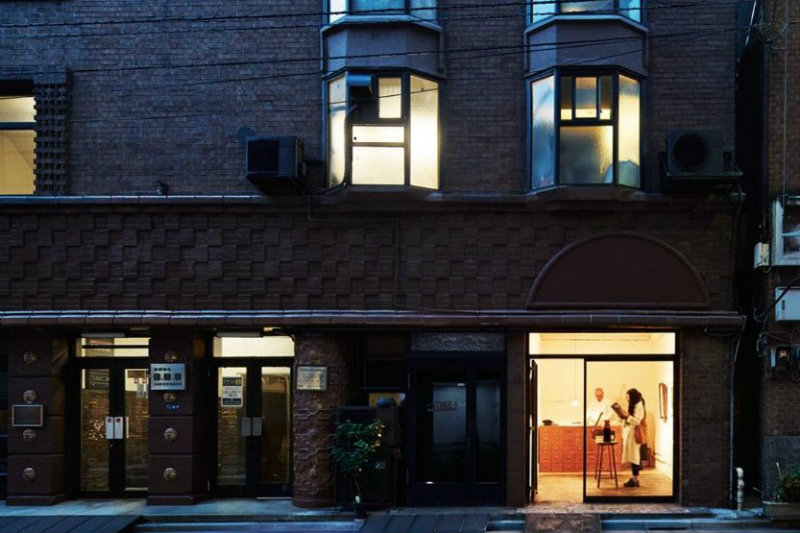
He choose a book each week and places it at the center of a decorated stand in pure Japanese minimalist style room: wooden floor and concrete, white walls and some object of art in harmony with the book. The room is in one of the most luxurious neighborhoods of Tokyo, Ginza, one of the few buildings that survived the bombing, at Chuo-ku, Tokyo 1-28-15, Suzuki Building.

The book looks like a work of art and so it is treated as events are created for the week. First, customers can ask questions on the text and author and why the book has become the choice of the week. It is a little similar to what happened years ago with small bookstores where the bookseller had personally selected all the books and people entered the bookstore for advice, to exchange ideas and meet like-minded people. That model, which came into crisis once online sales and the large distribution chains came about, is in this way recovered, bringing it to a higher dimension: that of art.

The book becomes a work of art not only for the words within it but also as an object of worship. Morioka defines this idea as an "atomic regeneration of a bookseller: one with a single book", a natural regeneration is also a great way to relate with customers exchanging ideas, emotions, and suggested reading.

The idea is brilliant. When everyone is accustomed to having all information available on the web, when you lose contact with the press and the attention span of digital generations becomes a matter of seconds, this bookstore gives real emotions.

A "slow bookstore", to enjoy quietly the pleasure of knowing a book and its author, to exchange much thought on reading in a warm environment and being surrounded by true art.

For replication in every city and town in the world!

(This article is reproduced under licence from Energitismo Limited)
powered by social2s

Subscribe to Newsletter

Discover a territory through the emotions of the people that have lived it.