bdr
The Velletri Pilgrims’ Garden: Via Francigena with medicinal herbs

The Middle Ages can be seen in so many ways, and in Velletri the history of Via Francigena is seen from a truly unusual angle: that of medicinal herbs used by pilgrims.

A group of women has recreated in the heart of the historic centre of Velletri a vegetable garden that helps to retrace the history of European pilgrimage that, from 500 AD with Benedetto da Norcia, intersects that of the monasteries.

It is a journey of art, history, botanism and spirituality to the discovery of Via Francigena but also of one of the first mass phenomenon that united European peoples to the emblem of the path and to exploration of the territory.

In the historic centre of Velletri, in the shadow of the Torre del Trivio, the Vicolo del Pero brings the Pilgrim to a small inner courtyard overlooking an old doorway.

The stone staircase step by step climbs between tiles, roofs and terraces before arriving at the garden where the traveler can find remedies and medications to use on the way.

Chiara, one of the founders of the initiative, tells us:

"We have recuperated an old abandoned garden in the historic centre of Velletri (Rome) by planting the main medicinal herbs that pilgrims traveling along Via Francigena (which officially passes by Velletri) would use most frequently during the travel to solve the most common problems of hygiene and health ".

Thus, the Pilgrims’ Garden has arisen from the recovery of a small garden abandoned among the roofs of Velletri, among the Roman Castles. The all-female group who managed to give life to this forgotten urban space decided to plant in the Garden the main medicinal herbs which the pilgrims used - a sort of ready-made portable intervention could be on hand in order to prepare ad hoc medications.

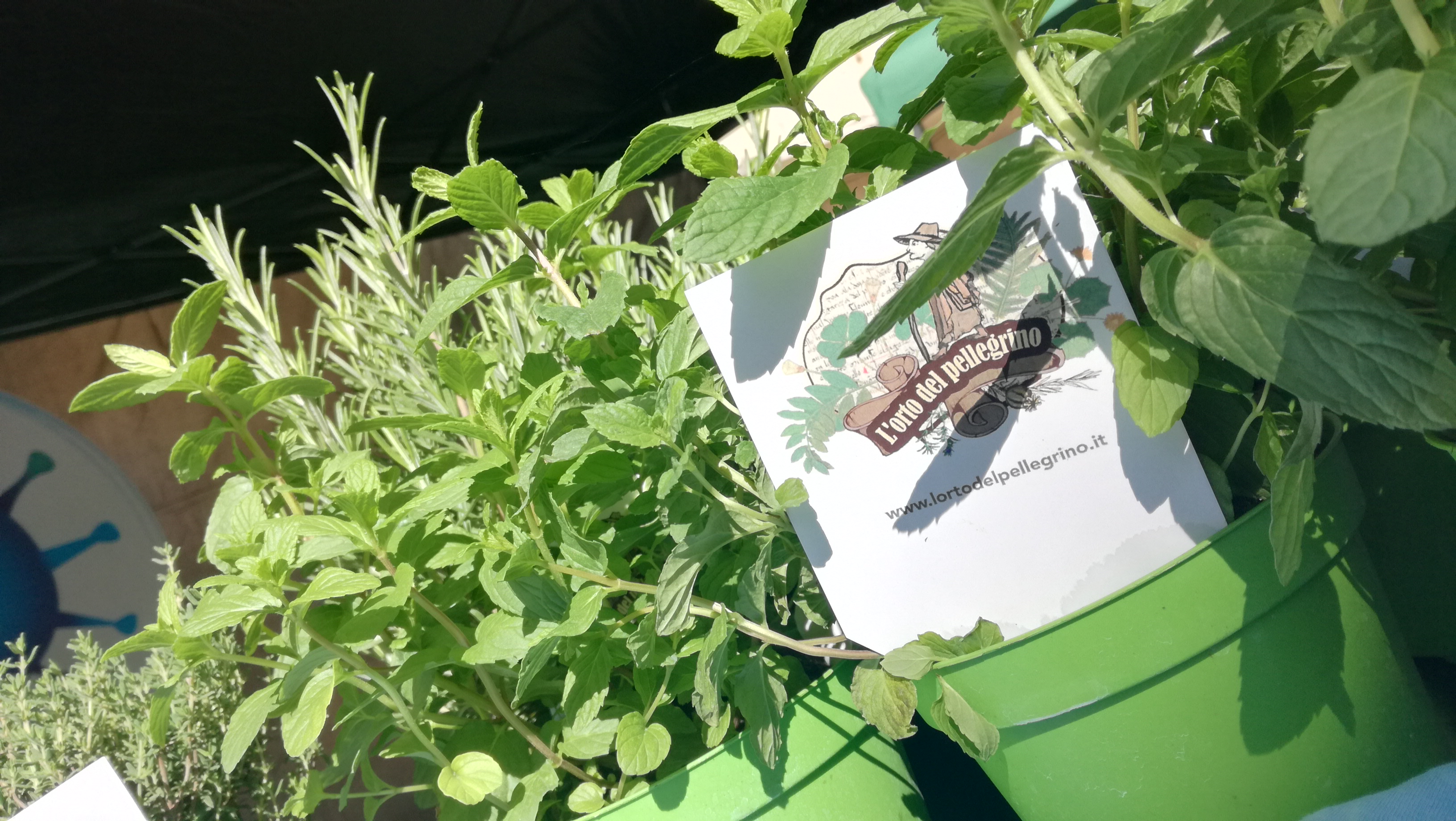
The Pellegrino Garden keeps medicinal plants in small flowerbeds, maintaining water in its heart as the central element. Hundred year old vines and white camellias shade the sloping paths that accompany the visitors to discover the Via Francigena.

It is a real experiment of urban regeneration because they did not want to create new scenery or hide the realities of daily life of houses that overlook this space suspended between the past and the present, between symbolic suggestion and reality.

The Pilgrim's Garden during the week hosts animated guided tours and educational workshops, offering children and teenagers the chance to learn about herbs and their use for the preparation of the most common remedies.

During weekends you can take part in events such as the Butterfly Garden, the "Animal Pharmacy" or you can book a half-day tour that, in addition to the guided tour of the herb garden, includes a visit to the Diocesan Museum at the nearby Cathedral of San Clemente.

There, among the various works, there is a Madonna with Child (1426-27) by Gentile da Fabriano and the famous Velletri (Veliterna) Stauroteca Cross (because it is said to contain a piece of the Cross of Christ). The visit then concludes with the entry to the Crypt of the Cathedral that is opened only on these occasions.

For more information visit www.lortodelpellegrino.it
powered by social2s
Exhibition - Show on Marc Chagall: Dream of a Summer Night

A few days ago, I visited the exhibition-show on Marc Chagall, which is being presented for the first time in Italy in Milan, in the Permanente Museum, where it will remain open until January 28, 2018.

Although I am not an art expert, I have always admired Marc Chagall's works. However, this exhibition has made me aware of the enormous variety of his artistic production. By use of multimedia technology, the life of the artist, which lasted for almost a century, is discovered. Born on July 7, 1887, he died on March 28, 1985.

Not everyone knows that he was born in Vitebsk, Belarus, and that his real name was Moishe Segal, a French nationalist of Jewish origin.
The exhibition is concentrated in two rooms, one large and the other small. After having listened to the interesting information at the entrance of the exhibition, the spectators enter a large room with blank white walls and a central light, during a moment of silence.

Along the walls are seats and there is a central turret, which is accessed via a ladder. From here you have the opportunity to look around from the top of the room: you find bare white walls and lots of unlit spotlights on the ceiling. In summary: an empty room.

When the central light shuts off, it is replaced by the lighting of spotlights that illuminate the walls and floor with a wide range of colours: it is the beginning of the show!

There are 12 short stories about the various aspects of the works of the artist that I personally did not know. It is a journey into the personal and work life of Marc Chagall, who had not only been the artist of paintings, but has also produced colourful stained glass windows for cathedrals, theatre scripts, and has experimented with sculptures, pottery and glass.

An eclectic artist who has expressed himself in various disciplines of contemporary art. All this is shown through the beautiful series of videos offered in the show.
Like all the artists, Chagall has had periods of his life characterized by different moods that have reflected on his work: some full of glittering colours to the joy of living others sadder and deeply nostalgic.

Chagall married for the first time in 1915 with Bella Rosenfeld, daughter of rich goldsmiths, and remained faithful until her death in 1944 from a viral infection.

Only in 1949 Chagall managed to escape the strong depression he had fallen into and in 1952 he remarried with Valentina Brodsky.
He died in 1985, at 98, without ever having interrupted his work. One of his later works seems to have been the stained-glass windows of St. Stephen's Church in Mainz in Germany.

The exhibition highlights all the eclecticism of this artist. The images that follow, enriched by lights and colours that almost hypnotize, are accompanied by very well-selected music, that make us immerse ourselves in a surreal world in which we become part of the presentation and participate in it visually, mentally and emotionally.

Personally I felt very satisfied, enthusiastic about having participated and very relaxed, despite a busy day of work. The beauty of art in all its manifestations is confirmed as a great and positive therapy for the soul and body.

It is not necessary to be a follower of the subject to experience strong emotions when confronted by the spectacular presented in this exhibition. Just let yourself be carried along by the wonderful succession of pictures, sounds and colours that are so cleverly combined.
 

Article written by Guglielmina Pepe and  Renato Colombai
powered by social2s
History of Wallpaper and the need for coloured walls

Have you ever viewed one of the houses of Pompeii or shops of ancient Rome or Greece? They were all frescoed and colourful, as were the statues. The tomb of Philip II of Macedonians clearly shows how the temples of the past were coloured.

In the Middle Ages the walls of the castles were covered with tapestries and frescoes and in the Renaissance they freshened up the walls of all the villas and palaces with paintings and hangings. Then came the industrial revolution, the birth of the bourgeoisie and the need for colour extended to a large number of people who resorted to a new invention, 'wallpaper'. But when was it born and what is its history?

 
History of wallpaper

Paper first appeared in China in the second century BC and was produced from tree bark, hemp and other fibers. From China, it arrived in Korea, Japan, and then to Arabia from where it landed in Europe. In 1190, Sicily had the first document on paper and from 1233, Fabriano became one of the most important Italian production centres.

The use of wallpaper began in China in the 1st century AD where it became a true art form. It was used as a support for paintings and then for wall decorations, today as then.

In Europe, a document from 1481 lists a French Louis XI comic that refers to wallpaper. But it can be said that the first copies of wallpaper came from 1509 when the English printer Hugo Goes imprinted paper with flowers using a wooden mold. These sheets of paper were used to cover boxes, wardrobes and wall coverings and were miraculously found intact.

In 1600 one of the most sought-after producers was the Dutch Herman Schinkel, who made sheets decorated with woolen ribbons spread on paper previously decorated with coloured designs. This was the century of economic progress of the Netherlands and the bourgeoisie was growing rapidly: from this moment on, wallpaper became essential for every home of a certain prestige. The wallpaper was still being made with single sheets to be pasted onto the walls of the houses.

A real curiosity is the 'wall-paper tax' introduced in England by Queen Anne in 1712, which declared it a luxury good. The tax was circumvented by making the paper with designs but without colours as an artisan was able to fill these designs after applying paper onto the walls.

The true diffusion of this fashion came, however, with the technological advancement of the industry and the introduction of rotary processing, i.e. a paper production machine continuously with rollers. Decorators could then make more detailed and complex designs repeated at some distance on the roll.

In 1785 in France, Christophe-Philippe Oberkampf invented the first machine to print wallpaper and in 1839, in England, Charles Harold Potter created a four-colour printing machine, adapting it to the one used in textiles. In 1874 prints were made with 20 different colours.

With the new technology wallpaper had a golden age and began to be demanded by the high bourgeoisie and emerging prestigious businesses in England, France and Italy. Each country had its own fashion: classical and mythological landscapes, views of Roman and Greek ports and ruins.

In England, floral decorations were fashionable and they had to be so 'intrusive' that Oscar Wilde came to declare, 'Either leave that wallpaper or I'll go'!

One of the best examples of wallpaper in Italy is at Casa Massimi Berucci in Piglio, the famous land of Cesanese del Piglio DOCG wine not far from Frosinone. The wallpaper comes from France over 100 years ago and repeats scenes of countryside with pastures around classic ruins and in the background the sea with a ship entering a harbour.

In the twentieth century, the wallpaper had its own particular charm with modern style art designs such as cubist and futurist decorations. Many fashion names have started their career decorating wallpaper, remember Mary Quant, Charles Rennie Mackintosh, Lucienne Day, Peter Hall, Laura Ashley, and Vivienne Westwood.

 
A curiosity: White House wallpaper

Few have noticed it, but the important White House Diplomatic Reception Room is adorned with marvelous wall decorations made by the famous Zuber Wallpaper Producer. The walls of this room tell the story of the "Conquest of the New World".

The room was furnished by Jackie Kennedy who wanted to turn a simple boiler room into a reception lounge. Jacqueline Lee Bouvier substantially renewed the interior style of the White House and, to give greater importance and solemnity to the environment, chose a card called "Vues d'Amérique Nord" - views of North America, on the recommendation of a historian.

The map reproduces monumental panoramas, it seems to be the travel journal of the conquerors who have created America and is based on sketches dating back to 1820. Thirty-two scenes are depicted, including the Natural Bridge of Virginia, Niagara Falls, the bay of New York and the port of Boston. At first glance it seems more like an artist's drawing than simple wallpaper.

Zuber was a famous wallpaper maker founded in 1797 in Rixheim, Alsace, and was the last to produce this kind of hand-made upholstery and to use traditional methods. It has an archive of over 100,000 carved motifs in wood and today this historical archive is protected by law.
 
Wallpaper Museum

The Wallpaper Museum is located in Rixheim, Alsace, the region of the three borders between France, Germany and Switzerland. Many of the original wallpapers and all the machinery and technologies that were created here are collected and exhibited here. There are two of these machines dating back to 1877 and 1881, practically among the first examples of industrialization of wallpaper.

The collection includes 130,000 documents and an exhibition in which in rotation are presented paper with scenic pictures and with landscape motifs printed since 1804 with scenes from all over the world.

powered by social2s
Atina, Ciociaria, and Paris linked by the story of Académie Vitti Museum

At Atina, in the province of Frosinone, Italy, the small museum, Academie Vitti, traces the story of three innovative sisters who opened in Paris the first drawing and painting school dedicated for women.
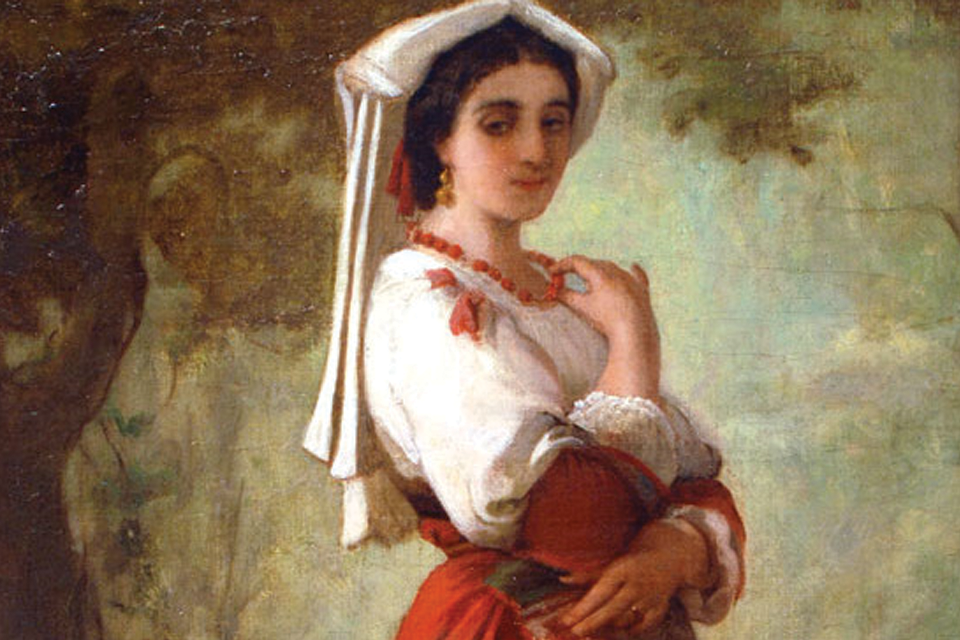
The story begins with the first emigration into France from southern Italy towards the end of the nineteenth century at which time the male and female models from Ciociaria were very much sought after by painters, photographers and sculptors. It was the Grand Tour period and these models with their traditional dress were so fashionable that many of the portraits by famous painters in the most important museums in the world were inspired by Ciociarian models.
Cesare Vitti di Casalvieri was one of these models with his wife Maria Caira who encouraged the other two sisters Jacinta and Anna da Gallinaro to go to Paris. Many of the emigrants came from Val di Comino in which, after unity of Italy, they had found themselves in unfavorable conditions.
Although these models were nude for the most famous artists, there was a limitation: women painters could not portray naked men.
The sisters then had an idea that became reality thanks to their capriciousness and courage: to open a women's art school where artists could have male models available plus all that they needed to be able to exercise their creativity.
The school was located in Montparnasse in the heart of the artistic district and was opened until 1914 when, upon World War I, the sisters decided to return to Comino Valley and settle in Atina.
Shortly after its inception, the school also admitted male artists and in its 25 years of activity many artists passed through its doors including the father of Sylvia Beach, the first publisher of Joyce's Ulysses and the illustrator of Belle Epoque in Paris in the twenties. Sylvia also posed as a model in the school for Cesare Vitti, who was also a good sculptor.
Academie Vitti became so important and a point of reference for artists that it had among its teachers great names such as Paul Gaugain and Jacques-Émile Blanche, Proust's portraitist.
When the sisters moved to Atina, they brought back all their belongings, works of art and sketches, furniture and objects of common use. Over the years many things have gone missing, but one of their heirs has gathered all that he has found and has set up a charming museum-house, the Académie Vitti Museum, in the building where the family had lived.
Entering catapults one into a world of the past with the walls covered with large sketches of naked poses executed by pupils of the school where sometimes masters' corrections can still be noticed.
powered by social2s
MACA Fine Arts Academy linked to Frosinone
MACA Fine Arts Academy linked to FrosinoneMACA Fine Arts Academy linked to Frosinone

MACA is the Museum of Contemporary Art within the Fine Arts Academy in Frosinone.

It is the first example of integration between museums and institutes, and now all the academies of Italy follow this example by opening museums and becoming more and more integrated with the area where they are located. The academy becomes a pulsating place for students and citizens, a cultural centre.

But how did this simple and revolutionary idea arise at this time?

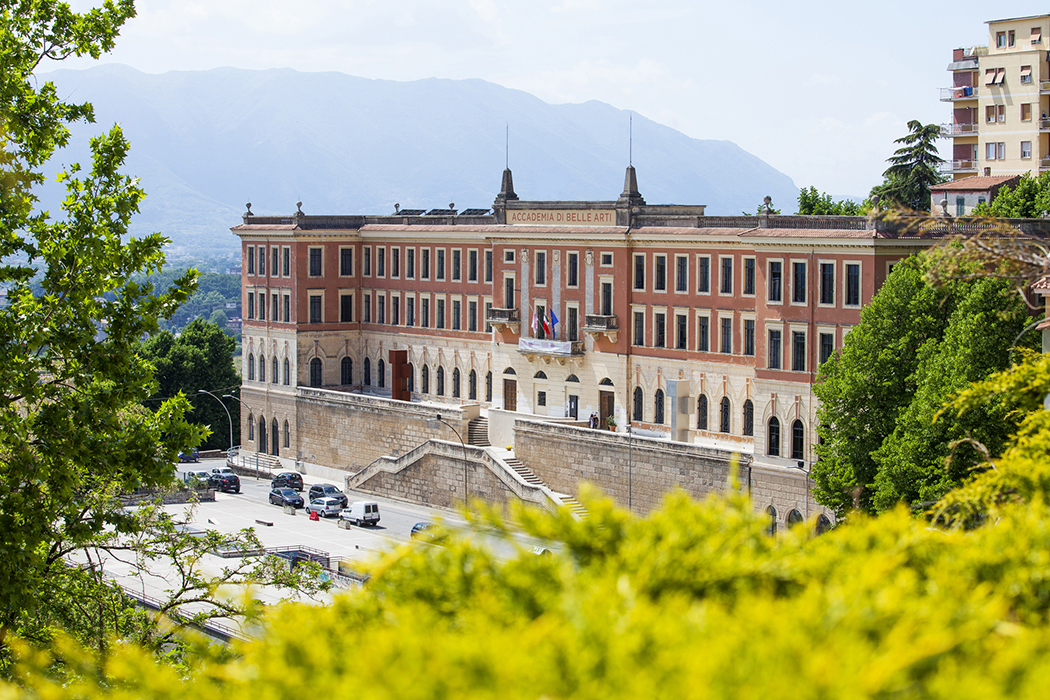
Three years ago, the academy moved to a new venue, a huge unification era schoolhouse that dominates a whole hill of Frosinone. Palazzo Tiravanti is impressive and bright and regular spaces make you want to break regularity with creative concepts.

Thus fantasy can be freed and on two of the long hallways an art gallery with almost 80 works was set up. Works interrupt regularity with provocative designs, shapes and colours. All have been donated by artists who have collaborated or had relationships with the Academy in its over 43 years of activity.

It will be the light of the valley that is reflected in the white walls of the institute, it may be the historical position or perhaps only the influence of the spirit of art, but since they moved to this palace, the academy appears as if it were integrated (or maybe 'befriended') by the city.

Cultural symbiosis began with subways of the railway station, where light games were built with an installation of panels called 'Dark in colour' and it is continued on the surface. After the construction of the new football stadium, students at the Academy have won the contest for the construction of the new Matusa Park.
Meanwhile, 'Thursday Get-Togethers' with characters and artists, are open to the more and more numerous people who hear stories or lessons about contemporary art.

The real 'engagement ceremony' with the city of Frosinone took place last June with the Open Day event, which will be repeated every year, transforming it into a Festival of Academies.

The palace has been the scene of a fashion show, exhibitions and concerts. In the evening, then, the facade became a large screen for a work of Mapping, the art of playing with the lights creating works with the power of suggestion and images accompanied by sounds. A giant installation that left people agape concerning the technical quality of the performance and the emotional intensity of the work.

With this Open Day, the academy has come to its most fulsome involvement in the life of the city, and not just by the students, as it makes Frosinone ever more alive and present. It is a city much loved by its citizens who enthusiastically participate in every cultural initiative.

And this is also a sign of re-opening of an entire territory where art has played a key role in the past and can once again be a force to attract tourists, especially youth.

The experience of visiting a place where ancient art is a cornerstone for today's creativity has a particular charm and the Frosinone Academy already has active collaborations with other academies in the world.

powered by social2s
Trivigliano- Stemma by Bettiol

At a time when organic food produced according to traditional methods, which were often naturally biodynamic, is very sought after, do we know how they used to produce it?

The Trivigliano Museum of Peasant Life is one of the places where you can see the tools of the past and learn the ancient methods of cultivating the land and preparing food.

Set in a stately palace right at the entrance to the historic centre of Trivigliano overlooking the Piazza del Belvedere, the museum's content and layout is designed to strike the visitor's heart.

Along with the tools and utensils, portraits and tales by famous writers are displayed about the history of life in the fields. These poets and writers have underlined in their works the profound bond between man and the earth, between the life cycles of man and those of nature.

The tools are arranged according to the different seasons and different processes: from ploughing and sowing to harvesting. Finally, one part is devoted to the preservation and processing of products: production of flour, oil, jams and production of dried bread and biscuits.

The equipment and utensils for cooking, both for immediate consumption and preservation, are displayed in a kitchen setting and some names will bring back memories from stories told by your grandmothers.

Preserving vegetable and orchard products meant having food during the winter that could be long in Trivigliano, as in the snowfall of 2012 when the population was isolated for 4 days with 2 metres of snow.

Yet in the past, the cycles of nature and the rotations of crops were respected, and they knew what the plants were for fighting fungus and, for example, those that protected orchards and vineyards from parasites.

Getting closer to nature with respect and knowledge, with care and professionalism, is one of the new lifestyle paths that define the Italian approach to experiential tourism. In addition, the variety of garden fruit and vegetable species that Italy has thanks both to its microclimates and the rediscovery by agronomists and ‘new age peasants’ have reinforced ‘made in Italy’ among world famous food.

A small museum like this one in Trivigliano that combines stories of the peasant past and tools and utensils of that lifestyle is perfect for bringing to new generations of youth the love for cultivating fields in a natural and respectful environment.

For further information, please contact the Mayor, municipal administration or the Pro Loco.

powered by social2s
The many precious and original Madonnas of Vico nel Lazio

Vico nel Lazio has a special relationship with the Madonna with 5 precious statues protected in churches, 6 churches dedicated to the mother of Jesus, 4 confraternities and 5 festivals. But how does all this commitment come about?
The worship of Our Lady begins with Christianity itself and, perhaps, represents a bridge between the pagan cults and the nascent Christian church. In the Madonna, which comes from the Latin 'mea domina' (my lady), she revives the concept of the female source as a creator and a giver of life. It is no coincidence that the word 'maria' in ancient Hebrew means 'hole' from where everything originates.
In the Egyptian and Roman period Isis was one of the most beloved goddesses and had many followers, and was considered the "Holy Mother" of the ancient world. In the cult of Isis it is said "that all sees and all can, star of the sea, crown of life, giver of laws and redeemer". Isis was a goddess of the moon, beauty, magic, and mystery, and she was like a young woman, wreathed by the blue crescent of the rising moon, with her little son Horus in her arms.
Over the centuries following the birth and dissemination of Christianity many statues of Isis were transformed into representations of Our Lady.
The term "mother of God" was then established in 431 by the Council of Ephesus where it authorized the transformation of all previous pagan temples and cults into Christian centres.
In the Middle Ages, Marian worship developed further and Maria is always present in the prayers of the monks. They began to talk about Maria as "Queen", "Mother of Mercy" and "Mother of Miracles in favour of sinners".
It is precisely from these definitions that the different Marian crowns arise and the Rosary is derived.
In Vico nel Lazio, the adoration of Our Lady appears in all its power in the names of Churches, Confraternities and Festivals. Each celebration is generally associated with at least one statue or an image of Our Lady.
The oldest statue is the Sorrowful Lady a wooden statue dating back to the Benedictine period. The precious medieval statue is preserved in the church of San Martino and on the wood are still visible traces of the colour that covered it.
The story of this statue is particular because it has suffered two thefts but has always been found. Now it is 'behind bars' protected in a display case but available to those who want to dedicate a prayer.
According to a tradition, this is also called the 'Madonna of the Seven Pains' in opposition to that of the '7 veils' which is also called 'the Madonna of the 7 joys’.
Madonna of the Seven Blessings or Madonna of Seven Joys as opposed to the Sorrowful Madonna. The seven veils correspond to the seven phases of the life of Jesus' mother.
The name derives directly from the fact that this was a statue dressed or covered with real clothes that were changed depending on the time of year and special occasions. The garments were donated by the wealthy families who competed in their preparation. Some of these dresses were embellished with embroidery, gold threads and ornamental stones.
The original wax statue was replaced in 1942 by a plaster, which today also appears to be somewhat disproportionate to garments. The garments have been restored and are protected in a special case.
The name of the Madonna of the seven veils may appear to be strange with reference to another cult of the goddess Isis and with the '7 veil dance', also of pagan origin, which originates from a sacred dance of the priestesses in honour of Isis. Every fallen veil represented the elimination of a negativity and of an obstacle that makes our evolution difficult.
Santa Maria church also houses the statue of Our Lady of the Rosary.
For those who wish to celebrate Our Lady in Vico nel Lazio, Madonna's celebrations are:
The feast of Our Lady of the Rosary is in October, Madonna of Sorrows is in the last Sunday of August, Madonna of Concordia is in the second Saturday of September, Madonna del Campo is on the 1st of May and then the celebration of Our Lady of Grace.
Each festival is organized respectively by the Brotherhoods of Our Lady of the Rosary, Our Lady of Sorrows, Our Lady of Concordia and Our Lady of the Field.
One last curiosity is that the blue of the jersey of the Italian national team is associated with the worship of the Madonna and refers precisely to the Marian devotion by the Piedmontese kings. Azzurro 'Savoia' was the official colour of the monarchy used during the greatest events and is in fact derived from the colour of the Madonna's mantle.
powered by social2s
ArtisticIsBetter- Liceo Artistico Grottaferrata

Her passion for art and culture grows into a job for a young woman who spends her days in the service of young students who dream of living with art, and creates an exciting new brand.
In 2013, Electra, a volcanic young woman of 26 years, and her mother decided to save the Art School of Grottaferrata from certain closure. While others had surrendered to the bureaucratic and financial difficulties Electra and her mother faced their new adventure with courage, strength and passion.
And so, after many difficulties, they found ways to realize the dream of an art school in a house in the centre of Grottaferrata.
Grottaferrata, one of the most elegant of the Castelli Romani towns, is famous for its villas built by the noble Roman bourgeoisie to spend the holidays.
The art school is located a few metres from the ancient fortified Abbey of San Nilo, an important religious centre from which you can glimpse the ancient Tuscolum, on top of the hill above the area of the Municipality.
Cosy and full of history, the school has become a real home for the students: the hallways and decorated classes, gardens that change colour with the seasons and form a perfect theater for alternative classes and art exhibitions.
Getting their Hands Dirty drawing, sculpting and painting: the young students shape their ideas into valued works for successful exhibitions fairs. The beauty of these people is in their "diversity" in being extravagant, free and full of love for art. They are real artists and their works speak of dreams and passions !!!
"A school where people grow by cultivating the love for art, for life and to be happy"
The founders have a special relationship with each student: Luana, more mother, Electra more older sister. They guide the path of each student, cultivating their dreams maturing with them the idea that can become a reality.
A life in art is possible and Electra believes it: she has created a brand of clothing ‘artisticisbetter’ that she hopes will also become a publishing and design brand. So that when "at large" her students will already have a job in which to be engaged and from which feed from.
Dreaming does not cost anything and the idea of ​​a small Bauhaus in the elegant setting of Grottaferrata is a dream in which I also believe!
 
www.liceoartisticosangiuseppe.com
powered by social2s

Subscribe to Newsletter

Discover a territory through the emotions of the people that have lived it.