Churches & Places of Worship

Acuto. St. Peter's Church

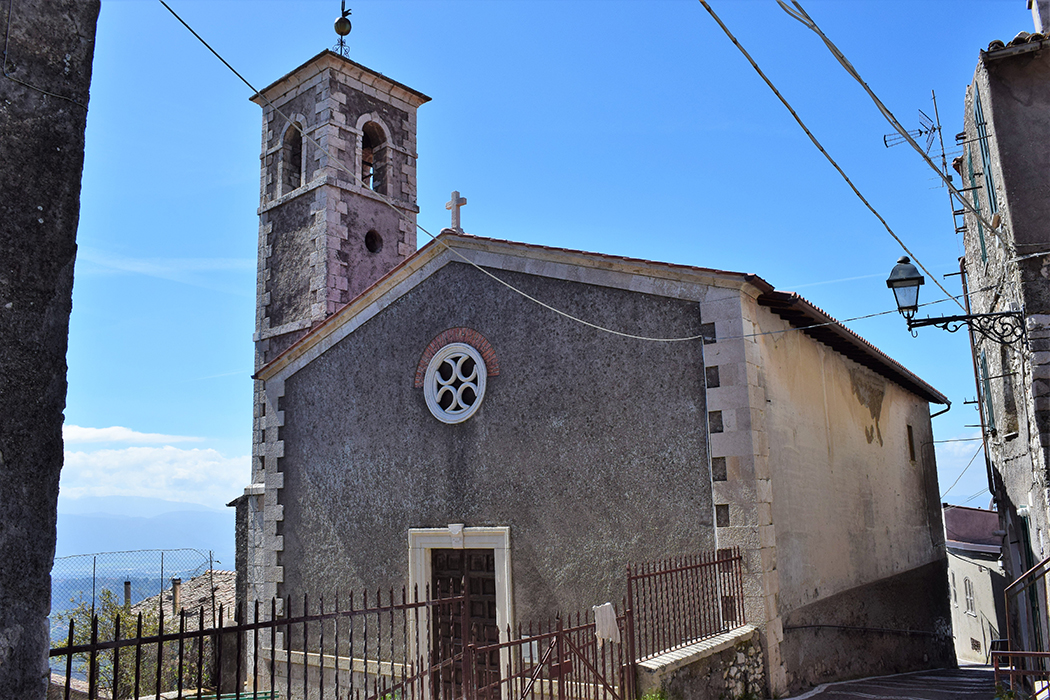
The St. Peter's Church is in the heart of the historical centre at the highest point of Acuto and is in Lombard - Byzantine style.

It dates from the thirteenth century, although its present appearance is due to the many renovations over the centuries.

The building suffered collapses due to earthquakes and lightning, and only a central arch and the side wall on the right belong to the Middle Ages.

The facade is simple and edged by white stone and the last time it was refaced was in 1949.

It is identified by an elegant rose window above the front door while the bell tower dating from 1907 was built with the same Romanesque church style, and is surrounded by limestone.

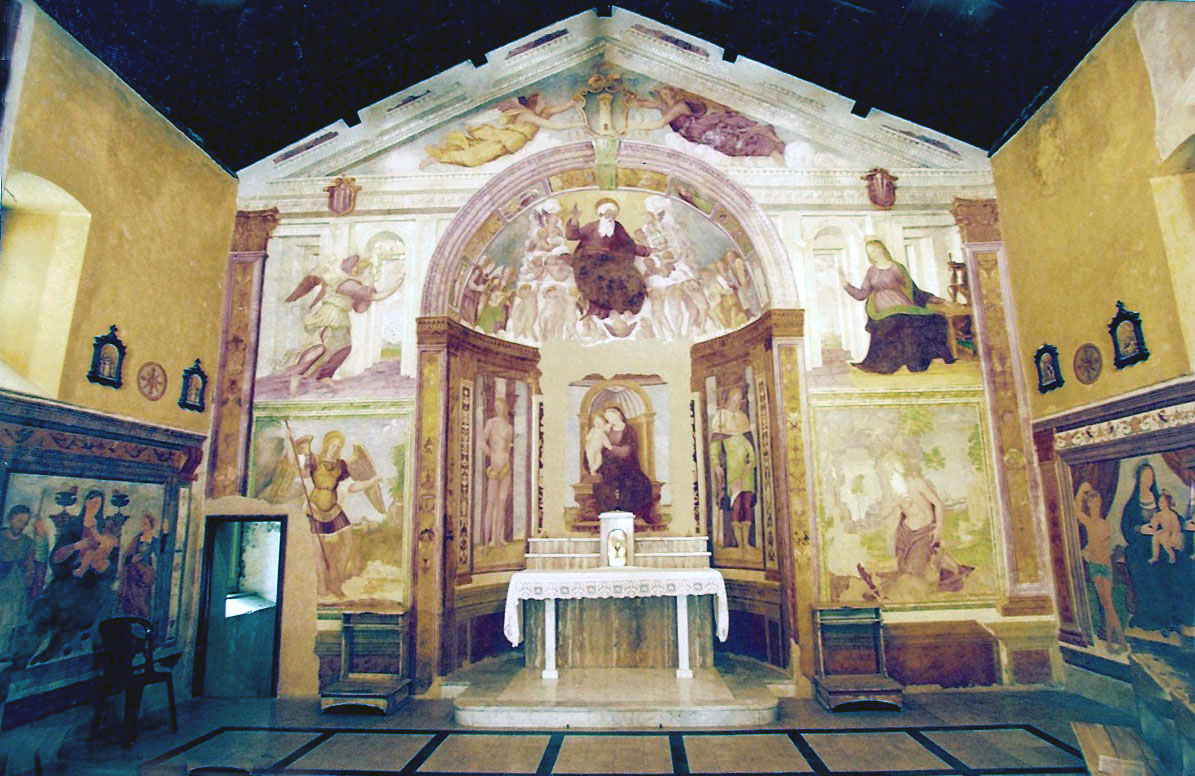
The inside of the church appears simple with bare walls and only the right-hand wall is covered with frescoes of the thirteenth and sixteenth centuries that demonstrate how the whole building had been painted.

The altar has two side windows that give a mystic effect to the church.
powered by social2s

The Collegiate Church of Santa Maria is a beautiful neoclassical church overlooking the village of Acuto.

Its original building dates from the late eleventh century and the building has undergone many changes over the centuries.

The first document that mentions the church is a bull of Pope Boniface VIII in 1290 that granted indulgences to those who had made donations for the renovation of this sacred building.

The first major project of renovation and expansion dates back to 1574.

The second major project, the one that gave it its present form, was funded by the Papal States in 1870 with 17,700 crowns.

The interior is finely decorated with stucco and behind a vase you can see a monarchist star with an eagle (symbol of the monarchy) as opposed to victory by a crow (symbol of the clergy) who is intimidated and loses its droppings.

It wasn’t until 1870, in fact, that the state of Savoy took over the Papal States with the unification of Italy.

Inside the church are works of the eighteenth century such as the main altarpiece depicting the Assumption of the Virgin, the altarpiece of San Maurizio, the picture of San Carlo Borromeo and the tabernacle in cast bronze produced by Ranocchi.

powered by social2s
Acuto. San Sebastian Church

The San Sebastian Church in Acuto is dedicated to Saints Sebastian and Rocco and was built around the twelfth century, to ward off disease, famine and plague epidemics.

St. Rocco is the patron saint of lepers and in almost every village there is a church dedicated to him and pictures of him with his dog. San Rocco was born in France in 1350 by very elderly parents of an ancient lineage and his history recalls that of San Francesco.

On the death of his parents he gave all his possessions to go on a pilgrimage to Rome precisely during the period of the great Black Death that killed a third of Europe's population.

With his blessing and a sign of the cross, San Rocco healed many people, including even a cardinal of the Pope's court.

On his return trip from Rome, San Rocco became ill with the plague near Piacenza and retired to a cave where a dog every day brought him a piece of bread with which to feed themselves.

Once healed, the Saint returned to his task of tending the sick and many followed his example.

The splendid frescoes of Acuto church were painted between 1528 and 1550, probably as a votive offering.

In the background of one of these frescoes you can recognize the profile of a town, probably the same Acuto, as it appeared more than 500 years ago.
 

powered by social2s
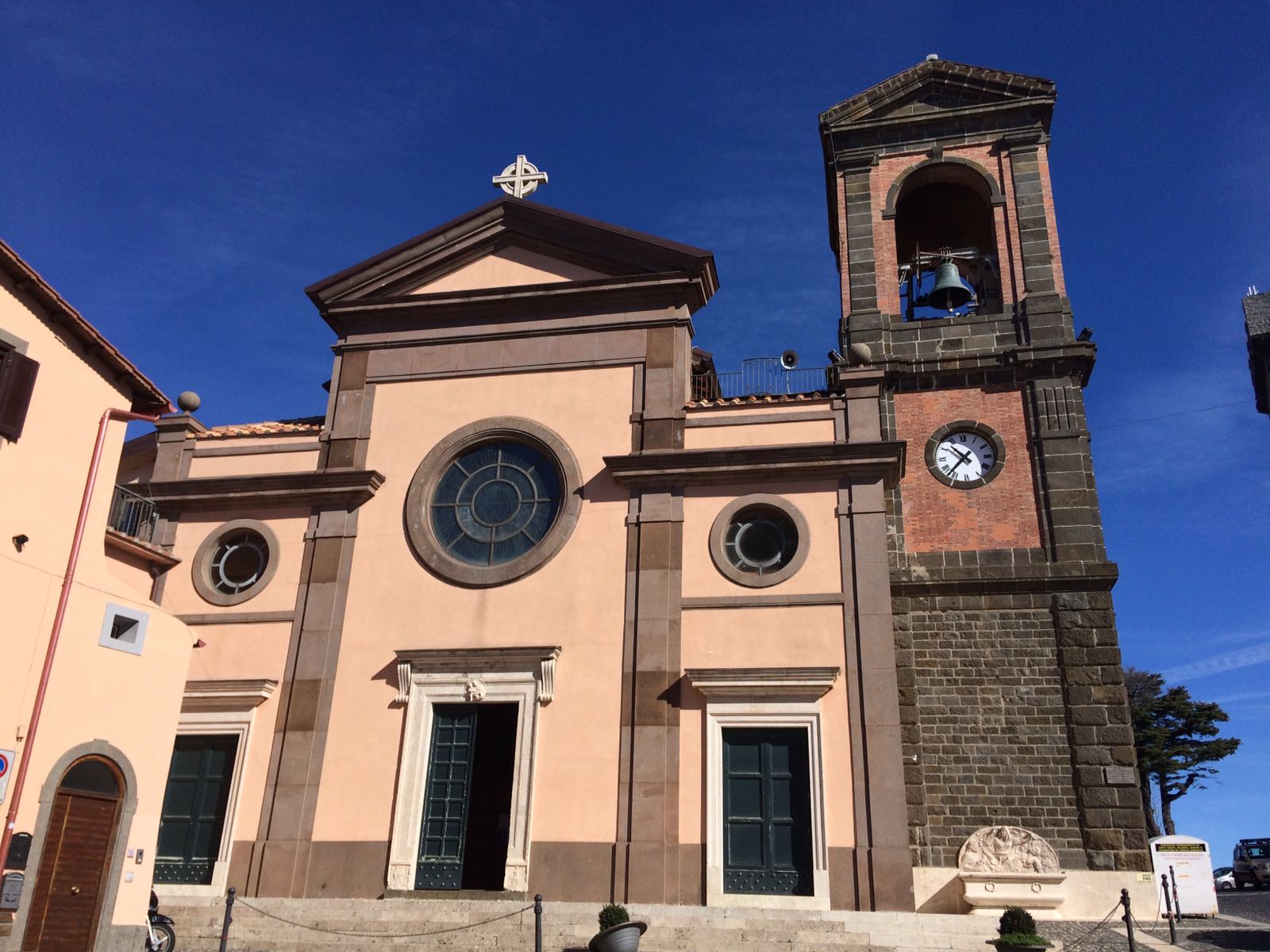
Rocca Priora Chiesa Santa Maria Assunta in Cielo 2 by Chiara Rossi
Rocca Priora. Church of Santa Maria Assunta in Heaven

The church of Santa Maria Assunta in Heaven is located in the heart of the historical centre of Rocca Priora and was sponsored by the Savelli family.

It was consecrated in 1464 and dedicated to St. Rocco.

The interior has three naves, with vaults supported by a double row of octagonal columns in peperino stone with stylized foliage capitals.

The rose window is from 1987 and depicting the Trinity SS.ma and was executed by Ingrid Tross.

Alongside the church is the Parish Museum, open by appointment.


powered by social2s
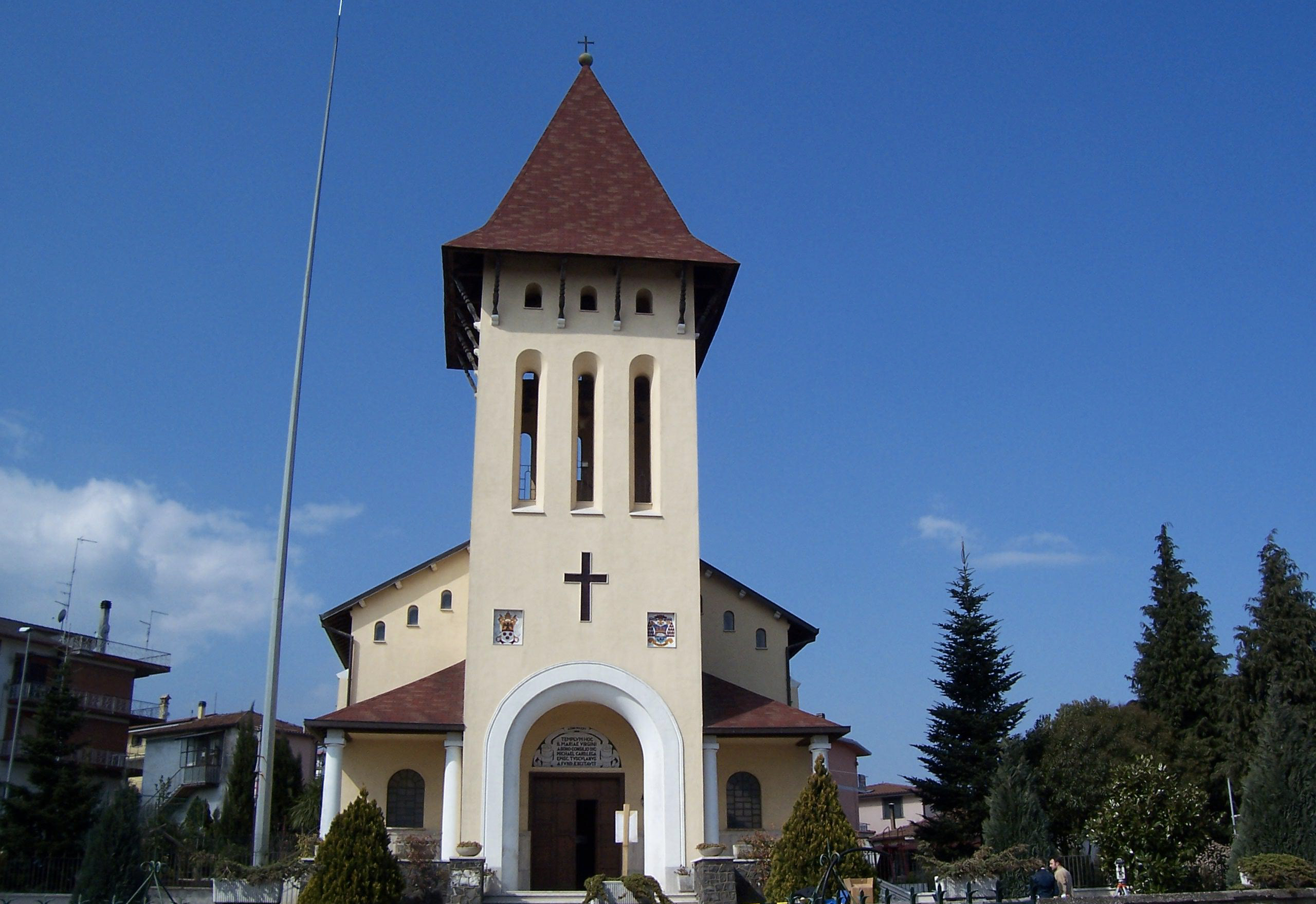
Rocca Priora- Chiesa Madonna del Buon Consiglio by Chiara Rossi
Rocca Priora. Church of Our Lady of Good Counsel

For the population of Colle di Fuori in Rocca Priora is a Church of Our Lady of Good Counsel.

The church is in 'alpine style' built in 1930 to a design by engineer Carlo Strocchi.

The façade is characterized by the bulk of the high bell tower which is accessed directly from within the church.

Inside you can see an ornate altar that is frontal gilded stucco on white background with Bernardiano crest.

This altar was formerly located in Villa Mondragone and donated by the Jesuits when the villa was sold to the University.

powered by social2s
Rocca Priora. Sanctuary of Madonna of the Snows

This small sanctuary of Madonna of the Snows dates from the late sixteenth century and is located in Rocca Priora, the city of snow.

It has a single nave with a coffered ceiling decorated with five arches that form part of their respective chapels.

On the main altar apse is a copy of the Snow Madonna venerated in the Basilica of Santa Maria Maggiore in Rome.

The facade of 1858 in brick and lava stone, has a neo-classical portal and a rosette with the monogram of the Virgin Mary.

Over the centuries the church has been expanded, enriched with furniture, with a sacristy and a large building to house pilgrims and groups.

Since 1860 it has been well maintained and guarded by the Pallottini Fathers.

The devotion to Our Lady, still deeply felt, goes back to the fact that since ancient times Rocca Priora was the main supplier of snow and ice in Rome.

Its inhabitants traded this valuable asset throughout the year, keeping the ice in wells sealed with hay.

Then they transported it with special carts to the capital "neviere", place to store ice in Rome.

A shortage of snow during the winter meant tightening their belts during the summer, hence the invocation to the Virgin's protection.

The town dedicates a feast to Our Lady of the Snow in late July and early August, culminating in the feature, an evening procession on the first Saturday of the month.

The feast is very popular and ends with an artificial snowfall.

powered by social2s
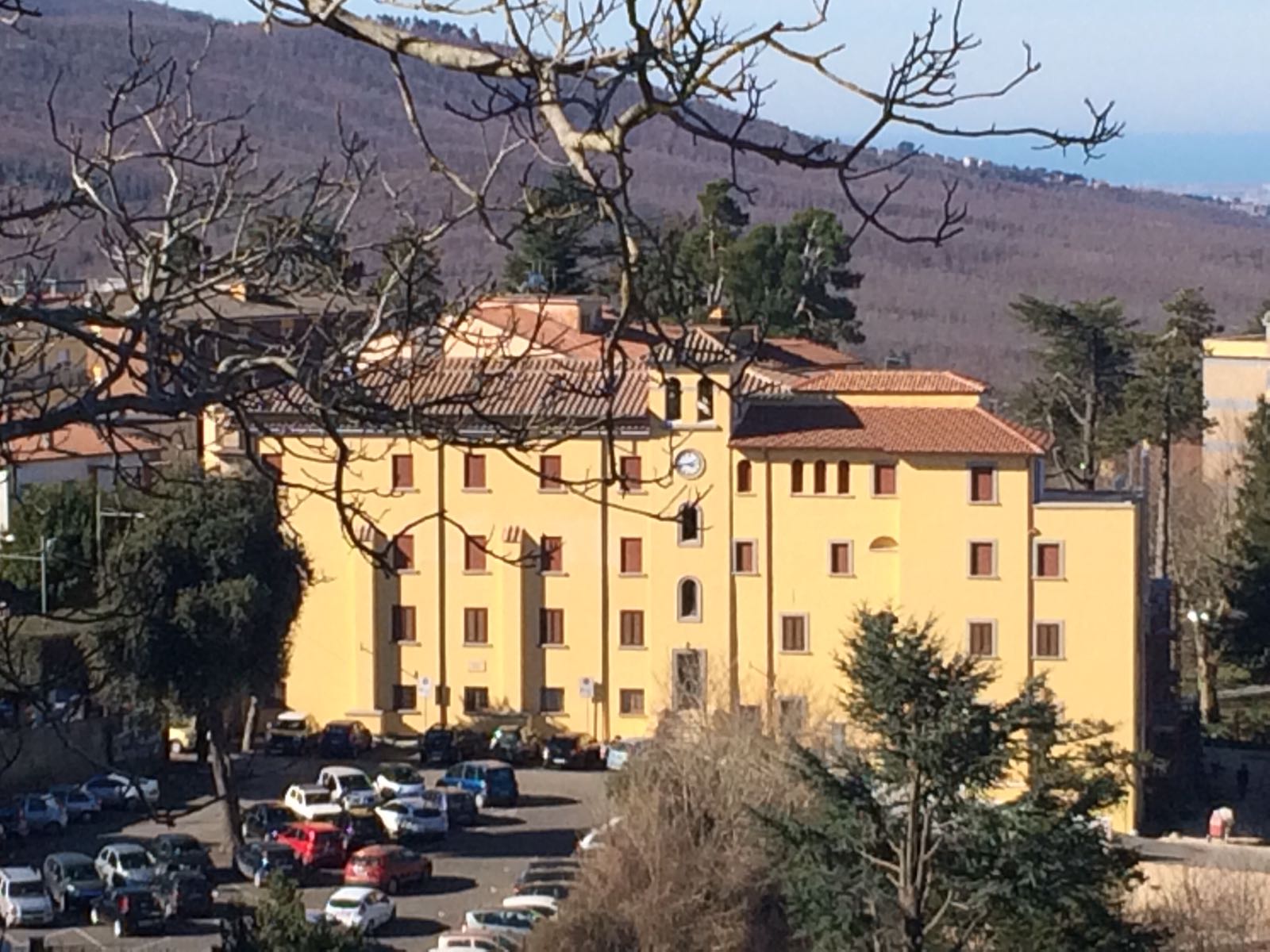
Paliano Madonna Zancati 3
Paliano. Chapel of Our Lady of Zancati

The Chapel of Our Lady of Zancati (Cappella della Madonna di Zancati) is located at the bottom of a valley in San Procolo area south of Paliano and is carved into the rock.

The chapel predates the fifteenth century and was built around a miracolous image.

Until 1632 in the chapel was kept a fresco of the Virgin of Zancati which was transferred to the Collegiate Church of Sant'Andrea in a dedicated chapel.

powered by social2s
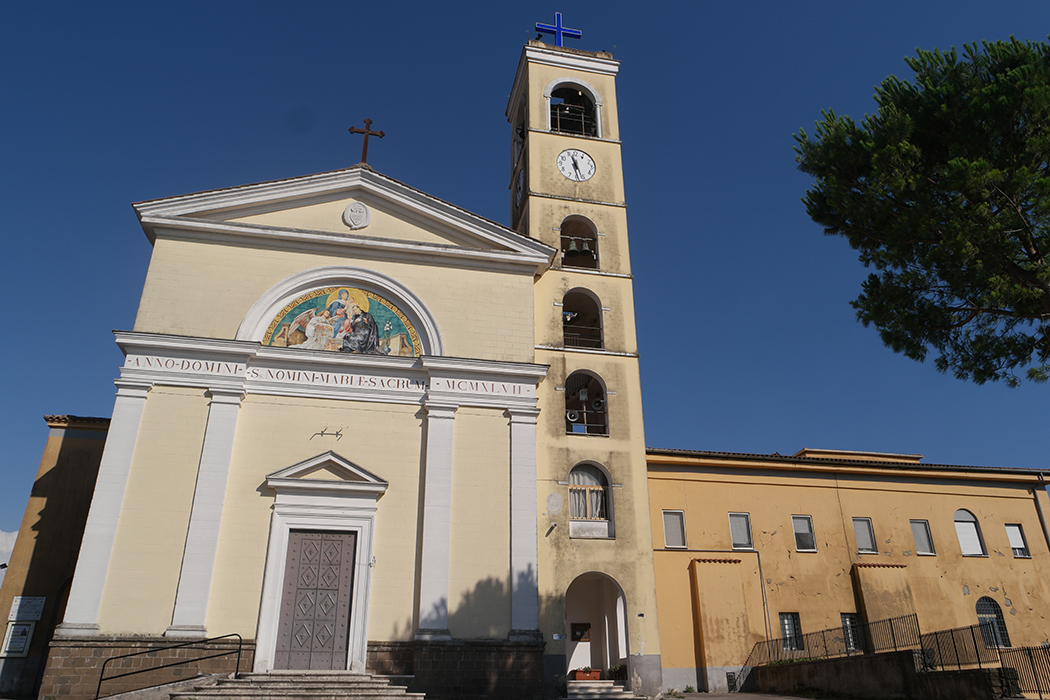
Paliano- Santuario Santa Maria Pugliano by Roberta Gabrielli

Perhaps the Church and Monastery of Santa Maria Pugliano were founded around a small church dedicated to the Virgin, that was a home for hermits who were guarding it.

The image of the Madonna was called 'The Puglianella' because it was thought that it had been brought from the Puglia region by two soldiers.

In the area of Santa Maria Pugliano also stood a castle built to protect local people.

In 1559 Father Santo from Piglio turned the church into a convent which was ceded to the Order of Friars Minor Conventual. It was later closed in 1652 due to lack of religious interest.

In 1750 it was assigned to the Passionist Fathers who still have care. The Passionists enlarged it, and they added one and then other altars in 1823.

During the Second World War, the monastery was occupied by the Germans and in 1946 the church was rebuilt and enlarged.

On the high altar there is a painting of the Madonna that replaced the statue of Puglianella which is now inside the convent.

The facade is in eighteenth-century style, and on the tympanum is a drawing of the Virgin and St. Paul of the Cross made of majolica (clay).

The interior has a nave with a side chapel, dedicated to St. Paul of the Cross, and is decorated with faux marble plaster.

Under the altar lie the relics of San Teodoro martyr, supported by columns of porphyry and over the entrance is found the organ and the choir.

The new bell tower dates back to 1967 and on top of which is a clock and bells, while the old bell dates back to 1486, as can be seen by an inscription engraved in bronze.

powered by social2s

Recommended

Subscribe to Newsletter

Discover a territory through the emotions of the people that have lived it.