Churches & Places of Worship

The sanctuary of Our Lady of Peace sits right on top of the Scalambra mountain at an altitude of 1420 meters and is easily reached by a narrow road from Serrone.

The sanctuary has been created in the mountain rock and is the destination of pilgrimages and gatherings.

It is said that here Our Lady of Peace appeared to the visionary Ivan.

The site is characterized by a large bronze statue of the Madonna that protects all believers coming from the valley.

From here you can enjoy breathtaking views and the area is equipped for parking and picnicking.

You can see the memorial of a plane crash with the remains of the aircraft.
 

powered by social2s
Chiesa di Santa Maria Serrone
Church of St Mary of the Graces

The church is St Mary of the Graces (Santa Maria delle Grazie) is located in the historic centre of Serrone and is a small building with a single nave.

The front door is a beautiful coloured ceramic work that represents the Madonna.

On the altar is a fresco representing the Madonna of Loreto.

In the sacristy was set up a small museum of historical relics dating back to the two world wars.
 

powered by social2s

Like many churches dedicated to St. Roch, patron of plague victims, the church was built during a plague epidemic in Serrone.

The story of St. Rocco and his dog who managed to overcome the plague have made him the patron to ask for miracles during these crises.

Probably the church was built during the plague of 1592.

The church was rebuilt in 1969.


powered by social2s

The church of St Quirico is a simple building in Serrone and was completed in 1607.

It is adjacent to a building that was entrusted to the "Zoccolanti brothers" or Franciscans. The friars were granted land to earn an income and maintain the church.

In the church in March 1650, a serious matter occurred about which there is no record except that the church was banned and de-consecrated.

Only many years after did the locals raise the funds to re-consecrate it.

Near the church is a Christian cemetery dating back to the times of the Roman Empire.
 

powered by social2s
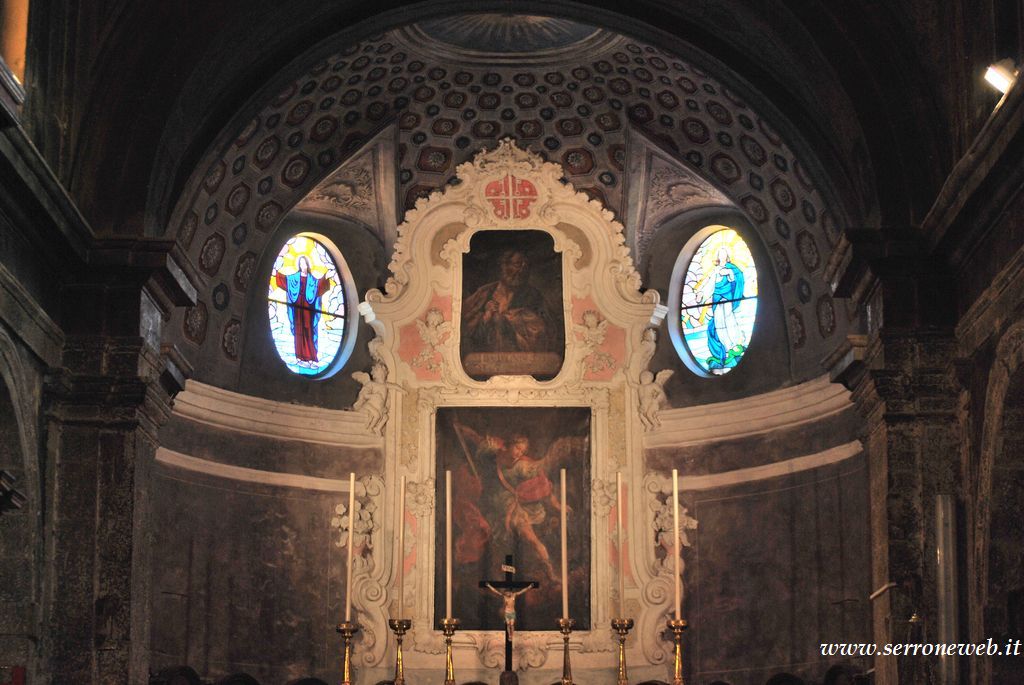
Altare e Interno Chiesa di San Pietro a Serrone
Serrone. Church of Saint Peter Apostle

The Church of Saint Peter Apostle is located in an alley in the centre of the town and the facade blends with the neighbouring houses.

From a 1754 document it seems that the church was already operating in 1192 and was under the diocese of the bishop of Palestrina.

The church underwent extensive restoration and was rebuilt in 1600. The interior has three naves and the ceiling is hidden by a large canvas that reproduces a wooden coffered ceiling and the image of Saint Peter.

Of great value is a finely carved wooden pulpit in which there are three small niches with statues of three evangelists (while some statues were stolen). The ‘artistic’ organ dates back to 1700.

In the nave is a large canvas and frescoes that are attributed to the school of Raffaello. The frescoes have been preserved thanks to a layer of spent lime spread to disinfect the walls during an epidemic of plague.

The church has a frescoed chapel with scenes of Herod with John the Baptist's head in his hand and Salome with the dish.

Another fresco is of a Pope who appointed a knight and also one of Luigi Gonzaga in a church that looks like that of Serrone.

The last fresco is dedicated to the Saint of the Church with the appearance of the angel to St. Peter and scenes from the life of the saint with the granting of the keys to Saint Peter.

On the high altar is a 1600 altarpiece depicting St. Michael Archangel, patron saint of Serrone, and a reproduction of a painting by Guido Reni of 1635.

Probably the painting was by Pierre Dulauvier (or Laurier) from the workshop of Guido Reni. The stucco frame that surrounds these two paintings is seventeenth century.

Under the floor is a cemetery that bears witness to the custom of burying the dead in churches.


powered by social2s
Abbey of Santa Maria in Viano

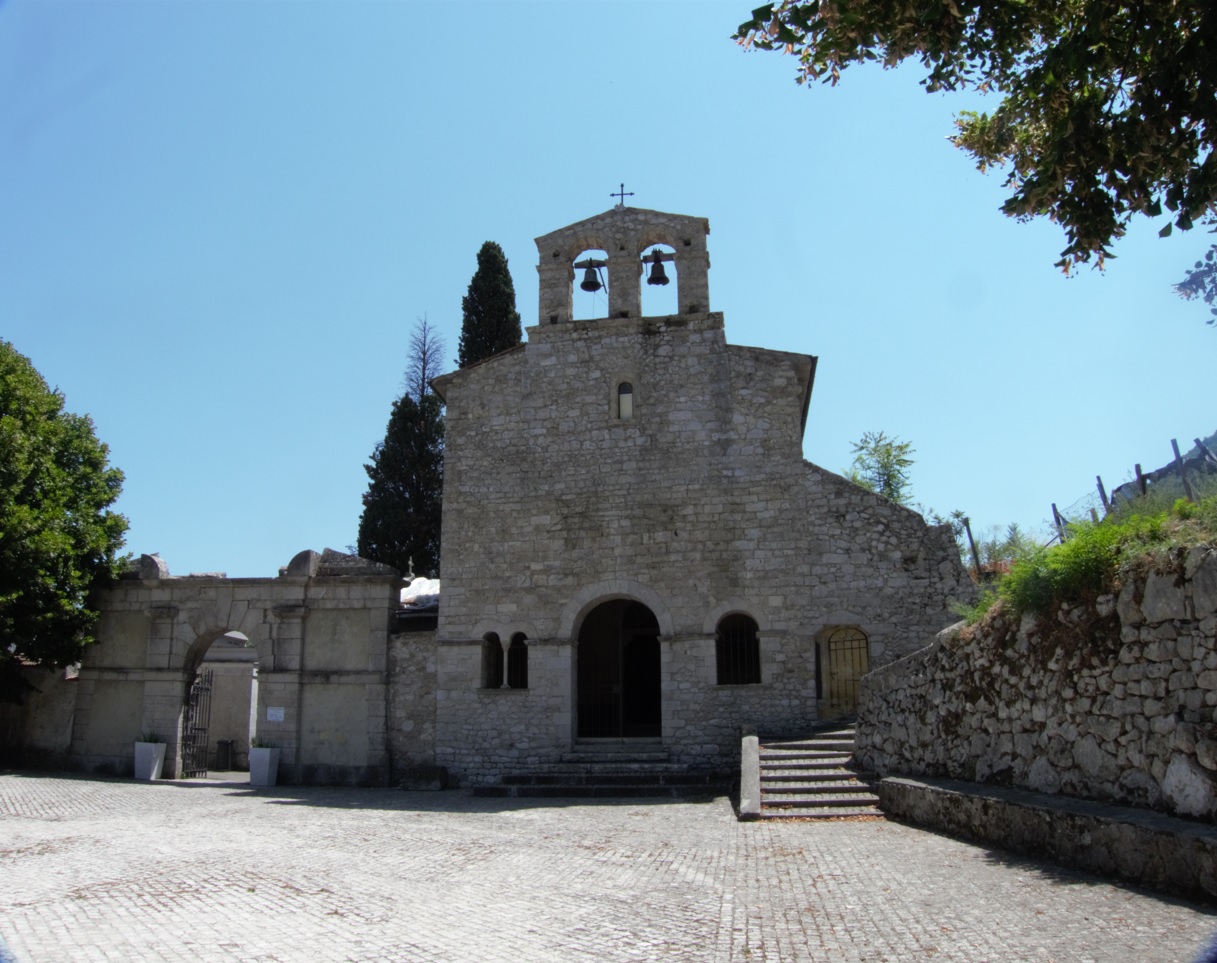
The Abbey of Santa Maria in Viano near the cemetery of Sgurgola dates back to the eleventh century and was part of a Cistercian monastery.

The ruins of the monastery can be seen by visiting the cemetery where also were found ossuaries of the monastery.

The church has a rectangular plan and is characterized by two areas: a vestibule or porch and a frescoed internal room.

In the lunette of the main door of the church is a restored medieval fresco in the Byzantine style representing Christ with a hand raised in blessing and the other holding a book.

The facade is made of stone and is asymmetric, with a mullioned window on the left and a single lancet window on the right, and ends with a bell tower with two bells.

In this monastery women were hosted from important families like Maria, the sister of Rinaldo of Supino, wife of Francesco Caetani, a great-nephew of Pope Boniface VIII, who was elected Cardinal.

Maria would eventually become Santa Maria in Cosmedin.

Mary gave two sons to her husband, and then she entered the convent when he was appointed cardinal.

powered by social2s
Sgurgola. Church of Santa Maria Assunta

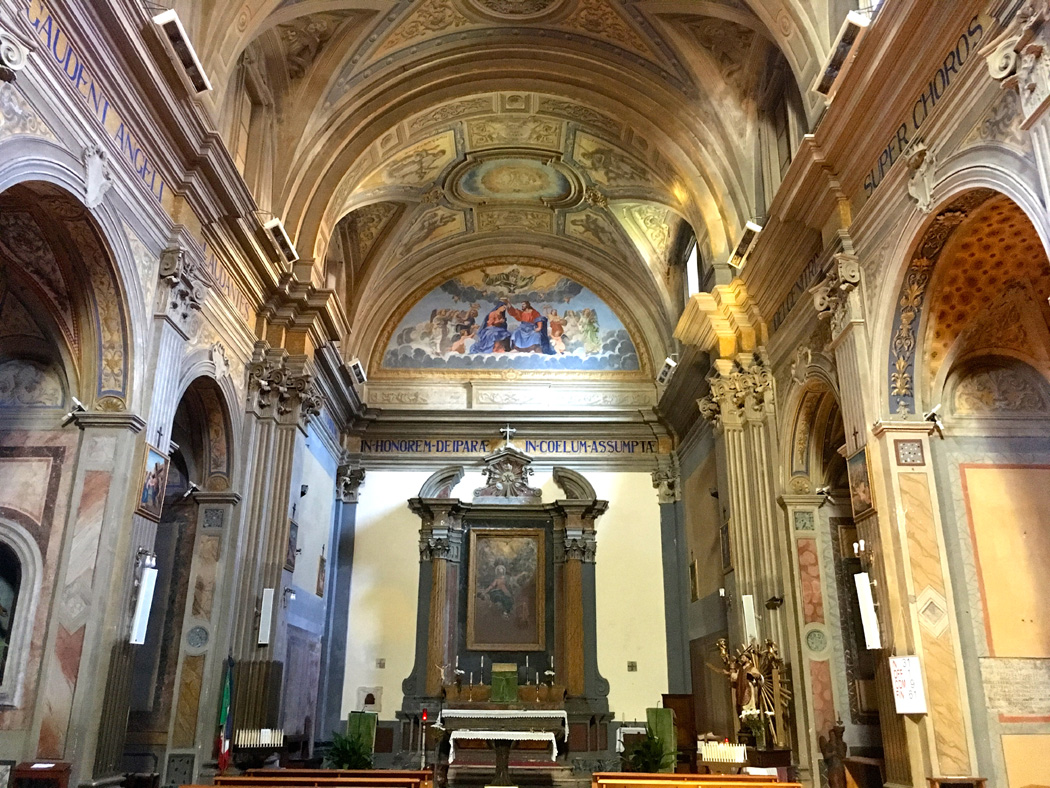
The Church of Santa Maria Assunta in Sgurgola is eighteenth-century, and the facade was rebuilt in 1966 in brick, and fortunately later renovated with a plaster render.

The three bronze doors of the church were executed by the sculptor Pietro Gismondi from Anagni (1906-2003).

Inside you can admire a beautiful painted ceiling and a peaceful environment against the bustle through the square.

powered by social2s

Recommended

Subscribe to Newsletter

Discover a territory through the emotions of the people that have lived it.