Churches & Places of Worship

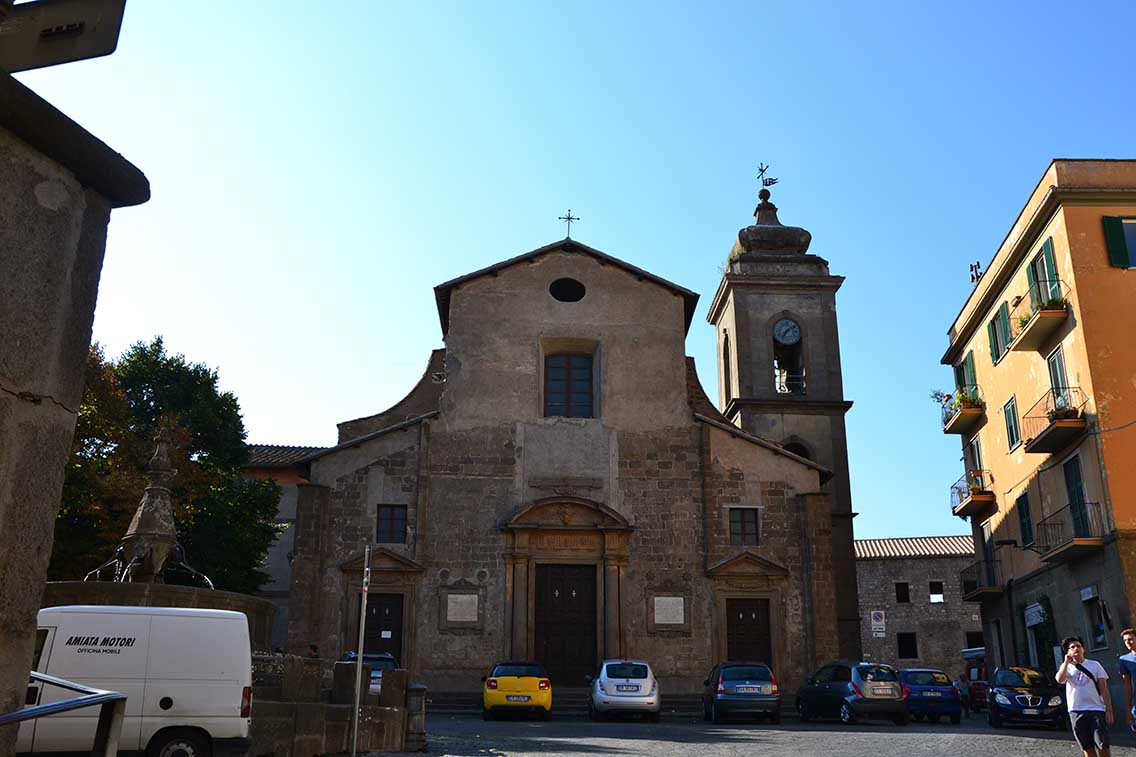
Viterbo. Church of Santa Maria Nuova

The church of Santa Maria Nuova is located in the medieval heart of Viterbo and its ancient history is reported on a stele inside the church itself and on a parchment from 1080.

A priest named Biterbo with his family gives the clergy a small church with an adjoining hospital, which was then a place of rest and care for pilgrims along the Via Francigena or Via Cassia (in this section the two roads overlap).

The church was located inside the castle and the name of Santa Maria Nuova was given to distinguish it from the older one in nearby Santa Maria in Cella.
The original building was enlarged to accommodate the meetings of the governing body of the city and here the keys to the municipal coffers and city archives were kept.

Here there was also a column that was the reference for the measurement system of all citizens, an indispensable element for commercial relations.

Around the thirteenth century it was so important that it hosted St. Thomas Aquinas who came to preach in 1267 on a pulpit that can be seen outside on the left side of the facade. St. Thomas was in nearby Bolsena to settle the question of the Miracle of the Eucharist.

A miraculous episode is then linked to the church and the Feast of the Holy Savior which is still celebrated in Viterbo on the second Sunday of May.

In 1283 two peasants who were plowing their fields with oxen observed that the animals stopped in front of an underground stone box which contained a triptych. The work was in excellent condition and represented a Blessing Savior between the Madonna and St. John. On the back of this work you can then admire the paintings of St. Peter, St. Paul and a Cherub.

The clergy went to the place and then a procession was formed to bring this work to the church: from this procession the present feast was born.

From 1567 the church began its decline with the decision of Pope Pius V to aggregate it to the cathedral. Over the years the church had then been decorated in the Baroque style, also covering its precious frescoes, but a restoration in 1906 brought it back to its primitive Romanesque beauty.

The images of Garibaldi and Mazzini can only be seen on two majolica tiles on the roof. The church also has a Lombard-Romanesque cloister and a crypt.

Inside you can admire a true masterpiece of modern art: a sculpted bronze element that delimits the altar area. The work dates back to 1964 and the author Carlo Canestrari carved a wonderful scene of the Last Supper representing Jesus among the 12 apostles. In the church there are two other works by the same artist: a bronze crucifix above the altar and a Pietà in Peperino that marks the artist's tomb.

Another modern work is a terracotta that tells the discovery of the triptych and which was created by the artist Mario Vinci.

powered by social2s
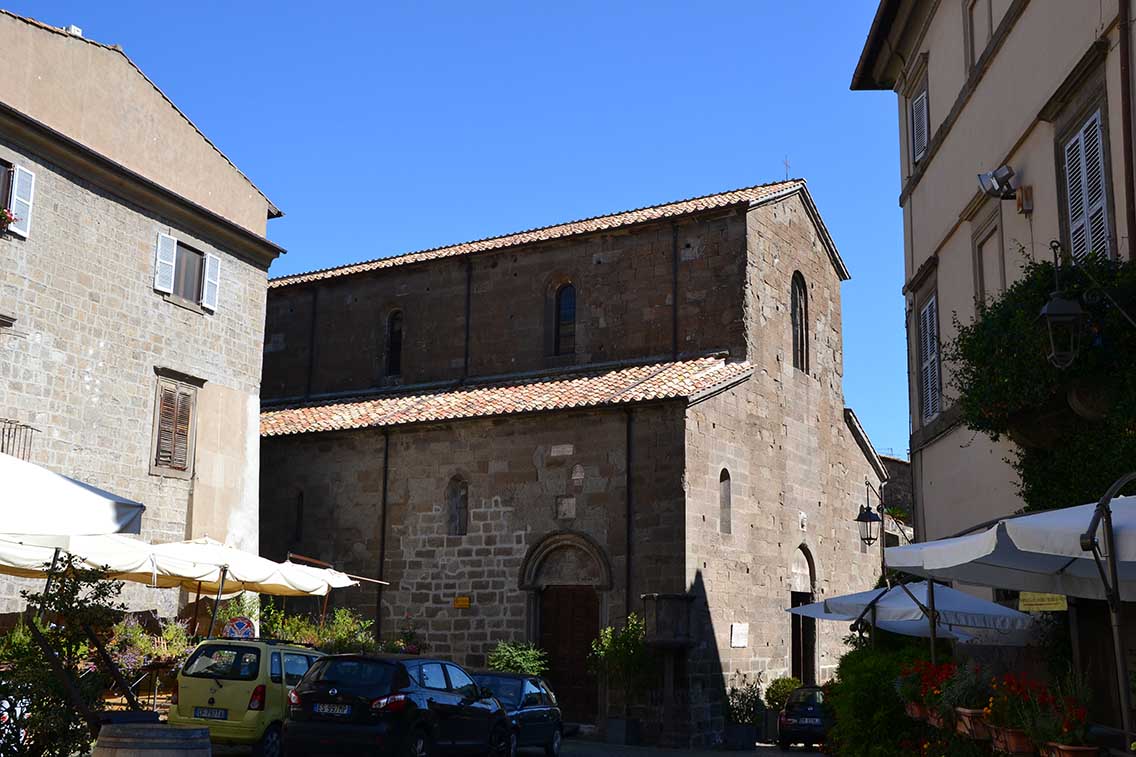
Viterbo. Church of San Silvestro (called of Jesus)

The small medieval church of San Silvestro (called del Gesù) was one of the first in the city built before the 10th century in Viterbo, is mentioned in documents from 1080, and hides a unique history.

The simple facade in peperino stone ends with a bell gable with three bells enriched by some marble friezes inserted in the masonry.

On the roof profile there are two peperino sculptures: that of a lion symbol of San Marco and that of a winged bull symbol of San Luca. On the lunette above the simple entrance door is painted a Madonna between Sant’Andrea and San Silvestro (which gives the church its name) and above the lunette is the symbol of the Confraternity of Jesus who guarded the building.

The interior has a single nave with a wooden trussed ceiling and the church ends with an entirely frescoed apse, as well as the areas on its sides. The frescoes were made in the 14th and 15th centuries and frame a beautiful carved wooden crucifix from the 1600s.

A plaque near the altar and one outside the church recall a famous crime that took place in this church.

On 13 March 1271 when the Monfort brothers, representatives of King Charles of Anjou, killed their carnal cousin Henry of Cornwall who was also a cousin of King Edward I of England.

The father of the two brothers had been killed by the king of England a few years earlier despite the fact that he had surrendered himself as a prisoner to the crown, so the Monforts retaliated by killing Henry of Cornwall near the altar during a mass.

The violence of the echo of this episode reached Dante who recounted it in a passage from the XII canto of Hell.

Enrico's heart was brought to London, while his body was buried first in the Cathedral of Viterbo and then in the Cathedral of Orvieto.

All these sovereigns and famous people were in Viterbo for the conclave that was supposed to elect a new pope but found no solution.

The fact that they were located in what today appears to us as a small church gives us an idea of ​​the importance of Viterbo but also of its small size at the time.

powered by social2s
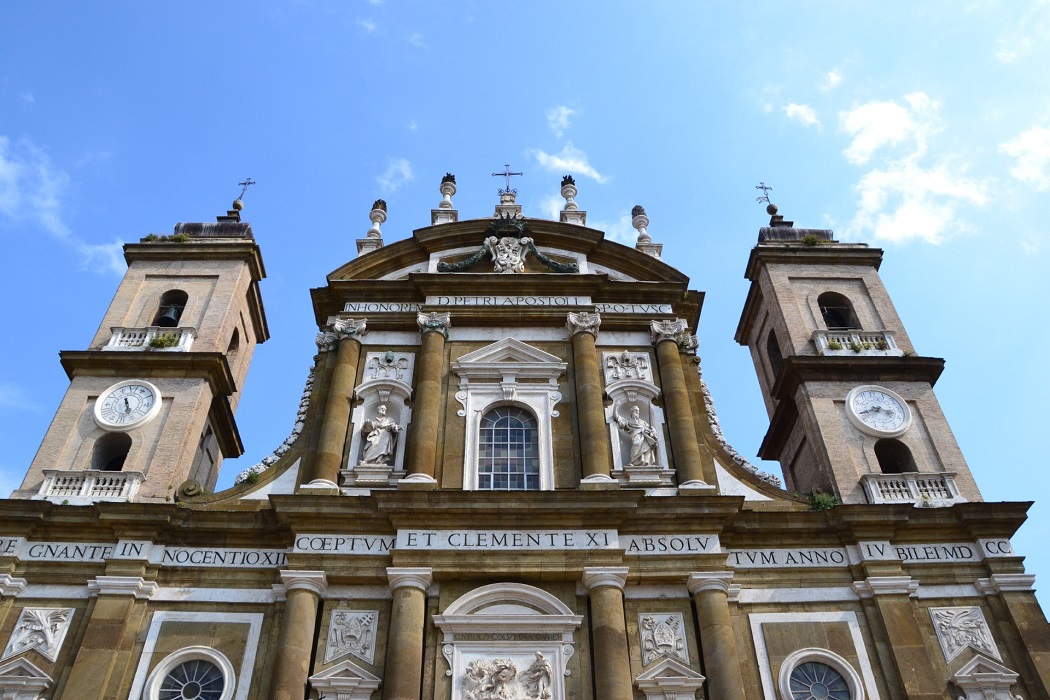
Chiesa di San Pietro

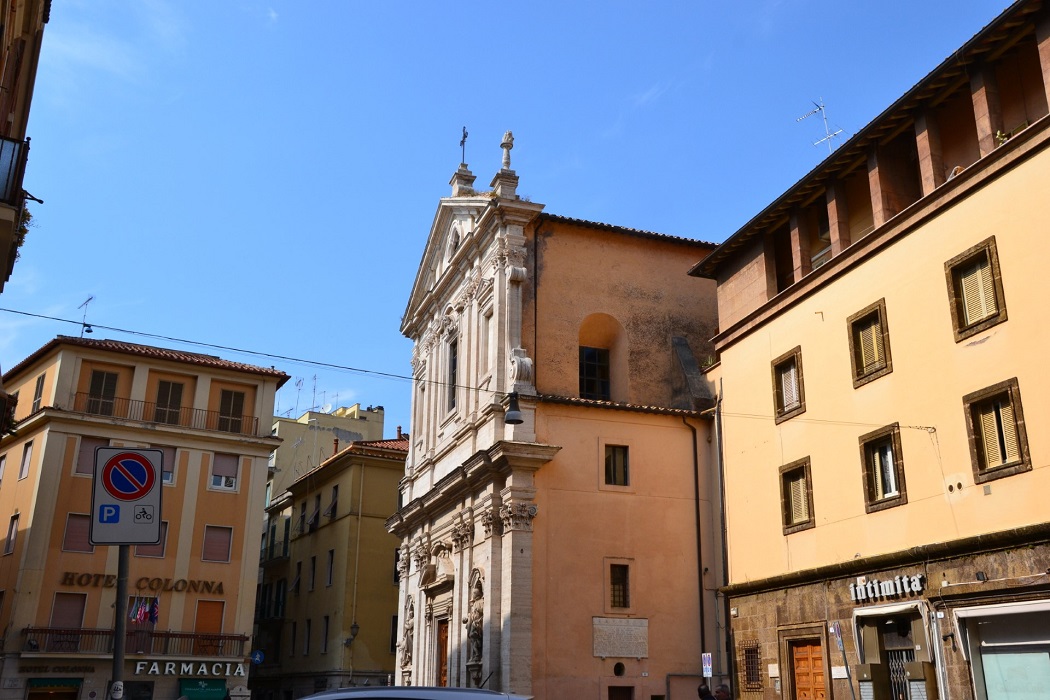
The church of St Peter is the cathedral basilica of Frascati, built starting from 1598 to a design by Ottaviano Nonni, known as il Mascherino.

The travertine spur stone facade was miraculously saved from the bombings of 8 September and is attributed to Girolamo Fontana and was completed in 1700. It is a clear example of a Baroque facade, divided into niches where statues of saints are housed while two orders of columns scan and divide the façade.

The entrance portal is underlined by a high relief.

The plan is a Greek cross, three naves with eight side altars which preserve valuable works of art.

Very interesting are the high relief of Pompeo Ferrucci in the central apse, the bronze cross of the Jubilee of 1750 and the funeral monument of Carlo Edoardo Stuart.

Fontana is buried near the baptismal font.

powered by social2s
Chiesa del Gesù
Chiesa del Gesù

The church of Jesus was built around 1630 in Frascati as a Jesuit residence, and was built on a site previously dedicated to the Blessed Virgin Mary.

Its elegant and sober facade is attributed to Pietro Da Cortona and is inspired by the church of Gesù in Rome. It has a double order of overlapping pilasters, framing two niches below with the statues of St Ignatius and St Francis Borgia.

The entrance portal is enriched by an interrupted pediment and a plaque commemorates the dedication of the church to San Gregorio Magno.

The Baroque interior of the church is a perfect synthesis between architecture and painting, the spaces spread out and at the intersection of the single nave with the transept there is the fake dome painted by Andrea Pozzo. Standing on a black disk drawn on the floor, you can enjoy the artfully designed perspective show.

Even the skillfully painted apse suggests perspective effects and takes up the decorative motifs of the church.

powered by social2s
Chiesa di Santa Maria in Vivario o San Rocco e Campanile
 Chiesa di Santa Maria in Vivario o San Rocco e Campanile

The church of Santa Maria in Vivario is the ancient cathedral of Frascati, built around the 8th and 9th centuries on the remains of a Roman villa attributed to Lucullus.

In 1296 the first restoration works were carried out, and in 1305 the famous Romanesque bell tower was erected on the back of the church.

On 11 May 1495 the church was reconsecrated after the restoration work financed by the Estoutevilles, then feudal lords of Frascati.

While the town was invaded by the plague in 1656, two frescoes came to light in the church reproducing Saints Roch and Sebastian, who on 28 January 1656 were proclaimed protectors of Frascati.

The church was renamed in honor of St Roch and today the two names of Santa Maria in Vivario and St Roch coexist to indicate the same church.

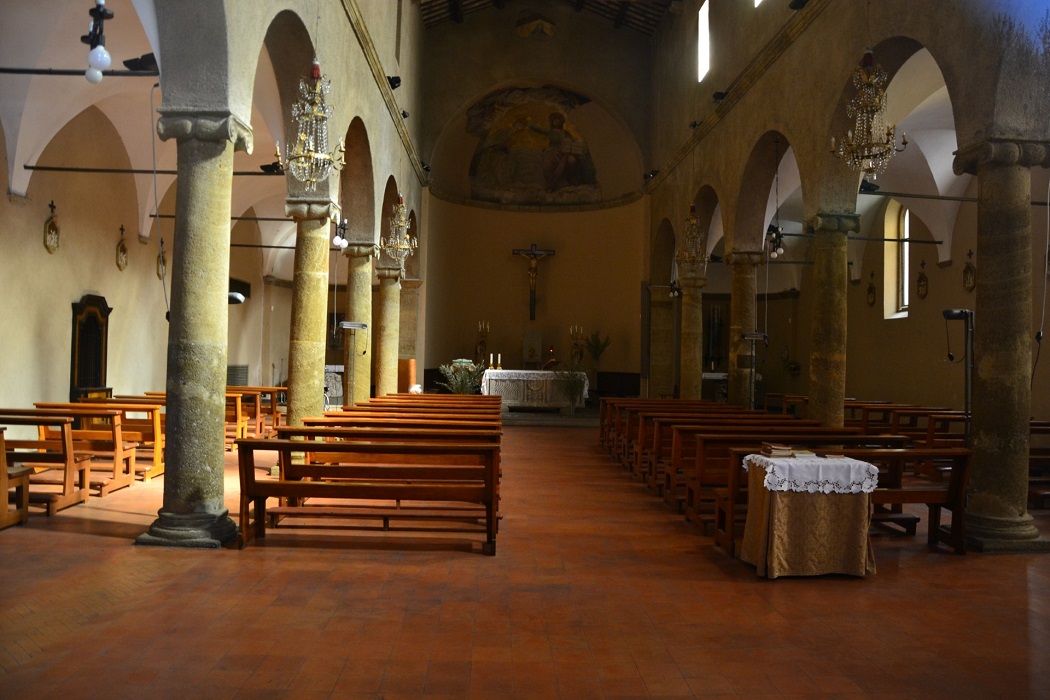
The structure has three naves divided by beautiful spur stone columns and the altar is a magnificent early Christian sarcophagus found in the Camaldoli wood.

powered by social2s

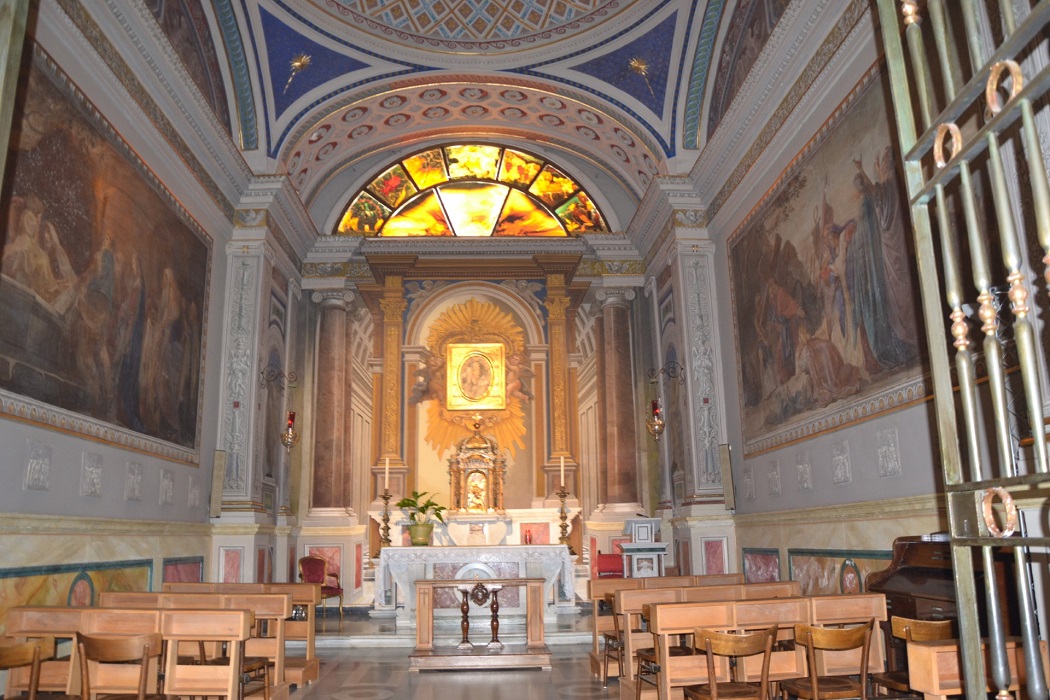
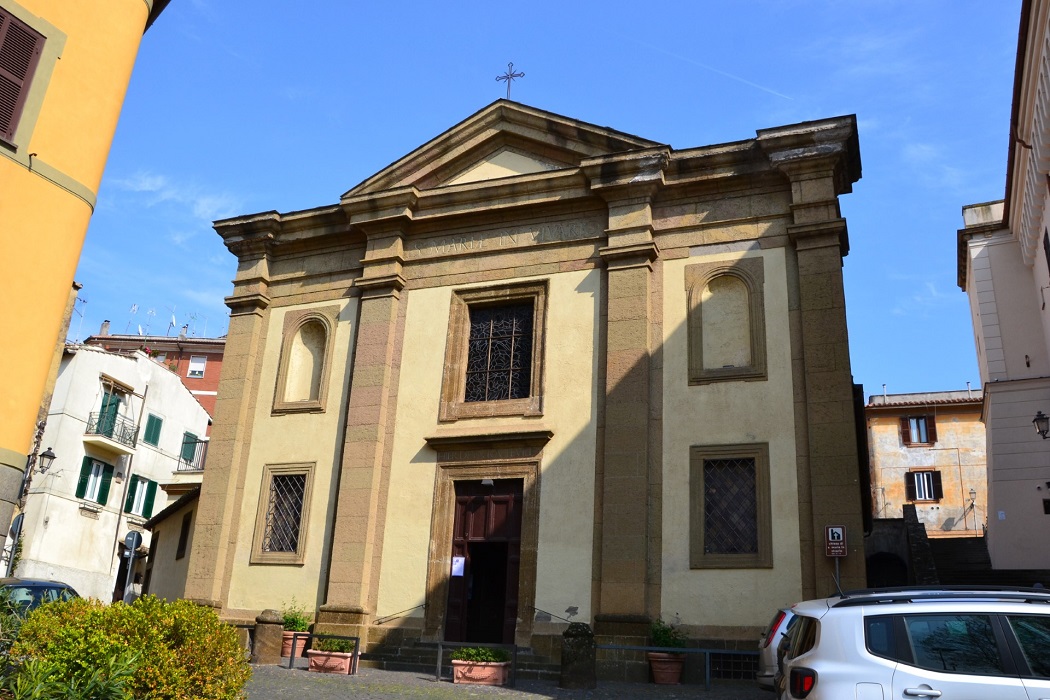
The church of the Madonna of Capocroce is located in the place where there was a small aedicule dedicated to the Madonna.

Legend has it that in 1527 this image had miraculously stopped the horde of Lanzichenecchi from the Sack of Rome which was about to attack Frascati thanks to the apparition of the Madonna. The church was built in 1612 by Girolamo de Rossi as a thank you.

Only the facade and the bell tower were saved from the ferocious bombings of the Second World War which destroyed a large part of the historic center of Frascati. The whole church was then rebuilt in the fifties following the original Baroque style of the interior.

The facade is very simple in plaster, it is enriched by an image of the Madonna and ends with a tympanum. The interior has a Latin cross plan with the single central nave overlooked by four chapels, two on each side.

The image of the Madonna and Child painted in oil on a metal plate is the object of devotion of the faithful and reproduces the ancient fresco destroyed by the bombings.

powered by social2s
Viterbo. Church of Saints Faustino and Giovita (known as San Faustino)

The church of Saints Faustino and Giovita, with its elegant late Baroque bell tower with clock, is located in one of the historic areas of Viterbo and its origins date back to the 13th century. 

It is dedicated to Faustino and Giovita, two nobles from Brescia who lived n a daring manner and were martyred in the second century under the emperor Adriano (they ended up at the Colosseum but the beasts knelt at their feet). 

Their worship was brought to Viterbo by the Lombards, and Saint Faustino is now considered the patron of the "singles".

The first records of the church date back to 1236 by Pope Gregory IX, when the church used a lot of energy to counter the phenomenon of heretics in Tuscia favouring their grouping together, like the case of the Augustinians of the church of the Trinity, or their involvement in the life of the city.

For years it was one of the religious but also socio-economic centres of Viterbo, to the point that in 1523 it hosted the Order of the Knights of Rhodes: a plaque and a cross of the Order on the façade recalls the story. 

The knights had been driven from the island of Rhodes when the Turks arrived and Pope Clement VII granted them the fortress Albornoz of Viterbo and this church until 1527 when they then decided to settle in Malta.

At their departure, the Knights donated to the church a precious image of the Virgin and Child, the Madonna of Constantinople, which for years has been a place of pilgrimage. 

Some knights are buried in the left aisle of the church and in 1655 the church enjoyed the indulgences and privileges of the order also called Gerosolimitano or Saint John of Jerusalem.

The church then had many alterations and the current late Baroque-neoclassical form dates back to the 1759 works of the architect Giuseppe Antolini.

The interior has three naves at the three entrance doors, ending with apses and are divided by pillars with round arches. 

Above the entrance door, the bigger one with a neoclassical frieze, is a large window and an oculus let the light penetrate the church.

The church houses many works of art, in addition to the Madonna of Constantinople which has been celebrated for centuries. Another painting is that of the Madonna della Luce or Madonna dell'Aurora (Dawn) because it was worshiped early in the morning (at dawn) by the peasants going to the fields.

Two other works of particular effect and value are paintings by the artist Stringelli: a Massacre of the Innocentie the painting Faustino and Giovita in prison dedicated to the two saints of the church.

In the square in front of the church there is the Fountain of San Faustino from 1250, as reported in the inscriptions on the peperino stone, financed by the inhabitants of the neighbourhood so they would have access to public water.


powered by social2s

Recommended

Subscribe to Newsletter

Discover a territory through the emotions of the people that have lived it.