Churches & Places of Worship

Cathedral of San Lorenzo

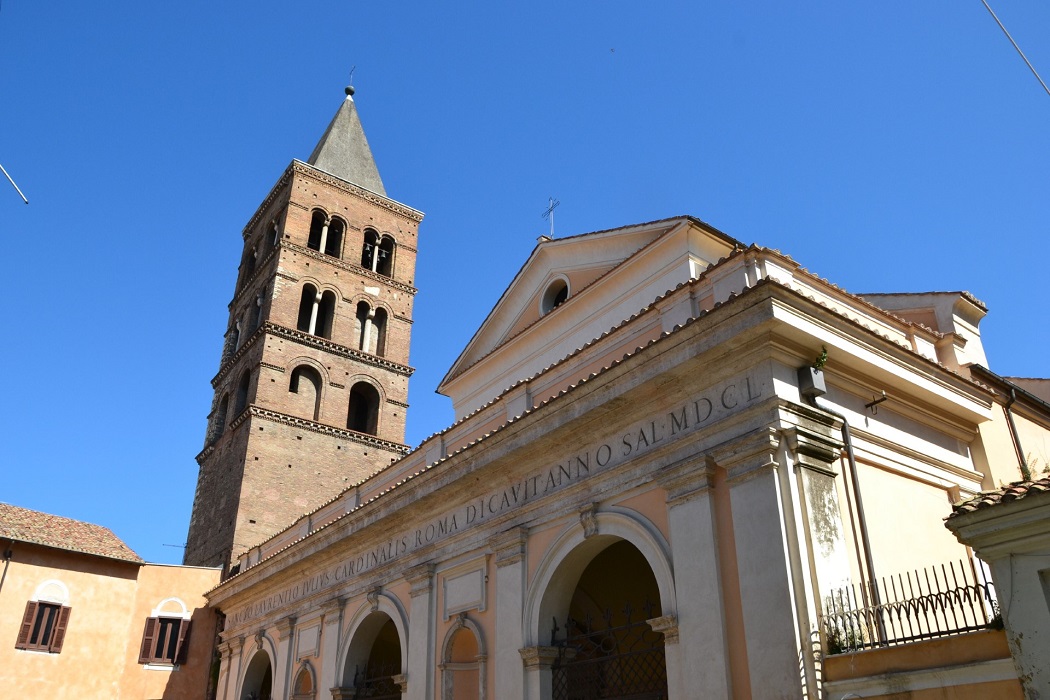
The cathedral of San Lorenzo or the cathedral of Tivoli was built in medieval times and is famous for its beautiful Romanesque bell tower 45 meters high.

An ancient legend associates the construction of the cathedral to the Emperor Constantine, who reputedly built it over the ruins of the ancient Forum Tiburtino.

The original apse is still visible on the outside of the religious building.

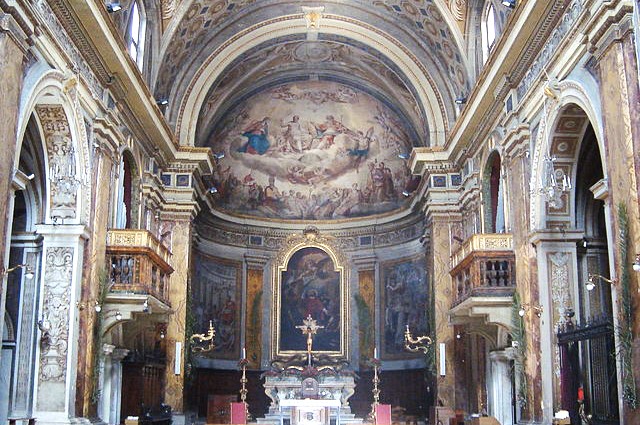
Inside the building there are three masterpieces.

The first is the Gruppo Ligneo della Deposizione, a masterpiece of Romanesque art dating from the thirteenth century,.

The secondo is a silver case - embossed from the fifteenth century, and then the Triptych of the Saviour from the XII century.

powered by social2s

The church of Gonfalone ("Chiesa del Gonfalone") is located in the town square and is one of the most interesting churches in Campagnano di Roma with an unusual style for a religious structure.

The current building was initially built around the 16th century and renovated in the 19th century.

The nineteenth-century style is found in a very geometric rectangular façade.

It is characterized by a play between the white color of the plaster and the dark gray of the string courses and the cornices in peperino.

The central part of the building is characterized by a door, a window and ends with a tower with a clock entirely in dark peperino.

The construction of the tower dates back to 1864.

powered by social2s

The convent and school of the Oblate Sisters of Albano Laziale are located within one of the most significant areas of the city and in fact occupy part of the ruins of the ancient Baths of Cellomaio.

The courtyard where the children play during recreation is located just below the ancient arches of the baths and above the Museum of the Second Partic Legion.
The order of the Oblates was born in Albano in 1714 by Maria Maggioni who began by welcoming some young girls into her paternal home, giving them shelter and education.

The order was then formed in 1724 and from 1735 they were assigned the current headquarters.

The consecration of the order of the Oblates of Jesus and Mary took place in 1745 with a decree by Pope Benedict XIV. Today the order has several sites and all deal with the education of young people.

powered by social2s

The church and convent of Santa Maria delle Grazie are located in the centre of Albano Laziale and their origin began in the Middle Ages.

They are mentioned in a document from 1203 when the complex had the name of Santa Maria Minore.

In 1560 the church was then entrusted to the Friars Minor Conventual who also had custody of the Cathedral of San Pancrazio.

The church then underwent many alterations over the centuries and today the style of its facade is neoclassical.

Inside you can admire some 17th century paintings.

powered by social2s

The church of Santa Chiara of Albano Laziale is located inside the convent of the Poor Clares on the borders of the Villa del Papa of Castel Gandolfo.

It is a small modern building that is divided into two rooms to allow the Poor Clares to participate in their isolation.

The Poor Clares are in fact a religious order that practices enclosure and was founded by Saint Clare, the twin sister of Saint Benedict.

The convent was built by Princess Caterina Savelli in 1631 and the church was built by Pope Urban VIII.

The monastery was then razed to the ground by bombing in World War II and rebuilt in a modern style.

Inside there is a thirteenth century panel depicting Christ and the Virgin and attributed to Rinaldo da Siena.

powered by social2s

The church of Sant'Emidio is one of the small buildings of worship in the countryside around the village of Cervara di Roma.

It is a small church with a classic gabled façade with the peculiarity that the entrance door is not in the centre and it has only one window on the left side.

In fact, the building is near the slope and fits into the surrounding nature.

The interior has a flat roof interspersed with arches and ends with an altar in an apse where the statue of the saint is found.

powered by social2s

Along the way to Camerata, next to one of the entrances of the town of Cervara di Roma, a small church was built and dedicated to San Rocco.

Its function was to protect the town from the plague, and in fact this saint had the task of removing disease.

The small building has a simple local stone facade with a gabled roof. The church has an entrance door with three openings: two on its sides and one above the door.

The building ends with a small bell tower with a single bell.

powered by social2s

Recommended

Subscribe to Newsletter

Discover a territory through the emotions of the people that have lived it.