Churches & Places of Worship

The church of Divine Love is located along one of the main streets of Montefiascone, Via Cavour, around which the historic centre was constructed.

The church was called San Giovanni in Borgo or Santa Maria della Potenza but is known as the church of Divine Love.

In fact, it originally was part of the Monastery of Divine Love that was run by the Augustinian nuns.

The convent was first a cloistered centre and today it is a religious training centre.

The church was renovated in the eighteenth century.

The façade is completely located between the other buildings and is barely noticeable.

The interior is a Latin cross plan with a single nave and a dome at the center and is richly decorated with polychrome marble.

The church is enriched with numerous works and an altar with four columns supporting a large decorative element with gilded stuccos.

And a nineteenth century canvas depicting the Virgin on a cloud with angels and the saints Agostino, Ignazio, Francesco di Sales and Benedetto Giuseppe Labro who all adore her.
powered by social2s

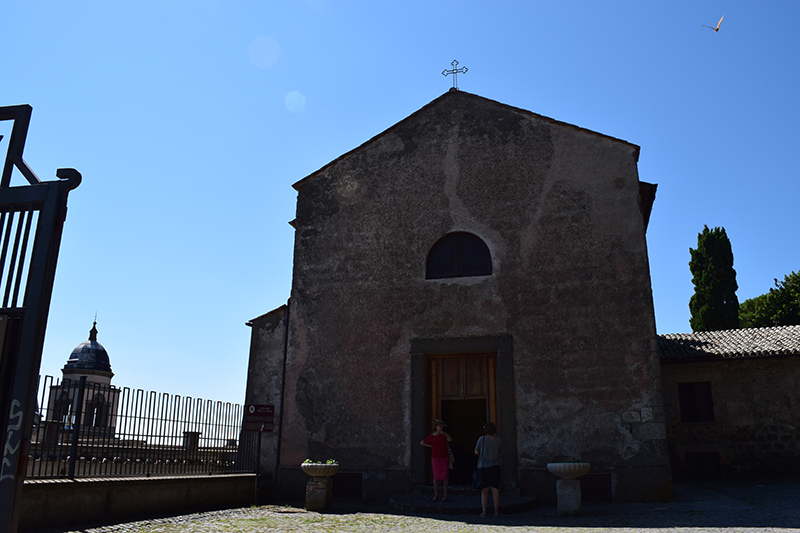
This small church of Sant'Andrea is among the oldest churche in Montefiascone.

It is present since the ninth century and is located right in the main square of the old town where once justice was administered and today there is still the town hall.

Over time the church has been suffocated by neighbouring houses.

Today its simple façade is composed of a square dark stone wall with an entrance door characterized by an arch and a circular opening instead of a rose window.

Next to the door there is a plaque that tells the story of an agreement between Montefiascone and the surrounding towns and which shows the oldest coat of arms of the town.

You access the inside by some stone steps and you enter a simple area also in stone consisting of three naves separated by stone arches.

The columns are enriched by Romanesque capitals and on the apse, there is a simple wooden crucifix.

In the right aisle an impressive fresco illustrates Madonna nursing her baby.

powered by social2s
Montefiascone. Church of Santa Maria of the Snows

The small medieval church of Santa Maria is located right on the highest point of Montefiascone, where the fortress is located, and for this it was called Santa Maria in Castello.

It was built in the thirteenth century by Pope Innocent III, the only pope from Gavignano who had to counter both the Magna Charta and the growing popularity of Saint Francis and the communities of pauperist friars.

The Pope's interest was to affirm the presence of the pontificate in this area north of Rome.

The name Santa Maria della Neve dates back to 1583 when a papal emissary on an apostolic visit found it completely covered in snow.

Today the building has only one nave with a simple entrance door and a semi-circular window on the local stone facade.

The interior is in simple plaster and on one side there is a 14th century fresco representing a Madonna with child on a throne in stone between Saint Francis and Sant'Antonio Abate on one side.

On the other side,  San Flaviano (patron saint of Montefiascone) and Saint Augustine.

powered by social2s
Montefiascone. Church of Santa Maria di Montedoro

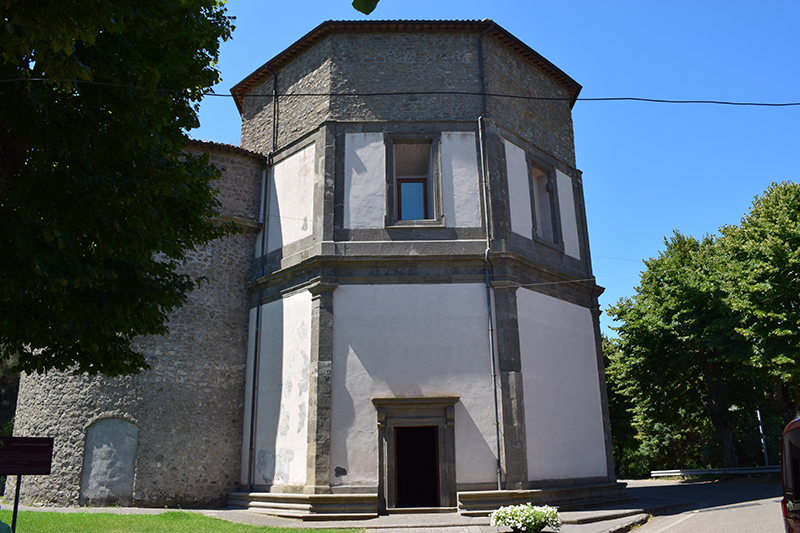
The octagonal church of Santa Maria di Montedoro in Montefiascone has the classic renaissance form.

It was designed by the great Florentine architect Antonio da Sangallo the Younger who had thought of it as an appendix to a larger convent.

The building is located outside the town along the road that leads to Bolsena exactly where once there was a sacred shrine to which people in search of grace were drawn.

The original painting, a fresco representing the Madonna with the Child in her arms, is still located just behind the main altar.

The work is attributed to the painter Antonio del Massaro, known as Pastura, originally from Viterbo.

However, its construction underwent several interruptions, first for the plague of 1523, and then for the passage of the troops of Emperor Charles V who sacked the city in 1527.

However, the church was finished in 1548 according to the drawings of Sangallo that today are found in the Florence Uffizi Museum.

Inside, the church has a Renaissance style with decorations in local dark stone that mark the rythm given by the octagonal plan.

The 5 side chapels are all frescoed and there is a splendid crucifixion with Mary, Mary Magdalene and St. John the Evangelist at the foot of the cross.

The church ends with a superb dome also with an octagonal base.
 

powered by social2s
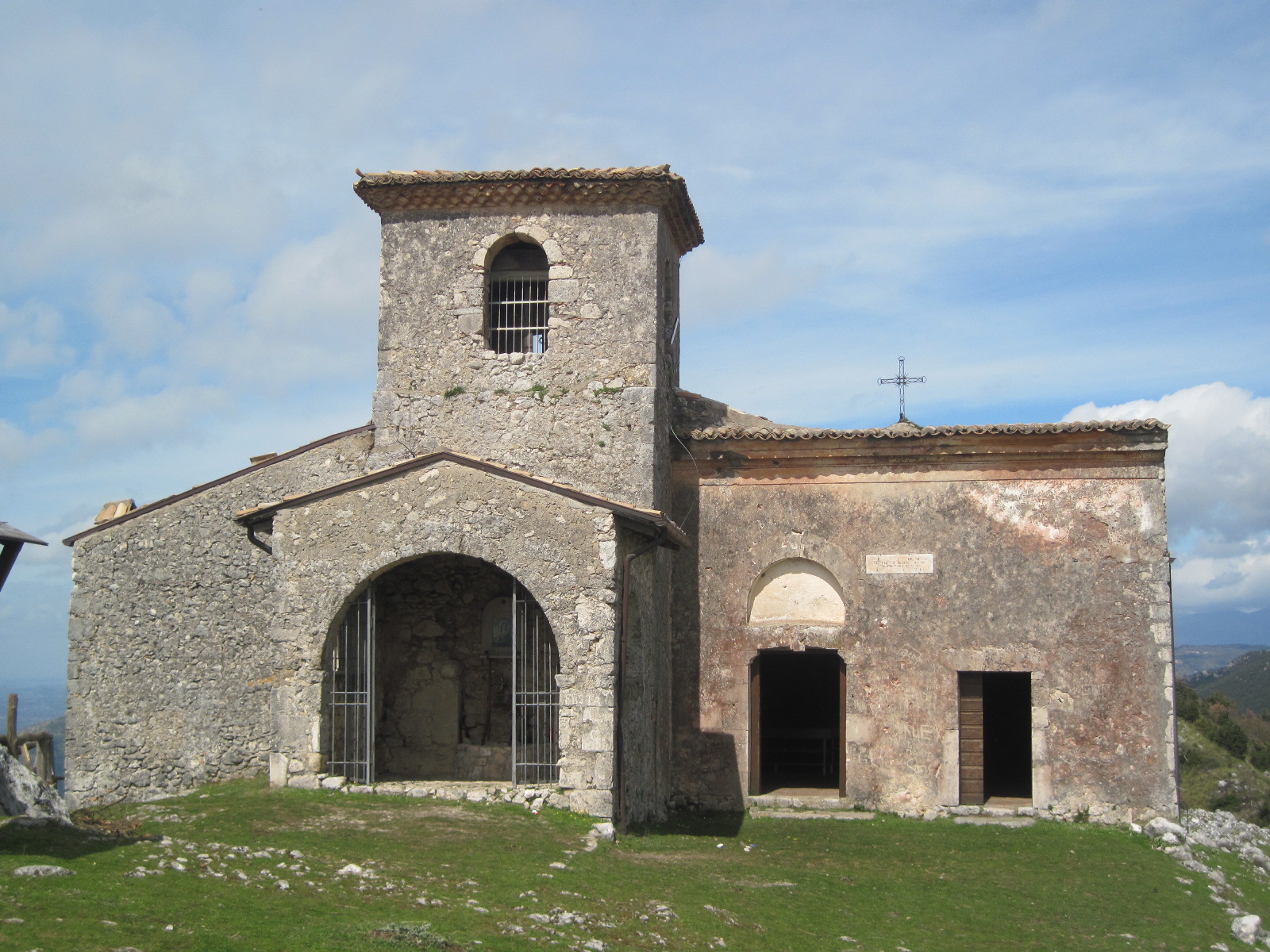
Colle San Magno. Church of Santa Maria Assunta on Mount Asprano

The church of Santa Maria Assunta in Cielo was built in the first decades of the 1300s.

It is a few steps from the castle of Federica, and became a parish in common with Castrocielo. The clergy itself was divided between Colle San Magno and Castrocielo.

The relics already housed in the Federician castle, when it was abandoned for the population to go down into the valley, were moved to Palazzolo (Castrocielo).

But on Easter Monday and on the day of the Assumption for centuries they were carried in procession back to the Church on the mountain.

Even the procession of Corpus Domini from the town of Colle San Magno went to Santa Maria Assunta in Cielo.

Of these customs Easter Monday remains a very important holiday, it being the day when you can visit the inside of the church and hear the sound of its bells.

powered by social2s
Church of the Madonna del Passo

The small church of the Madonna del Passo is located along the Sublacense Road just below the town of Agosta and near a spring. Its construction is linked to a miracle of 1615 and its original name was of Madonna of the angels to remember their help in healing Elisabetta di Andrea.

The woman was possessed by evil spirits and the exorcist was performed by a priest originally from Trevi nel Lazio and since then the church has been dedicated to the healing of the possessed.

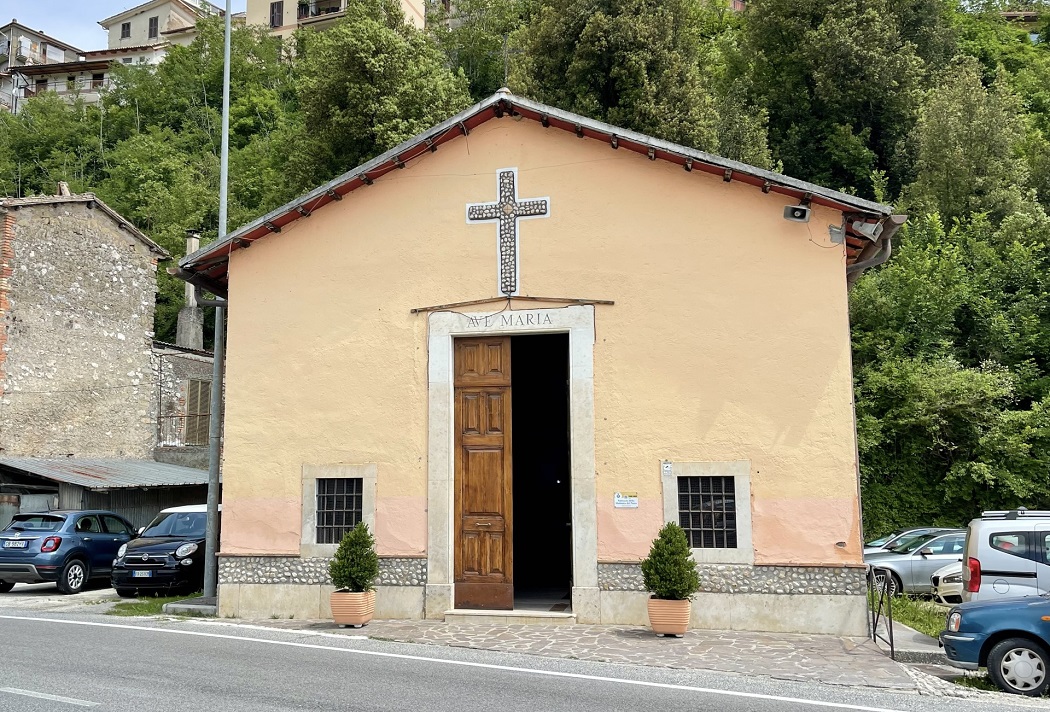
The church looks like a simple plastered gabled building, with two openings on the sides of the entrance door and a large cross made of stones.

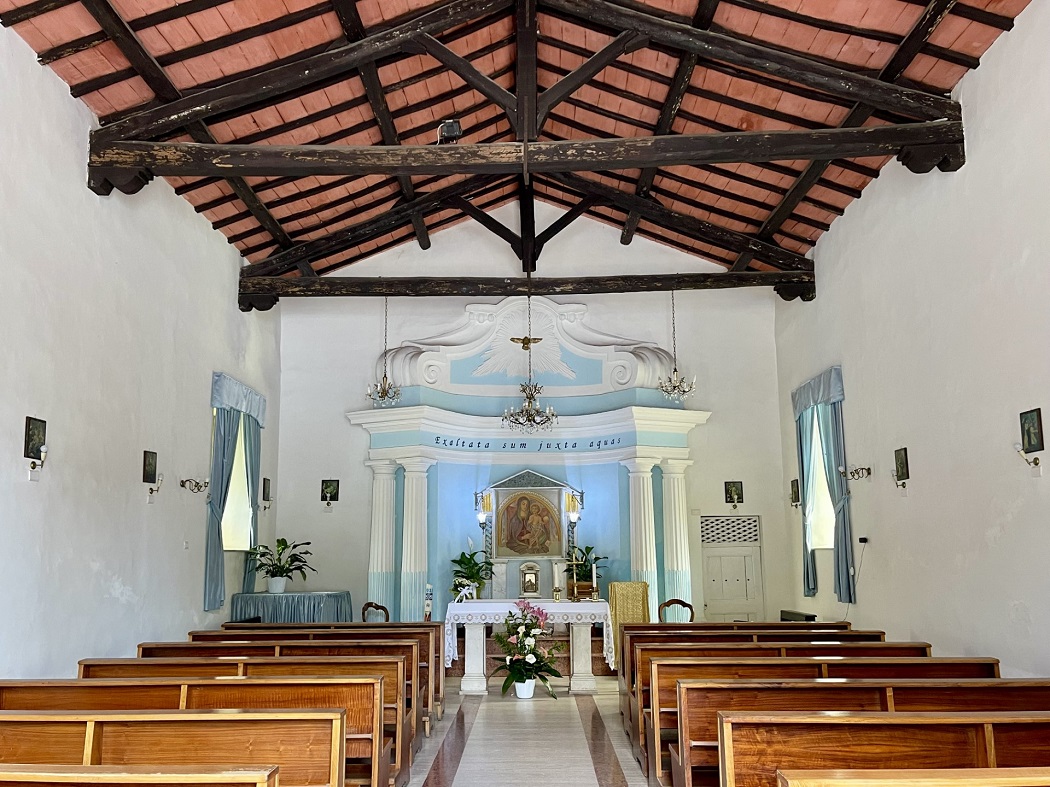
The interior has a unique room, with a wooden roof, and ends with a large Baroque style altar and a fresco of the Madonna and Child. The image is said to have been found and dates back to the 13th century.

The Madonna del passo is celebrated with a festival that has been repeated since 1700 in which the statue of the Madonna is carried in procession on the evening of 7 September and during the day of 8 September.


powered by social2s

The church of Madonna delle Piane is located not far from Proceno in the village of Le Piane, from which it takes its name.

According to an ancient tradition, the church was built on the site where an image of the Madonna was found in 1088.

In this church, on the second Sunday after Easter, the feast of the Madonna delle Piane is celebrated with a solemn mass and then an outdoor feast.

powered by social2s

Recommended

Subscribe to Newsletter

Discover a territory through the emotions of the people that have lived it.