Churches & Places of Worship

Monte Porzio Catone. Cathedral Church of Saint Gregory the Great

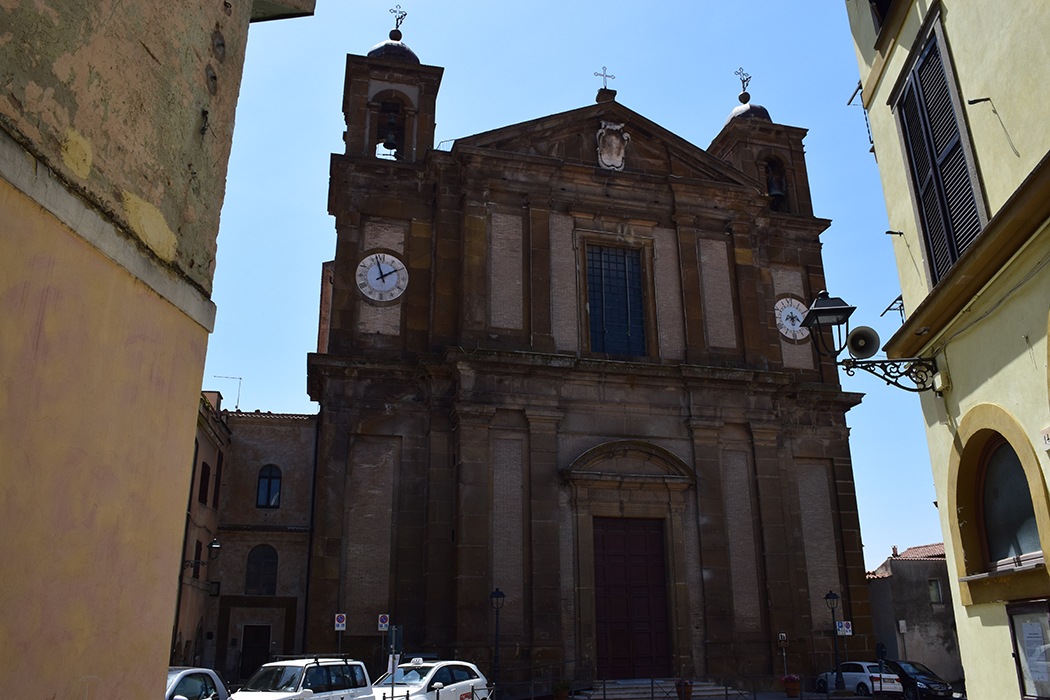
The cathedral of Saint Gregory the Great was built in 1666 by Pope Paul V Borghese.

It is in honour of Pope Gregory who had signed the papal bull of the Gregorian Calendar here.

The design and construction was by Girolamo Rainaldi.

The façade, which looks directly at the valley, has two towers on each side and is characterized by rigid geometrical designs.

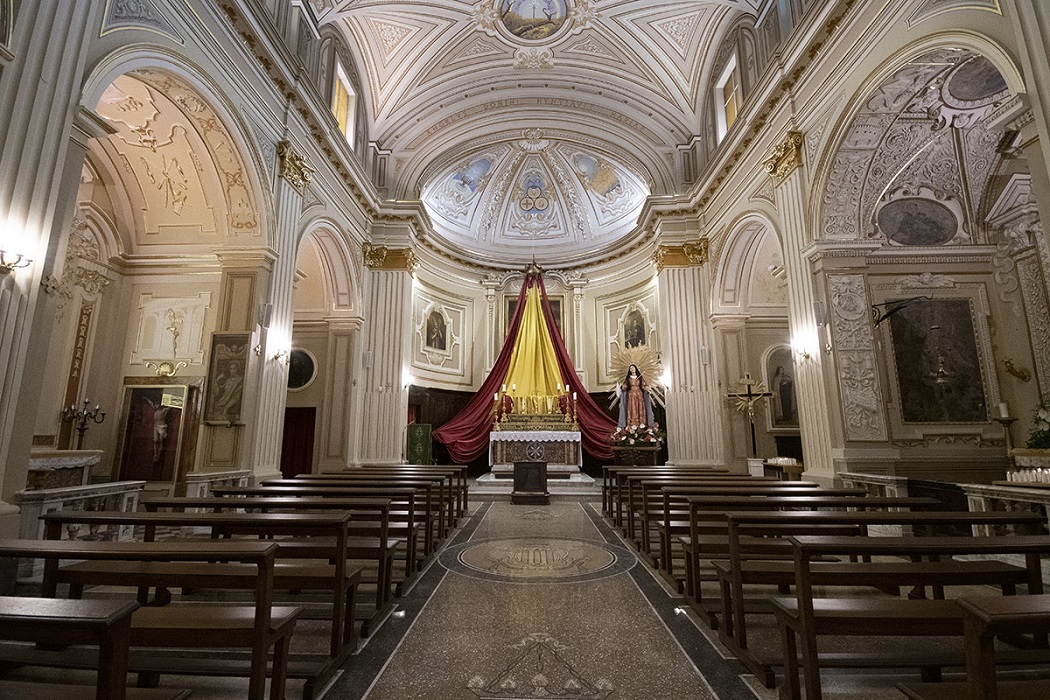
The plan of the cathedral is a Greek cross and inside there are paintings of the seventeenth century.

In the basement of the church the remains of a Roman villa have been found above which was born Monte Porzio.
powered by social2s

The small country church of Madonna degli Angeli was built in Veroli around a medieval image.

The image represents a breast-feeding madonna who was in a niche or 'Cona di San Mauro'.

The niche had been built on the spot where Santa Maria Salome, San Biagio and San Demetrio had stopped when just arrived in Veroli.

Here they had met Mauro with whom they had then begun to spread Christianity.

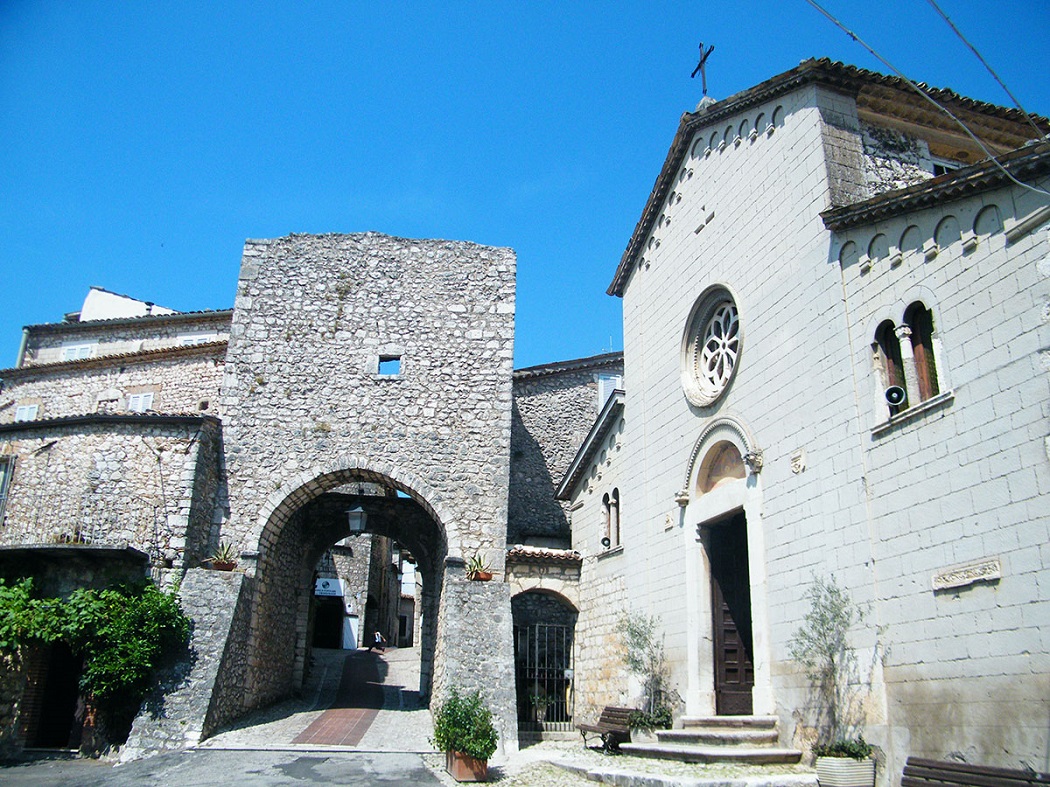
The church has a simple plastered façade with a gabled roof and a small lateral sail belfry next to the building.

The door has a square stone frame and two small side openings.

A circular opening completes the decoration of the façade.

The interior is a single room with beautiful frescoes of the fifteenth century made by Antoniazzo Romano in which you can see the four saints of history (Santa Maria Salome, San Biagio, San Demetrio and San Mauro), a breastfeeding Madonna and the Father who blesses.

powered by social2s

This church of St Francis Bianchi is small round temple in Veroli.

The lower part is made of columns joined by a brick wall and an upper part in smooth plaster that ends with decorations made with bricks.

Next to the building is a small bell tower with a bell.

The chapel dates back to 1794 and is dedicated to Saint Francis  Bianchi, born in Arpino on 2 December 1743 and known as "the Apostle of Naples".

St. Francis began as a university teacher and went to Naples where he began to abandon teaching and to devote himself to meditation and the care of the suffering.

Miracles are attributed to him as when he stopped the eruption of Vesuvius in 1804 and in 1805 with his blessing hand.

His image is found in hospitals next to the sick and his body rests in the church of Santa Maria di Caravaggio in Naples.

powered by social2s
Church of the Holy Cross

It is difficult to define the date of the church of the Holy Cross that has been completely rebuilt several times.

Probably the first church dates back to the 12th century.

It was later destroyed by the earthquake of 1350 and then the 16th century fire.

Some medieval fragments were then inserted into the current facade.

In 1841 the church underwent a radical restoration that perhaps saved only the Romanesque structure with three naves plus the shape of the façade.

The interior appears in neoclassical style and the walls are all decorated with stuccos.

The last restoration dates back to the 1950s on the occasion of the Jubilee year.

powered by social2s

The church of Sant Angelo in villa was built on a previous building of the tenth century, as evidenced by a bull of Pope Urbani II of 1097 that cites this church.

In the 13th century Bishop Loterio built a fortified fortress for soldiers and peasants where several bishops have sojourned.

This fortress was used until the sixteenth century but today it has been virtually lost.

The current church dates back to the eighteenth century and has a neoclassical style.

it has a small bell tower with a square plan slightly set back from the facade.

The interior has a Latin cross plan and houses some works of art such as the statue of St. Michael the Archangel of 1832 created by the Neapolitan sculptor Francesco Verzella.

The altar houses relics of Saints Vito and Venanzio and of Sister Maria Fortunata Viti, a Benedictine nun of Veroli beatified by Pope Paul VI

powered by social2s
Church of Saint Michael Archangel 

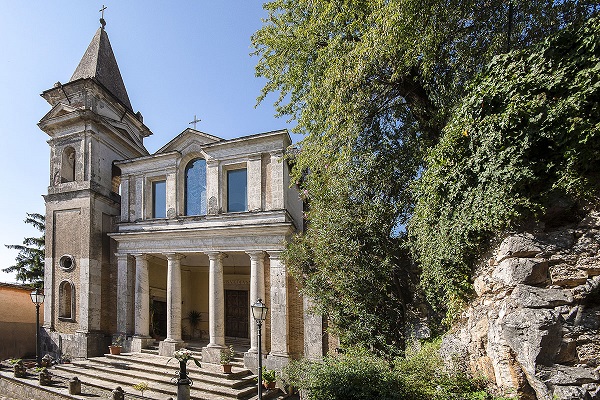
This small church dedicated to the Archangel Michael in Veroli is an unusual set of styles.

The current church was completely rebuilt in the nineteenth century with references to various eras.

The façade is divided into two parts: a staircase leads to a portico with four classic columns above which a marble band divides the two sections.

The upper part is in the late nineteenth century style composed of three large windows of which the central one is decorated with a painted glass window.

Next to the church there is a small bell tower with a square plan with the lower level in bricks and the upper part that recalls the large neoclassical bell towers, albeit in 'miniature'.

The interior is decorated with stuccos and on the altar there is an oval canvas depicting Saint Michael Archangel, a copy of the most famous painting by Guido Reni.

powered by social2s
Church of St Leucio

The small and simple church of St Leucio dates back to the ninth century.

Its small rock facade with a gabled roof is embellished only by a Romanesque door with a frescoed lunette and a rectangular window above the door that lets light into the church.

It is accessed via some steps and on the back you can see a small bell tower with a bell.

The interior has a single nave with two side chapels that have been added later.

The two chapels and the altar area are defined by three large arches with a simple smooth stone frame.

The area of the altar and chapels, dedicated to Santa Salome and the Addolorata, are decorated with frescoes dating back to the XIII-XIV century.

A walled plaque shows the year 1079 for the dedication of the church to San Leucio confessor by Pope Gregorio VII.

powered by social2s
Church of St. Augustine or Santissima Annunziata

The church of St. Augustine or Santissima Annunziata in Veroli dates back to the fourteenth century.

It was annexed to the hospital of the Santissima Annunziata and to the convent of the Augustinians.

The Augustinians had moved after the destruction of their headquarters in 1556 by the Spanish troops of the Duke of Alba.

They repaired the church and the convent and for this reason the church also took the name of St. Augustine.

During the French occupation after the revolution, part of the population took refuge in this convent.

After a period of decline, restoration work began in 1920 by the Confraternity of Death, Charity and Prayer, and Pia Unione dell'Addolorata and reopened.

The last restoration dates back to 1955 while the façade was rebuilt in 1967.

The interior has a nave with an apse and 6 richly decorated side chapels.

powered by social2s

Recommended

Subscribe to Newsletter

Discover a territory through the emotions of the people that have lived it.