Churches & Places of Worship

The church of the Santissima Annunziata is part of the first nucleus of the founding city of Sabaudia and was inaugurated on 24 February 1935.

His rationalist style is found in the austere and daring forms and in the softness of the baptistery.

The church is a square building 22 meters high, 55 long and 29 wide, clad in white marble and red bricks, with an imposing 47-meter bell tower in white marble at its side.

On the façade, in a protected and set back position, a large mosaic was created by master Ferrazzi where sacred and profane are confused: on one side the Annunciation and on the other Mussolini arranging the grain.

The interior of the church is a unique environment with 6 chapels ending in an apse and large windows. Here is the Royal Chapel donated by Queen Elena of Savoy and which was originally located inside Palazzo Margherita in Rome.

The baptistery is a cylindrical building built on one side of the church (opposite side of the bell tower) all covered with white marble.

powered by social2s

The sanctuary of Santa Maria della Sorresca is the oldest building in Sabaudia and its history begins with the Roman Empire. In fact, here there was a villa that dates back to the 1st century AD.

Later transformed by the Benedictine monks in the sixth century into a first convent.

In the twelfth century the complex was arranged in Romanesque style and the small bell tower was built by transforming a watchtower and the monastery was active until the arrival of Napoleon. The current form is given by a further modification in more recent times.

The church is located on the shores of Lake Paola at the beginning of the Annunziata arm and the name 'Sorresca' comes from the word 'surrectum' which indicated a canal.

Inside the church there is a wooden statue of a Madonna and Child from the thirteenth century which is celebrated every year on the Monday after Pentecost with a procession that starts from San Felice Circeo.

powered by social2s

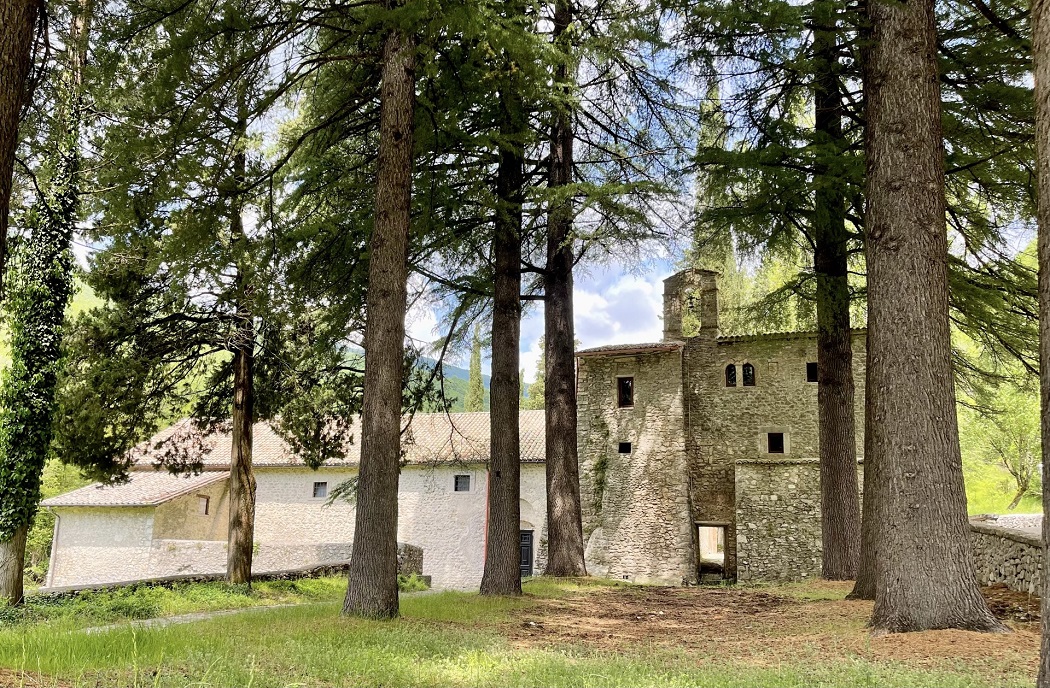
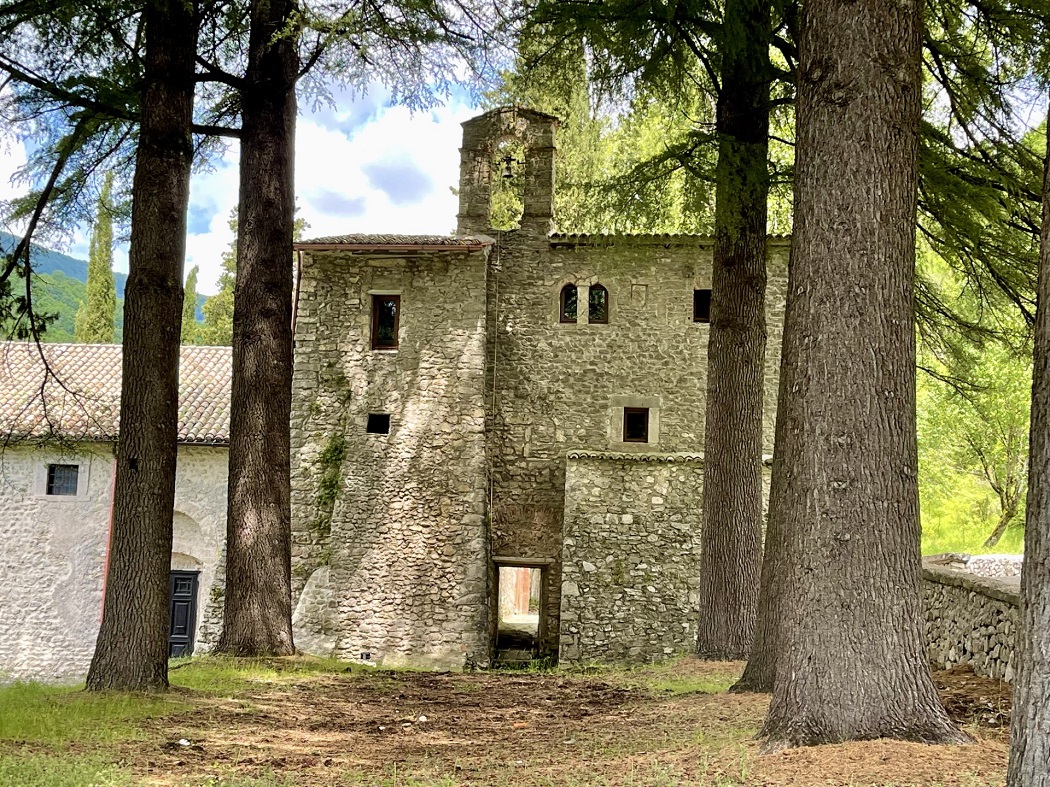
This small country church in Blera is dedicated to the Madonna della Selva.

It is located on the top of a hill in a place where hermits used to stay.

Every year, in the second week of September, the church opens to host the procession that carries the image of the Madonna on pilgrimage before returning it to the village.

powered by social2s
Anzio. Basilica of Santa Teresa of the Baby Jesus

The basilica of Santa Teresa of the Baby Jesus in Anzio and the religious complex are located at the entrance of Anzio, on a hill overlooking the sea, and were designed by architect Alfredo Paoletti in 1925, recalling the Romanesque style.

In those years the sanctification of this French girl occurred just 28 years after her death.

The church was completed in 1939 and was inaugurated by a message from the pope and the religious sisters of the saint. And perhaps this blessing was providential because the sanctuary was saved from the bombing and for a long time hosted the citizens of Anzio during the war.

The facade is made of bricks with an entrance door protected by a small portico, a loggia with three-pane windows and a large central white rose window.

The interior of the church is in the form of a Latin cross with large openings, stained glass windows and a clever use of bricks and cement that give a mystical atmosphere.

The Romanesque style was accentuated by the choice of floor decorations that recall the cosmatesque style.

The central altar is adorned with a marble sculpture representing the saint with a bundle of roses and is protected by a small marble temple. Behind the altar is the choir and the organ pipes can be distinguished.

A side chapel is dedicated to the relics of the saint with a statue that represents her on her death bed and some of her belongings.

A large bell tower of six levels with openings is located in the courtyard in front of the church and characterizes its image from the distance.

powered by social2s
Anzio. Church of Saints Pio and Antonio

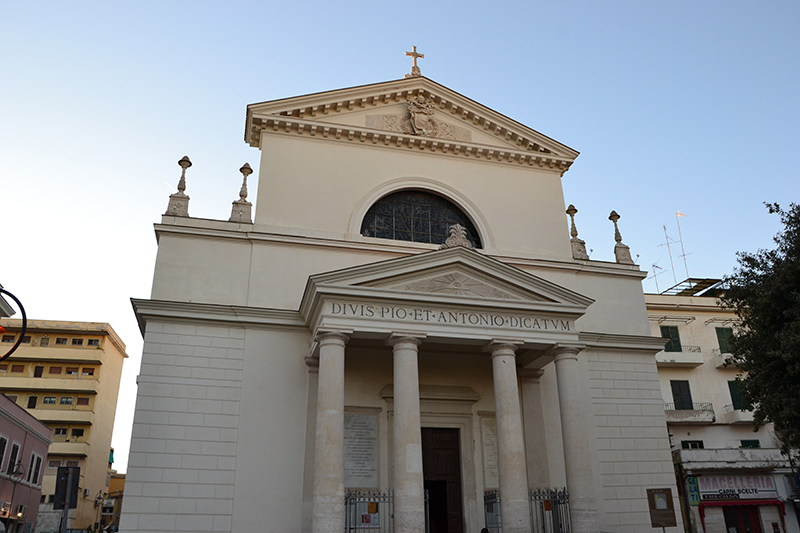
The church of Saints Pio and Antonio is located right in the square next to the port of Anzio.

It was commissioned by Pope Pius IX in 1847 dedicating it to the Saints Pio and Antonio.

The church was completed in 1856 and the Pope went several times to check the progress of the works.

The church has a neoclassical style and the facade consists of two levels and has an entrance portico in the shape of an ancient temple with four circular columns and a triangular tympanum.

The lower part of the façade is wider and is enriched by 4 elegant candle holders made using marble paste.

The upper narrower part has a large semicircular opening and ends with a tympanum that reminds one of the entrance portico.

The church is accessed inside with a staircase while the bell tower with the clock is located at the back of the church.

The design of the structure is by the architect Gaetano Moichini.

The interior has three naves that end with the high altar donated by Pope Pius IX.

He had it removed from St. Peter's in Rome as the Pope wanted an altarpiece representing St. Pius V receiving the news of the victory of the Holy Alliance in the Battle of Lepanto against the Turks in 1571.

The work was realized by Casimiro Brugnone De Rossi in 1856.

Among the other works that adorn the altar there is also a wooden crucifix from the 16th century of the Venetian school.

The whole interior of the church is richly decorated and has been restored after the bombardments of the Second World War.

The church has an ancient organ built in the nineteenth century by the Morettini company of Foligno and subsequently restored.

powered by social2s
Church of St Mary of the victory

The church and monastery of St Mary of the victory are located in the lower part of Percile, near the Aliucci spring and where the municipal cemetery is located today.

Its name and its construction seem to date back to the victory of Charles of Anjou over Conradin of Swabia in nearby Tagliacozzo in 1268. The Angevins had been called by the pope to support him during the struggles between the papacy and the German empire Federico Barbarossa and his descendants.

The story goes that Charles of Anjou had seven churches built dedicated to Saint Mary to commemorate his victory by choosing to place them in the places where his army had stopped.

The church of Saint Mary was built in the Middle Ages on the remains of an ancient Roman temple dedicated to the goddess Alecia and some capitals and portions of the floor can be recognized in the monastery garden.

The interior of the church, on the other hand, appears in the Gothic style with a wooden trussed ceiling and adorned only by a few plaques on the walls.

powered by social2s
Church of St Lucia martyr

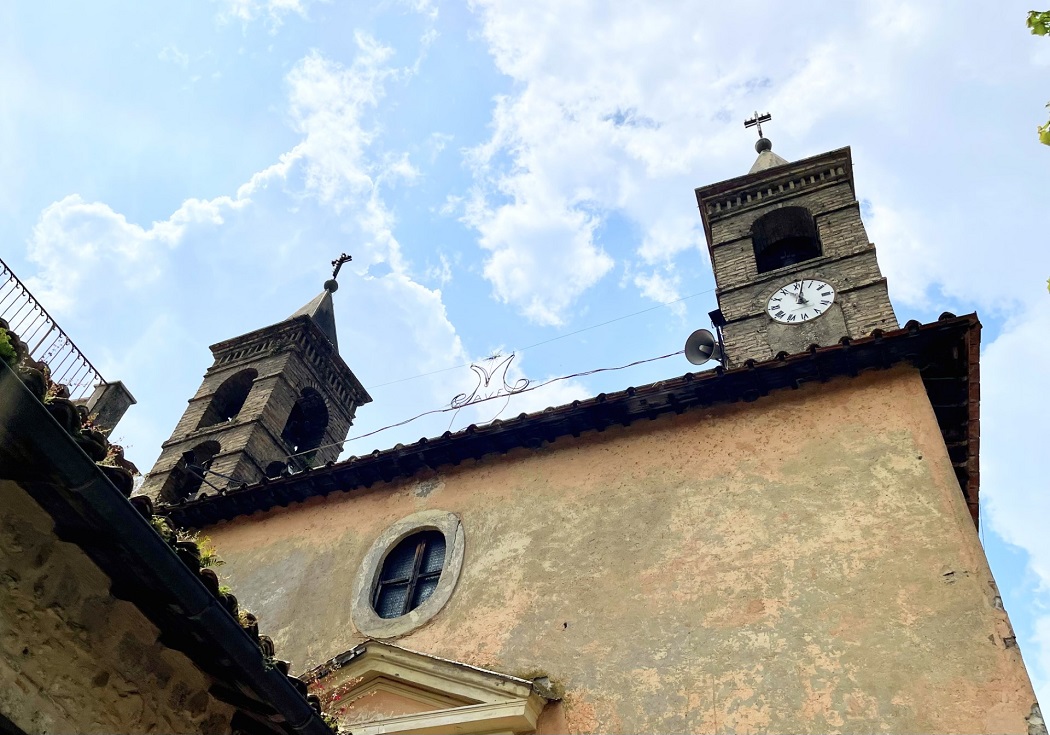
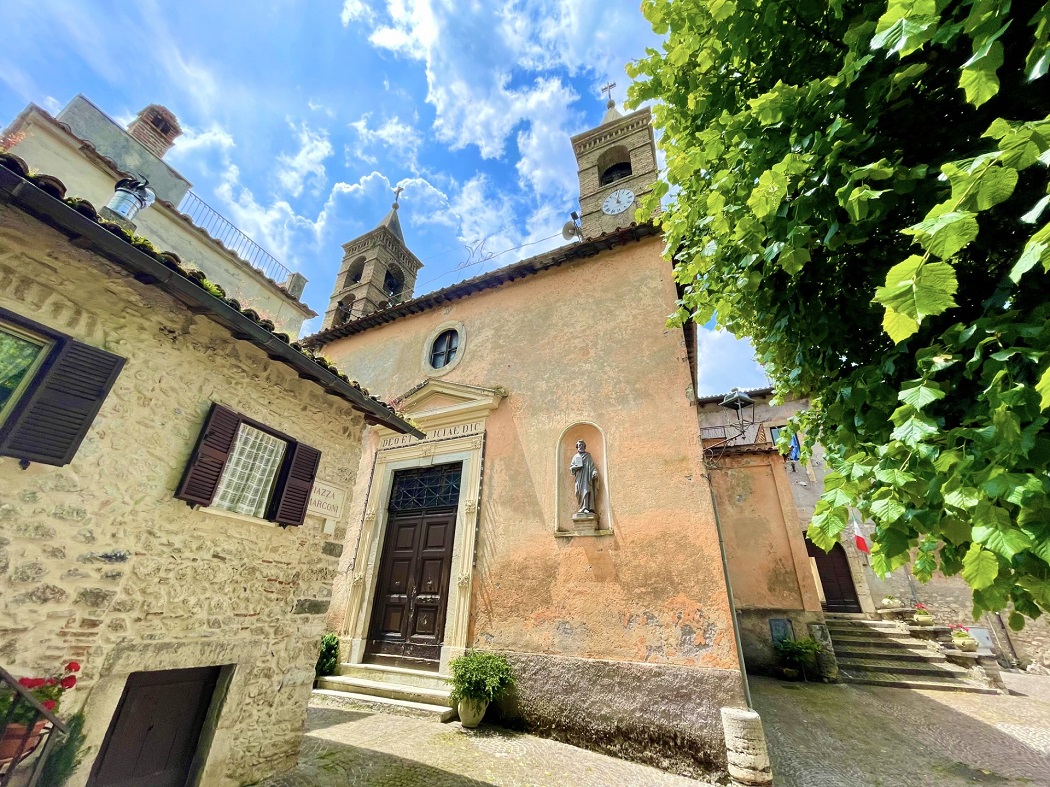
The church of Santa Lucia martyr is the symbol of Percile because with its twin bell towers it dominates the image of this village on the border between the Aniene Valley and the Sabina. Santa Lucia is the patron saint of Percile.

The church is joined to the Borghese castle and was initially the chapel of the castle even if its current form should date back to the fifteenth century.

A first major renovation took place during the 16th century and mainly concerned the interior, while the two external bell towers were only built in 1914.

The limitation of the space in front of the church makes it not very visible and its facade appears that of a simple plaster building adorned only by an entrance door with a marble frieze and two niches on its sides.

The interior of the church of St Lucia is a single room with a coffered ceiling while the altar area and the side chapels are inserted in niches delimited by round arches. The altar stands out from the style of the church due to the Baroque richness of its marbles and among the works that the church holds you can admire a wooden crucifix, some stones dating back to the Roman period and two frescoes reproducing the Madonna del Rosario and San Domenico .

Above the entrance area is a choir loft which housed an organ.

powered by social2s

The church of Santa Felicita is located just outside the town of Montefiascone and dates back to the sixteenth century.

It was part of the convent of the Capuchin friars mentioned in 1580 in the Chapter of the Cathedral.

The church was dedicated on September 1, 1591 to Santa Felicita.

The friars used it as a lazaretto, that is, a place where the plague victims were housed and it was always a refuge centre.

During the Second World War it was a refuge for displaced people.

The simple facade consists of a central section and two side entrances with a gable roof and only a cornice marking the entrance to the building.

Above the door are a square window and a circular opening.

The interior has a single nave with a vaulted roof and two side chapels.

The simple building is enriched by some paintings of the seventeenth and eighteenth centuries such as a "Deposition of Christ from the Cross" attributed to the Belgian painter Frans van Kasteele (Francesco da Castello).

There is also an eighteenth century altarpiece showing the Madonna della Vittoria with the saints Felicita, Antonio da Padova and Flaviano.

powered by social2s

Recommended

Subscribe to Newsletter

Discover a territory through the emotions of the people that have lived it.