Churches & Places of Worship

The complex of the convent and church of Saint Francis of Canino, was built in the renaissance on a small hermitage where, according to tradition, St. Francis had been standing on his trip to Tuscia.

The monastery is about two beautiful cloisters, one inside and one outside, and the inside was painted in the eighteenth century with the stories of Saint Francis.

The earliest records date back to 1474 when a document of Sixtus IV reports that the convent and church were built through the generosity both of Gabriele Francesco Farnese, son of Ranuccio the Elder, married to Isabella Orsini, and of all the people of Canino.

The convent was occupied until 1868 by the Minor Friars.

The church has a nave with a trussed ceiling.

Inside is a table of 1400s and St. Anthony of Padua and a Madonna and Child with Saints of 1497.
 

powered by social2s
Canino. Church of the Holy Cross

The church of the Holy Cross in Canino has a simple facade of late Renaissance style.

It has a beautiful Romanesque portal with Romanesque capitals and jambs decorated with flowers and leaves.

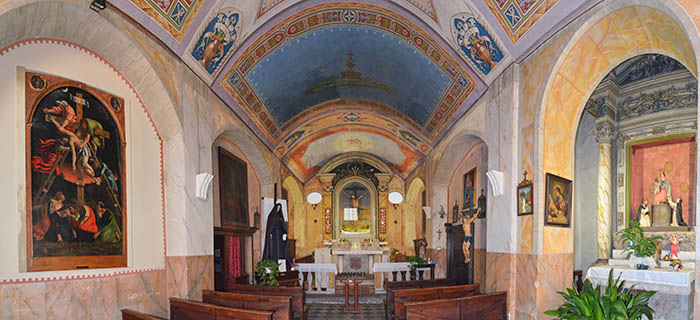
The church has a single aisle and inside there is the beautiful altarpiece of the Deposition of Christ executed in the sixteenth century by the Viterbo artist Monaldo Trofi.

The work is a copy of a concept of ​​Raphael.

The bell tower is a square tower in tuff blocks, called the Clock.

The tower is topped by a Baroque castle in wrought iron.

In a document of an apostolic visitation of 1594, it is said that the church belongs to a local Brotherhood associated the Arciconfraternita del Gonfalone of Rome.

powered by social2s

The church of the Holy Apostles John and Andrew of Canino, dates back to the eighteenth century.

It is famous for the family chapel of the Bonaparte family with the funeral monuments of Charles (father of Napoleon and Luciano), Luciano Bonaparte, his son Joseph died at 14 months, and Cristina Boyer, first wife of Luciano.

The tomb of Cristina has a sculpture attributed to Canova.

The monuments were made of Seravezza marble by the sculptors Laboureur and Pampaloni.

The church contains other valuable works of art such as: a Child Adoration of the fifteenth century, paintings of the eighteenth century saints, a wooden crucifix of the thirteenth century, a Nativity by the Perugino school and the relics of St. Clement.

powered by social2s
Canepino-Chiesa-della-Madonna-delle-Grazie.jpg

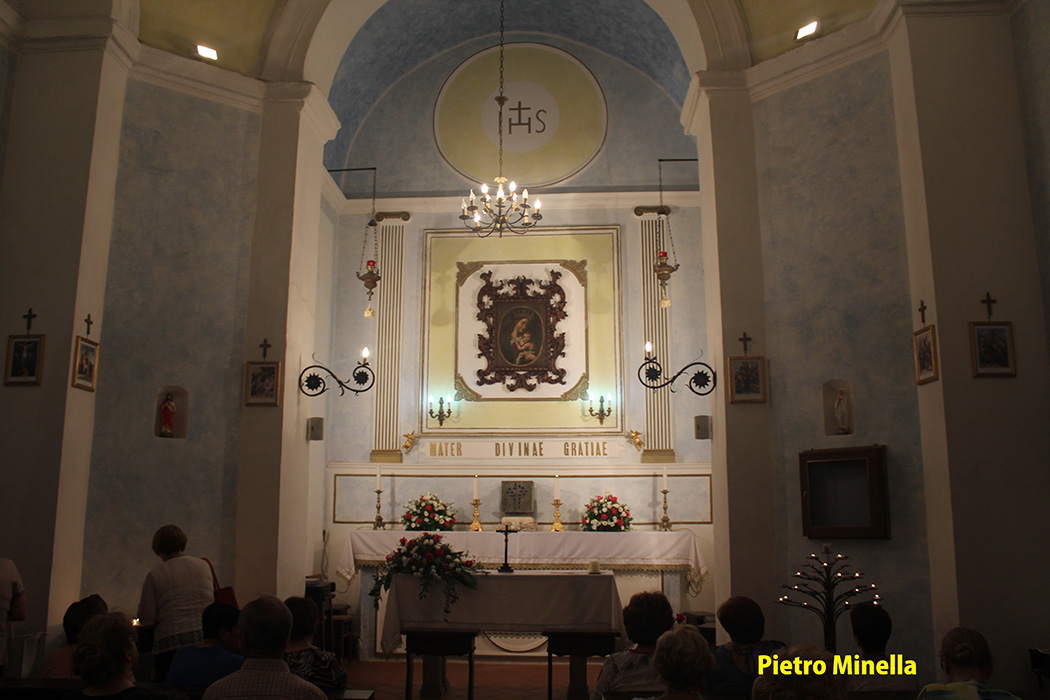
In Canepina, the church of Our Lady of Grace is out of town and has a unique architecture with a square plan with a dome inside a cylinder. 

It was built in the early seventeenth century, in the Baroque period, with material drawn from the crumbling of the Arcella stronghold.

In August, during the Festival of the Madonna delle Grazie, the church is illuminated by small lights for the evening pilgrimage of the faithful.

powered by social2s
Canepina-Chiesa-di-San-Michele-Arcangelo.jpg

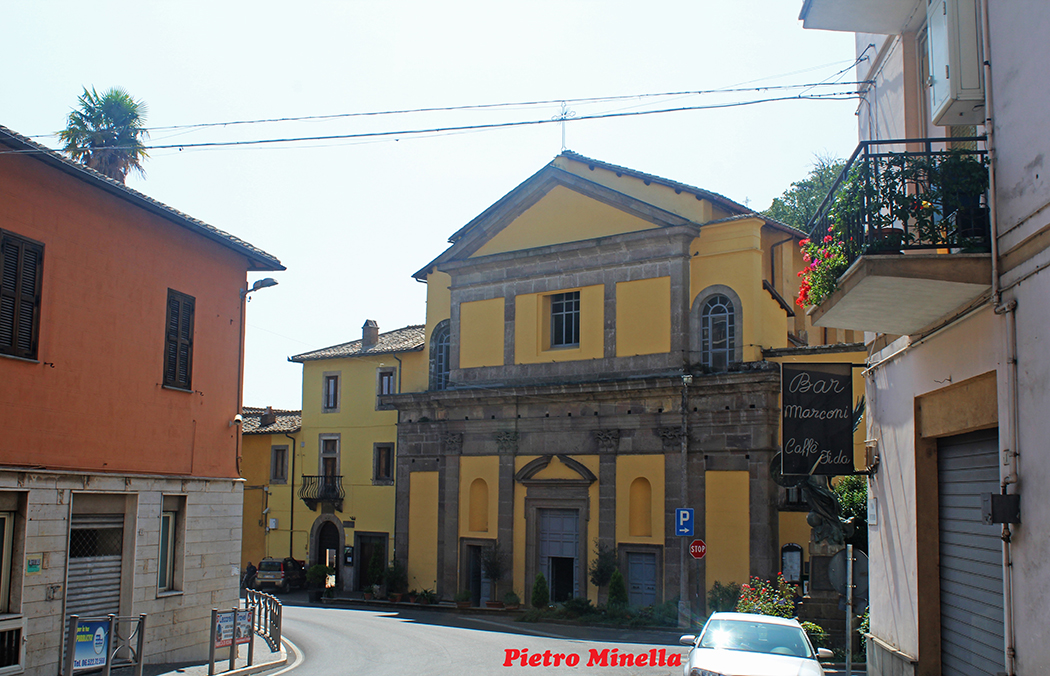
The church of San Michele Arcangelo was built in Canepina on a small church dedicated to Santa Maria del Fossatello built during the plague in 1476.

At the end of the sixteenth century, the Carmelite friars of the adjoining convent enlarged and rearranged it.

For this reason, in this town it is also known by the name of "the friars church" even if it is dedicated to St. Michael the Archangel.

The complex, but not the church, is owned by the municipality.

powered by social2s
Canepina-Chiesa-di-Santa-Maria-Assunta.jpg

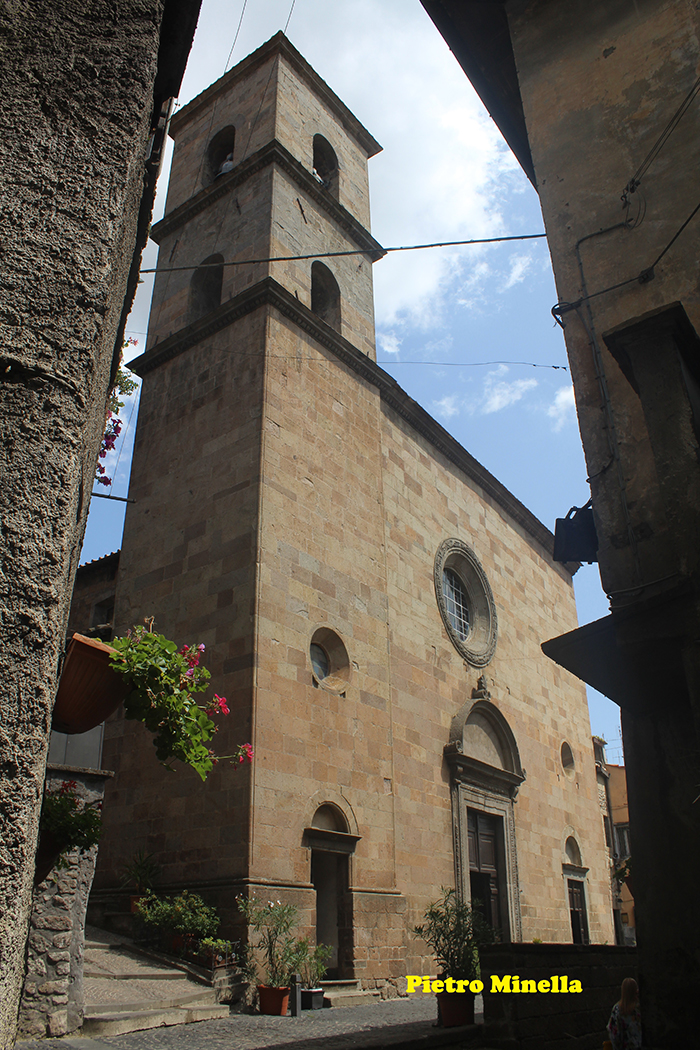
In Canepina, the church of Santa Maria Assunta was erected in 1492 on an earlier medieval building by architect Antonio Cordini da Sangallo called ‘il giovane’.

The church is inspired by and resembles that of the Madonna della Quercia with a simple flat facade of rosacea boulders and a small bell on one side of the facade.

The request of the population to the architect for the design of a facade similar to that of another church refers to a miraculous episode.

Four years before Don Simone Foglietta, a priest of Canepina who used to say Mass every Saturday at the church of Our Lady of the Oak, was accused of having ‘knocked up’ a young girl.

The priest defended himself and said he would continue his normal life to prove his innocence.

Killers of the family waited and stabbed leaving him almost dead.

To Don Simon, who had his stomach opened out, the Madonna appeared and healed him.

After a few years his innocence was proven.

In the church is the statue of Santa Corona, patron saint of the town, which is carried in procession in May.

powered by social2s
Church of the Assumption into Heaven and St Vivenzio
 Church of the Assumption into Heaven and St Vivenzio

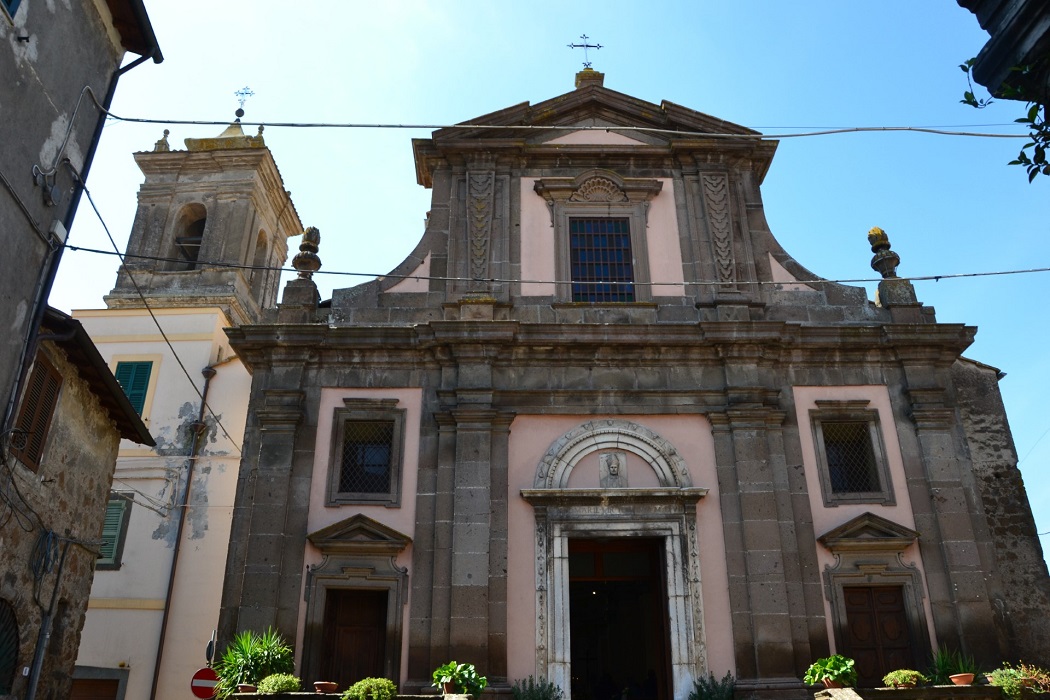
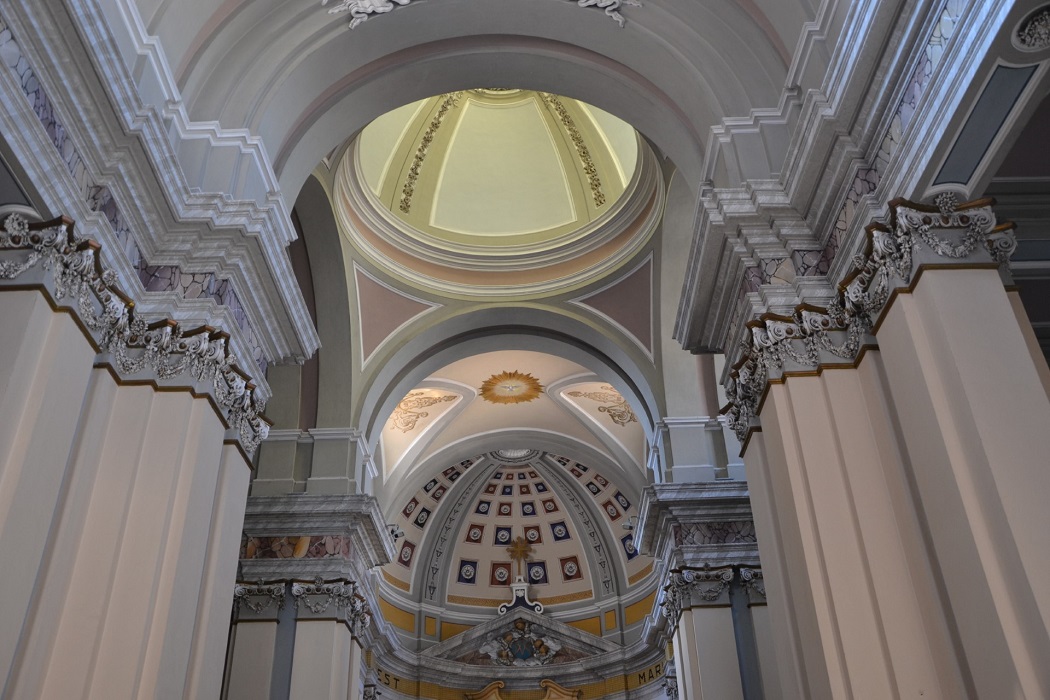
The church of the Assumption into Heaven and St Vivenzio in Blera dates back to the eleventh century.

It was then completely remodeled and the original Romanesque nucleus can be seen in the crypt where the tomb of San Vivenzio, patron saint of the city, is located.

Here there is also a valuable altar made from a Roman sarcophagus with a bas-relief depicting hunting scenes.

The architecture of the church dates back to 1538, as reported in an inscription on an architrave, and has a characteristic sixteenth-century façade.

You arrive through a wide staircase that allows you to reach the level of the second church, that one above the crypt, and then you enter through three entrance doors that correspond to the three naves.

The interior has a classic style with decorations that divide the part of the columns from the roof with a barrel vault.

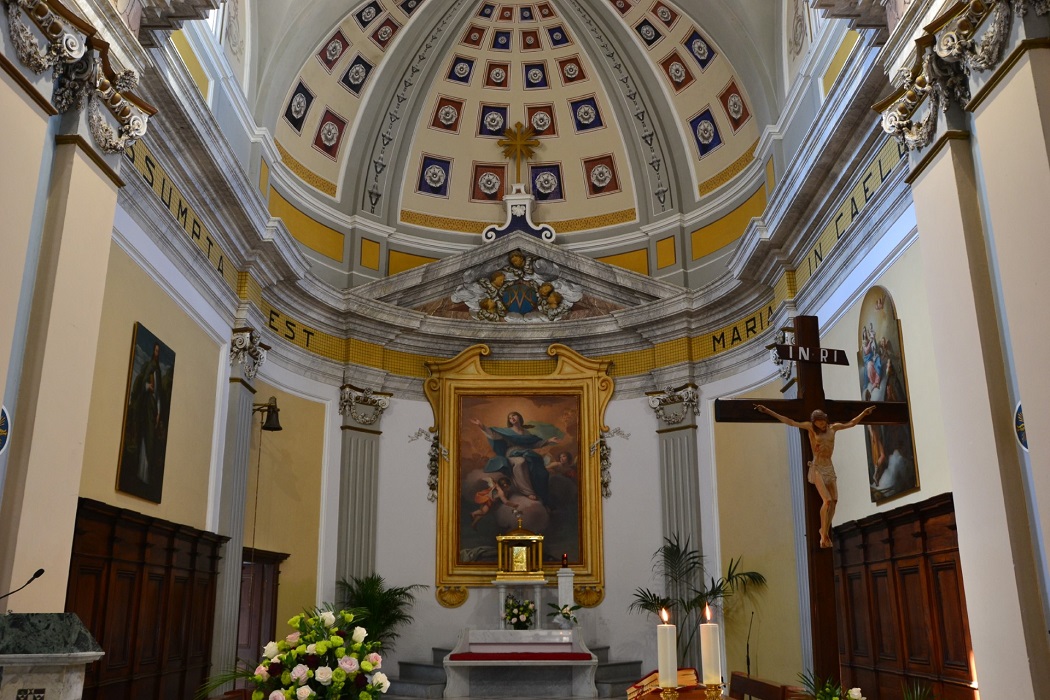
The central nave ends in an area with a choir and an apse. Here is the main altar with a painting of the sixteenth century by Antonio da Bassano with the Virgin ascending to heaven.

The church has a small central dome with a lantern from which light filters in order to give impressions to the whole complex.

Inside there are some eighteenth-century paintings and a baptismal font in carved marble.

A bell tower in the same style is located next to the church and completes its image.

The church is a point of reference for all the faithful of San Vivenzio, who is also the patron saint of the village.

Vivenzio was a hermit who later became bishop of Blera from 457 to 484 when he died and was buried in this city.

There are no certain documents that prove its history but for example, a bull of Pope Sixtus IV of 1471 authorizes the citizens of Blera to sell grain to Civitavecchia so that with the proceeds they can embellish the tomb of San Vivenzio with a bust.

powered by social2s
Bassano Romano. Church of St. Gratiliano Martyr

In Bassano Romano, the church of St. Gratiliano Martyr was built in 1546 in the place where the head of Saint Gratiliano stopped after decapitation.

The church is totally dedicated to the holy martyred patron.

It has a nave with a trussed roof and a semicircular apse frescoes.

Some frescoes depict the life and martyrdom of the saint: his baptism taught by Sant'Eutizio, preaching to Faleri and the process.

Other frescoes recount the miracle of the saint during his imprisonment in Falerii, when he healed from blindness Santa Felicissima, and finally martyrdom and his beheading with the background the representation of Mount Soratte.

Behind the altar there is a canvas of 1757 representing San Gratiliano holding up in his left hand a reproduction of the city of Bassano and with the right the prize of martyrdom, painted by Christopher Bollini from Bassano.
 

powered by social2s

Recommended

Subscribe to Newsletter

Discover a territory through the emotions of the people that have lived it.