Churches & Places of Worship

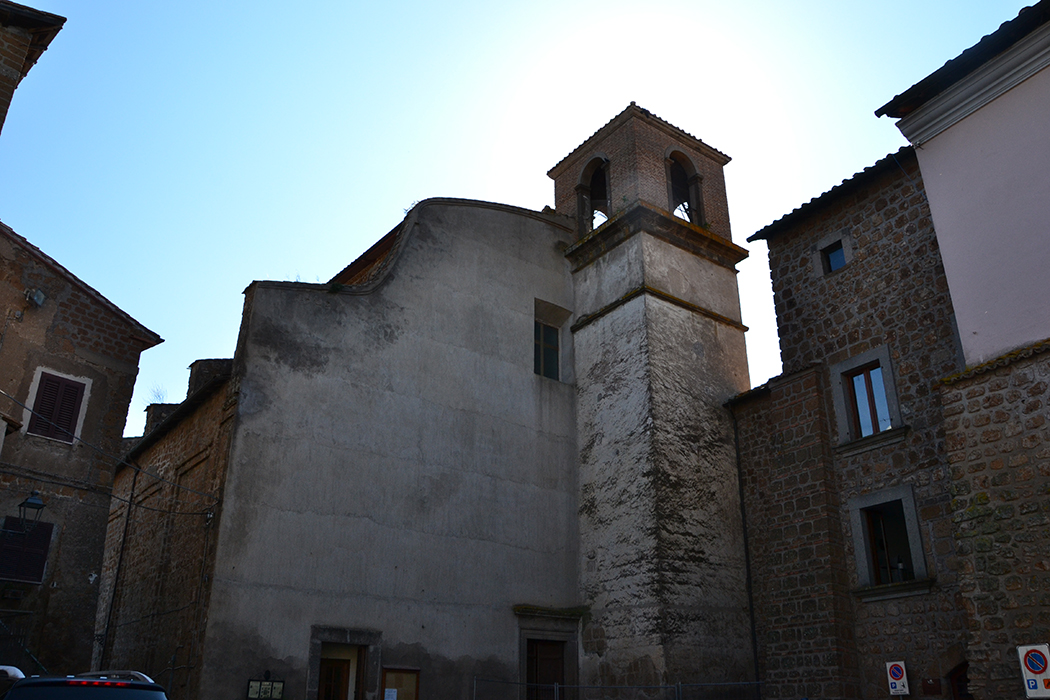
Barbarano Romano. Church of the Assumption

In Barbarano Romano, the church of the Assumption already existed in 1072, as reflected by a registration in the apse.

It had an intial restoration in 1292.

In 1753 was the largest architectural project when the architect Michele Lucatelli rotated the axis of the building.

The square bell tower was rebuilt in 1767.

Inside it has a nave and two aisles and there are paintings of great value such as a fourteenth-century fresco depicting the Virgin Mary breastfeeding Jesus standing next to San Giovanni and Sant'Antonio Abate.


powered by social2s
Acquapendente. Church of St. Francis

[metaslider id="109709"]
In Acquapendente the church of St Francis (San Francesco) is built prior to the birth of the saint.

It changed its name in 1253 when it was entrusted to the Franciscan friars.

Next door is the bell tower with three floors of the Renaissance period, which dates back to 1506, but with a portal of the eleventh century.

Originally the church had the gothic style and was then rearranged according to a baroque style in 1747.

powered by social2s
Acquapendente. Cathedral of the Holy Sepulchre

[metaslider id="108650"]
In Acquapendente, the cathedral of the Holy Sepulchre is historically belonged to the Benedictine order.

It owes its name to a rock stained with blood that is said to come from the Holy Sepulchre of Jerusalem.

The relic is under the Romanesque crypt that is one of the most important and characteristic in Italy both for its origin of the X-XI century that features 24 columns that form a particular 'game' of shapes.

The crypt is adorned with the XIII-XV century frescoes.

With a double staircase carved into the stone you arrive up to the room that houses the relics: the stones wet from the blood of Christ during the Passion.

The size and orientation of the chapel are those of the Holy Sepulchre of Jerusalem.

During the Middle Ages the church was frequented by pilgrims and crusaders, being located along the Via Francigena.

The church has a special facade with two bell towers on the sides and is enriched by a niche with a bust of Pope Innocent X.

The sculpture is a copy of a 1652 statue by Alessandro Algardi, which is kept in the bishop's palace.

The building has undergone many modifications of arrangement and beautification.

The interior has a Latin cross with three naves and there are valuable works such as the two bas-reliefs by Agostino Duccio representing the Angel and Victory of St. Michael over the dragon and St. Raphael the Archangel with the small blind father Tobia.

Behind the altar is the fine wooden choir from 1685, decorated with carved angels

Aat the end of the central aisle is a travertine baptismal font depicting the twelve apostles, and which dates back to the fourteenth century.

powered by social2s

The church and convent of Santa Maria delle Grazie in Zagarolo were built from the transformation of a shrine with a miraculous image of the Madonna and a small hermitage.

The place had become a pilgrimage destination and the church and convent were commissioned by Cardinal Giovanni Colonna, bishop of Sabina, in 1200.

It was assigned to the Franciscan friars and it is said that Saint Francis passed through this convent.

The church and the sanctuary underwent profound modernization during the eighteenth century.

In its construction, Roman remains were used, such as the two columns of the portico.

Inside the church there are precious works such as a triptych painted on wood from 1200 placed on the high altar with a Madonna and Child in the center and images of San Lorenzo and San Giovanni Battista on the sides.

Another important work is an 18th century canvas of a Madonna between San'Agostino and San Giovanni Evangelista made by the Roman painter Gerolamo Pesci.

Some members of the Colonna family are buried in the crypt of the church.

The feast of the Madonna delle Grazie is celebrated on August 15th.

powered by social2s

The collegiate church of San Lorenzo was built in Zagarolo on the remains of a church of the tenth century and has had several architectural interventions over the centuries.

The façade is attributed to Carlo Maderno and, at the top, closes with a high tympanum supported by two rows of pilasters.

The left wing of the church ends with the bell tower.

The plan is a Latin cross and inside are preserved significant works of art, including a triptych of the SS. Salvatore, painted at the end of the 16th century by Antoniazzo Romano, works by Cavalier d'Arpino and stuccos from the 17th century.

powered by social2s

The church of Saint Peter was built by the Rospigliosi princes in Zagarolo at the beginning of the 18th century on another older one.

The plant has a longitudinal axis along which the area of ​​the faithful and the deep presbytery dedicated to the priests are developed.

The sinuous façade has a single order, and from concave it becomes convex on the sides, denoting a certain theatrical influence of Borromini's baroque style.

The vertical development accentuated by the light that penetrates from the large windows under the lantern that give a sense of lightness.

The huge dome decorated in pure gold.

powered by social2s

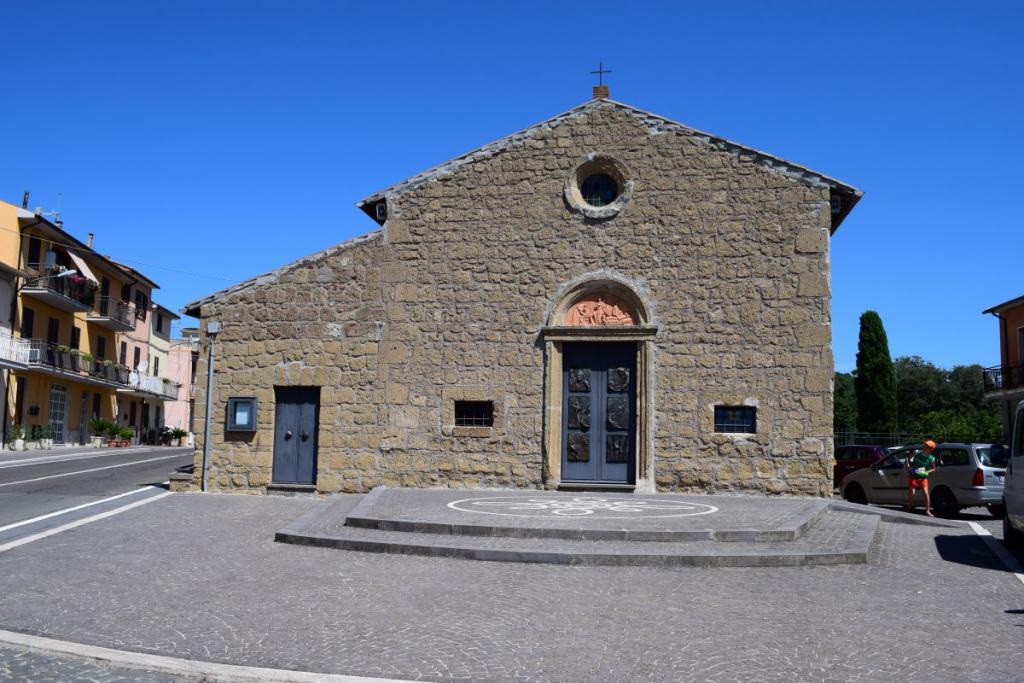
The church of Holy Trinity di Anguillara Sabazia is located near the cemetery outside the historic center, and dates back to 1689 when a small chapel was enlarged which had the effigy of the Madonna with San Giuseppe and San Domenico.

The church was built thanks to popular contributions and 5 years later the bishop donated some relics to the church.

The building has a single nave with an altar above which there is an image of the Madonna and Child, probably a part of the original one from which the church was born.

The church also has a beautiful marble stoup and a bell from 1807.


powered by social2s

Recommended

Subscribe to Newsletter

Discover a territory through the emotions of the people that have lived it.