Churches & Places of Worship
In the hamlet of San Giovenale of Leonessa, surrounded by greenery, is the Sanctuary of Madonna of Paolina.
The church takes this name thanks to the appearance of the Virgin to a woman of that place named Paolina Giovannoli.
The event was accompanied by a twofold miracle: the flow of a spring and the healing of a sick person.
In honour of this event a well and a rural chapel were built in 1665.
The building was destroyed by the earthquake of 1703.
Due to the great devotion a new church was built in 1770.
The name of the church of Santa Maria of the Visitation or of the Image in Leonessa is due to the fact that it is built probably in place of a devotional niche in which the image of Our Lady was worshipped.
Here St. Joseph in 1608 accomplished the miracle of resurrecting an ox that died as he threshed the grain, and for this the inhabitants of Leonessa are very close to this church.
With a single nave, it is mentioned for the first time in 1393, and inside there is a cycle of 15th century frescoes of the Umbrian school.
SAMSUNG CSC

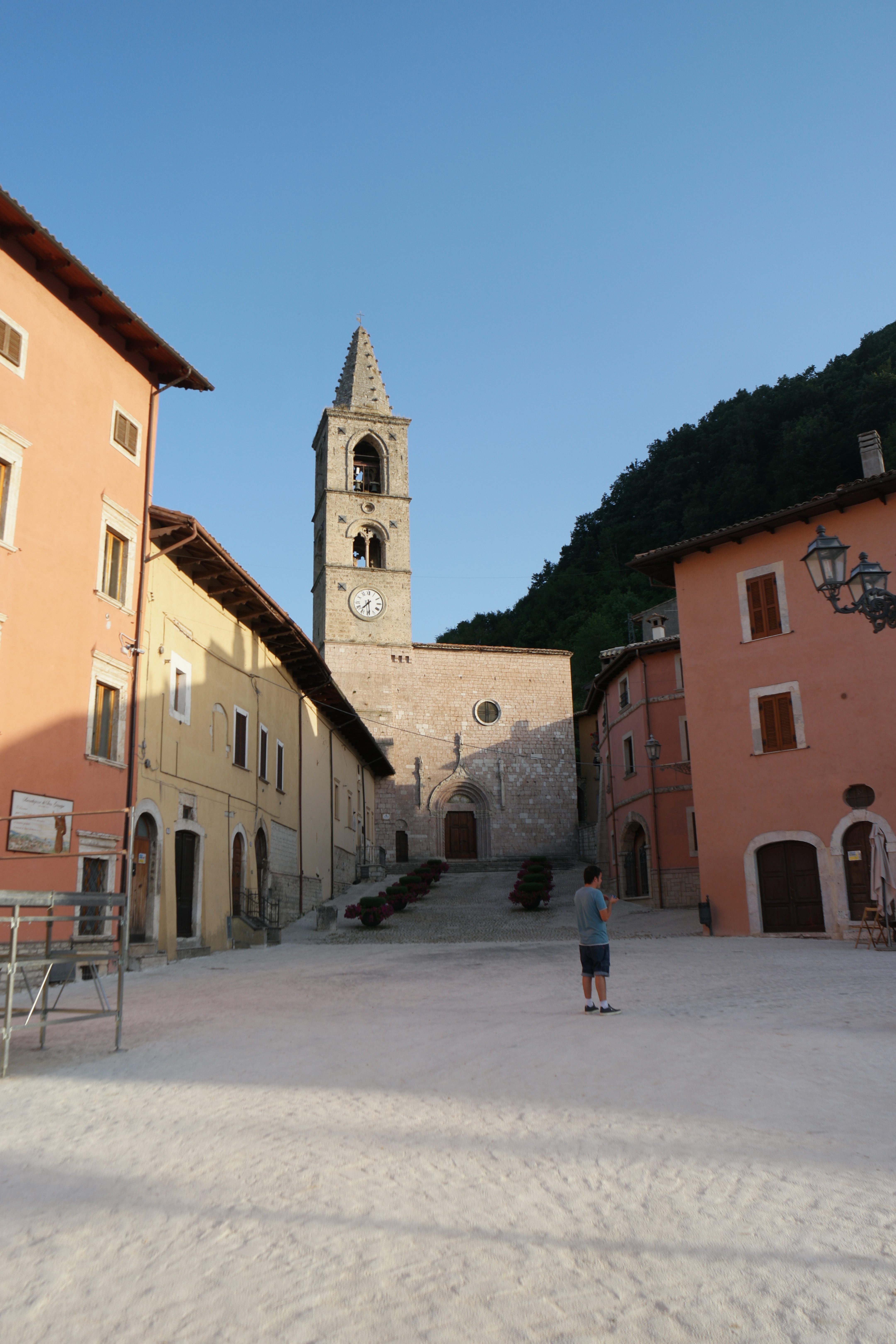
St. Peter’s church is one of the most important churches of Leonessa also from the civil point of view.
Inside, until the end of the 17th century, the Priors swore their oath of allegiance in the presence of the Abbot of the Augustinians.
The church comprises a lower church named Santa Maria delle Grazie probably dating back to the year one thousand and an upper church built around the 15th century.
The Romanesque facade is enriched by a Gothic portal with alternating smooth and spiral small columns crowned with Corinthian capitals.
In the lunette are frescoes with Augustinian symbols.
The church and monastery of St. John Evangelist in Leonessa has several times been closed and reopened during the last three centuries.
It shows precious crucifix and the Virgin, St. John the Evangelist and Saint Francis, that is probably the work of an Umbrian master of the XIII-XIV century.
In Leonessa, in the middle of the corso of St. Joseph is the church of Santa Maria del Popolo or of the Priests, so called because between the XV and XVI century they merged the parish priests of the Sesti (districts).
The church, dating back to 1300, was expanded in the second half of the fifteenth century due to the great importance it had acquired.
From a single nave to three aisles, and the red local stone facade was expanded in continuity with the original.
The portal is decorated with rich symbolic motifs.
In 1736 it became Collegiate with 12 canons.
The church of San Carlo Borromeo in Leonessa has a single nave and four altars on the sides.
It was built in the first years of the seventeenth century and then it was severely damaged by the earthquake of 1703.
Promptly restored, it was embellished with the construction of the dome finely painted probably by Viscardi.
Behind the great altar is a rich baroque decoration made by Bisini in the eighteenth century representing glory, and on the sides are medallions with San Carlo Borromeo and St. John the Baptist.
SAMSUNG CSC
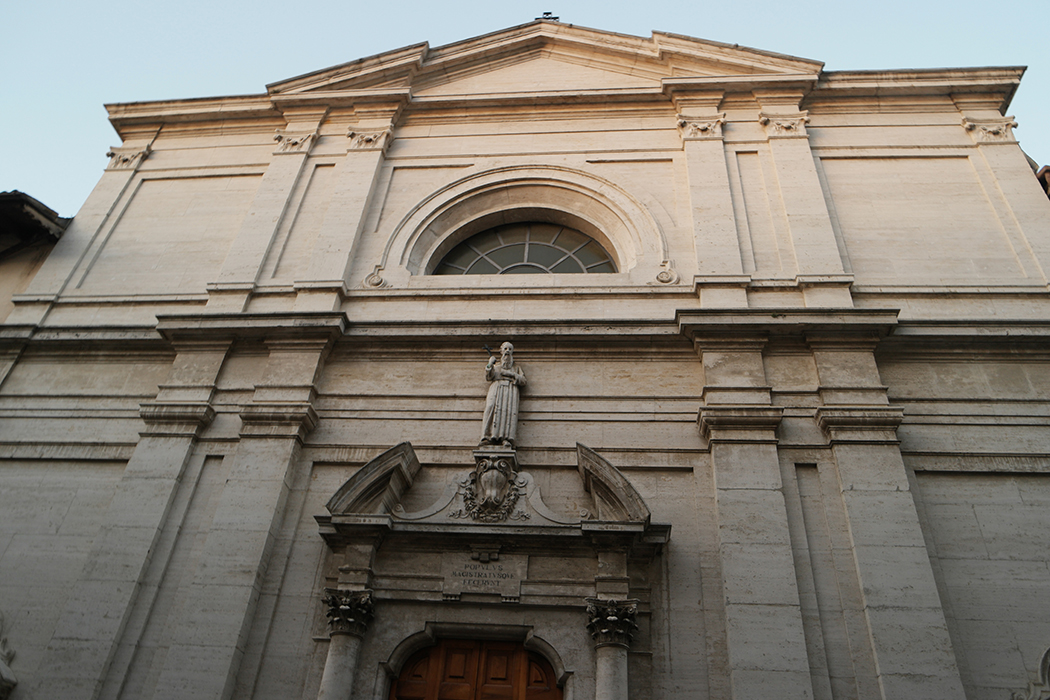
The shrine of Saint Joseph of Leonessa is a good example of baroque architecture.
It preserves the remains of the saint, among which the still intact heart is enclosed in a seventeenth-century silver reliquary box.
The sanctuary is the heart of the town of Leonessa that venerates the saint as its heavenly patron.
In the sanctuary, one finds the Museum Don Pio Palla that preserves sacred vestments and objects dating back to the era of construction of the sanctuary.
The organ was made by the German organ builder Giovanni Corrado Werlè (1759).
SAMSUNG CSC
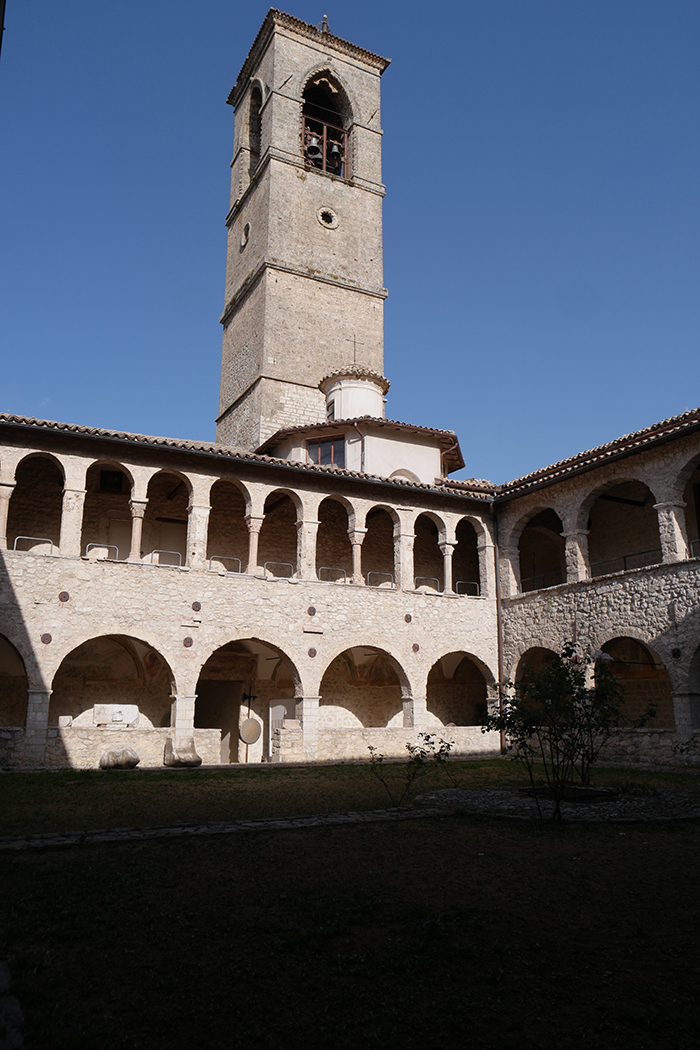
The church of St. Francis in Leonessa dates back to 1200 and construction work continued in the following centuries, as evidenced by the complexity and irregularities of the structure.
The simple façade used a local red stone, typical of Leonessa’s religious architecture, and is enriched by a carved portal depicting a lamb between two lions.
The church has three aisles with chapels on each side.
The bell tower dates back to 1539 and the church had an annexed Franciscan convent closed in 1809 by Napoleonic laws and that today has become a cultural centre.




Follow us