Churches & Places of Worship

FOTO CLAUDIO PASQUAZI
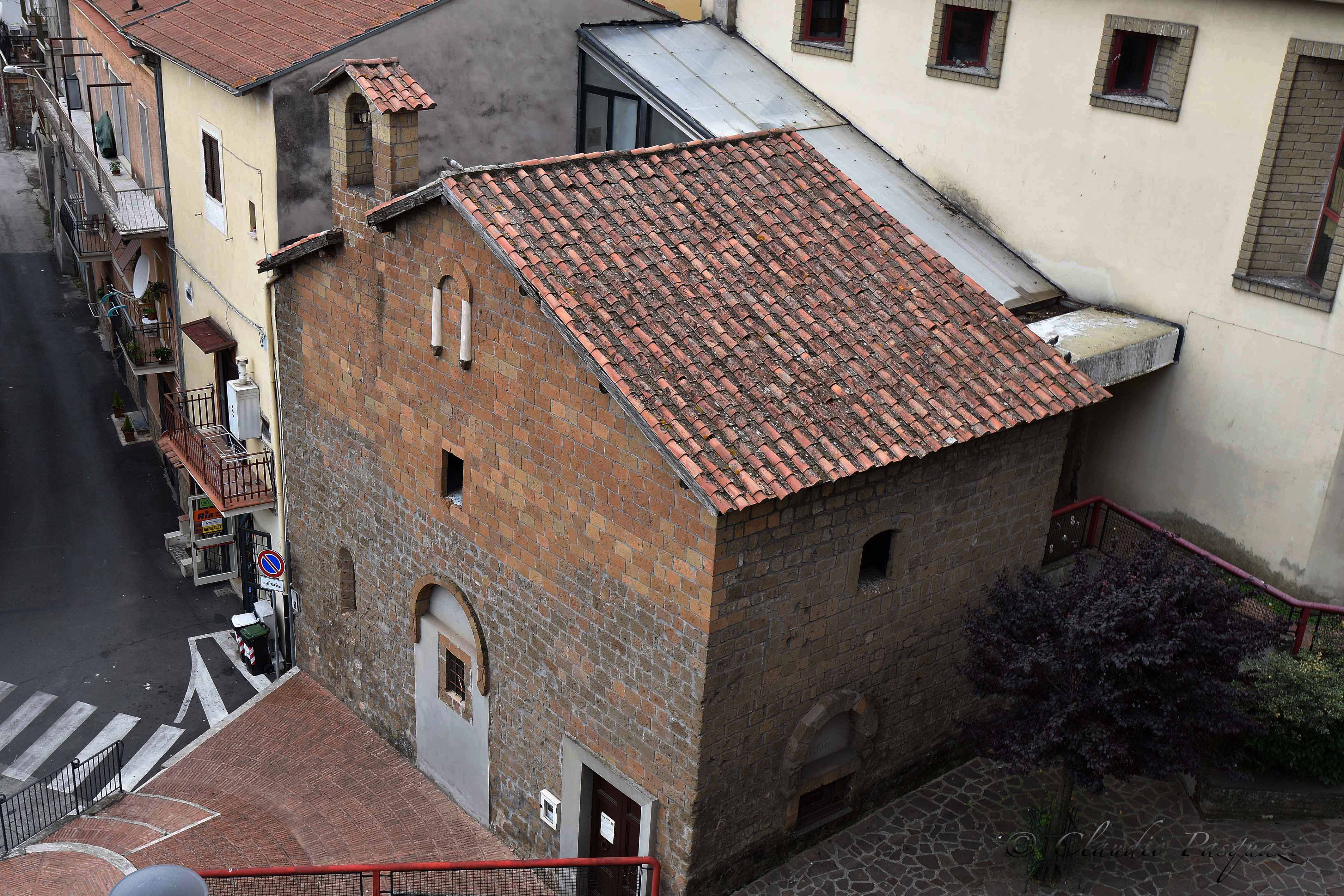
Valmontone. Church of Saint Anthony

Even this small church of Sant’Antonio di Valmontone did not survive the bombings of the last conflict, however it is practically the only medieval building that has not been completely lost in Valmontone.

Its real name is Santa Maria delle Grazie and it was built in the 11th century in Romanesque style: tuff blocks were used for the construction, the facade enriched by two small blind windows, one of which decorated with a small arch.

The interior is decorated with Baroque stuccoes, a Madonna with her Son and a Saint Anthony the Abbot, both anonymous.

powered by social2s
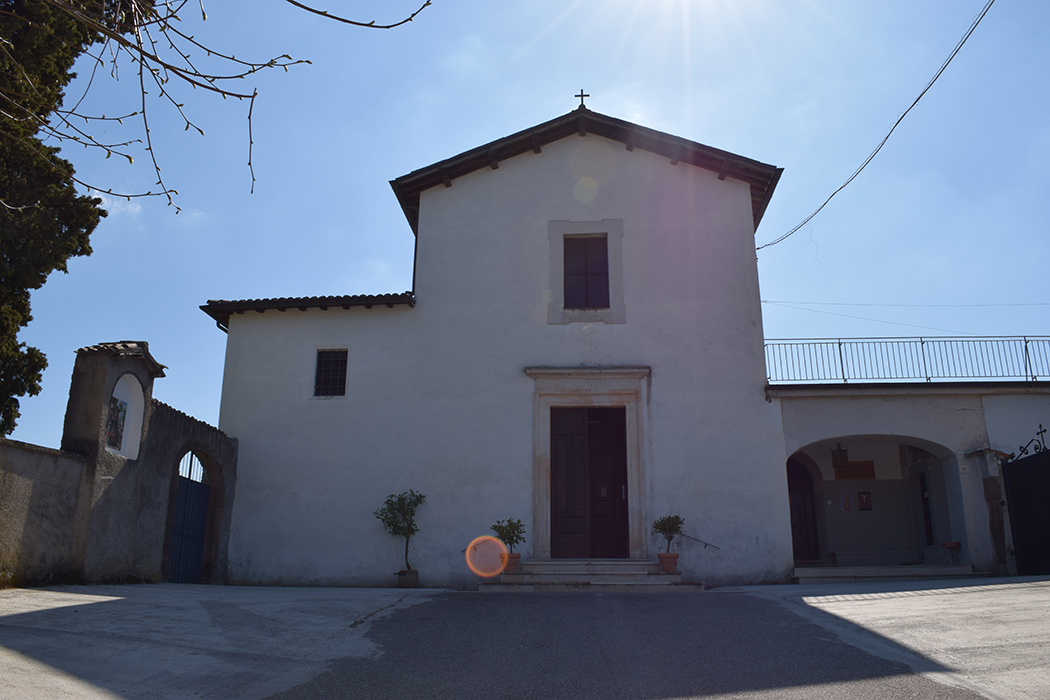
Segni. Church of Pratoro

The small country church of Pratoro is located outside the town of Segni along the road that leads to Roccamassima.

The church was part of a monastery built in the fifteenth century by Basilian monks, who were inspired by St. Basil the Great.

It has the classic style of country buildings with a plaster façade characterized by a central door with a cornice and a lunette in white stone.

On the sides of the door there are two small square openings and a round window in the door.

The church has a gabled roof and has a small bell tower with one bell.

The interior is a single room with a wooden gable roof and the background facade has an altar in different coloured marble with a Renaissance style painting of a breastfeeding Madonna.

The sides of the painting and the other walls are also decorated with frescoes.

powered by social2s
Segni. Convent of the Capuchins

The Convent of the Capuchins was built in the town of Segni during 1592, thanks to a legacy of the will of Mastro Pietro Fratepipari who donated a thousand scudi to make a convent.

However, the works were soon suspended because the chosen site was isolated and under threat by bandits.

The works were then resumed in 1602 and ended in 1606 and the convent was the site of a school of theology dedicated to the religious youth. The convent was then sold by Napoleon during his period of Italian conquest in which he sold many church assets to private individuals.

In 1905 it was then bought back by the Capuchin friars at a public auction and during the war it hosted many families of Segni giving them water and food.

powered by social2s
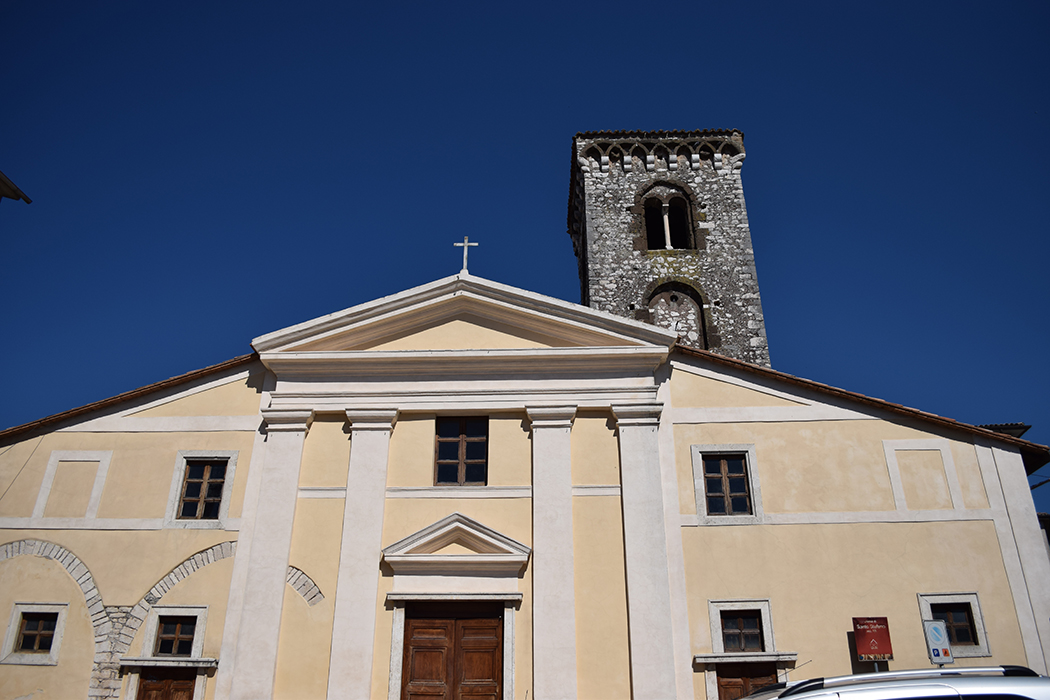
Segni. Church of Saint Stephen

According to a tradition, the church of St Stephen was built between the first and second century on the initial place of christian worship in Segni, transforming a synagogue.

In fact this area was also called Judea.

The current church was rebuilt after the fire of 1557.

It presents a neoclassical temple-shaped facade between two buildings that have roofs with the same incline as the facade.

Next to the church, at the back, is a medieval Romanesque bell tower that ends with a flat roof and two types of openings.

powered by social2s
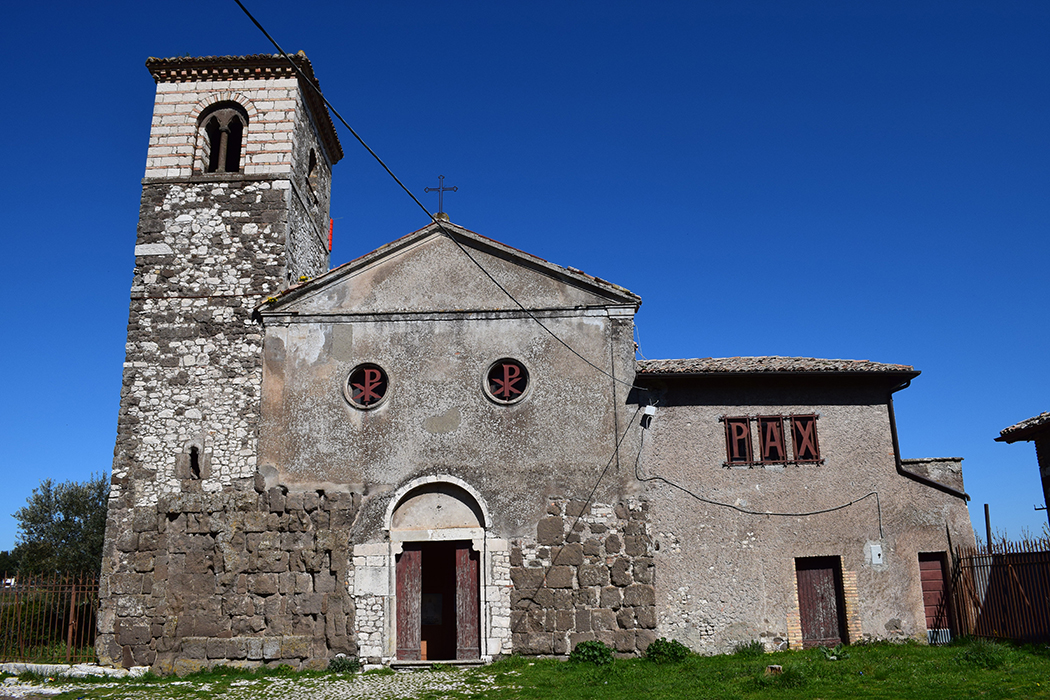
Segni. Church of Saint Peter

The church of St Peter is located on the highest part of Segni which once was the acropolis of the city.

Probably it is on the site of the pagan temple.

On the stone walls of the church we can recognize in the low parts polygonal walls followed by different layers of stones with different structures that correspond to different eras.

The church is accessed via a wide paved walkway that leads to a simple facade with a Romanesque door, two circular openings and a gabled roof.

Next to the church is a Romanesque bell tower, also on a foundation of a previous construction, which ends with a single window.

The interior is a nave decorated with a fresco of the twelfth century that represents a Madonna with Child.

Two others frescoes represent St. Sebastian and the Virgin enthroned between Saints Lorenzo, Stephen and Vitaliano.

Among the other works there is a painting from the 1500s and an altarpiece made by Tadolini in 1907.

powered by social2s
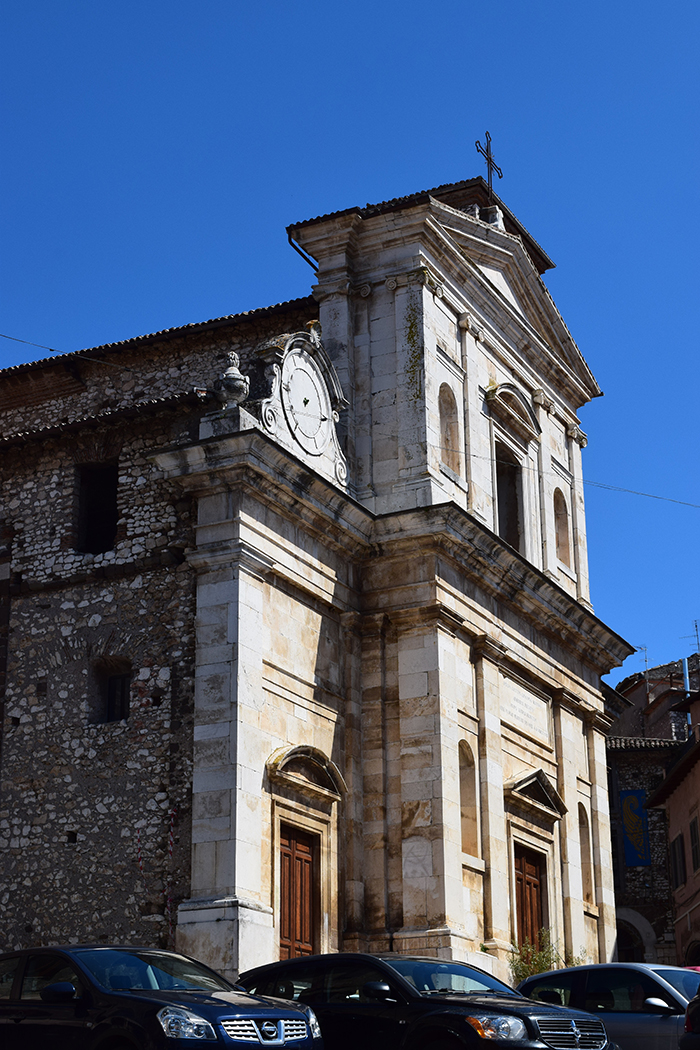
Segni. Cathedral of Santa Maria Assunta

The church of San Bruno, now Co-Cathedral of Santa Maria Assunta, was built on a previous Roman foundation.

Over time has had many changes and renovations that also include a change of orientation of the building.

Around the tenth century, the village of Segni moved to a side of the hill and this made it necessary to give more significance to the church in a lower part of the town.

The medieval church dates back to the tenth century and was upgraded by the best craftsmen of the time such as the Cosmati and the Vassalletto, families of artists in marble work. It was completed in 1185 by Bishop Pietro and had a single nave with 16 side chapels and a crypt.

The medieval church was damaged in the wars during the Sack of Rome in 1557 and in 1626 it was totally rebuilt by the architect Giovan Battista Roderi.

The new building has a Greek cross shape with three naves, with three major and four minor chapels and a frescoed central dome. It was consecrated on 23 April 1684 by the bishop Francesco Maria Giannotti and dedicated to the Virgin Mary Assunta in Cielo.

The interior is finely frescoed and decorated with paintings and other works of art and the altar and the white floor were introduced in 1875 on the occasion of the Jubilee.

A chapel is dedicated to San Bruno, with the relics of this saint who died in Segni and is the patron saint of the city. A large organ of 1855 completes the charm of the cathedral.

The white limestone façade is in neoclassical style and dates back to 1817.

The 11th-century medieval bell tower, 24 meters high, is divided into five levels with windows in the shape of single, double or triple mullions.

On the front of the church there are two clocks, corresponding to the entrances on the two side aisles, which date back to 1933.

powered by social2s
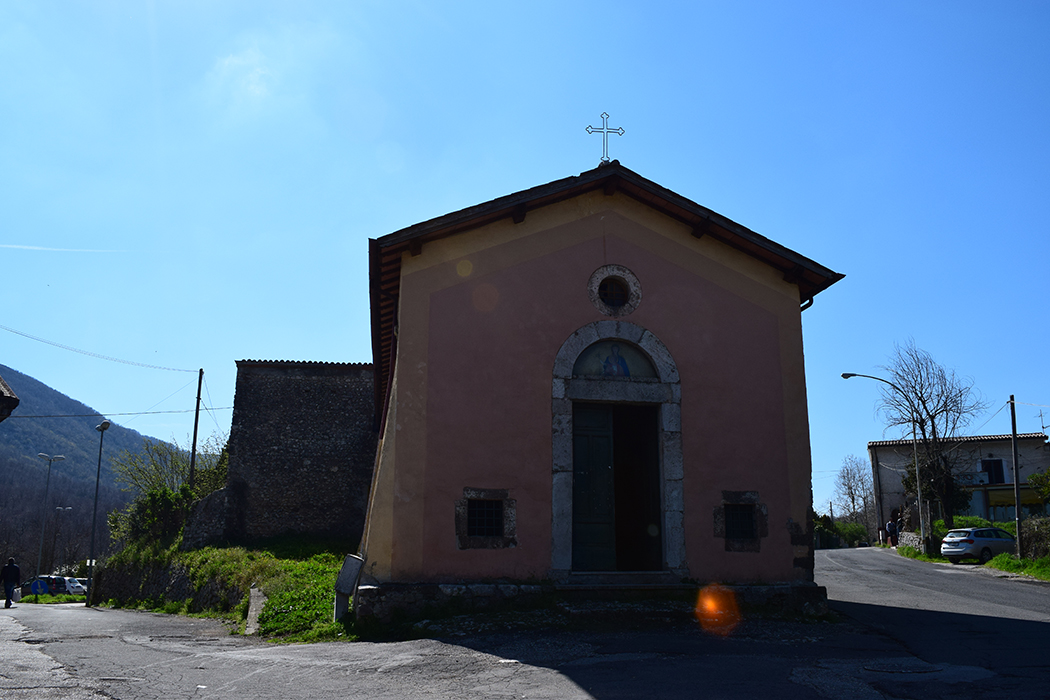
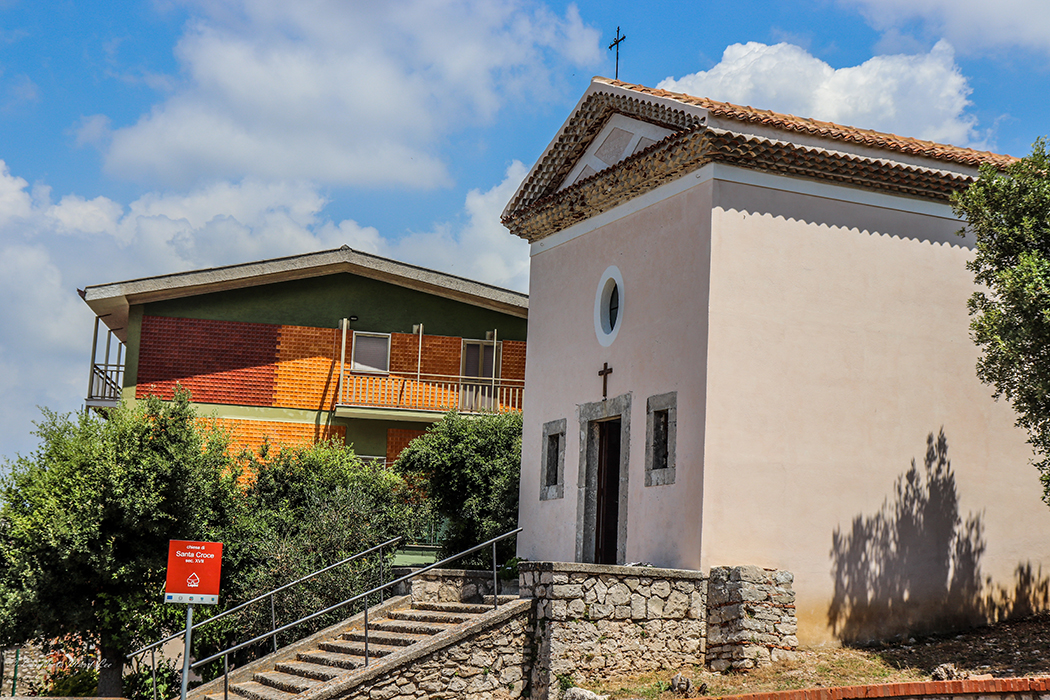
Roccasecca dei Volsci. Church of Santa Croce

The small seventeenth-century church of Santa Croce in Roccasecca dei Volsci is has the classic sober style of the buildings for worship in the country.

It has simple façade and an entrance door with two openings on the sides framed with stone slabs that can be reached through a flight of steps.

There is a round opening in the centre of the façade and a gable roof with brickwork decoration.

The interior is a single space that ends with an altar and a large wooden crucifix.

The stations of the Via Crucis adorn the side walls.

powered by social2s

Recommended

Subscribe to Newsletter

Discover a territory through the emotions of the people that have lived it.