Churches & Places of Worship

The church of St. Anthony dates back to 1609, when the alum industry was in full swing.

It is located in the historic centre of Tolfa.

Since 1758 it has been the seat of the brotherhood of Suffrage.

The interior is simple and is enriched by a wooden crucifix above the altar and a canvas representing Saint Anthony of Padua.

powered by social2s

The small church of the Crucifix in Tolfa was erected in 1644 to house a crucifix considered "miraculous".

Today it is protected in a case behind the high altar.

The church has a single nave with a side chapel and a vaulted barrel vault.

This is the seat of the Brotherhood della Misericordia e Umiltà of San Giovanni Decollato and from here the Good Friday ceremonies start.

powered by social2s

The church of San Francesco d'Assisi in Tolfa is very simple and was built in 1623 by an executive of the papal mines thanks to the revenues from the extractions alum.

It has a single nave and three small chapels on each side.

The nave ends with a wing decorated with a canvas representing the 15th century Madonna di Cibona.

In the convent near the church San Crispino da Viterbo lived at the end of the seventeenth century and who was made a saint by Pope John Paul II in 1982.

powered by social2s
Tolfa. Sanctuary of the Madonna della Rocca

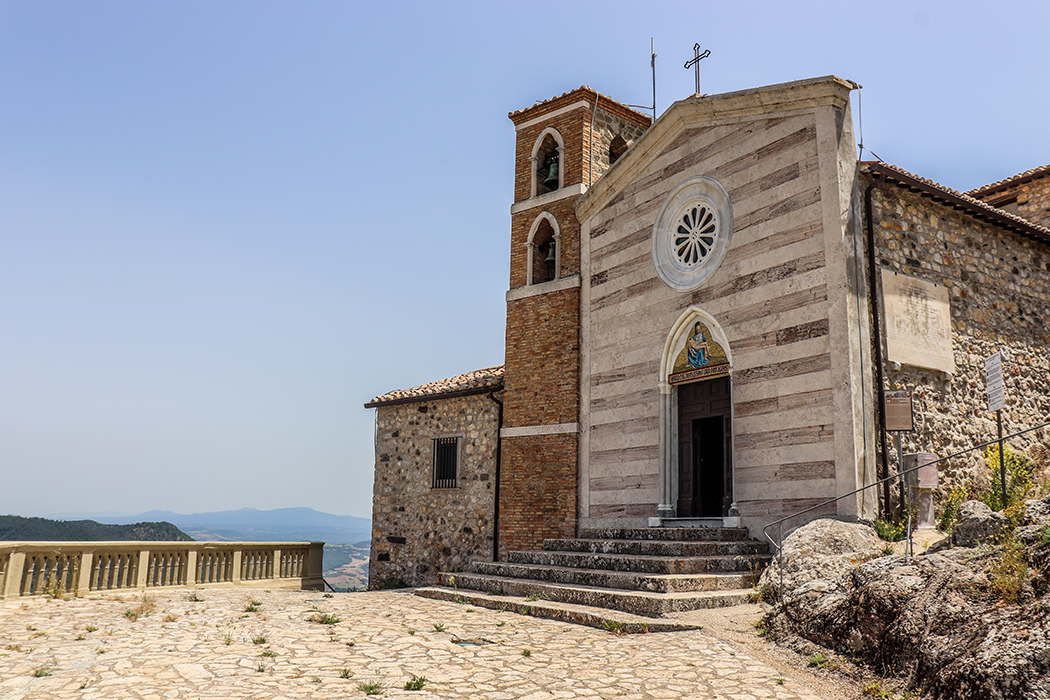
The sanctuary of the Madonna della Rocca is located on the highest point of Tolfa.

It was originally part of the castle built in the early ninth century, when the inhabitants took refuge on the hills to escape the attacks of the Saracens.

The church stands next to the ruins of the castle.

The original medieval church was rebuilt in 1567 at the expense of the community.

Everything thanks to the organization of the Confraternity of the Name of God linked to the Dominicans.

The exterior has a facade with two-coloured marble stripes, an elegant entrance door with a mosaic of piety and a finely worked rosette.

The interior has a Latin cross plan with a single nave.

The high altar in polychrome marble that is enriched by a 16th century canvas made by the Carracci brothers that represents the Virgin with the body of Jesus.

Next to the church is a not very tall Romanesque bell tower with two rows of framed openings.

powered by social2s
Tolfa. Collegiate church of Saint Egidio Abbot

The collegiate church of Saint Egidio Abbot is one of the first in the town of Tolfa so much that the first restoration dates back to 1550 and 1585.

In those years it had only one nave with two side chapels and in 1588 it was elected as a collegiate by Pope Sixtus V particularly to underline the special role of Tolfa and its mines in the government of the Papal State.

In 1630 the increase in population necessitated an enlargement of the church that was expanded with two other side aisles.

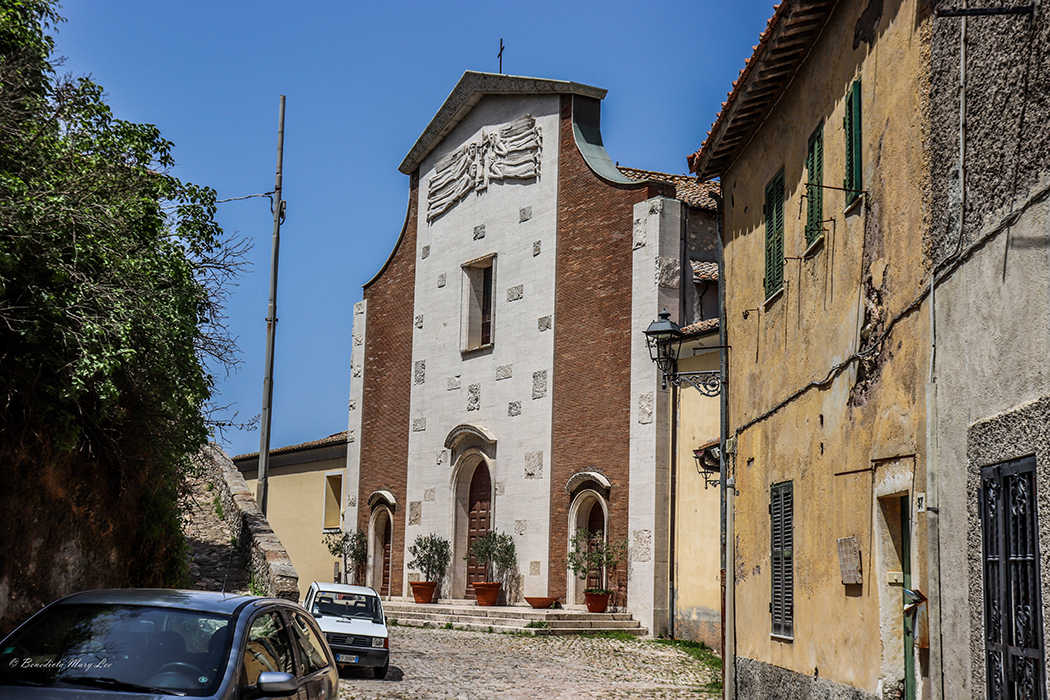
The current facade of marble and earthenware tiles has a marble relief that represents Angels to protect the Eucharist and was completed in the twentieth century.

The interior has three naves with three dedicated chapels and many paintings such as that of Sant'Egidio Abate (behind the high altar), the Saviour, Sant'Isidoro Agricoltore.

The gilded bust of Sant'Egidio, protector of the village, is that which is carried in procession during the feast of the patron.

Behind the high altar there is a wooden choir dating from 1815 and two wardrobes that once contained the relics of the saint that were only shown during the official celebrations.

While the urn of Santa Cristina martyr, coming from a catacomb in via Ostiense and brought to Tolfa in 1733, is located under the canteen.

The church has a bell tower that dates back to 1547 with five bells, one of which from the sixteenth century has for years marked the life of the village.

powered by social2s

The church of Madonna of Sughera in Tolfa dates back to the 16th century and was built following a miraculous event.

On November 1, the All Saints Day in 1501, two hunters found an image of the Madonna on a cork plant.

The image was brought to the church of Mercy, but the day after it disappeared and returned to the cork.

The inhabitants read this event as a sign that Our Lady wanted a church to be built there.

It began as a chapel in 1524.

In 1560 the church was built with 10 altars incorporating the original chapel in the apse.

This church was then sacked and ruined by Napoleon's troops and subsequently rebuilt.

Today the church has three altars and three chapels.

powered by social2s

This church in Romanesque style dates back to the eleventh century and was built upon the ruins of a pagan temple and in fact the church has a crypt downstairs with frescoes of the fifteenth century.

The church was run by the confraternity of the Battenti, which owed their name to flagellation during public demonstrations and processions.

They were legitimized in 1499 by Pope Alexander VI Borgia, perhaps to be forgiven for his sins!

Inside it has an irregular plan divided into three naves and in the last centuries has undergone several 'modernizations' that have changed the original style.

The church is frescoed and the baptistery dates back to 103.

The church received an organ during the eighteenth century.

powered by social2s

The church of San Giuseppe dates from 1520 and is dedicated to the patron saint of Sermoneta.

The arrangement of the entrance façade with the access stairway dates back to 1733.

The interior has a single nave covered with cross vaults with three side chapels.

The most important is the Caetani Chapel, frescoed by Girolamo Siciolante in 1550 and commissioned by Bonifacio Caetani.

powered by social2s

Recommended

Subscribe to Newsletter

Discover a territory through the emotions of the people that have lived it.