Churches & Places of Worship

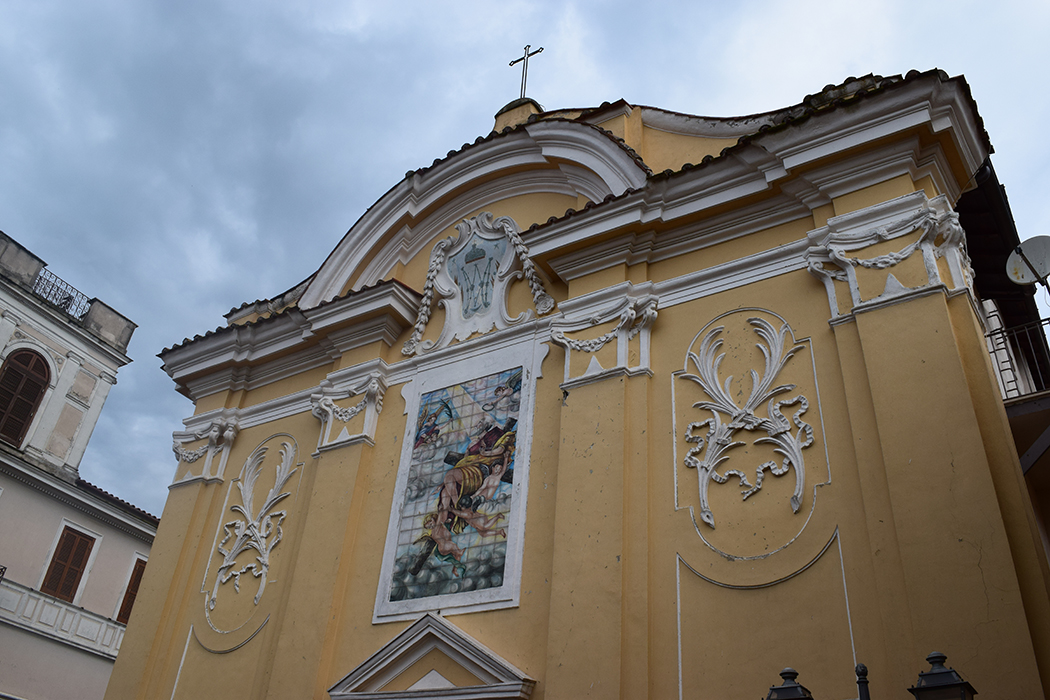
Gallicano nel Lazio. Church of Saint Andrew Apostol

The original church of Saint Andrew Apostol in Gallicano nel Lazio has medieval origin.

In a document from 1290 quotes an offer of 1,500 gold florins bestowed by Pietro Colonna, who is buried here.

In 1734 the complete rebuilding of the church was completed by the princess Victoria Altieri Pallavicini.

She also took care of furnishing the interior and bringing the body of St. Aurelio Sabazio martyr.

The façade has unique and special features and combines neoclassical rigor with the softness of the baroque lines.

It is enriched by a painting made of glazed ceramic tiles and has a bell tower with a clock in the back.

The interior has a single square nave with an altar with two large side niches.

In one niche there is an organ of 1700.

The ceiling is coffered, painted panels and 5 side altars and a chapel complete the whole.

Here from the eleventh century is kept the venerable statue of Our Lady of Grace coming from Constantinople.
powered by social2s
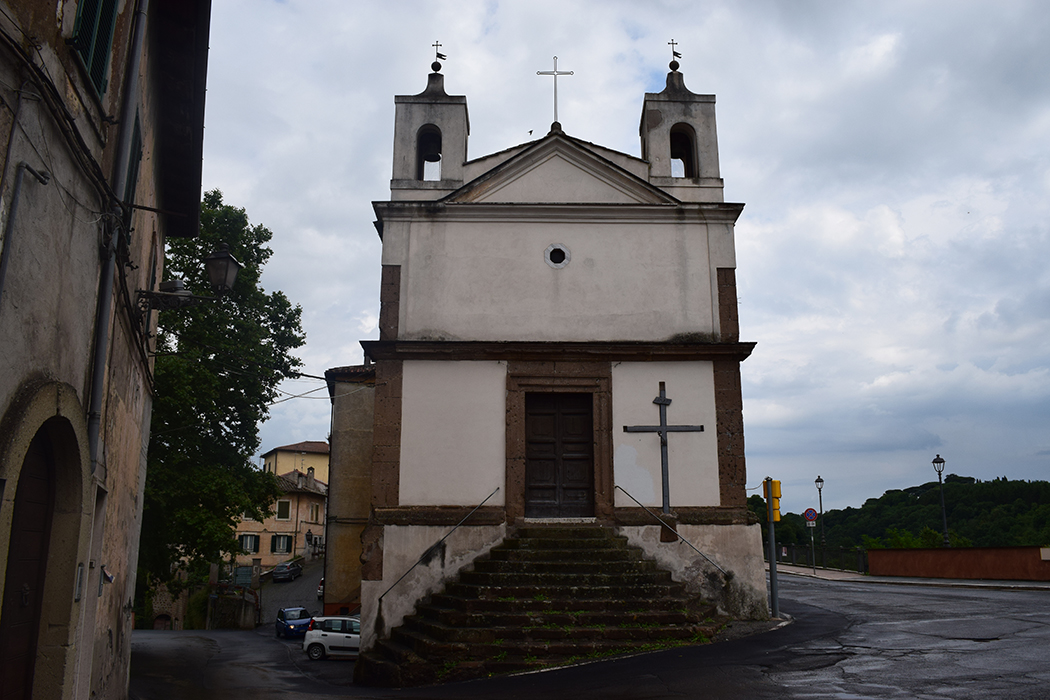
Gallicano nel Lazio. Church of San Rocco

The church of San Rocco is located outside the ancient medieval old town of Gallicano nel Lazio as it was used for these buildings dedicated to the saint protector from the plague.

The building dates back to 1628 to thank the saint of grace for having saved the country from the plague that had affected all the neighboring villages.

The facade is very simple and ends with a gabled roof with two small bell towers on the sides.

An access staircase leads inside, a unique environment with the seventeenth-century three altars dedicated to San Rocco, San Domenico and Sant'Antonio Abate.

In the nave, a  baptismal font and a baroque wooden choir.

The church was then enlarged and modified in the nineteenth century.

powered by social2s
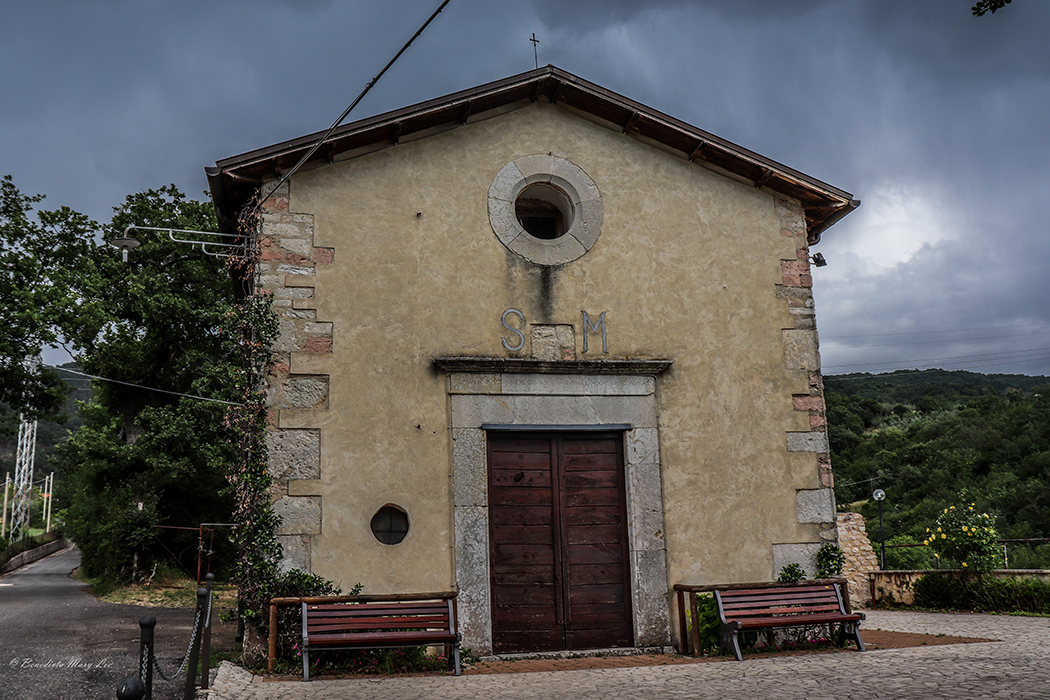
Cottanello. Church of Santa Maria

The church of Santa Maria is the oldest of Cottanello and was built over a previous Roman temple.

In fact, all the temples became a church after the beginning given by the emperor Theodosius.

Initially it was larger and housed an archpriest and 8 canons as is clear from the story of a visit of Peter Ispano, future Pope John XXI.

Its importance is given by a miraculous event that occurred in 1527 when Cottanello was besieged by the Landsknechts coming from the Sacco (pillage) of Rome.

The troops had chosen this church as their headquarters and threatened the country when a Madonna with Child appeared in the sky that frightened them and put them on the run.

After this episode was founded the Venerable Company of Santa Maria dei Casali, associated with the Confraternity of the Blessed Sacrament, to maintain the memory of that event.

The church was rebuilt smaller and in 1610 the archpriest and the imperial insignia were transferred to the new and great church of Sant'Andrea.

powered by social2s
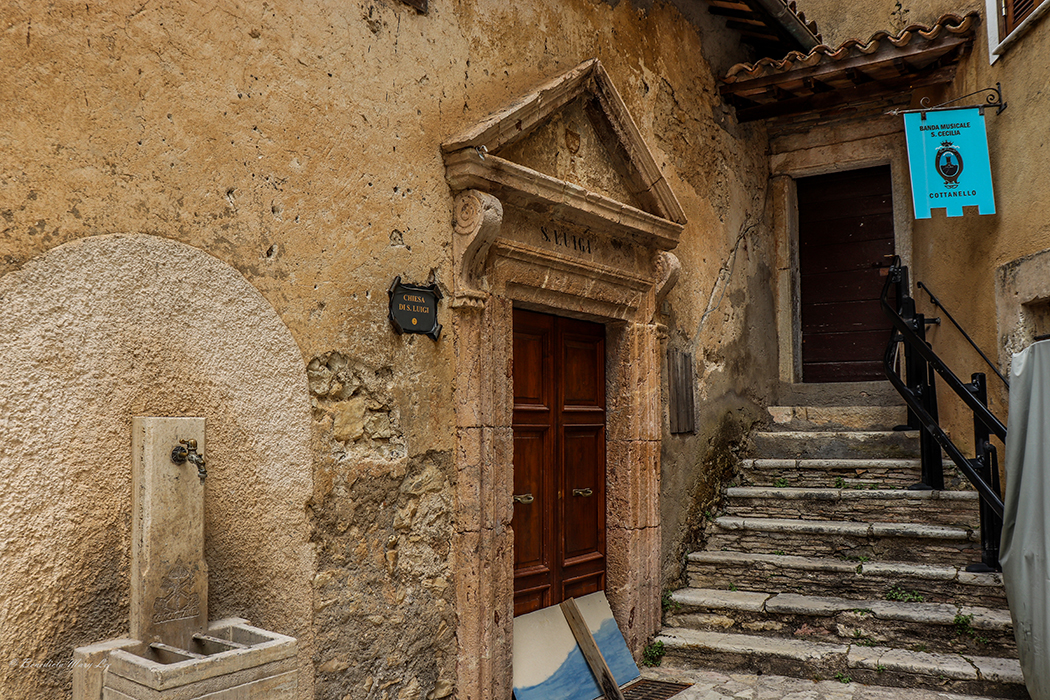
Cottanello. Church of San Luigi

The church of San Luigi was built by extending one of the towers of the defensive system of Cottanello.

For this reason, the Kingdom Gate is connected to the apse of San Luigi.

The simple medieval structure is enriched by a neoclassical entrance door.

The entrance is located on one of the long sides of the building.

Above the tympanum of the door a small fresco with the Eucharistic goblet symbolizes that the church housed the oratory of the SS. Sacrament.

Until 1794 it was the cemetery of foreigners.

A small bell tower with a bell at the apse completes the image.

powered by social2s
Cottanello. Hermitage of San Cataldo

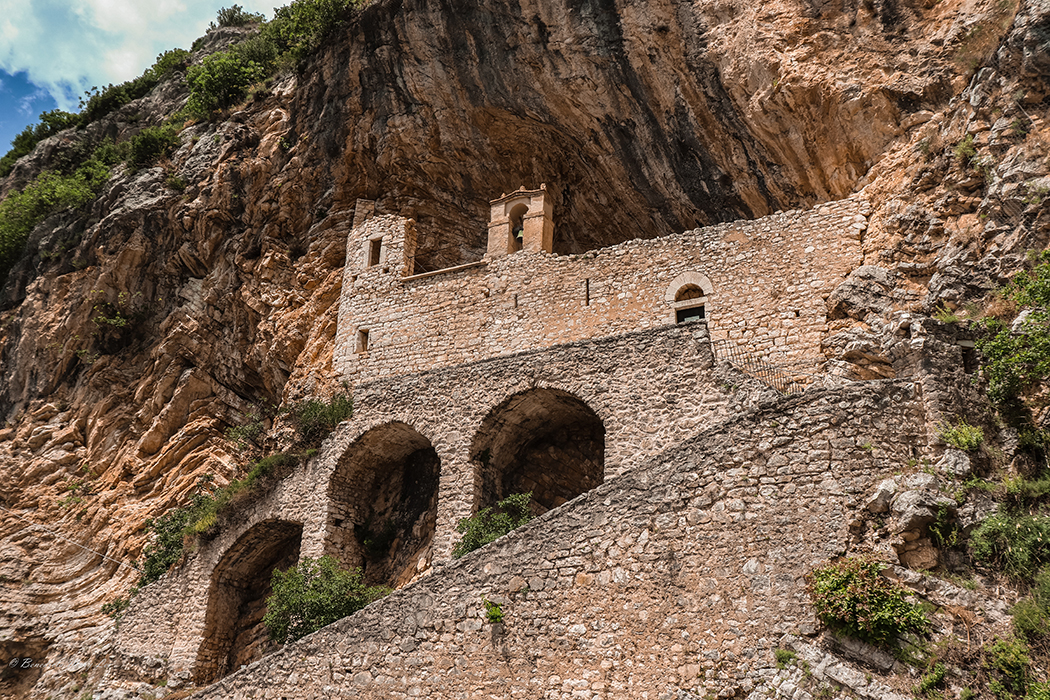
The hermitage of San Cataldo is built in an enormous cavity in the granite rock tin Cottanello.

Its origins are older than the tenth century when it was a place of hermitage of the Benedictine monks.

San Cataldo lived between VI-VII century AD and died in Taranto during a pilgrimage to the Holy Land.

Legend has it that the saint took refuge in the hermitage to escape Aryan persecution, but more likely his veneration was brought about by soldiers who had fought in 1497 in Taranto.

In the small chapel you can admire the fresco of the Redeemer, in the Byzantine style of the ninth century, and other fifteenth-century frescoes depicting the Madonna and Child with Bishop Saints.

In the fresco of the Redeemer there are clear references to St. Francis of Assisi, as the symbol of the saint, the Greek “TAU”. It is certain that between 1217 and 1223 saint Francis stopped in Cottanello.

The fresco was discovered only in 1944, when German sappers blew up the bridge below.

The hermitage miraculously remained intact, but the explosion cracked open a fresco of the 1700 depicting the country, under which was hidden the precious painting.

The staircase was built in 1888 and before they used the old road to the “Prati di Cottanello”, now part of the Way of St. Francis.

powered by social2s
Poli. Pink Chapel

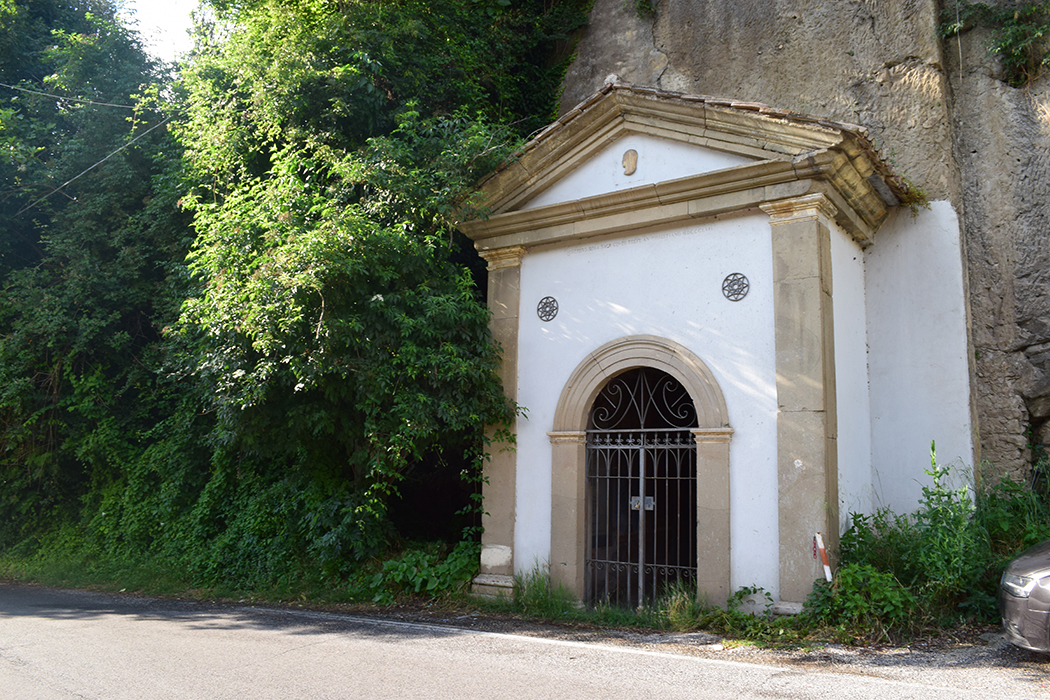
Before arriving in the village of Poli, along a tuff wall there is a small facade of a chapel with the classical style of an ancient Roman temple and adorned with a tympanum in peperino and a frame around the entrance arch.

The chapel was then dug into the tufa and completely frescoed with bright and energetic colors. On the front wall there is a dedication to S. Filomena while on the sides of the entrance are the two tombs of Mons. Giuseppe Cascioli and Anna Maria Rosa.

powered by social2s
Poli. Church of Sant'Antonio Abate

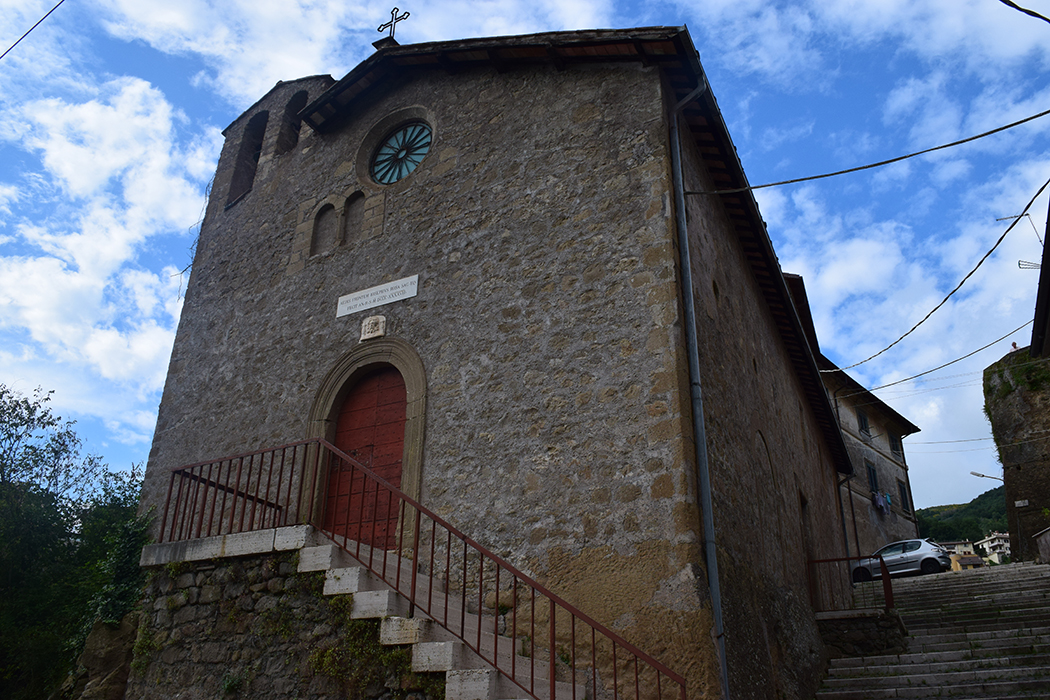
Just outside the original city walls of Poli and in a lowered position is the small church of Sant'Antonio.

It is a rectangular building of the fourteenth century later expanded in the fifteenth and sixteenth centuries.

It has a gable roof and a steep entrance staircase.

The simple stone façade is enriched by a small rose window.

A mullioned window is placed in a non-symmetrical way compared to the entrance door.

The church ends on one side with a bell gable with two bells.

The interior is frescoed on the wall of the apse, in the three chapels on the left and, partly also on the other walls.

powered by social2s
Poli. Chapel of the Pity

The neoclassical church of the pity is located on the hill in front of the ancient village of Poli and its dome stands out among all the other buildings.

Its particular style is influenced by the Vignola architecture with a geometric elegance made of pure volumes. Here is the tomb of the Torlonia family.

Its name derives from a statue on the high altar that represents the Virgin of Sorrows with her son on her knees made by Adriano Schirati, perhaps a pupil of the school of Michelangelo. The sculpture is inspired by the famous Pity in the Basilica of S. Pietro in Rome.

However, the Pity di Poli has not been completed in the Madonna, perhaps due to the artist's death.

powered by social2s

Recommended

Subscribe to Newsletter

Discover a territory through the emotions of the people that have lived it.