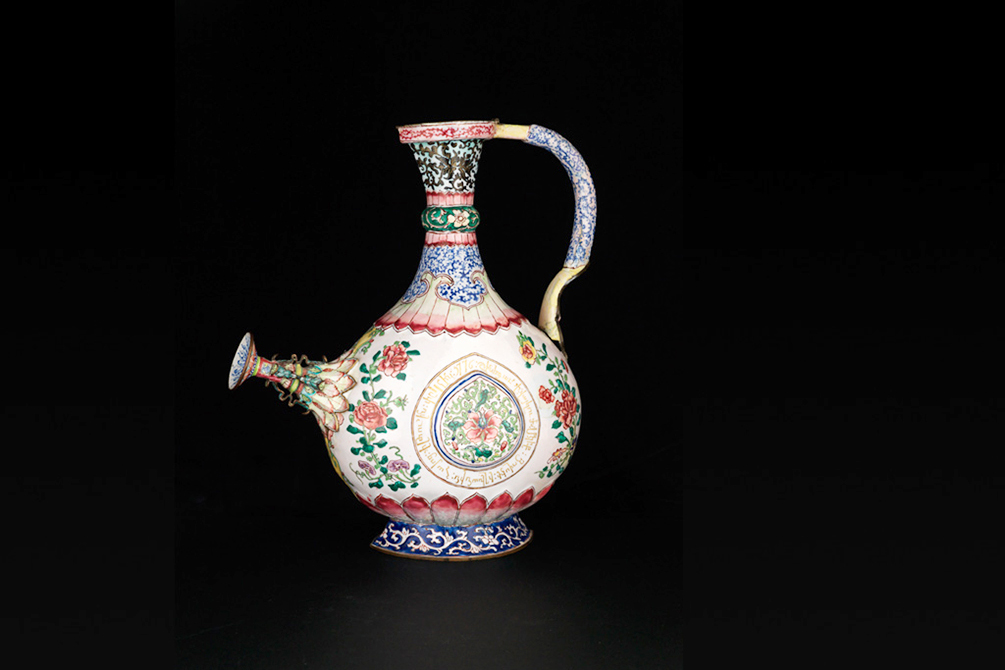
Armenian Art from Cyprus

An exhibition of Armenian art from Cyprus is opened on April 7 at Leventis Municipal Museum in Nicosia, Cyprus.

The exhibition comprised the collection of the Kalfayan family from Thessaloniki in Greece. It consisted of works from the late 16th century to the 19th century.

It included artefacts of historical and artistic value relating to the presence of Armenians in Cyprus. Armenians have lived in Cyprus since the early 6th century AD, and their history parallels the history of the island.

The Kalfayan family has close ties with Cyprus. The core of this exhibition was a presentation at the Museum of Byzantine Culture in Thessaloniki. The Kalfayan family have continued to enthusiastically develop the collection, which they commenced in the inter-war period.

The collection of Armenain Art covers a range of art forms, for both ecclesiastical and secular use. It includes fabrics and textiles, excellent quality ceramics of the Kϋtahyan style, Chinese style porcelain objects, and handwritten manuscripts. It also incorporates relics from the Armenian Archbishopric in Cyprus.

The sources of these works were Armenian artists, artisans, churches and collectors in Cyprus.

Armenian art has attracted the attention of collectors around the world and particularly in centres of Armenian migration where the local Armenian churches were the initial sites forthe reliquies and icons. It is interesting that in nearly all areas,the art concentrates on the religious, a trait of protecting the cultural heritage in placesremote from the homeland.

To know more visit this link: www.kalfayangalleries.com
powered by social2s
Vasca idromassaggio whirlpools

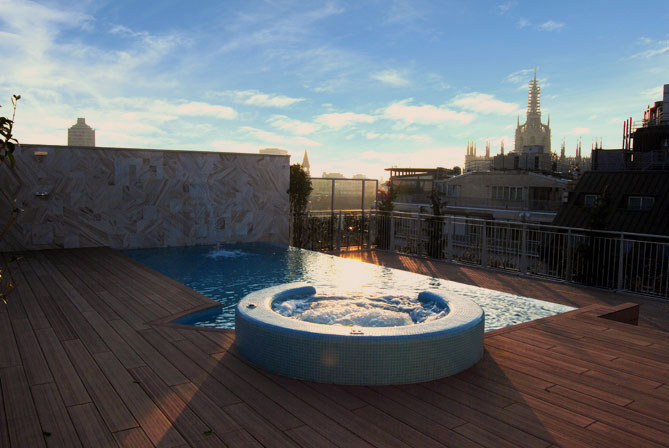
Living with water is an experience of lifestyle and lightweight terrace pools and spas are in everyone dream.

The desire by people to live close to the beach, lake or river tells us how strong a link man has with water. The need to control water and to have access to water features, wherever we live, is solved by building pools, spas, streams, waterfalls, showers and baths throughout our homes and gardens.

But lack of design freedom and the need to construct on site, mostly with solid concrete, has meant that only the few could create the scenario of their dreams.

New EPS Technology

New technology and materials allow everyone who owns a terrace or deck to experience the pleasure of an open air pool and spa. The self-standing pool is realized with EPS, a light-weight material with excellent properties for water resistance, long maintenance-free life and easy shapeability.

An Italian company, Preformati Italia, in Mussolente, near Bassano del Grappa, patented a new way to realize a stand-alone pool. The main characteristic is a sandwich wall with reinforced concrete struts and beams encased in closed pore 'dense' EPS; just the inverse of an insulation system used for walls. Enrico Puppi started this company based on his family’s experience with packaging materials and his own study into new materials and designs.

The modular EPS based system of Preformati has freed the architect to create shapes and features that excite and stir the senses, and allowed the engineer the capability to provide a wide range of functions for pleasure and leisure.

Whether on the terrace over-looking the Duomo in Milan or in your own indoor ’terme’ in Trento, you can choose shapes as difficult as the engineering marvels and sculptures of the renaissance. With EPS and proprietary finishes, these can be realized by the sculptors and artisans in-factory and then iassembled on the terrace or outdoors. Multiforms of a wide variety of colours can be integrated with light features to create the image dreamed of, especially for evening entertainment. Waterslides and waterfalls, in-pool bars, seats, couches, Jacuzzis are all created with ease, and finished with unique shapes and even a bridge over your private river pool.

Sustainability in engineering, in materials solutions and in assembly methods are combined with Italian style and finishing to provide to the customer a personalised elegant solution at an affordable price, and with a ten year warranty from Preformati. The best lightweight terrace pools.

To know more visit: www.preformatiitalia.it

powered by social2s
Roberto Scardella - Living with bronze

The bronze sculptures by Roberto Scardella have been described as linking the contemporary and ancient worlds. They are mostly derived from the magnificence of the horse and the flowing beauty of a woman. It is said that his sculptures ‘prance and dance’.

He explains the techniques and emotive forces that combine in the creation of a bronze sculpture. ‘I learned the art, techniques and dynamics of sculpting in bronze in Rome. The technique I use is called Lost Wax casting, not greatly different to the processes used in the Renaissance by the famous sculptors of Florence.

I start in my studio, where I envision the theme and let my hand do the drawing. These drawings create for me the force of the horse, its energy and movement. The sketches become sculpture in the most fragile of materials, wax. The excitement is to convert this poor fragile creation into a strong and noble bronze sculpture.

I travel with my wax sculpture to Verona, where there are still artisans casting in bronze. There, patiently we encase the wax model in a special semi-porous clay that has great resistance to sudden temperature changes.

Small straws of wax link the encased model to the outside world. The cast is dried slowly to prevent cracking and then is placed in a large oven and heated to 1000 degrees to bake the clay and melt out the wax.

And now we reach the critical stage the casting of the bronze, which requires great skill and confidence, bred of vast experience. It is essential to avoid holes from trapped air and for the mould to be evenly heated by the molten bronze.

The molten bronze, at 1100 degrees, is poured into a ladle held by two men, and then rapidly poured into the inverted mould until bronze issues from each of the channels.

After many days of cooling aided by fresh draughts, the sculpture is released from its clay prison by breaking off the mould, which is crushed and re-used.

If I have succeeded, the creature will bound out of the mould. I then cut off the straws of bronze and close the surface pores with a wax’.

Many months have passed in the creation.

powered by social2s
Dal Prà Fine Ceramic ware in Milan

Collaboration with designers and architects has created a new line of fine ceramic ware of Dal Pra of Nove, one of the Italian born artistic ceramic houses along the banks of the River Brenta.

Thanks to a bank of clay discovered when the Brenta River changed its course several hundred years ago, the citizens of Nove had access to quality materials with which to make pottery. For the Venice nobility it was just Nove (and nearby Bassano del Grappa) that could realise crockery, fine tableware and artistic ceramic furniture for their villas.

For over 100 years the family Dal Pra has continued the tradition of this community by designing and producing high quality ceramics for the home, and every year the catalog is enriched with new models, shown in preview in exhibitions in Milan and Paris.

Tradition and new design live together like two souls in this family business run by Rita and her daughter Valentina Meneghini. On the one hand, Dal Pra has continued the tradition of miniature ceramic gardens for use as a centerpiece for ceremonies and for outdoor dining and business meetings. Over decades dozens of different ceramic gardens have been developed following the first series for the tables of the Italian royal family of Savoy.

The other soul of the company is the one closest to the hearts of Rita and Valentina who continuously seek and select artists who create a harmony in new collections for lovers of ceramic art furnishing. A particular example is their classical lighting designs of which one was born from collaboration with local traditional artists in the form of an egg-shaped lamp with painted birds. At Nove laboratories you can see a permanent exhibition of ceramics of Dal Pra.

The laboratories where the expert craftsmen work can be visited and you can spend quality time studying customized solutions for the finest furnishings and for those who do want to add a touch of their personality to their homes. Of course this comes with the guidance of the family Dal Pra that since 1897 designs and creates this beauty.

Their deep knowledge of fine ceramics, the museum and gallery of Dal Pra are invaluable to help people select from the extensive catalog and new stylish designs. 

powered by social2s
Flower of Florence - Iris Gardens in May

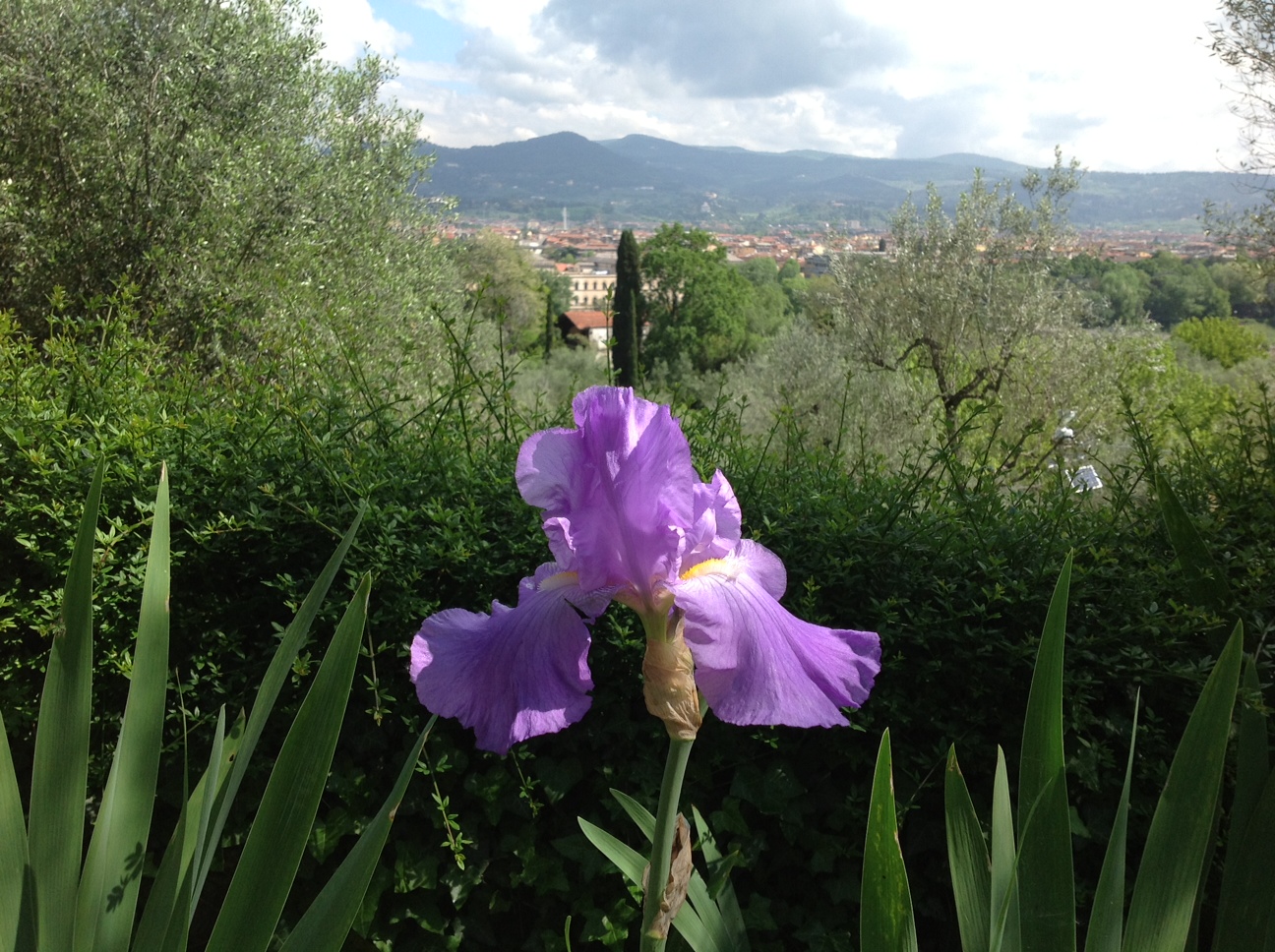
The tall bearded iris has been the native flower of Tuscany for millenia and the formal Floral Symbol of Florence for 900 years (even though it is sometimes inaccurately referred to as the Fleur-de-lis).

Possibly it arrived in Tuscany with Etruscans whose monuments often portrayed the iris. It grew wild throughout the valleys of the Arno flowering from late April to end May. The iris is, for afficionados, the most elegant and beautiful flower.

Visitors to Florence can see the Florence Iris Garden throughout May and admire the thousands of blooms.

Most visitors to and even natives from Florence have Piazzale Michelangelo on their itinerary. Standing below the bronze replica of David that has graced this square for 150 years, people throng to view the city and the 'dome', the Arno and its bridges. To the right at the end of the crescent is an unassuming gate and plaque leading to the Florence iris garden.

Here, you wander around the stone paths rolling down and around the hill among the olive trees, and experience 'a wonderful symphony of colour'- the virtually complete spectrum from deep purples to pure white.

The only colour not quite replicated is the red of Florence, a colour that has so far eluded the breeders. This red flower however, did not arise from nature, but from politics. Originally the Standard of Florence had been the natural white iris (iris alba fiorentina) until one of the many coups in 1266 when the Guelfs gained control and reversed the colours.

With the planting of this world famous iris garden 60 years ago, the project of the Italian Iris Society to collect the most beautiful irises created by hybridisation began. Each year in mid-May there is the International Iris Competition where new varieties from around the world are judged.

The ambition of every hybridiser is to win this competition, and when I was assembling my iris garden south of Canberra in Australia, the Grosvenor family, from whom most varieties of the many of hundreds of colours and forms were sourced, were most proud of their achievements in Florence iris competition.

The depth, subtlety and brilliance of iris colours astound the viewer. On an early spring morning I could thrill to the tall large black iris that dripped its colour with each bead of dew. The Florence iris competition has a special prize reflecting the desire to replicate the red of Florence and being a reminder of the origin of the tall bearded iris.

In the Florence iris garden you will also find many other varieties of iris from around the world including Japanese water irises. For more information and to find out how you can commence your own magnificent iris garden, visit: www.irisfirenze.it.

powered by social2s
Artisanal solutions for the elegant garden: Madeinlava exhibits in Florence and Rome

Springtime is the moment to re-open gardens and find new elegant ways to renovate their spirits -anditisthe timeto find MadeinLava. If you are in Italy on late April and beginning of May, there are two major events, in Florence and in the Roman countryside, to find the right solution for your needs.

Madeinlava, the Italian sculpted furniture company founded by Sabrina and Luca, has shown its most recent artisanal creations in Florence from the April 24th to May 1st at the 78° Artisanal Exhibition.

The two partners, expert in the carving of lava and peperino, the volcanic stones from Viterbo, present their new furniture range for the elegant garden, created by the integration of wood and stone. All their solutions are sustainable, the wood is treated naturally and the design of the furniture uses no nails or glue.

The artisanal fair is held at Fortezza da Basso, a magical place and one of the most interesting examples of how the past can be linked to the future. This fort was created in the 15th century by Antonio Sangallo and it was a military base for the Medici family. In the '60 it was converted into the exhibition area for the city of Florence and some new modern constructions have been built to make it functional for its new purpose.

Visitors can feel the surrounding elegance both in the place and in the artisanal elegant solutions.

From May 1st to May 4th, Madeinlava exhibited in a special estate to the north of Rome, near the Bracciano Lake. The event is call Arti&Horti and is dedicated to country villas and 'casali' (the typical Italian country villas in Tuscany and Rome). The artisanal elegant creations of Madeinlava were shown among the most beautiful flowers and garden solutions for the opening of the new season.

Find where Madeinlava are exhibiting and be charmed by their artistry

powered by social2s
Jon Fathom Stone sculptor from the Great North West

To the right in Mountain Square in Whistler, the now famous resort north of Vancouver, next to a totem are stairs leading down to Art Gallery Row.

Immediately on the left you can find a window with mainly Inuksuk statues and some stone carvings, the home of Jon Fathom.

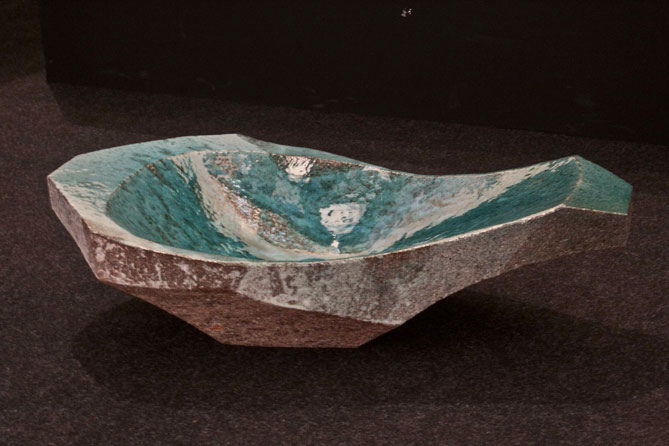
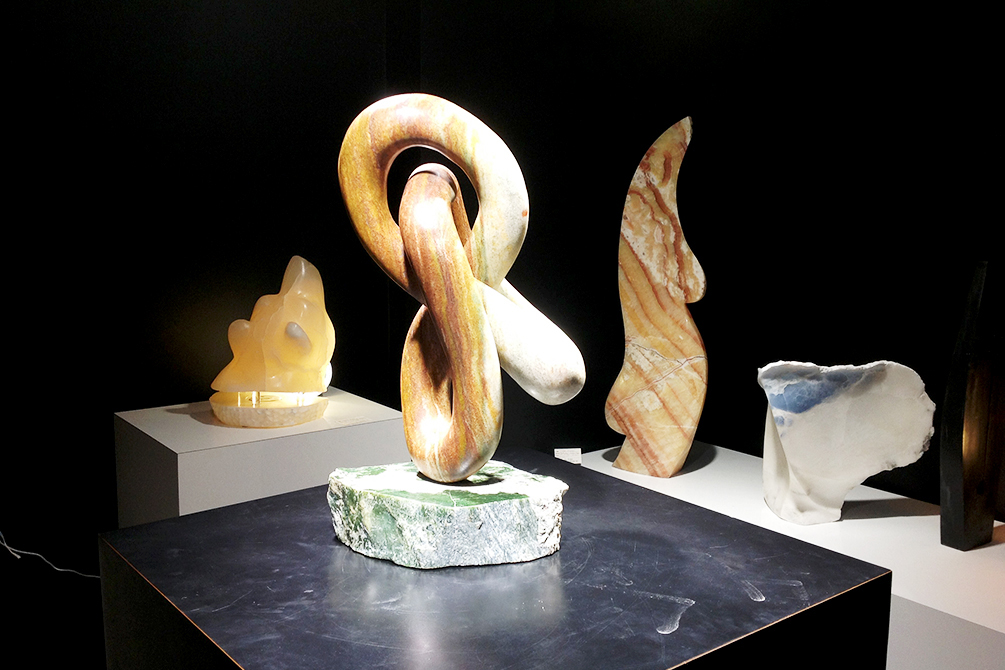
Just inside the door is a sculpture of bears seemingly coming out of a large block of the conglomerate marble rock. To the right of the door are four sculptures: a wonderful orange stone Moebius of African rainbow alabaster, a shining chlorite black bear, a soaring Humpback whale from Tokeen Bay Alaska white marble, and a marble bear with its salmon catch – all sculptured by members of the team of seven local stone carvers.

Take a walk into the showroom, and you meet a young man whose accent assures you he is from the north west. His name is Jon Fathom and this is his showroom, these works come from his master class of stone sculptors.

Jon has a quizzical sense of humour and a laid-back but intent salesmanship for the works in his care, from his team and other north west stone carvers.

He was born in Juneau, Alaska in a log cabin. His parents lived there during his childhood with life on the sea, fishing, crabbing, whale watching, eagle feeding and glacier viewing. So we asked him how he came to stone. He relates that he escaped Juneau as a wild young man, tired of smelling like fish and, like his friends, having been brought up on a snowboard. Finding himself at 21 years in Mammoth Lakes, California, searching for his fortune on a snowboard, he sought a revelation in a prayer.

The answer came to him in an immediate vision – stone art. At the end of the season, in Seattle, he met by accident a stone carver and apprenticed himself. A fast and willing pupil, he soon graduated to his own workshop with a fine feeling for the stone and its changing textures and moods.

Now 10 years later after sojourns back in Juneau, the Alaskan cruise town of Ketchikan, and Seattle, we find him as a four year ‘veteran’ of Whistler, with just not enough time to spring on to his board. However, Jon has a special talent as a teacher.

The seven sculptors in his team have all been taught the art of carving by Jon, with power tools through to fine polishing cloths. Next door to the showroom is a studio where he conducts classes for all ages in stone carving and making of bears and Inuksuk. All are encouraged to try their hand with the feeling for stone.

Seek him out, admire the beautiful stone carvings and the many Inuit inspired Inuksuk, try your hand at stone carving, and ask Jon about his polar bears. His passion is the creation of stone carvings of larger than life polar bears, but that is another story.

powered by social2s
Becoming a fashion designer

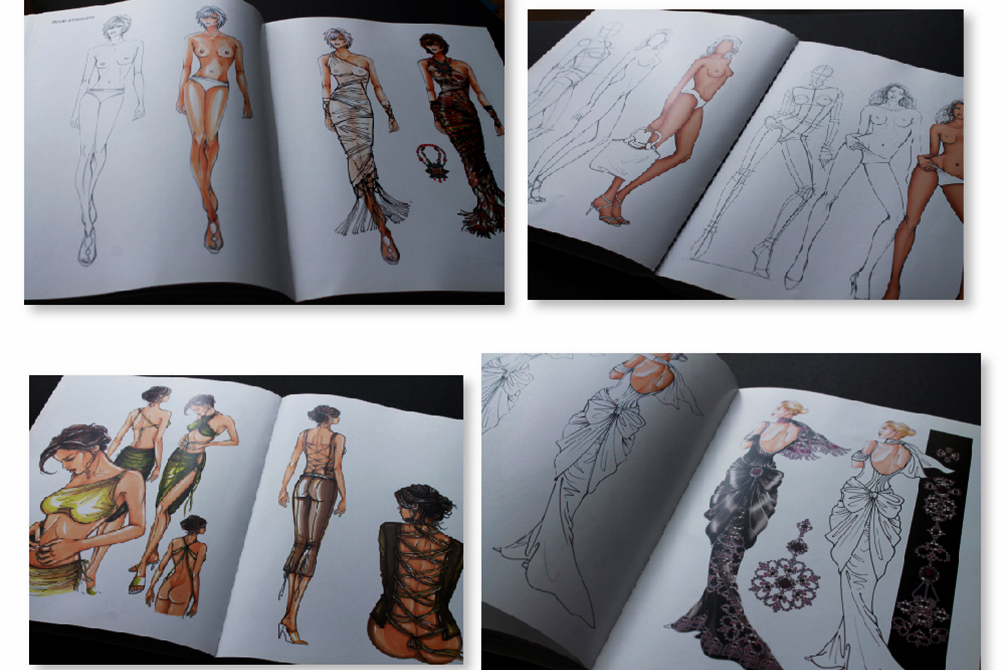
Tiziana Paci is the author of 2 books on the method to be a fashion designer, "The Figure in Fashion" and "Male Figure in Fashion" translated in 8 languages ​​and sold in millions of copies (Edited by IKON for Italy and PEPIN for other languages). We asked her how these books on fashion arose.

How did the idea of ​​such a successful book arise?

The idea was born many years ago when I was teaching fashion design and I could not find a suitable manual. They were all too full of news, full of notions that ranged across a thousand different fields. They were certainly interesting, but not concentrated in a clear and thorough explanation on how to dress and how one might draw a fashion figure.

I called one of my former students, a talented stylist, Elisabetta Drudi – Kuki, and together we prepared the drawings. The first publication was a book on the "feminine figure" and goes back about 20 years ago. From the initial idea of a short manual of 30 pages we eventually wrote a book of 350 pages. After a few years, it has been followed by one on the “male figure” and over time, they have both been updated in content.

Can we say that you have invented a method?

The texts and graphics are the result of my experience in the field, both as a teacher and designer. I think that the ‘winning’ and innovative idea was to create a book with little text but full of beautiful designs, clearly and exhaustively reporting on the method to follow.

I then wanted to include a number of explanatory drawings upon completion of each teaching step. A book with lots of graphics and "visual" communication on the model of internet communication, although 20 years before the internet was so common. We anticipated the modern teaching methods.

Who are your readers?

The two books still have a large acceptance in a diverse audience of designers, students, and also lovers of design books who are not necessarily involved in the fashion industry. The manuals are also used by small and creative businesses who find applications that are easy to customize with their skill and fine craftsmanship, typical of the value of our small business.

Was it a surprise how it was received abroad?

The books, and in particular the one on women, have been referred to in dozens of publications of many authors who have followed my method ‘word for word’. Some have copied perhaps a bit too much, and every day I find many of my designs in a variety of domestic and foreign sites including Russia, China and India.

But this is just a credit to an idea born solely by the need to give a true and useful manual to pupils in fashion schools of every order and degree. My biggest surprise was when the text has also been adopted by international universities. I can only thank all my readers for the success.

You also teach abroad. What advice would you give to those who want to pursue a career in fashion?

I love to teach and to compare people and mentalities that are different from mine. I always learn from them and so I improve my methods. My small advice to those who are approaching the fashion world now is to widen their horizons, to not be afraid to go abroad and to deal immediately with the whole world.

powered by social2s

Subscribe to Newsletter

Discover a territory through the emotions of the people that have lived it.