Churches & Places of Worship

The baptistry of Santa Lucia is a small frescoed chapel, with a baptismal font in the centre, located in the castle of Santa Severa in Santa Marinella.

It was built around the fourteenth century by the Santo Spirito Hospital in honour of Santa Severa and Santa Lucia.

The frescoes cover all the walls and represent a Madonna and Child surrounded by saints and an annunciation in the area of ​​the apse.

On the side wall there is a large ship on the sea with the symbols of the Hospital of Santo Spirito which probably represents a miraculous catch.

All the frescoes were made by painters from the school of Antoniazzo Romano.

In the church you can also see graffiti from the 15th and 16th centuries representing ships and which may have been made by sailors.
 

powered by social2s

This church of Santa Maria Assunta in Santa Marinella is located inside the village of the Castle of Santa Severa and its origins date back to 1595.

It was built by the commander Fivizzani whose coat of arms can be found on the facade.

The church looks to have  a unique shape and the altar area is delimited by two large columns and a small frescoed barrel vault.

On the marble altar there is a fresco with a Madonna between Saints Teresa and Marina who are the inspirers of the two villages of Santa Marinella with the Odescalchi castle and Santa Severa with its castle.

Initially the whole church was frescoed with scenes from the life of Santa Severa, the Annunciation and the Nativity.

These were removed in 1772 when it was preferred to decorate with stucco and plaster.

Some of them have recently been uncovered and highlighted.

powered by social2s

The church of Santa Marina (and San Leonardo) is the oldest in the town and initially was the church around which the centre of Santa Marinella was born.

Its cult had been brought around the tenth century by Basilian monks who came from the Middle East and who had settled in the area of ​​the Villa of Ulpiano.

Santa Marina was originally from Lebanon and the relic of her body was brought to Constantinople from where the Venetians stole it and brought it to the church of Santa Maria Formosa in Venice where it is still located.

This construction dates back to the end of the seventeenth century and is characterized by a very simple facade with a central door and two windows in correspondence to the side aisles.

The church is accessed via a staircase that leads to a terrace in front of the entrance.

The decorative elements are a decoration of the openings, a central round opening and pilasters along the facade and the central end section which recalls an ancient Greek temple.

At the entrance door there is a coat of arms of the Santo Spirito Hospital which ruled Santa Marinella for many years.

Inside you can see the 'bees' symbol of the Barberini family who ruled this area for a period and who renovated the church.

The interior is majestic but simple and the overlapping styles are noticeable, in fact the two lateral naves were added at the beginning of the twentieth century.

Among the elements of internal decoration, there is a baptismal font made from a Roman piece and a marble altarpiece depicting a nativity.

In two side chapels there are paintings of San Giuseppe, the patron saint of Santa Marinella, and of Christ.

powered by social2s
Cellino San Marco. Chapel of Al Bano

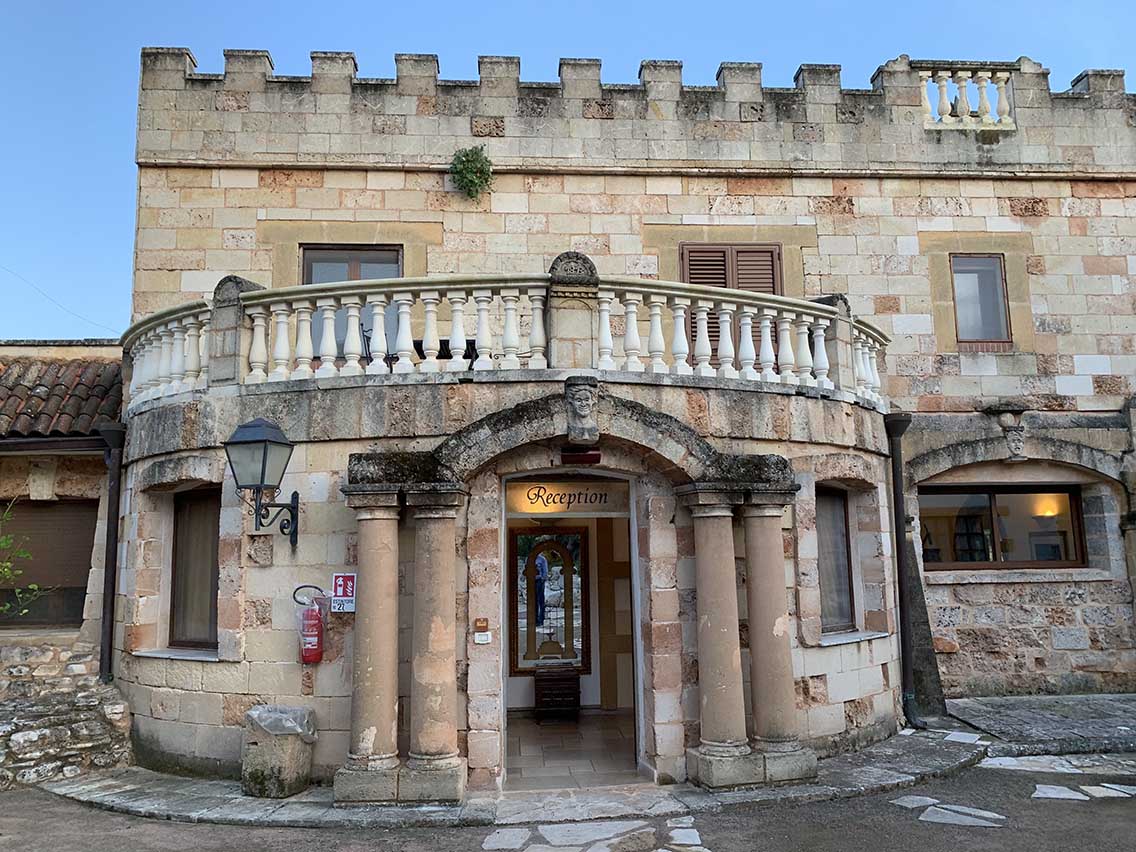
In Cellino San Marco, inside the Tenute Albano Carrisi, right in the centre of the village, an evocative church was built that combines ancient and modern art.

The façade is linear and clean in plaster with carved stone inlays and an anti-portico at the centre and a small bell tower on the roof.

The interior has a fan pattern, with a rustic local stone floor and a roof covered with stone beams.

A cross-shaped opening through which a ray of light penetrates marks the altar, while niches with saints are found along the perimeter.

powered by social2s
Cellino San Marco. Masseria Mea Chapel and Church

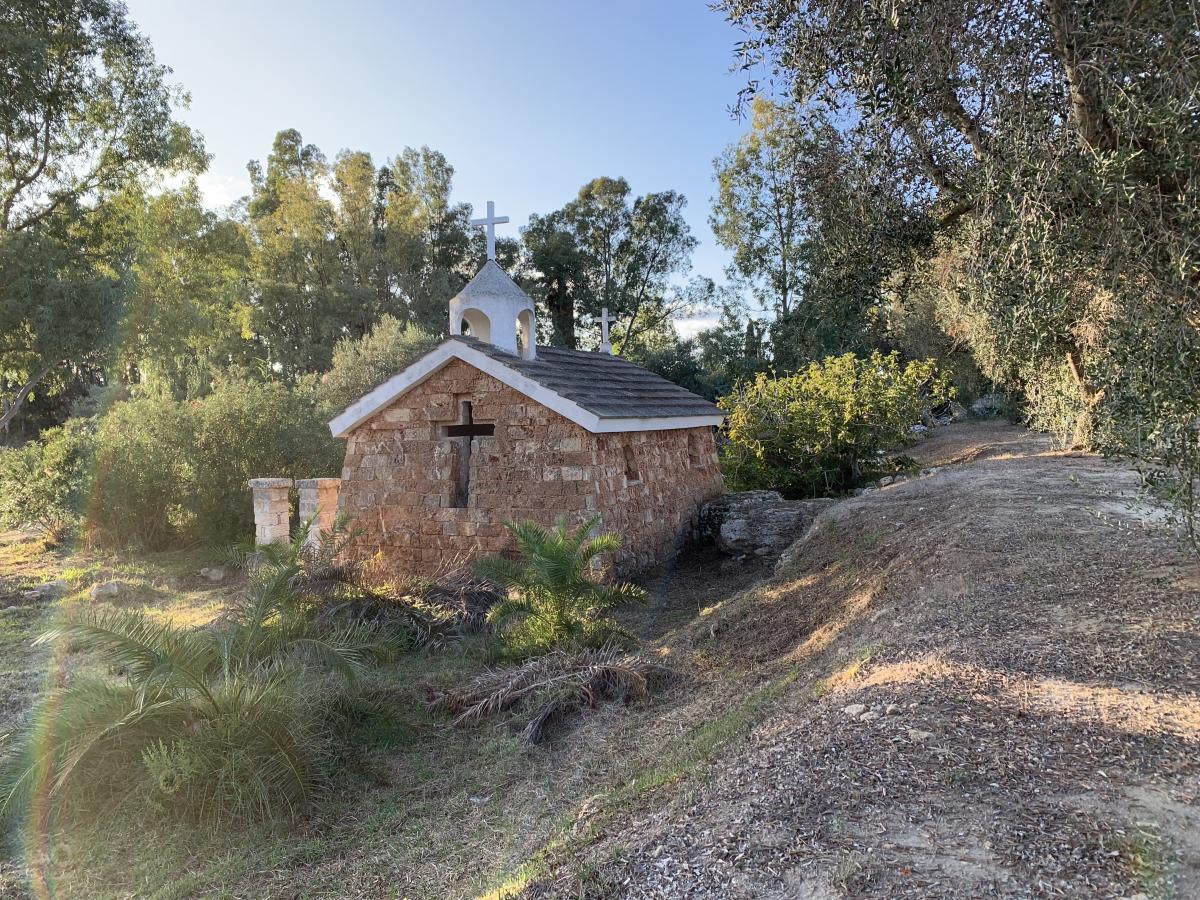
Masseria Mea Chapel

Masseria Mea is a small chapel on the banks of a pond and on the edge of a vineyard.

It is built of local stone and has a small round bell tower resting on the roof.

The chapel is dedicated to Sant’Antonio and San Giovanni.

Masseria Mea Church

On one end of the long façade of the farm there is a small church, one of the oldest in Cellino San Marco.

Its façade is very simple with a double covering profile that opens in the centre to accommodate a cross and ends at the sides with two pinnacles.

The interior has a covering with a cross vault coloured blue.

Above the altar there is a fresco depicting Saint Mark with the lion.

powered by social2s
Cellino San Marco. Chapel of the Calvary or Resurrection

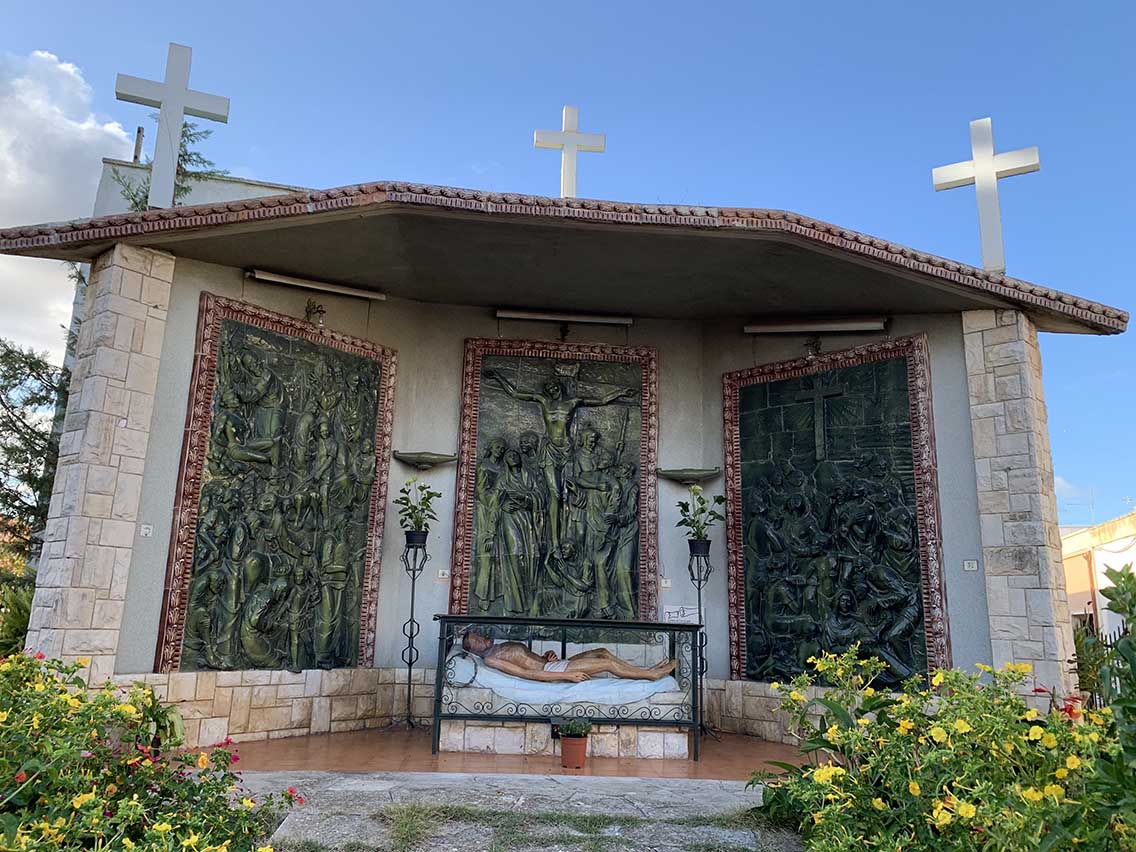
The small chapel of Calvary or of the Resurrection was built in 1962 on the same site as a previous one in Cellino San Marco.

The chapel has 3 large ceramic panels with sculptures by P. Mangia and P. Garrisi from 1968 and a concrete roof.

The left panel shows scenes from the Bible and the Gospel, the central one depicts the crucifixion and the right one shows the resurrection.

The three panels form a scenic backdrop and in the centre is a shrine with a sculpture of the dead Christ.

The whole area is enclosed by a fence that also includes a small green space with a small garden.

powered by social2s
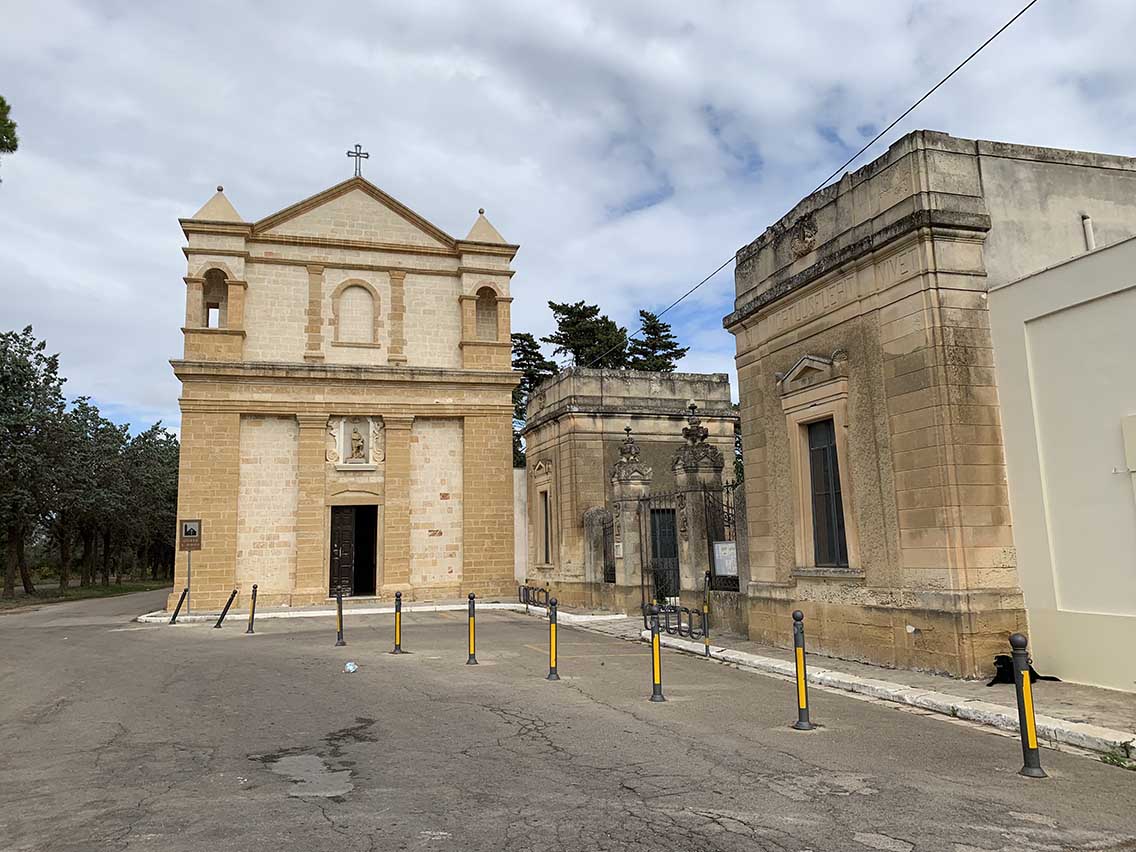
Cellino San Marco. Chapel of San Marco or Church of the Cemetery

The chapel of San Marco was the first nucleus built by the Basilar monks upon their arrival in Cellino San Marco.

it had annexed a small monastery that housed the monks.

It was in operation until their departure and then abandoned.

The present church is therefore the result of a total reconstruction in the 17th century and was completed in 1716.

The façade is made of two-coloured stones that highlight the square lines of the building.

Above the entrance door there is a niche for the saint and two small bell towers are placed at the sides of the tympanum.

A certain softness is found in the external side wall where there are two large arches to introduce light to the structure.

A legend tells that it was San Marco himself who rebuilt this church.

In fact, a statue of the saint was found on the site and he would have appeared to passers-by several times asking them to bring a boulder of tufa to build a new church.

The statue of the saint is found on the façade of the church.

Inside is the statue that every year is carried in procession during the feast of the patron.

In the church there is a beautiful specimen of a Baroque altar from 1716 built according to that of the ancient Capuchin convent of Manduria.

The altar has two twisted columns that support the upper part, where there is a painting of the Madonna, and it is a blaze of leaves, flowers and cherubs.

Among the caryatids we can recognize the figures of Saint Lucia and Saint Susanna, once very venerated in the village.

Today the altar is polychrome and the use of colours creates a striking contrasting effect with the bare stone walls of the church.

At the sides of the altar two doors open and the ornate shapes of the upper part can be seen with two statues of Saint Anthony and Saint Paul.

The church is located at the entrance to the monumental cemetery of Cellino San Marco.

powered by social2s

Recommended

Subscribe to Newsletter

Discover a territory through the emotions of the people that have lived it.